



Turning the Corner on the Cattle Cycle
Midyear report hints at more impulse heifer breeding.
October 6, 2026

by Derrell Peel, Oklahoma State University
There are some indications (and a lot of hope) that the beef cow herd is at a cyclical low after seven years of liquidation. The latest data from the July Cattle report showed continued liquidation with the beef cow herd down 0.7% year over year at the midyear mark. Changes in beef cow culling and heifer retention are required to stabilize the herd inventory and begin herd expansion.
The first stage of turning a cattle cycle involves slowing herd liquidation and stabilizing the herd inventory at a cyclical low. Beef cow herd culling has been slowing since 2022 as producers have kept cows longer. Beef cow slaughter decreased 40.5% from 2022 through 2025 and is down another 13.7% year over year thus far in 2026. This corresponds to a decrease in the beef cow culling rate from a record high 13.2% in 2022 to a projected record low rate of 7.3% in 2026 (see Fig. 1, red line). The average beef herd culling rate over many years is 10.0%.
Unless sufficient replacement heifers are available, the beef cow herd will decline further in 2027.
The sharp decreases in cow culling since 2023 means that more older beef cows now populate the herd. Beef cow culling must increase soon even though no significant heifer retention is indicated at this time. This is punctuated by the extremely low culling rate in 2026 (see Fig. 1). In data back to 1986, beef cow culling has only dropped below 8.0% twice before (2005 and 2015) and has never stayed below 8.0% for more than one year. After decreasing for four years, beef cow slaughter is likely to hold steady or increase in 2027 as old cows are culled. Unless sufficient replacement heifers are available, the beef cow herd will decline further in 2027.
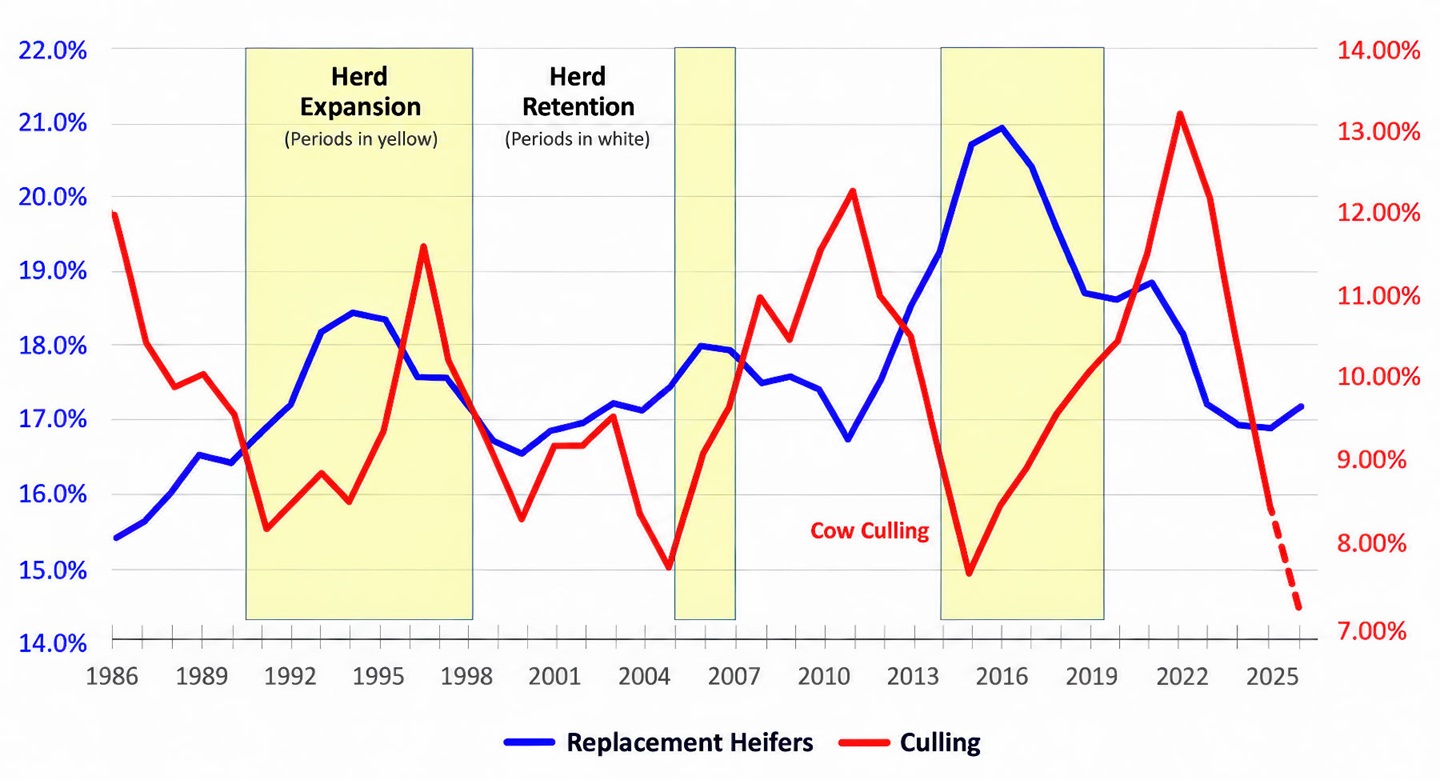
Fig. 1: Heifer Retention and cow culling, as % of Jan. 1 beef cow inventory

Inventory data from January indicated a small increase of 42,000 head of beef replacement heifers in 2026 (see Fig. 1, blue line). Since 2001, USDA has provided a breakdown of replacement heifer inventory into bred heifers (heifers expected to calve in the current year) and, by subtraction, heifer calves to be bred for next year.
The number of heifer calves is always lower than the number of bred heifers the following year, which implies that some additional heifers (not initially reported as replacements) must get bred each year. I refer to these extra heifers as “impulse heifer breeding” because these heifers are presumably redirected from the “other heifer” category and used for breeding rather than feeding. Fig. 2 shows the number of heifer calves each year and the calculated number of impulse heifer breeding. The vertical sum of these two sets of heifers in a year equals the reported number of bred heifers the following year.
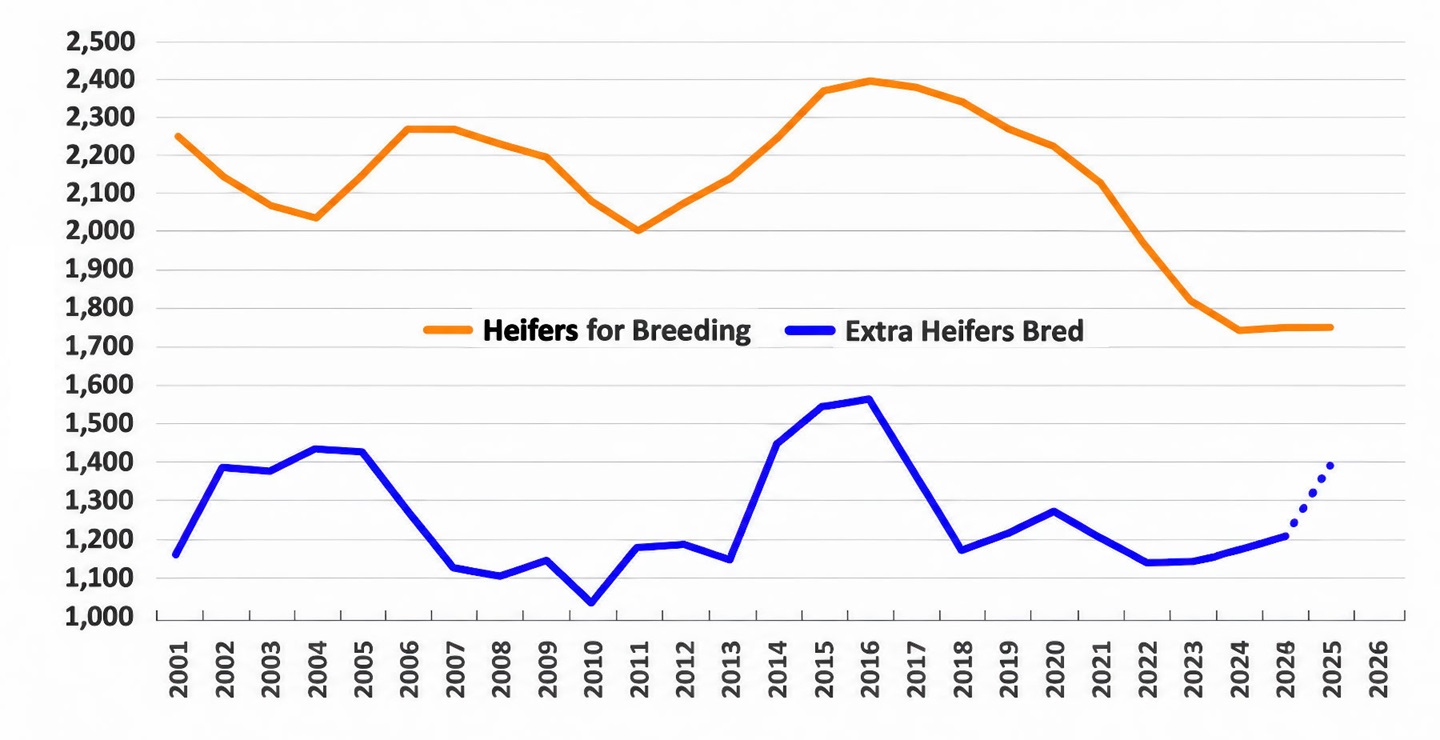
Fig. 2: Heifers for breeding and impulse heifer breeding, 1,000 head

If we project that the beef cow herd will show a slight increase in 2027 and that the beef cow culling rate increases above 8.0%, the implications for heifer retention can be calculated. The number of bred heifers would need to increase roughly 6%-7% going into 2027. From Fig. 2, we already know (from the 2026 Cattle Inventory report) that the number of heifer calves that could be bred in 2026 was unchanged from the previous year (orange line). This implies that a significant increase in impulse heifer breeding would be occurring in 2026 as shown by the dotted blue line in Fig. 2. This may be happening.
Heifer slaughter in 2026 is down 11.3% through mid-September. The midyear Cattle Inventory report included a 100,000-head increase in beef replacement heifers that may include impulse heifers bred early in the year and reported as replacements in July. Impulse heifer breeding is likely to increase more and faster than reported heifer retention.
Nevertheless, it is unlikely that the beef cow herd could show more than a slight increase at best going into 2027. The January Cattle Inventory report will confirm what has happened in 2026 and what may happen in 2027. Herd rebuilding may gain more momentum after 2027.
Editor’s note: Derrell Peel is livestock marketing specialist for Oklahoma State University Extension. Reprinted with permission from the Sept. 28, 2026, Cow-Calf Corner newsletter. [Lead photo by Shauna Hermel.]
Angus Beef Bulletin EXTRA, Vol. 18, No. 10-A
Topics: Business , Industry News , Management , Marketing , News
Publication: Angus Beef Bulletin
Related Content


Current Angus Beef Bulletin
Our September issue focuses on the females of the herd and the records that validate them.