



Handling Livestock Safely
Iowa State University Extension and Outreach offers safety guidance for livestock handlers during National Farm Safety and Health Week.
October 7, 2026

by Iowa State University Extension and Outreach
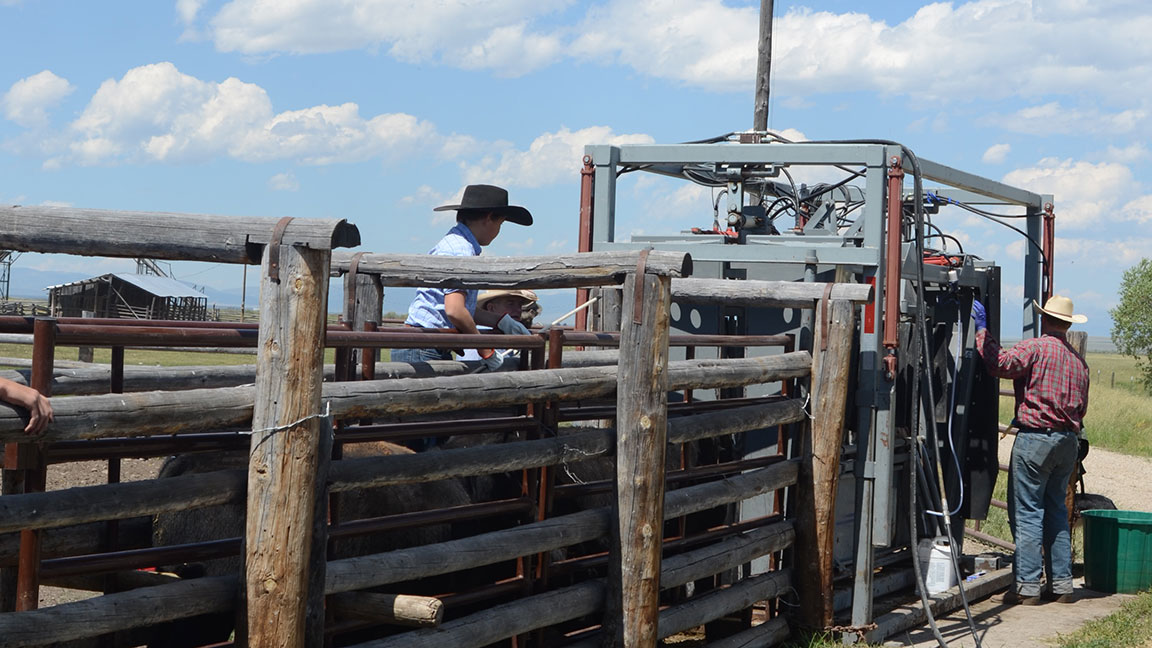
During National Farm Safety and Health Week, Sept. 21–25, Iowa State University Extension and Outreach beef field specialist Chris Clark reminded livestock handlers to prioritize their safety and others’ when working with livestock.
“Livestock production can be dangerous work. Most people who have worked with livestock have experienced at least minor injuries or close calls, and many have or know someone who has experienced serious injuries,” said Clark. “However, many injuries are due to human error, so with greater awareness and focus on safety, animal handlers can do a lot to protect themselves and others.”
Routine health and management procedures put handlers in close contact with animals, especially when those animals are under stress. Many animal-related injuries result from being charged, kicked, struck with an animal’s head or pinned against a fence or the ground. Clark offered the following suggestions to minimize risk:
- Study animal behavior and learn to recognize signs of distress.
- Use low-stress handling techniques.
- Minimize loud noises and aggressive movements.
- Pay attention to flight zones, points of balance and angles of approach.
- Identify an escape route in case a situation becomes dangerous.
- Do not work alone.
- Be particularly careful around mature males and protective mothers.
- Maintain facilities and equipment and use all equipment properly.
- Stay alert; avoid complacency, over-trust or overconfidence.
- Take your time.
Selecting for docility, or culling animals with aggressive tendencies, can also reduce risk. Handling practices such as hand-feeding, walking through pens safely, practicing acclimation strategies and low-stress handling practices help build trust with livestock over time.
“I think sometimes we take unnecessary risks, maybe just to save a few minutes or because we’re losing patience with a situation, and we may not stop to think about the potential outcome,” Clark said.
Not just attitude
Handling livestock also carries risks beyond animal contact. Administering health products, many of which are given as injections, brings a risk of needle sticks and chemical exposure. Producers should read product labels and safety data sheets, restrain animals properly before injecting, and seek guidance from veterinarians or manufacturers as needed.
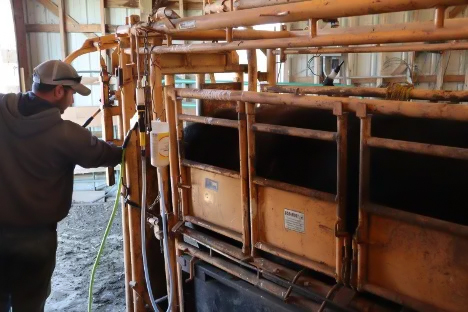
[Photo courtesy of Iowa State University Extension and Outreach.]

Zoonotic diseases (diseases that can spread from animals to humans) are another concern, and the risks vary by species. Handlers should learn which diseases apply to the animals they work with and follow recommended precautions, including washing hands after working with livestock, manure or other body fluids.
Many livestock-related injuries are preventable with knowledge, attention to detail and a focus on handler safety.
For more information, contact Chris Clark at 712-250-0070.
Editor’s note: Chris Clark is beef field specialist for Iowa State University Extension and Outreach. [Lead photo by Shauna Hermel.]
Angus Beef Bulletin EXTRA, Vol. 18, No. 10-A
Topics: Animal Handling , Management
Publication: Angus Beef Bulletin
Related Content


Current Angus Beef Bulletin
Our September issue focuses on the females of the herd and the records that validate them.