




Driven by Motivation, Defined by Quality
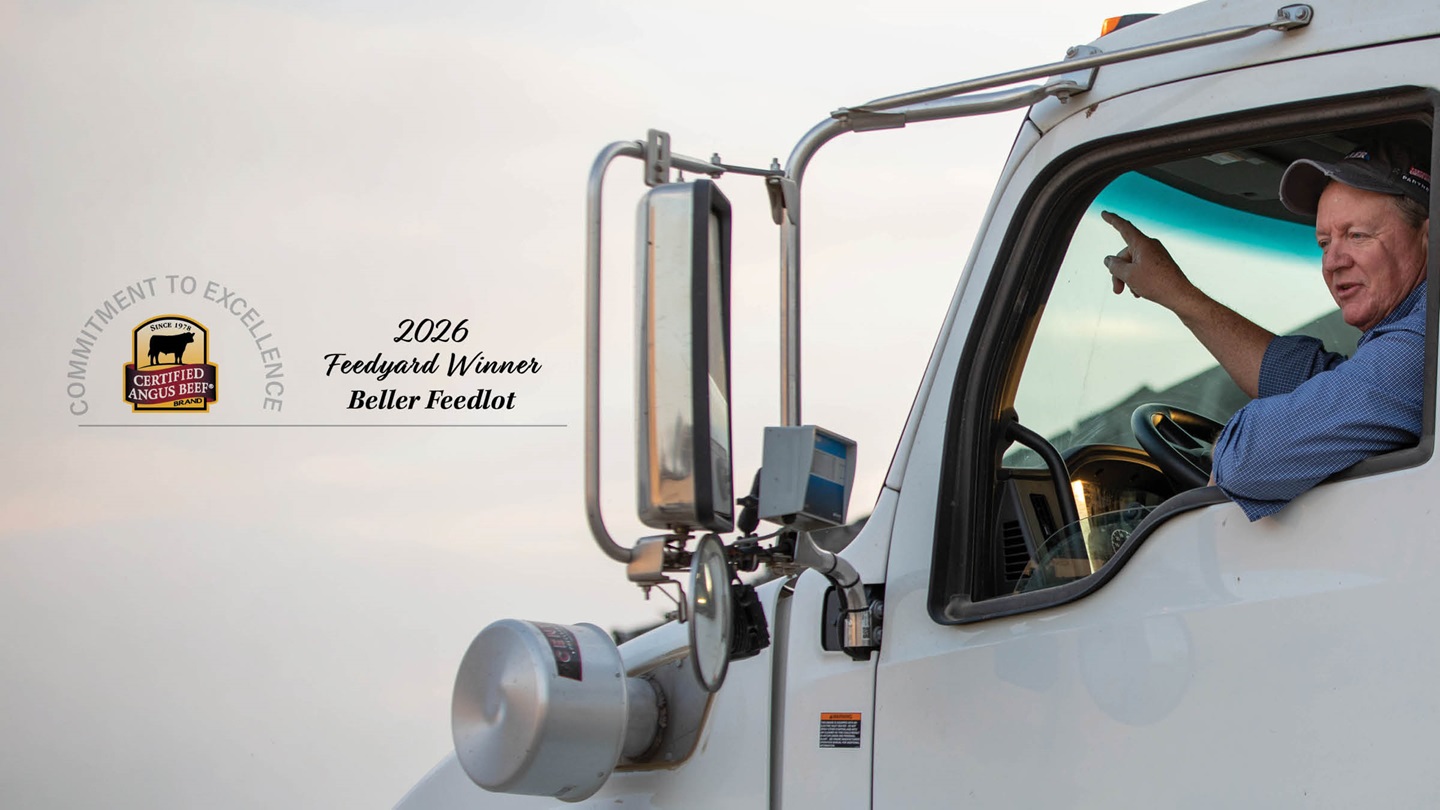
Beller Feedlot awarded 2026 CAB Feedyard Commitment to Excellence award.
September 26, 2026
Motivation gets a feedtruck moving before sunrise, keeps operations steady through adversity and drives pursuit of the next goal. It’s done more than fuel daily routines for Terry Beller, Lindsay, Neb. It’s helped build Beller Feedlot into a multigenerational operation known for its customer service and high-quality beef.
Founded in the 1950s by his parents, Jim and Mary Catherine, Beller Feedlot grew steadily through the generations. Today, Terry oversees a 6,200-head-capacity business guided by the same quality focus that shaped its creation.
The family’s dedication was recognized for its decades-long role in supplying the brand this September. Beller Feedlot received the 2026 Feedyard Commitment to Excellence Award at the Certified Angus Beef (CAB) Annual Conference in Marco Island, Fla.
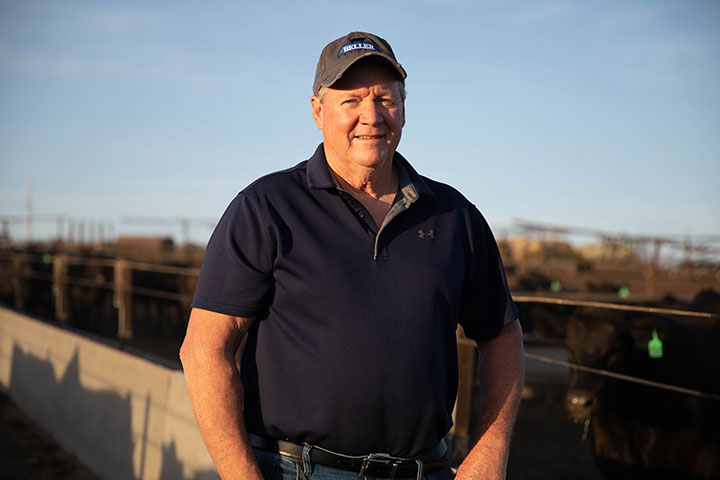
At the feedyard started by his parents in the 1950s, Terry Beller continues the Beller Feedlot legacy.

One pen at a time
What started as a wedding gift became the foundation. Jim and Mary Catherine received a heifer and a steer, fattened and sold them, and then bought more cattle with the proceeds. The first generation of Beller Feedlot ownership repeated this process until they reached 300-400 head in the 1960s. Aiming for a total feeding capacity of 1,500 head, the first feedyard expansion took place in the 1970s.
As it grew, so did Terry and his brother Rick’s interest in cattle feeding. At their dad’s retirement and their own transition into management, numbers grew to 4,500 head and have gradually increased since then. The last major expansion, a confinement barn, added 1,200 head to that capacity.
Some expansion stages were like growing pains, the first addition of six pens not leaving enough capital to stock more than half with cattle for the first three years.
Rick passed away in 2004, but Terry has carried on managing the family cattle-feeding business.
“My shoulders were pretty heavy for a while,” he says, and while noting his dad and brother would be proud of the progress today, none of it would be possible without the family and crew surrounding Terry.
The next generation, sons Riley and Wesley Beller, feature in daily operations. Riley feeds and checks cattle, along with hauling distillers’ and other corn byproducts for their grain-farming enterprise. Wesley is a jack of all trades, assisting with feeding and processing cattle, maintenance and especially cleaning pens. That favorite duty is testament to the feedyard’s commitment to animal health and performance.
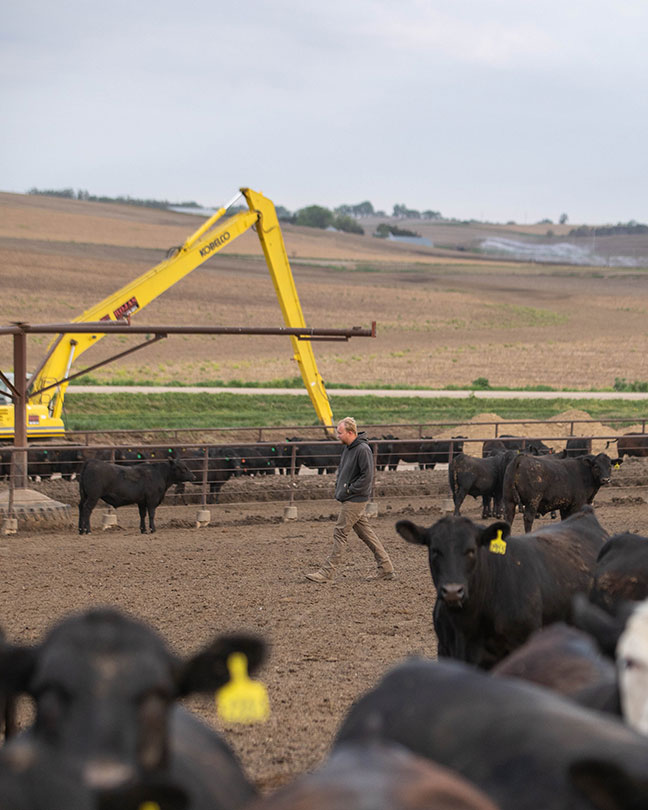
Twice-daily pen checks, completed on foot, are a cornerstone of Beller Feedlot’s cattle care program.

“Strong work ethic” is a common core description when speaking of their father. Not just his drive, but attention to detail and peace of mind from knowing nothing was left undone at the end of the day.
“Work hard, no shortcuts, do the right thing, and go the extra mile,” Wesley sums up.
The Beller blueprint
The Beller Feedlot team sources high-quality Angus feeder cattle, provides top-tier care, manages nutrition for optimal performance and builds strong customer relationships.
“We’ve got some great relationships that go back 35 and 40 years,” Terry says. “And they don’t look elsewhere.”
Most of those longtime, as well as newer sources, are known for Angus calves with performance and feed efficiency, carcass merit and docility.
With a goal to produce as many CAB and CAB Prime carcasses as possible, Terry has zeroed in on reviewing carcass data from the packer.
In the early 2000s, Beller Feedlot became CAB-licensed via a now-shuttered Feedlot Licensing Program, gaining increased access to carcass data from packers where they shipped cattle.
“It was the best move I ever did,” Terry says.
At the time, getting a carcass data sheet back from the packer was no easy feat. But Terry pressed on and worked with the CAB team. He had a vision for better genetics and increased profitability — knowing how customer cattle graded, and sharing that with customers was an integral piece.
Despite catching some flak from his father, Terry passed the carcass data he received on to ranchers.
“It’s like the Bible,” Terry says. “They look at their carcass data and say, ‘That cow’s got to go. We’ve got to switch bulls. We’ve got to make some change — we want Terry Beller to be happy with every calf that goes on that load.’”
The Bellers are keenly aware that the ability to grade well starts with high-quality Angus genetics at the ranch and is dependent on their daily management. Combining top-tier care and nutrition, they’ve found their sweet spot in achieving CAB and its Prime level.
Low-stress handling, a stringent fly protocol, shades and twice-daily pen checks — on foot — are the cornerstone of the Bellers’ animal care. And they still dial in feed rations with the counsel of a nutritionist. Details and doing things right matter.
“I like big numbers. I like producing premium cattle,” Terry says. “And then once we close them out, I like to see a positive on the bottom line, of course.”
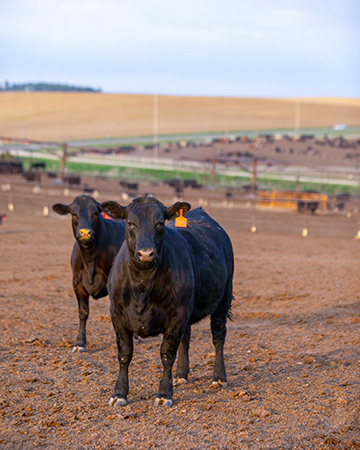
Beller Feedlot sources predominantly Angus feeder calves for their performance and feed efficiency, carcass merit and docility.

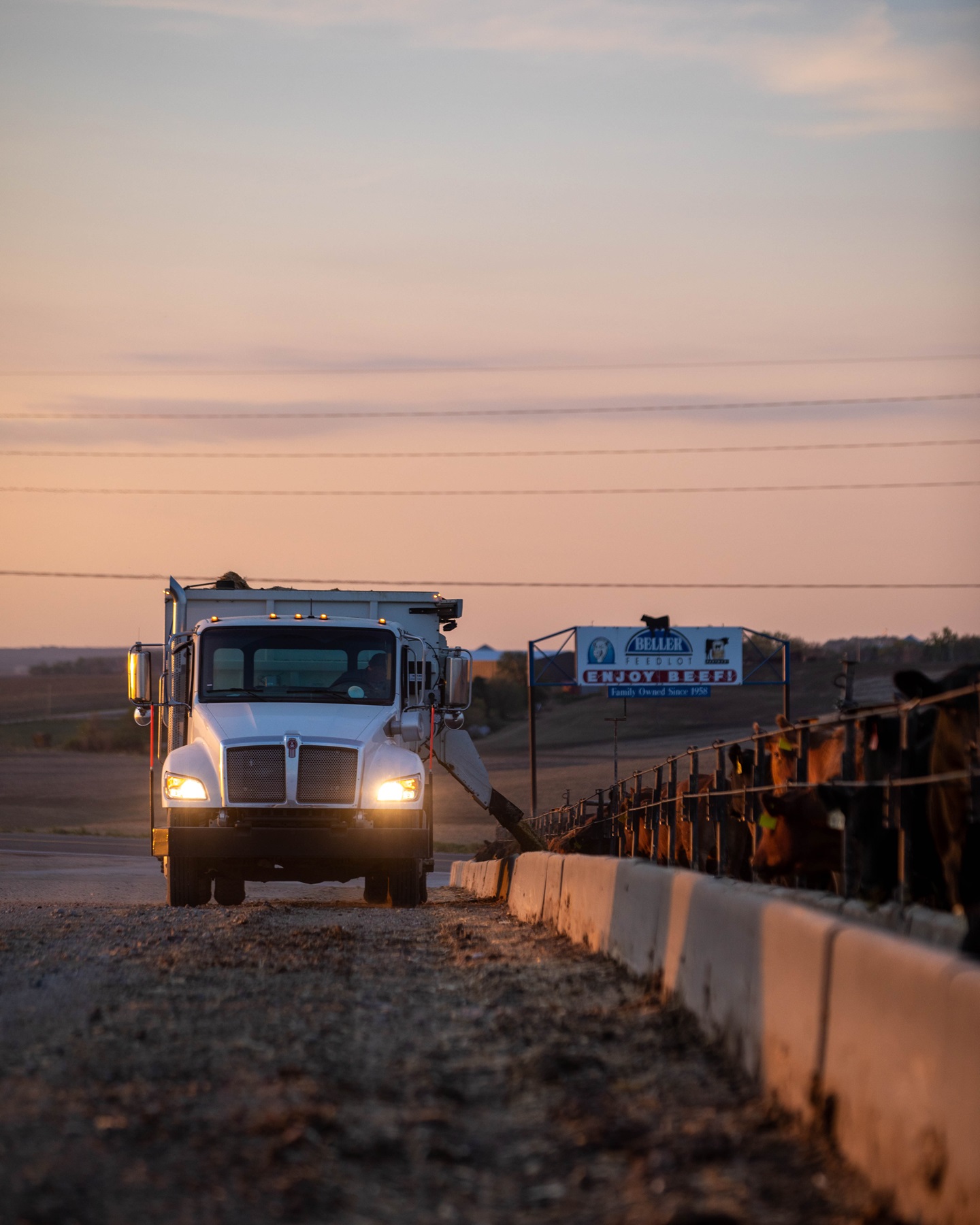
The feedyard feeds one time per day at 6 a.m., guided by Terry’s leadership and the counsel of a feedyard nutritionist.

A string of successes
The Bellers aren’t new to awards. In 2003, the feedyard was CAB Feedlot Partner of the Year for yards with less than 15,000-head capacity. They are one of only two CAB Gold Award winners among more than 70 previously licensed feedyards. Motivated by customer success, the yard regularly entered CAB’s quarterly AngusSource Carcass Contest between 2008 and 2011.
For Terry, it’s not about awards or plaques on the wall. It’s in knowing he and the crew completed another day’s work at the caliber he expects: The animals are well-fed, well-cared for and Terry’s happy with how things look at the sunset night check. Success is in a report from their packer partners showing he’s hit his CAB and Prime goals.
Today, Beller Feedlot markets nearly all cattle on a grid to Cargill or Greater Omaha. Carcass data from the past year for cattle harvested at both highlights the feedyard’s continued motivation and drive to achieve quality-rich outcomes.
Since July 2025, the feedyard has carcass data from Cargill on 4,300 head averaging 24.8% Prime and 40.2% CAB. Another dataset, comprising 13 lots of non-hormone treated (NHTC) program cattle sold to Greater Omaha, shows only one group grading below 40% Prime, with the highest reaching 77% Prime.
For Terry, though, a carcass sheet reading 100% CAB or Prime with no outs remains the benchmark. Looking ahead, he has another goal in mind: improving feed efficiency.
“Our ultimate dream is to convert 4 or 5 pounds of feed to 1 pound of beef, versus 7 pounds to 1 pound of beef,” he says.
For many, the numbers Beller Feedlot is posting today would be reason enough to celebrate. For Terry, they are simply the next benchmark to build upon. Whether the goal is more Prime, more CAB or greater feed efficiency, the approach remains unchanged: Do the job right, take care of the cattle and keep looking for ways to improve. That philosophy fueled decades of success and will continue to shape the feedyard’s future.
Editor’s note: Lindsay Graber Runft is director of producer communications for CAB.
Topics: Award winner , Feeder-Calf Marketing Guide , Feedyard , Management , Marketing , Success Stories
Publication: Angus Beef Bulletin
Issue: November 2026
Related Content


Current Angus Beef Bulletin
Our September issue focuses on the females of the herd and the records that validate them.