



Supplement or Substitute Feed?
Look to body condition, grass color and grass height for visual cues.
September 8, 2026
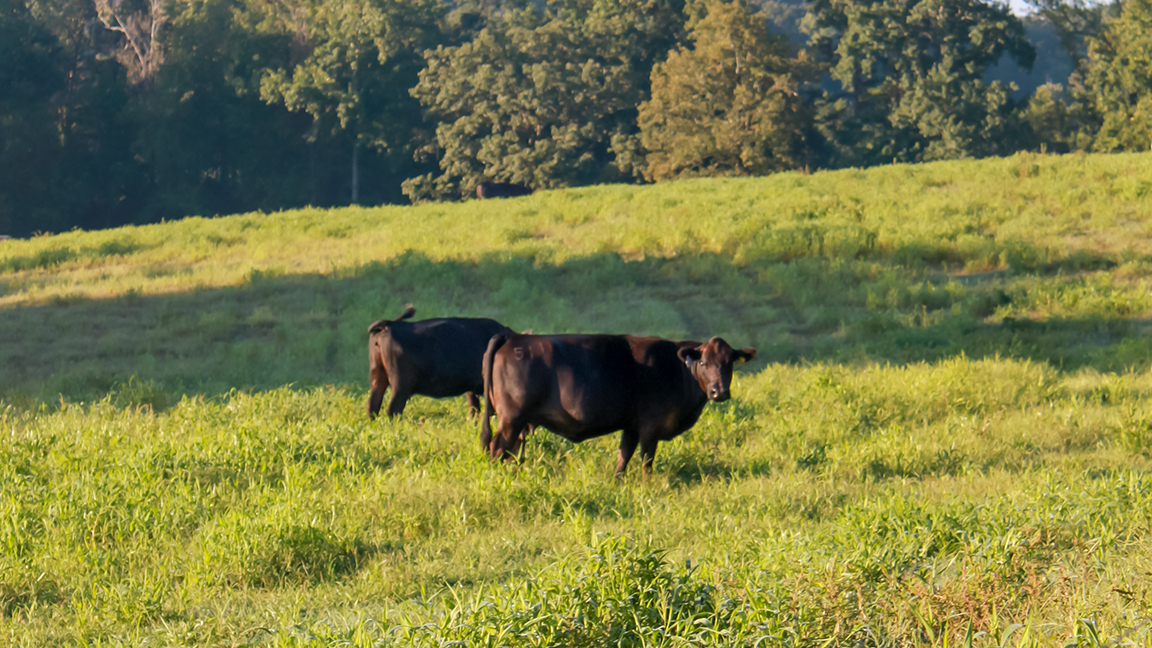

Are your cows getting enough to eat? What should you be feeding them?
“Every year it’s the same question, but you can end up with a different answer regarding what you should do,” says Rick Machen, former executive director of the King Ranch Institute for Ranch Management (recently retired). “How do we know what to feed, when to feed, and are we feeding the right amount at the right times?”
Cattle feeding is a significant part of ranch expense.
“Purchased feed is about 17% of our total costs, and if you look at it from a variable costs standpoint, it’s much higher,” Machen says. “It could be that 40% to 60% of our variable costs are attributed to fed resources — mineral, supplements, hay. It becomes a significant part of what we do to keep a ranch going.”
The only other two significant things are labor and depreciation. We can control all these things, but we don’t want to try to starve a profit out of a cow, because that always fails.
“Every time I put out a bale of hay or a bag of feed, my cows are eating $100 bills,” Machen says. “Sometimes it’s a necessary evil to make sure we’re bridging the gap from what nature can provide in the pasture and what that cow actually needs.”
“Every time I put out a bale of hay or a bag of feed, my cows are eating $100 bills.”— Rick Machen
Match need with availability
To figure out what the cow needs, we need to look at her gestation cycle and when it fits what we have for forage. The key is matching those two things. So we need to know if a cow has all she can eat in the pasture, and does it provide all she needs?
If forage supply is adequate and green, we probably don’t need a supplement, Machen says. “Protein will be above the 7% threshold, and energy should also be sufficient if it’s green and the cow can wrap her tongue around it to easily graze.”
If it’s green and not very tall, however, probably not.
“We think about that in the spring,” he says. “Depending on which part of the country you’re in, that might be March, April or May when cows are chasing the green. A cow can actually expend more energy than she’s taking in when grass starts to green up and it’s not tall enough to get a mouthful.”
If the grass is dry and brown, likely she’s deficient on protein. If cows are in adequate body condition — at or above body condition score 5 (on a 9-point scale) — we can supplement with something with greater than 32% crude protein (CP). They need more protein than energy.
If there’s plenty of grass, adequate in height, and the cow is in good condition, we just need to stimulate rumen digestion. Adding protein to the diet will stimulate production of rumen microbes so they can repopulate and the cow can consume and use that dry forage that’s deficient in quality.
“If the cow’s not in good enough body condition, however, or forage supply is not adequate, we need to drop down to maybe a 28% or 32% crude protein, and feed about 0.4% of her body weight per head per day to improve rumen efficiency. We also need to provide extra energy — either for her to gain a little weight, or to augment a forage supply that is not quite enough,” Machen says.
“So we need to consider the dollars per pound of crude protein and the dollars per pound of TDN (total dietary nutrients) — our energy or calorie intake. We need protein for building blocks for muscle mass and efficient growth and development, but we also need energy just to keep everything in the body running properly. If forage supply is inadequate, energy will be deficient and we must reduce the forage needs of the herd by either lowering the stocking rate and/or adding supplemental feed or even a substitute feed.”
If we get to that point, we probably need to adjust our stocking rates so we can get back to a supplemental rather than a substitute feed like hay.
Editor’s note: Heather Smith Thomas is a cattlewoman and freelance writer from Salmon, Idaho. [Lead photo by Kasey Brown.]
Angus Beef Bulletin EXTRA, Vol. 18, No. 9-A
Topics: Feedstuffs , Management , Nutrition , Pasture and Forage
Publication: Angus Beef Bulletin
Related Content


Current Angus Beef Bulletin
Our November issue focuses on the females of the herd and the records that validate them.