Market Closeout
Heifers dip low in the harvest mix.
August 17, 2026


The recovery status in U.S. beef cow numbers in the United States remains a top-five issue in the beef complex. Hand-over-fist increases in feeder-cattle values the past two years have provided indications 2026 would bring about the cycle low in calf head counts. Yet prolonged drought in some of the most important beef cow states has delayed the start of female retention.
To gauge replacement female retention, one of the metrics we often reference is the percentage of heifers in the fed-cattle harvest mix. A rule of thumb (with variations depending on source) is that 36% is the equilibrium point. When heifer numbers are greater than 36% of the total harvest, it signals contraction of the nation’s breeding herd. In contrast, when the percentage dips below 36%, the signal is that of expansion.
Modification to the rule of thumb is a recent theme, whereby changes in dairy reproductive management have allowed for more beef x dairy heifers in the fed-cattle harvest, possibly pushing the equilibrium number up by a percentage point or more.
For the four weeks ending July 26, recent USDA data show a downward shift to 35% heifers in the harvest mix. There is a strong seasonal trend for this measure to drop by 2 percentage points in the third quarter. Yet the July 2026 data indicate the heifer share is 2 percentage points lower than July 2025 and 3 percentage points lower than the three-year average for the period. Year to date, the heifer portion of fed harvest is averaging 38% vs. last year’s 40% average through July. This is a positive indicator pointing toward the beginnings of heifer retention.
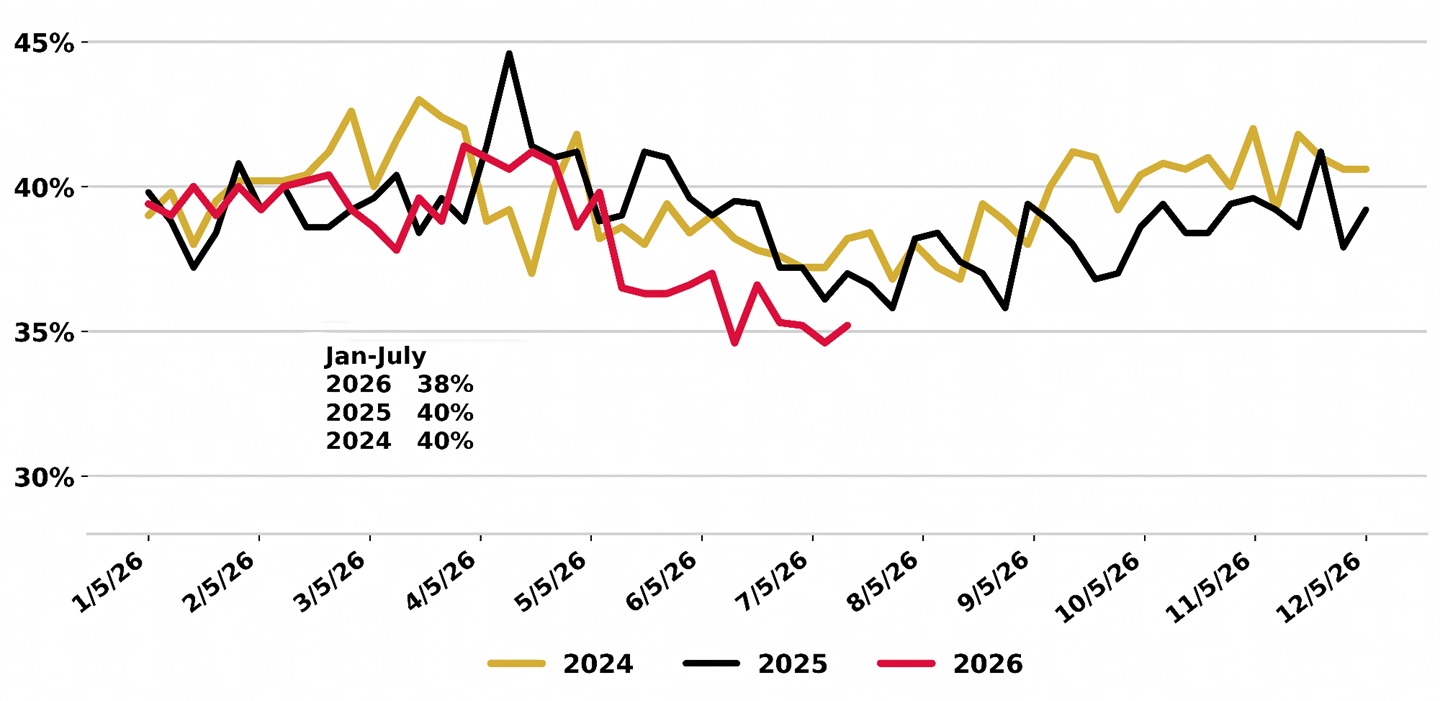
Fig. 1: Percent heifers in the fed-cattle market

The biannual Cattle Inventory report from USDA added credence to these observations as the replacement heifer inventory was measured at 2.7% larger than inventory numbers from a year ago. However, continued drought and especially hot daily temperatures in the western half of the country pose a threat. Reduced hay production and deteriorating grazing conditions will pressure producers in several regions. Earlier weaning and shipping dates for the spring calf crop have been a noted feature of the summer video sales thus far. Reduced heifer retention rates from this year’s calf crop may also be a headwind to herd rebuilding.
Hot carcass weight tonnage in 2026 is calculated at 4.9% lower than a year ago, despite an average carcass increase of 31 pounds (lb.) per head. A portion of the decline in throughput is simply due to negative margins disincentivizing packers from ramping up weekly head counts. Still, the beef sector continues to walk a thin line in terms of feeding and packing capacity utilization.

In this edition of the CAB® Insider in a Minute, Paul Dykstra, Certified Angus Beef director of supply management and analysis, gives an update on heifer retention and the pending herd rebuild. To listen to Paul’s full Market Update, click here.
The scheduled return of Mexican feeder cattle imports promises to fill some of the void. This is the primary source of growth in the U.S. fed cattle harvest in store for 2027. Increased female retention shouldn’t begin to show up in greater fed-cattle numbers until 2028.
Editor’s note: Paul Dykstra is director of supply management and analysis for Certified Angus Beef LLC.
Angus Beef Bulletin EXTRA, Vol. 18, No. 8-B
Topics: Marketing , Management
Publication: Angus Beef Bulletin
Related Content


Current Angus Beef Bulletin
Our September issue focuses on the females of the herd and the records that validate them.