High Nitrogen Prices Force Closer Look at the Numbers
State forage specialist advises on fall fertility decisions for stockpiled tall fescue.
August 17, 2026

by University of Missouri Extension
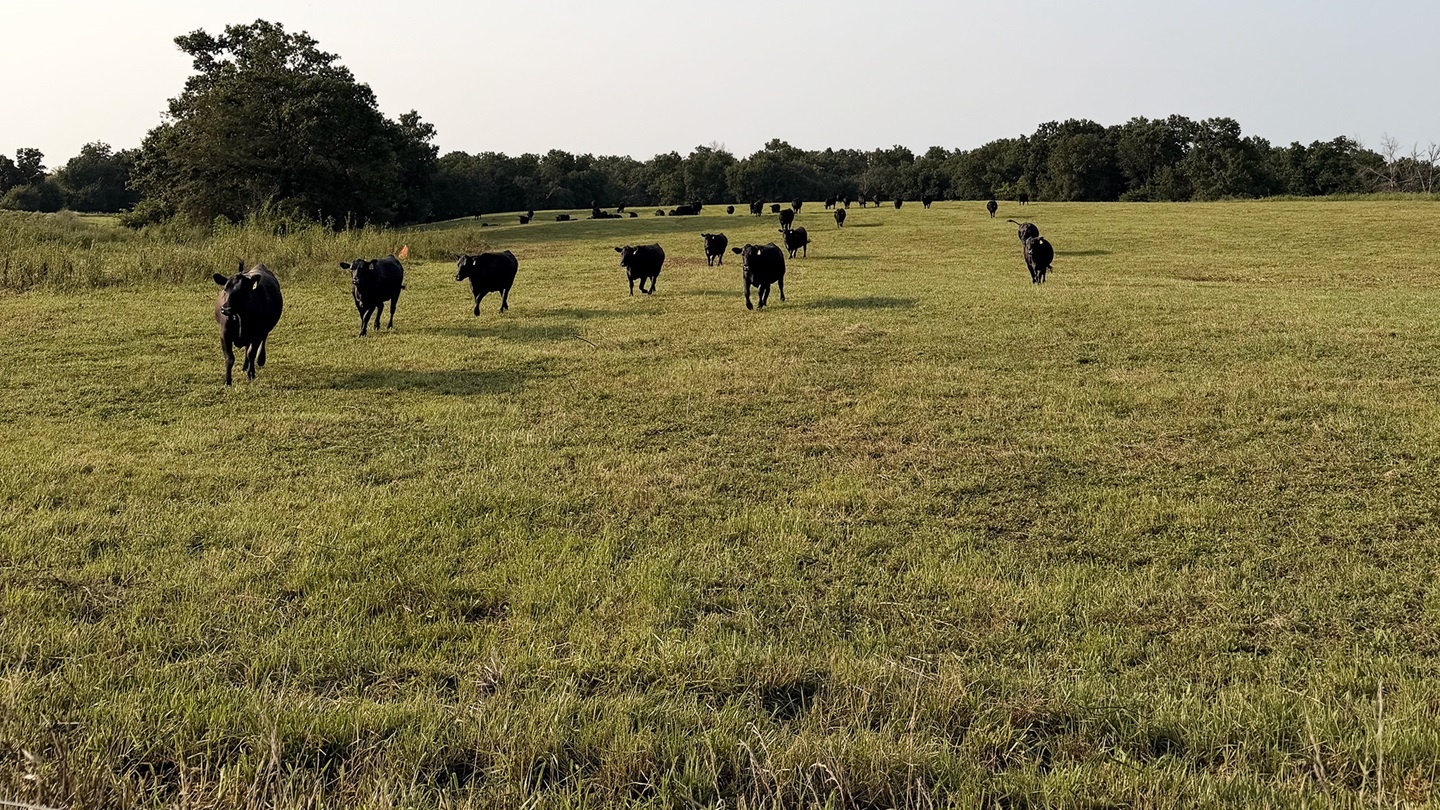
Stockpiled tall fescue remains one of Missouri’s strongest competitive advantages in the beef industry. This low-cost fall and winter feed allows producers in Missouri to extend grazing deeper into the winter than producers in most other cattle states. Maximizing that advantage starts with smart fertility decisions in August, says Carson Roberts, University of Missouri Extension state forage specialist.
Applying nitrogen in mid- to late August has traditionally been a reliable way to boost stockpile yield. But nitrogen prices have risen more than 40% in the past six months because of supply disruptions tied to the Iranian conflict. That increase has many producers asking if fall nitrogen still makes economic sense, Roberts says.
MU Extension research during the past three years indicates a 60-pound (lb.)-per-acre fall nitrogen application has increased tall fescue yield by an average of about 35%, Roberts says. Response varies widely with rainfall. Drought years often produce only 8 lb. of additional forage per 1 lb. of nitrogen applied. In years with favorable moisture, the increase can reach 20-25 lb. of forage per 1 lb. of nitrogen.
To decide whether fall nitrogen is a better buy than purchasing hay, Roberts recommends this quick formula:
- Divide 2,000 by your expected pounds of forage produced per pound of nitrogen.
- Multiply that result by the current cost of nitrogen per pound.
- Compare that number to the delivered price of average-quality fescue hay.
For example, assuming 8 lb. of forage per 1 lb. nitrogen, and nitrogen at $0.80 per pound: (2,000 ÷ 8) × $0.80 = $200 per ton of forage. At 20 lb. of forage per 1 lb. nitrogen: (2,000 ÷ 20) × $0.80 = $80 per ton of forage.
If the calculated fertilizer cost per ton is higher than local hay prices (currently near $85 per ton for average fescue hay in many markets), purchasing hay is the lower-cost option, he says.
Buying and feeding hay on pasture also affects fertility, says Roberts. A typical ton of fescue hay contains about 32 lb. of nitrogen, 12 lb. of phosphorus and 18 lb. of potassium, plus valuable micronutrients. When hay is fed strategically across pastures, much of that fertility returns to the soil and can reduce the need for commercial fertilizer over time.
The key to capturing the fertility benefit of hay without damaging stands is proper feeding management.
“Pugging and mud problems usually develop when cattle repeatedly congregate in the same location,” Roberts says. “Whether unrolling hay or bale grazing, move the feeding site with each new bale.” Limit total hay fed to no more than about 2 tons per acre in any one area to avoid excessive nutrient concentration and soil compaction.
Even when relying primarily on purchased hay for fertility, soil testing remains essential. Nutrients added by hay become available to plants only when soil pH is near neutral and the overall nutrient balance is correct. A soil test every three years allows producers to monitor progress and make targeted adjustments rather than guessing.
Roberts’ bottom line for 2026: Evaluate your specific situation using the calculation above. Timely application — ideally by late August — and careful hay-feeding management will determine how much advantage Missouri producers capture from stockpiled fescue this winter.
Editor’s note: Article courtesy of MU Extention. [Lead photo by Shauna Hermel.]
Angus Beef Bulletin EXTRA, Vol. 18, No. 8-B
Topics: Business , Management , Nutrition , Pasture and Forage
Publication: Angus Beef Bulletin
Related Content


Current Angus Beef Bulletin
Our September issue focuses on the females of the herd and the records that validate them.