

Plan Now to Purchase Your Hay Supplies
Proactively planning hay needs this fall, winter and next spring can save producers money and worry.
October 21, 2025
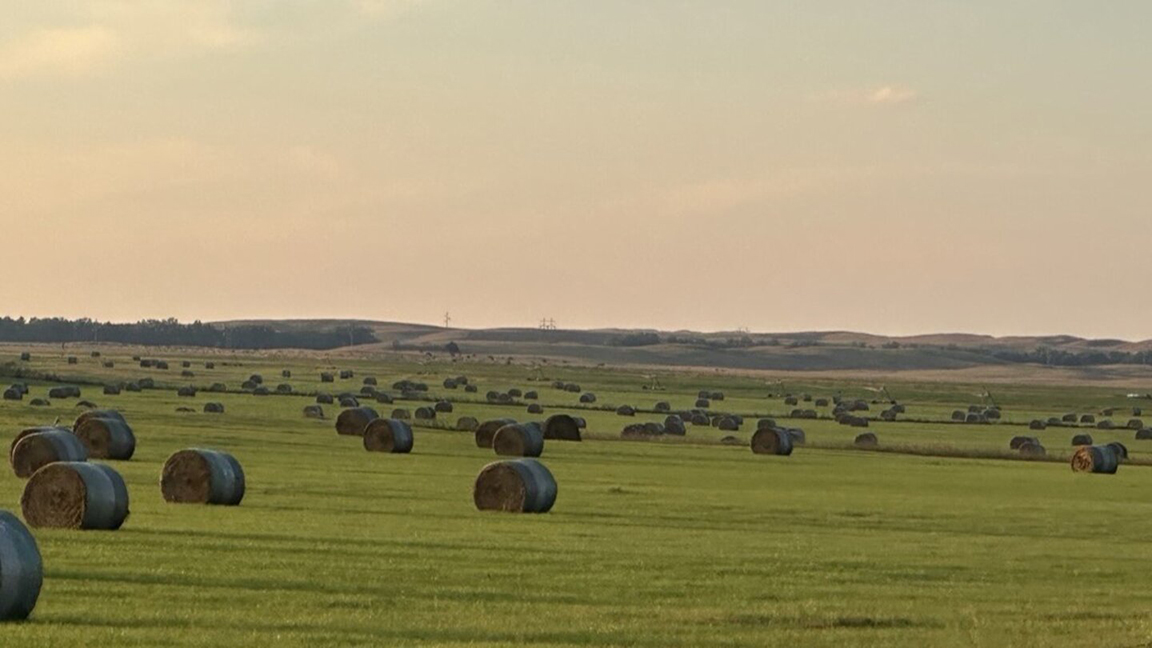
Checking hay prices and availability now can allow producers to meet their cattle's feed requirements more effectively this winter. [Photo by T.L. Meyer.]

by Randy Saner & T.L. Meyer, University of Nebraska
Feed inputs often make up the largest portion of a producer’s costs. By taking inventory now and checking availability and pricing, producers can reduce the uncertainty of feed supply over the colder months.
Current prices and finding hay to buy
The Nebraska Direct Hay Report shows steady hay prices as of late summer 2025, with demand remaining light due to existing inventory. Checking the USDA Market News Hay Reports for Nebraska and other locations can provide a rough idea of what hay is bringing in your area.
Always check local sources — print, online, market boards, and social media listings can uncover available hay earlier than broad-market reports. Supplement your search with the Nebraska Department of Agriculture Hay & Forage Hotline (free buyer/seller listings).
Tips for pricing and bale quality assessment
$ per bale or $ per ton: Know whether the hay you are pricing is per bale or per ton. If the price is by bale, account for varying bale weights.
Match hay quality to livestock needs: Consider protein, energy, stage of production and body condition. The class of animals (heifers vs. cows, dry vs. lactating, thin vs. fat condition, etc.) that will consume the hay will determine the quality of hay needed. If possible, buy hay that will best match those requirements. However, quality of hay can be supplemented with additional protein and energy sources to meet those requirements if higher quality hay is hard to source.
Physical bale quality: Look for dense, well-formed bales with square shoulders that don’t sag. Net wrap will help bales shed water. Bales should be free of mold, weed seeds and dangerous levels of nitrates (depending on forage species).
Test for quality: Use a lab analysis to determine hay quality. Core sample 15-20 bales from each lot and send the samples to a lab for testing. These tests calculate moisture content, crude protein (CP), total digestible nutrients (TDN) and additional information, including mineral content and nitrate levels. More information can be found in the Nebraska Extension publication, Sampling Feeds for Analyses.
Storing and feeding hay
- Place bale yards on well-drained, open ground, with rows oriented north–south and spaced at least 3 feet apart to enhance drying.
- Weigh bales when possible. This improves accuracy in feeding plans.
- If hay may contain weed seeds or invasive species, consider feeding it in a confined area initially to contain potential spread risk.
Estimating your herd’s hay needs
Knowing how much hay to buy starts with estimating how much your herd will actually consume. A mature cow will eat about 2.6% of her mature weight in dry matter a day, so a 1,300-lb. cow will consume almost 34 lb. per day. If you are unsure of mature cow size and don’t have access to a scale, keep track of weights from the sale of cull cows to have a starting point. Multiply one cow’s daily intake by herd size and number of days hay will be fed to provide a starting point for how much hay is needed. Other factors to account for include waste and extreme weather conditions that will amplify a cow’s nutrient requirements.
By combining these calculations with forage tests, producers can line up both the right amount and the right quality of hay to carry their herd through winter.
Editor’s note: Randy Saner and T.L. Meyer are extension educators for the University of Nebraska.
Angus Beef Bulletin EXTRA, Vol. 17, No. 10-B
Topics: Business , Feedstuffs , Management , Pasture and Forage
Publication: Angus Beef Bulletin
Related Content


Current Angus Beef Bulletin
Our November issue focuses on the females of the herd and the records that validate them.