



In the Cattle Markets
Fundamental price effects of announced tariff waiver on ground beef.
September 8, 2026

by Andrew Anderson, Utah State University
The cattle markets have been an eventful topic during the past month or so. The list of market-moving news includes slaughter and processing plant closures, the border reopening to Mexican cattle, a tight Cattle on Feed report, and an announced tariff waiver for ground beef imports. Not surprisingly, cattle prices have been volatile.
Each of these events has received much commentary, most of which has lacked grounding in estimates of fundamental price effects. The ground beef tariff exemption has been particularly controversial. Here I hope to add some substance to the public conversation by giving my own estimates of potential price effects of the announced tariff waiver.
To estimate price effects, I assumed a market for ground beef and another for whole-muscle cuts, since the imports would be lean beef trimmings destined for the ground beef market. Using supply, own-price demand and cross-price demand elasticities from the ag economics literature, we can solve the system of supply and demand equations for price and quantity changes.
The increase in supply of imported lean beef trimmings enters as a supply shock in ground beef, pushing down the price and extending to other beef through the cross-price effect. However, it is far from clear that the announced quantity will fully enter the market in the 90-day period that was noted.
A lower quantity could result from the logistics and availability of imports, some of the duty-free imports replacing quantity that would have arrived anyway, or some of the imports going into cold storage to enter the market later. So, I have made low (40%), mid (60%) and high (80%) assumptions for the proportion of the announced quantity that will actually enter the market in the 90 days. Fig. 1 shows my estimated price effects for ground and whole-muscle beef.
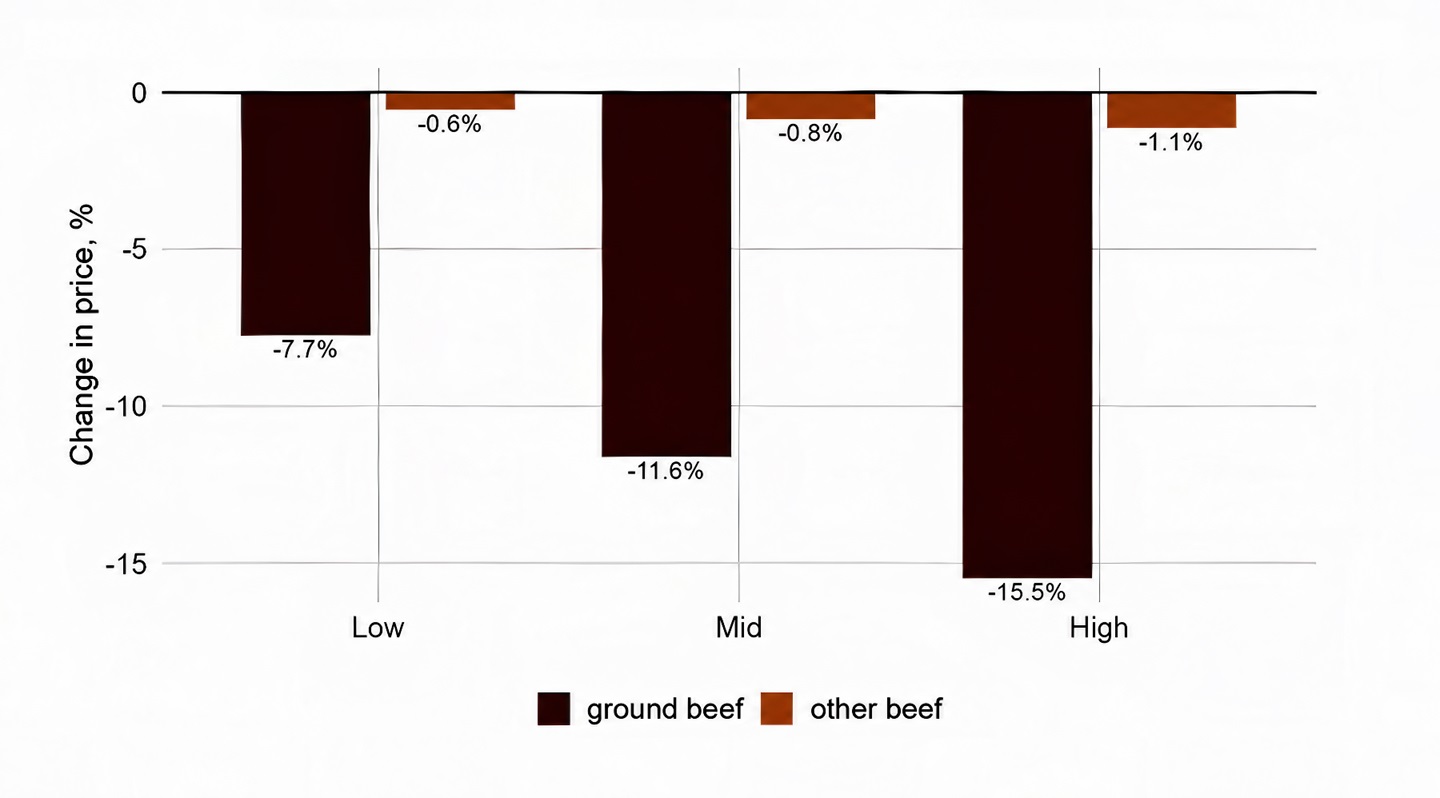
Fig. 1: Estimated potential price effects in beef markets of increased beef imports

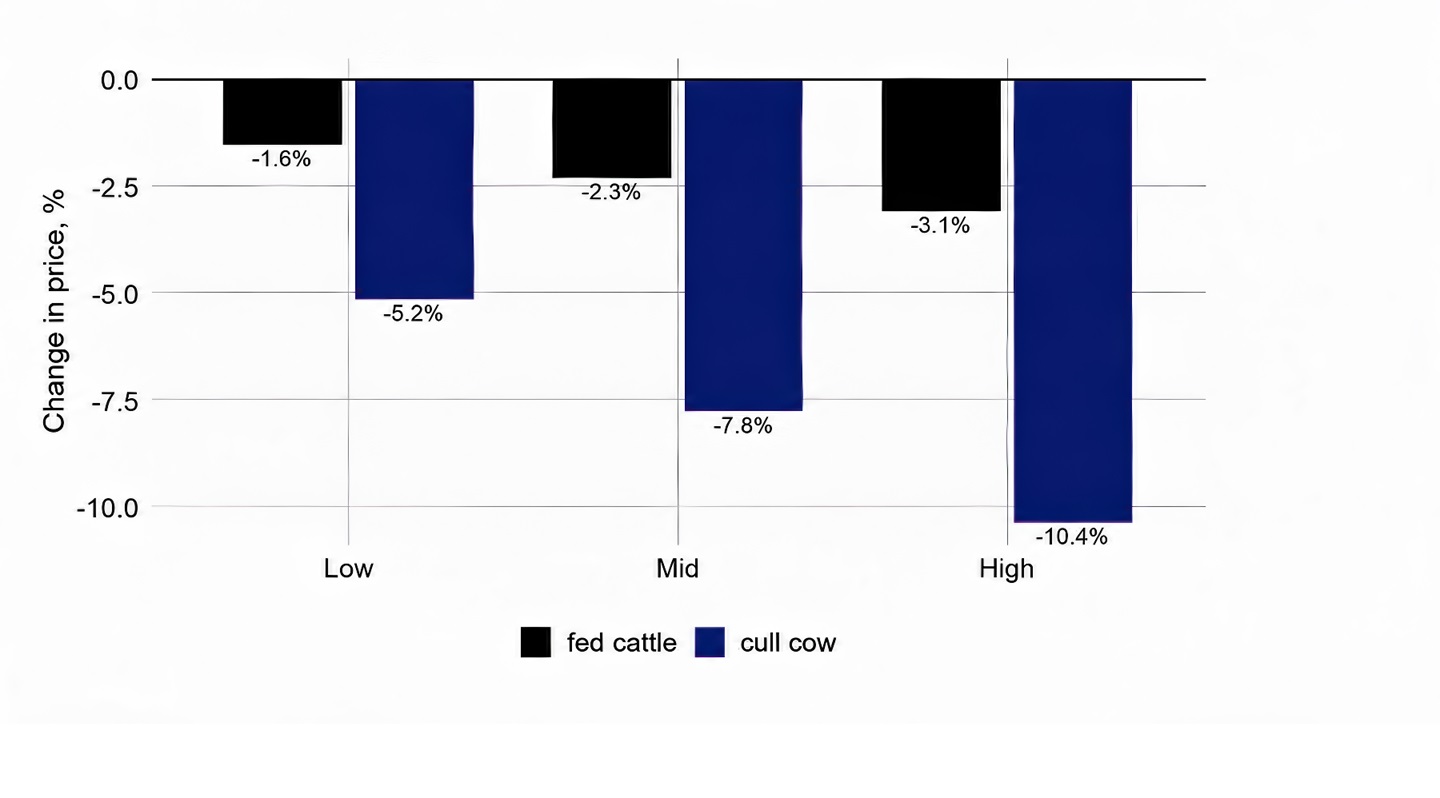
Fig. 2: Estimated potential price effects of increased beef imports

After affecting individual beef markets, as shown above, the price reaction would work its way back to cattle markets. I use a transmission factor from the literature for the price transfer to fed cattle and cull cows, 0.2 and 0.67, respectively. The rates are different primarily because fed carcasses are split about 85% vs. 15% between whole-muscle cuts and ground beef; while cull cows are split about 10% vs. 90%, respectively. Fig. 2 shows the price effects from above translated to fed-cattle prices in the various scenarios.
Based on my analysis, the fed-cattle price decrease from this policy change would be between 1.5% and 3%, while the cull-cow market would see a 5%-10% price reduction. The effects are highly uncertain because the logistics of importing and selling that large of a quantity of beef may be prohibitive.
In any case, the fundamental effects in the fed-cattle market will be relatively modest. Furthermore, it will likely be difficult to identify the isolated effect of this policy in the market as other factors like reduced packing capacity and cattle supply continue to dominate price determination.
The markets
As discussed above, the word to describe cattle markets as we move into the fall is “uncertainty” or “volatility” or whatever synonym you prefer. Given that, risk management takes elevated importance. Locking in a price for your fall marketed calves with a forward contract, short hedge, put option or LRP policy is a good idea in the current environment.
Editor’s note: This Aug. 31, 2026, “In the Cattle Markets” is reprinted with permission of the Livestock Marketing Information Center. Andrew Anderson is assistant professor and extension specialist in livestock economics in the Department of Agricultural and Resource Economics at Utah State University. For more details on the methods of the analysis in this article, please reach out to Anderson at a.anderson@usu.edu.
Angus Beef Bulletin EXTRA, Vol. 18, No. 9-A
Topics: Consumer , Industry News , Marketing , News , Policy
Publication: Angus Beef Bulletin
Related Content



Current Angus Beef Bulletin
Our November issue focuses on the females of the herd and the records that validate them.