Your Quarterly Market Update
What cattlemen need to keep in mind regarding herd rebuild, news related to the U.S.-Mexico border and summer video sales.
August 5, 2026
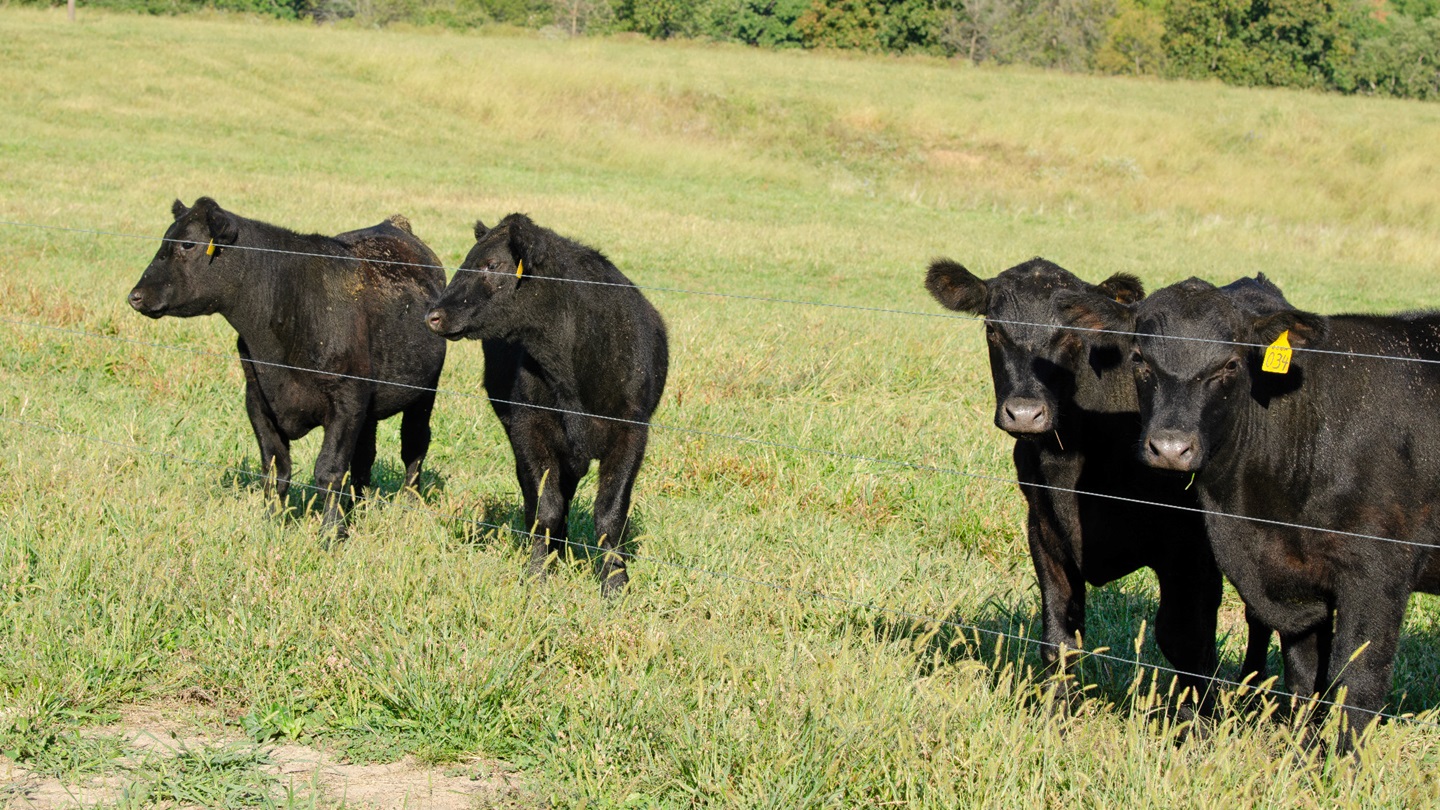

There are a lot of moving parts when marketing cattle. Whether selling at the local auction market or marketing through a video sale, commercial producers are quite talented at finding the best fit for their cattle and unique program goals.
As a continuation of our regular “Market Update” series, American Angus Association Regional Manager Kurt Kangas chats with the Angus Beef Bulletin team about current trends in the cattle market, the potential for herd rebuild, news related to the U.S.-Mexico border reopening, as well as recent video sales.
State of the summer video sales
In a previous professional life, Kangas worked with program cattle often. This year, he says, has been a very interesting one to watch.
“There’s been more volatility this summer. Last summer, we saw that constant run up on cattle all the way through the cycle,” Kangas says. “Everybody is looking at that June market, and it was so good. I was hoping for the same cycle as last year. I think I looked back through six years of data and very rarely do we see this thing literally track up like it did last year.”
As an avid observer of markets, and video sales in particular, Kangas generally watches video sales closely in order to keep up with the markets and see how commercial producers utilizing Angus genetics are faring for the season.
“Those shots pay. If you watch these video sales, people that throw the cattle up there with no shots or one round of shots at branding generally don’t get as much for their calves as folks that give two rounds of shots.” — Kurt Kangas
These video sales, he says, offer great insight into the mentality of both producer and buyers.
The market for heifers was a little soft, making them a good buy, Kangas observes. Heifers haven’t lost as much ground as steers have since the June market. With recent announcements dictating the market, that isn’t likely to change soon.
“There’s lots of news about the opening of the southern border. It seems like buyers will shake off a $2 to $3 drop in the market, but when it goes limit down, it’s tough for those guys,” Kangas says. “We’ve seen a decrease in prices, but overall, through all weight classes and all video companies, the prices are still higher than last year.”
That’s something people need to keep in mind, notes Kangas. The market is definitely down some, but it’s still a heck of a market for people to participate in.
Yearling numbers on all companies dropped some as drought hit different areas. Producers have unloaded yearlings earlier, and now they’re going to sell their calves because they don’t have any grass.
“It seems like buyers will shake off a $2 to $3 drop in the market, but when it goes limit down, it’s tough for those guys.” — Kurt Kangas
Does weaning pay?
Where heavier calves are concerned, calves from 650 to 800 pounds off the cow and weaned have pretty solid support.
“The weaned calf market this year has really paid, particularly if you’ve stuck a program or two on them to help those prices out,” Kangas says. “The demand there is fairly strong, particularly these prices being anywhere from $2,500 to $3,000 a calf.”
Another tip to adding value to feeder calves: Make sure those calves are getting two rounds of shots, says Kangas.
“Those shots pay. If you watch these video sales, people that throw the cattle up there with no shots or one round of shots at branding generally don’t get as much for their calves as folks that give two rounds of shots. The big question is going to be, is it going to be worth weaning them?” he questions.
“We’ve seen a decrease in prices; but, overall, through all weight classes and all video companies, the prices are still higher than last year.” — Kurt Kangas
Kangas suggests producers run the math. Figuring cost of gain or cost to maintain in order to get calves to 45 days weaned is a first step. Producers also need to consider where that places them in the market cycle, as well as what winter weather looks like in their area. Bottom line, says Kangas, if commercial cattlemen have the means to wean calves and keep them healthy, a weaned calf could pay fairly well.
Other industry news
With recent announcements related to the U.S.-Mexico border reopening, the big question on the mind of many producers is whether there will be a mass influx of cattle coming north.
That’s a question that only time is going to answer, Kangas says. Down south, cattlemen have figured out how to process cattle and how to feed cattle. It’s conceivable that the United States won’t see a huge influx, but there are certainly areas — such as feedlots in Texas — that depend on Mexican cattle.
“We sure don’t want to see us lose any more feeding capacity in the United States,” Kangas says. “The fall run? It’s going to be interesting, and we could roll this into the conversation about what we see for herd expansion. That’s all a big question mark.”
Editor’s note: The information above is summarized from the June 11, 2026, episode of Angus at Work. To access the full episode — including more information on marketing your feeder cattle — check out our Angus at Work archive on www.angus.org. [Lead photo by Shauna Hermel.]
Angus Beef Bulletin EXTRA, Vol. 18, No. 8-A
Topics: Feedyard , Management , Marketing
Publication: Angus Beef Bulletin
Related Content



Current Angus Beef Bulletin
Our November issue focuses on the females of the herd and the records that validate them.