




Keep ’em Ruminating
How forage quality and maturity, particle size and consistency, and more affect rumen function.
July 9, 2026
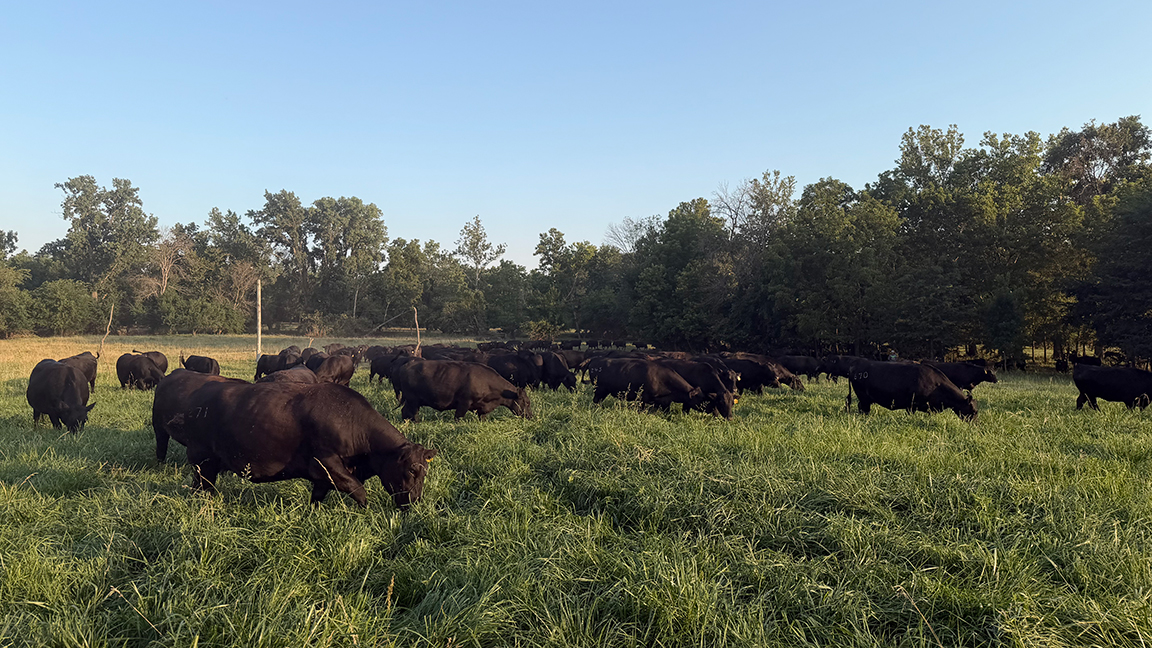

Rumen function in adult cattle depends on a population of microbes, and healthy rumen function determines performance. Forage quality and maturity are things you can control — to an extent.
Two options, says Natasha Mast, include rotationally grazing, which controls forage quality and maturity, and making sure you are grazing when the forage is not super mature.
“The more mature a forage, the more fiber it has and the harder it is to ferment, which means it stays in the rumen longer, reducing intake, reducing performance,” explains the ruminant nutritionist from Texas A&M University–Kingsville.
“If we are monitoring forage quality, and the forage is under 7% protein, we need to be supplementing,” she advises, “because intake is reduced if we’re under 7% protein.”
Adjusting particle length can affect digestibility, and therefore the intake, if you’re providing some kind of a mixed ration or hay, she says. “Looking at a shorter stem versus longer stem — with a shorter stem we’ve started the digestion process, making it smaller. The smaller we can make it, the more surface area for microbes to attach and start the breakdown and fermentation process. But, you don’t want to get it too small and too fine.”
Usually, if it’s about 1.5 inches, this is OK.
“If we are monitoring forage quality, and the forage is under 7% protein, we need to be supplementing, because intake is reduced if we’re under 7% protein.” — Natasha Mast
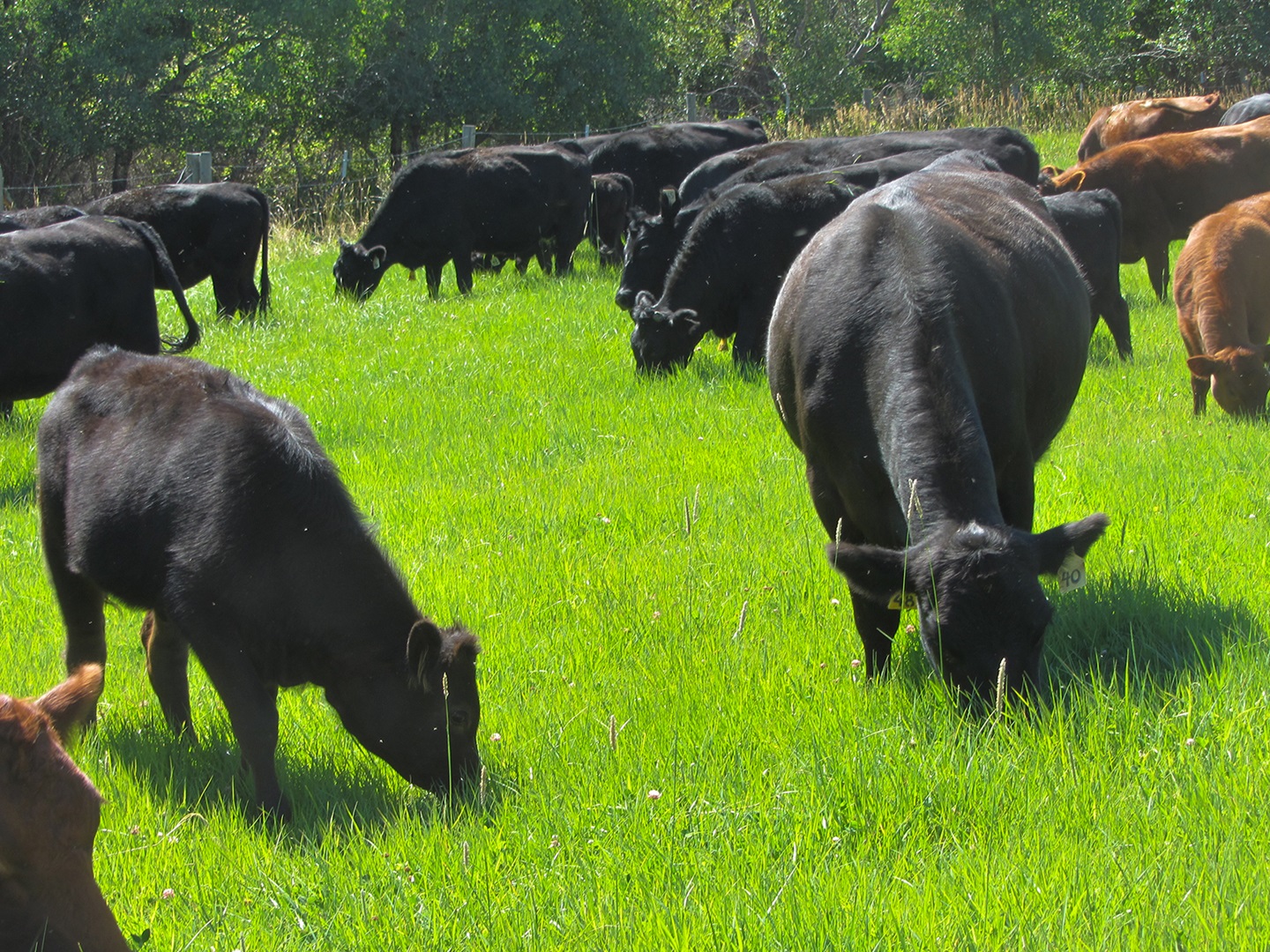
[Photo by Heather Smith Thomas.]

“That’s what we’re mixing into a total mixed ration. You don’t want to grind it so small it becomes dust, or you’ll have other issues to deal with,” she says. “I don’t know exactly where the too-small point would be, but it might depend on the type of hay.”
You can adjust consistency of the feed or supplement delivery. Whether you are supplementing once a week, twice a week, three times a week, or every other day, you can adjust it based on what’s needed.
“Make sure cattle have free access to a good quality vitamin and mineral mix, and access to clean water. These are all things that impact rumen function,” Mast says.
Rumen dysfunction
Warning signs of rumen dysfunction include reduced intake. If you have animals on pasture, that’s harder to look for than in a feedlot situation, but one sign is loose manure (see “Does It Plop When It Drops?”). You can check that in the pasture or in a feedlot pen.
“If there’s loose manure, usually there’s an issue with the rumen,” Mast says.
Intake is what sets the ceiling for performance. If cattle can’t take in enough feed, they’re not going to be able to perform well, Mast explains. “You’re not just feeding cows. You’re feeding an entire rumen ecosystem for that rumen to function correctly. You are not really managing the cow; you are managing the rumen ecosystem.”
If you can properly manage that rumen ecosystem, the cow will do well.
“You’re not just feeding cows. You’re feeding an entire rumen ecosystem for that rumen to function correctly.” — Natasha Mast
Age of the cow can be a factor, however. Does the rumen start changing as the animal gets older?
“The rumen function doesn’t necessarily change, but the teeth do, and their ability to masticate may have more of an impact than the rumen itself,” Mast says.
As long as we’ve got the microbial population the way that it needs to be, getting plenty of protein, getting plenty of energy, that’s fine, she says. More of the impact is related to whether the cow is able to chew the feed and get it down to the rumen.
Editor’s note: Heather Smith Thomas is a freelancer and cattlewoman from Salmon, Idaho. [Lead photo by Shauna Hermel.]
Angus Beef Bulletin EXTRA, Vol. 18, No. 7-A
Topics: Feedstuffs , Health , Nutrition , Pasture and Forage
Publication: Angus Beef Bulletin
Related Content


Current Angus Beef Bulletin
Our November issue focuses on the females of the herd and the records that validate them.