




Does It Plop When It Drops?
Use manure scoring to monitor rumen function and cow condition.
July 9, 2026
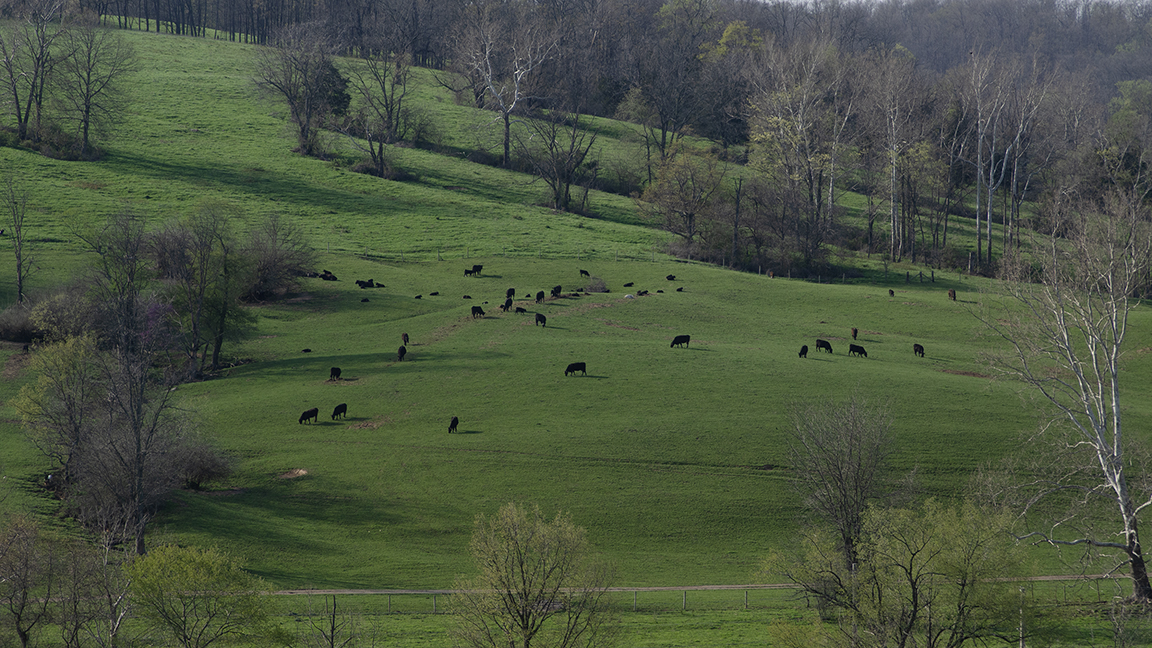

Want a quick read on your cows’ nutritional status? Don’t rely on body condition; take a look at what she’s shooting out the back end, advises Robert Wells, professor at the King Ranch Institute for Ranch Management (KRIRM).
Speaking at the Applied Nutrition Strategies for Grazing Livestock Lectureship hosted by the KRIRM in January, Wells discussed tools to monitor animal performance. Manure scoring, he says, is a great tool to assess rumen function (see “Keep ’em Ruminating”) and body condition.
“When we do manure scoring, we look at the fresh patch of manure and class it on a 1-to-5 scale,” Wells says. “Body condition scoring tells us what’s happened in the last 30 to 90 days in terms of whether that cow is losing or gaining weight. But, if a cow is losing weight, I want to know quicker than that.”
Weight loss doesn’t happen overnight. It may take 30 to 60 days or longer to notice a cow is losing weight, Wells says. “With manure scoring, I can tell what’s been happening in the last 48 to 96 hours rather than the past months, and it’s easier to measure.”
For accurate manure scoring, the animal must be in good health, he cautions. “With a sick animal, we can’t do an effective score. On a 1-to-5 scale, number 1 is diarrhea or really lush pasture or a feedlot diet with excess nutrition and protein.”
Manure scoring helps determine whether protein levels are adequate or if supplements are needed.
“You can make adjustments in the diet, then wait three to five days and see how manure scores start to change,” Wells says. With manure scoring you can adjust and make those changes much faster than when assessing body condition scores.
Scores defined
“For manure scoring, with score 1 there’s no form to the manure. It splatters and flattens,” Wells explains. “This might indicate a sick animal or a highly digestible diet like wheat pasture, lush spring grass or a feedlot diet with excessive protein, carbs or minerals.”
Manure score 2 is not quite as runny, he says. “When it hits the ground, it still has some splatter like pancake batter, has less than an inch thickness and lacks consistent form.”
The feed is still passing through the GI tract a little too fast. Feed intake is high, and digestibility is high, he says. “If we add a little dry matter to the diet, we can help slow that rate of passage and help the whole system work a little better.”
“Dry-matter intake affects rate of passage, and rate of passage affects digestibility, and digestibility affects rate of passage. If one is off, it throws the others off,” Wells says.
“Manure score 3 is like thick pancake batter or like pumpkin pie. This is ideal consistency and indicates a balanced ration. There is a slight divot in the middle from that last plop that hits, but there’s no stacking,” he describes.
With manure score 4 we start to see stacking. The manure is thick, making a deeper pile.
“It’s not completely stacked, but we see some segmentation and maybe a few little rings,” Wells says. “If you kick that fresh pile, you won’t end up with much on your boot; whereas, if you kick manure that’s score 1, 2 or 3, you’ll have to take your boots off when you get to the house.”
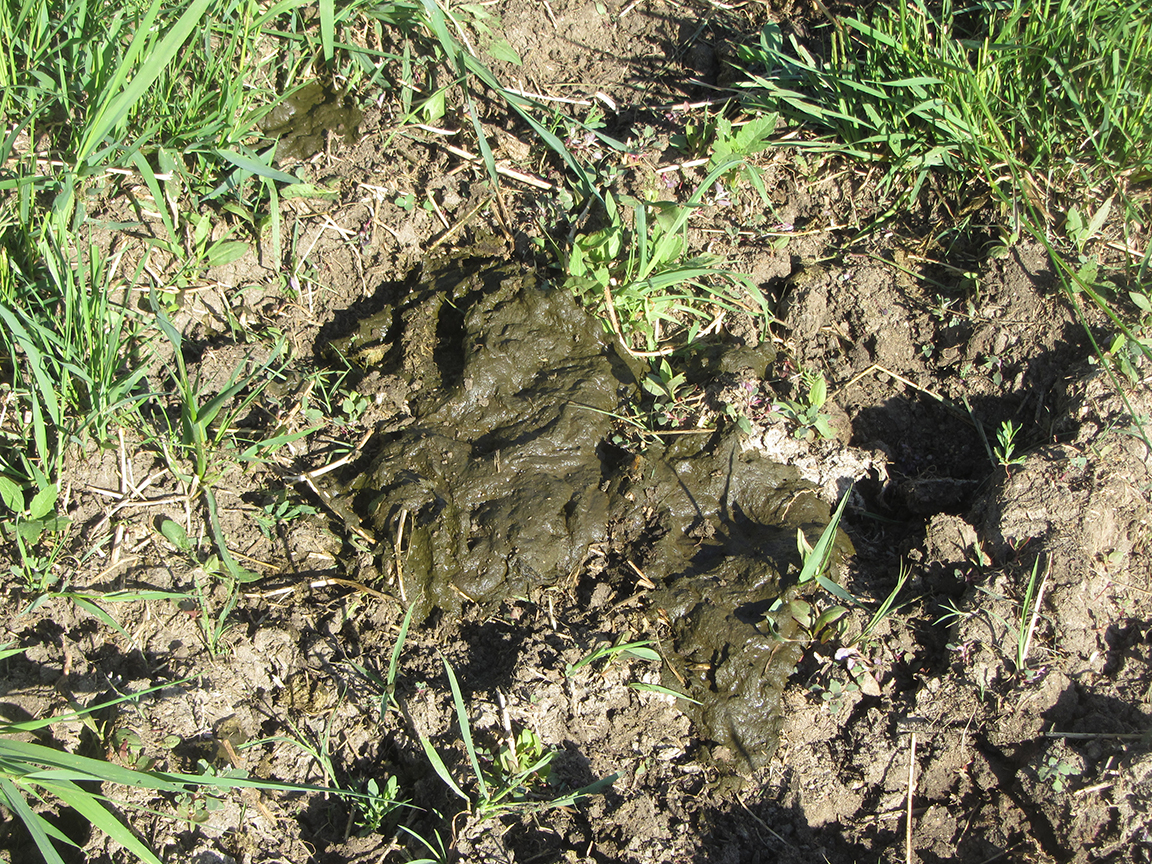
If the animal isn’t sick, manure scores of 1 and 2 probably mean an animal on lush pasture is receiving too much protein or energy, Robert Wells explains. Providing a bale of average or low-quality hay can help balance the diet.

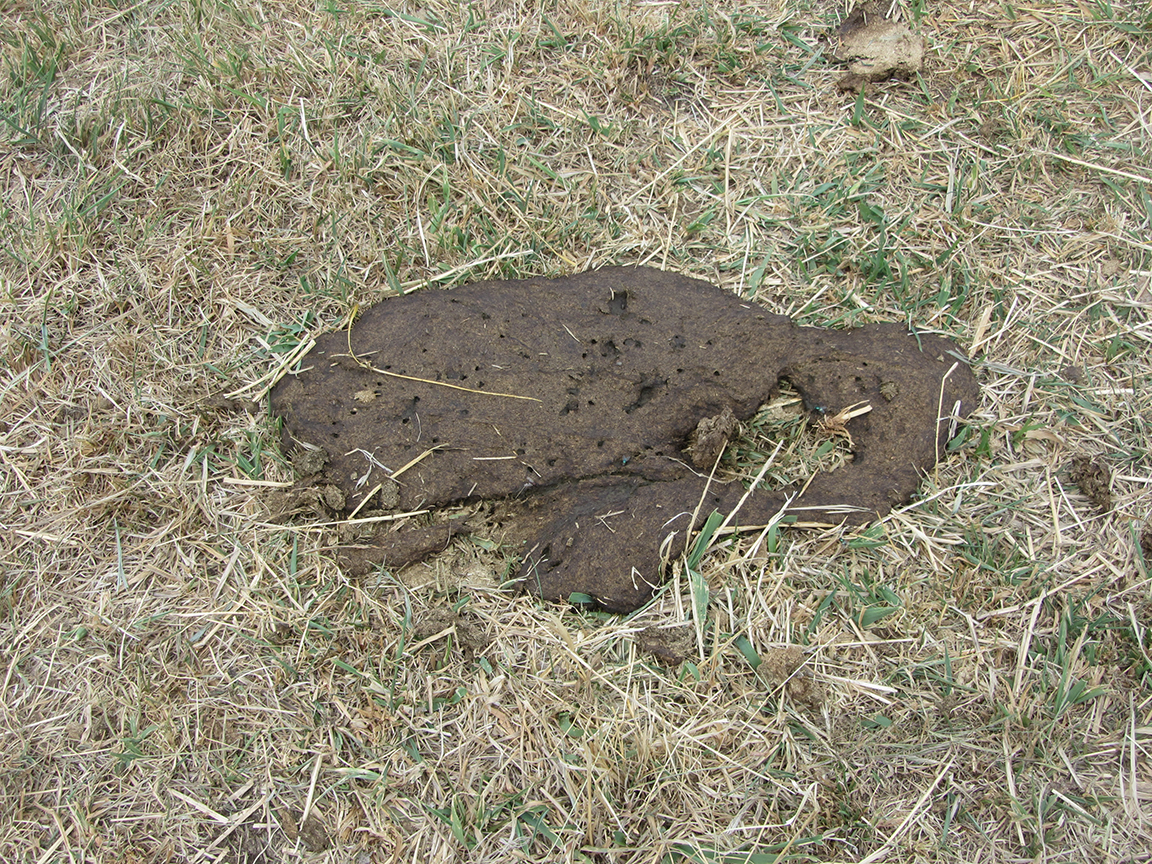
Manure score 3 is ideal consistency and indicates a balanced ration, Wells says.

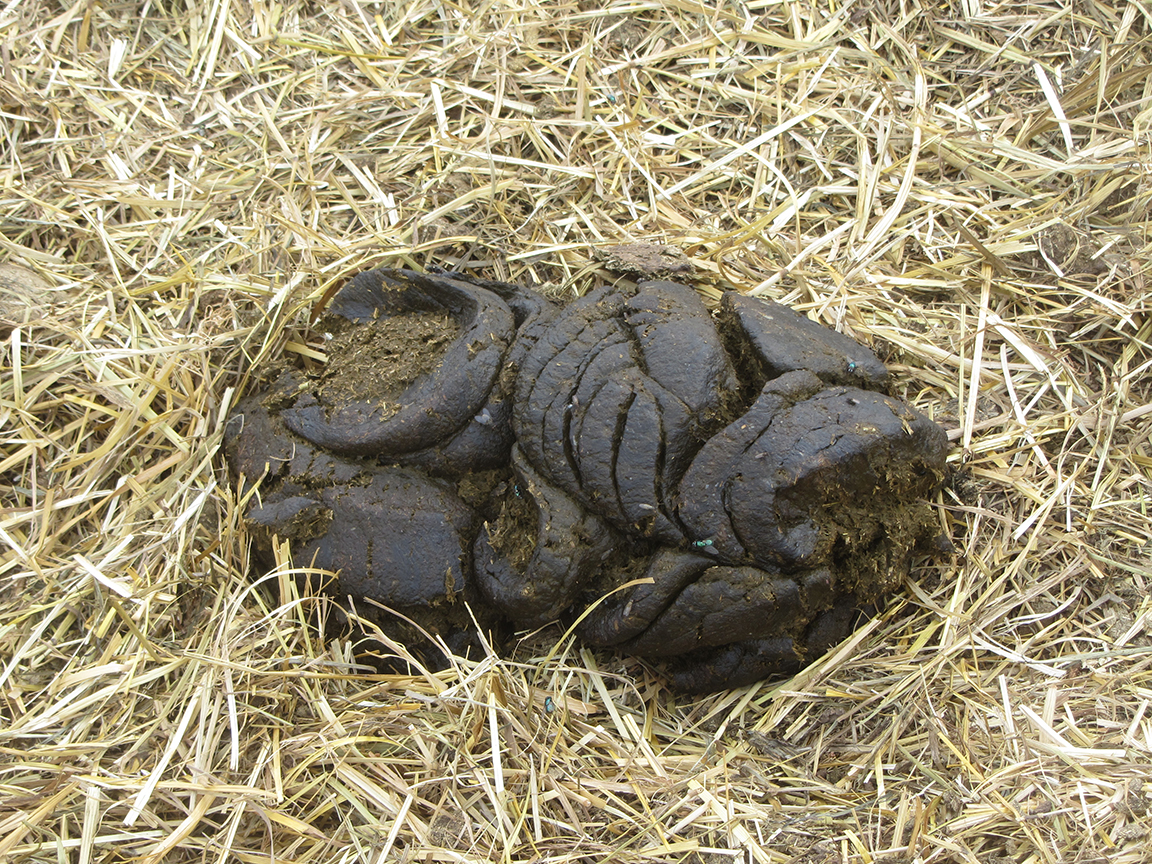
A manure score of 5 is indicative of an animal eating a poor-quality forage that’s low in protein and low in digestible fiber. Supplement protein to balance the cow’s diet and prevent weight loss.

Manure scores 4 and 5 indicate excess low-quality forage in the diet. To correct this we can supplement cows with a little protein supplement daily. Score 4 is common when pastures get dry.
“With manure score 5 there’s more stacking and segmentation rings. Manure is firm, stacking over 2 inches high. This indicates poor-quality forage, low in protein and digestible fiber,” Wells explains. “We see segmentation when rate of passage is slow, especially in the large intestine. One of its functions is to pull water out of material going through, so the longer the feed spends in the large intestine, the more time it has to pull water out of that fecal material.”
The more it dries out, the more segmentation and stacking.
“If pastures are mature and dry, but the cow hasn’t lost weight yet, we probably need to feed about 4 pounds of 20% protein or about 2 pounds of a 38% protein,” he advises.
At the other extreme — cattle on lush grazing — if their manure score is 1 or 2, it probably means too much protein or energy. The best thing we can do is add dry matter, maybe a bale of average to low-quality hay to balance their diet.
“They seek out dry matter and this will help correct the pH, slow things down and start to thicken up the loose manure,” Wells says.
Editor’s note: Heather Thomas is a freelance writer and cattlewoman from Salmon, Idaho. [Photos by Heather Smith Thomas. Lead photo by Shauna Hermel.]
Angus Beef Bulletin EXTRA, Vol. 18, No. 7-A
Topics: Feedstuffs , Health , Nutrition , Pasture and Forage
Publication: Angus Beef Bulletin
Related Content


Current Angus Beef Bulletin
Our September issue focuses on the females of the herd and the records that validate them.