News & Notes
News from across the country pertinent to cattlemen using Angus genetics.
July 9, 2026


Topics included in this month’s “News & Notes” include
- John Deere reinforces commitment to diagnostic and repair tools for farmers
- Grants support rural emergency response departments
- Actions to lower fertilizer costs and support American farmers
- Veterinary center expands to increase professional services
- USDA makes more farm-to-school investments
John Deere reinforces commitment to diagnostic and repair tools for farmers
An agreement announced July 8 by John Deere, the Federal Trade Commission, and five states ensures farmers and ranchers will have access to the diagnostic and repair tools that help them and independent service technicians maintain and repair their current and future John Deere equipment.
“This is good news for our customers and for the future of how Deere equipment is supported,” says Denver Caldwell, vice president of aftermarket and customer support.
The agreement reinforces Deere’s continued innovation toward more flexible repair options, emphasizing increased access and transparency for customers. It formalizes Deere’s ongoing commitment to expanding access to diagnostic and repair tools — helping customers and independent service providers maintain and repair equipment with greater choice and control — while providing the FTC and states with the ability to verify that Deere is meeting this commitment now and into the future.
The agreement brings to a close the matter filed by the FTC and states in early 2025 and allows the company to move forward with a continued focus on supporting its customers. Recent settlements and related agreements in this space have similarly emphasized increased access and transparency for customers, reinforcing Deere’s continued innovation toward more flexible repair options.
John Deere will continue to invest in tools, technology and services that give customers more ways to care for their equipment, whether they choose to do the work themselves or through a repair provider they trust.
Grants support rural emergency response departments
To ensure volunteer emergency response departments are equipped with technology and tools to effectively respond to rural emergencies, Compeer Financial awarded 146 departments in Illinois, Minnesota and Wisconsin grants totaling $1,015,198. Forty-five departments are first-time recipients.
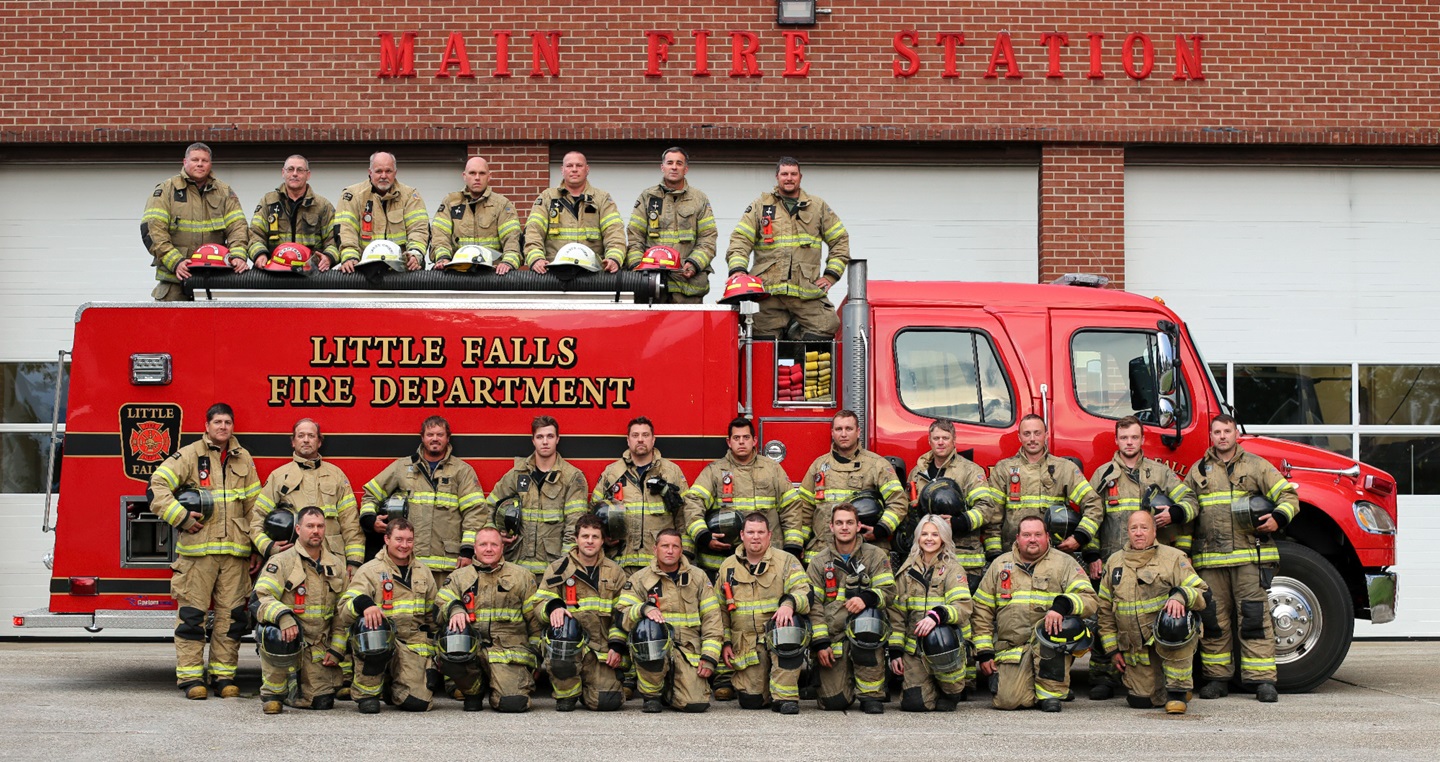
Across Illinois, Minnesota and Wisconsin, 146 volunteer fire, rescue and ambulance departments received an Emergency First Responder Grant of up to $7,500 from Compeer Financial. Recipients include those pictured from the Little Falls Fire Department in Minnesota.

The Emergency First Responder Grants provide rural first responders with critical equipment that improves lifesaving capabilities, protects volunteer responders, strengthens regional emergency preparedness, and enhances the safety and resilience of the communities they serve.
Responding to rural crises is becoming increasingly difficult, as departments are faced with limited funding, larger coverage areas, population demographic challenges and dated communication infrastructure. As a rural-based business, Compeer Financial understands the strain volunteer emergency response departments are under.
“As rural residents ourselves, we want to ensure our first responders are prepared to answer emergency calls,” says Karen Schieler, manager of Compeer Giving at Compeer Financial. “We’re proud to award these grants that provide first responders with important equipment, personal protective gear and technology, and enhance their ability to respond to crisis situations.”
Departments will use this year’s grants to support the following capabilities:
- Improve response times and emergency care. In rural areas where transport times are often longer, having lifesaving equipment in the hands of first responders can mean earlier intervention and better patient outcomes. Many departments are using grant funds for automated external defibrillators (AEDs), cardiac monitors, radios, pagers and advanced emergency medical services (EMS) equipment.
- Strengthen firefighter and responder safety. Due to funding constraints, emergency response departments often have to choose between upgrading tools and equipment or updating safety gear. A significant portion of grant requests focus on replacing outdated turnout gear, helmets, self-contained breathing apparatus (SCBA) equipment, boots, radios and other protective equipment.
- Expand local rescue capabilities and reduce reliance on distant resources. In many rural communities, the nearest specialized rescue team may be 30-40 minutes away. Several departments are investing in specialized rescue equipment for grain bin rescues, vehicle extrications, confined-space incidents and technical rescues to help ensure life-saving capabilities are available closer to home when every minute matters.
Grants help address the unique needs of rural emergency response departments, including:
- Offset rising equipment costs. Many volunteer and small paid-on-call departments operate on very limited budgets. Grant funding often serves as the catalyst that allows departments to begin critical replacement projects that otherwise would be delayed for years.
- Enable regional emergency response networks. The benefits extend beyond the individual department. Equipment purchased through these grants is often used during mutual aid responses and shared across neighboring jurisdictions to increase interoperability and help multiple communities respond more effectively to large incidents.
- Support the vitality of rural and agricultural communities. Many funded projects directly address risks unique to rural America — grain bin rescues, farm accidents, wildland fires, water supply challenges and long EMS response distances. By strengthening emergency response capacity, the grants help protect farmers, agricultural workers, businesses, residents and the local economies that depend on them.
Since beginning the Emergency Response Grants in 2018, Compeer Giving has provided more than $5.75 million in grants to equip volunteer first responders with the equipment and tools needed to aid rural residents across Compeer’s 144-county territory.
There were 48 departments from both Illinois and Wisconsin and 50 departments from Minnesota that received an Emergency First Responder Grant of up to $7,500 this year. Compeer Giving intends to offer the Emergency First Responder Grants again in 2027.
Action taken to lower fertilizer costs and support American farmers
On June 29, President Trump signed a proclamation temporarily suspending countervailing duties (CVDs) on certain phosphate fertilizer imports.
The temporary suspension will increase phosphate fertilizer availability, improve competition and help lower one of agriculture’s largest production expenses while supporting a stable and reliable fertilizer supply ahead of future planting seasons, according to a USDA release.
Current USDA analysis indicates American farmers could save approximately $1.82 billion annually through lower phosphate fertilizer costs as additional supplies enter the U.S. market, says Ag Secretary Rollins. The action is expected to reduce phosphate fertilizer prices by approximately 22%.
The announcement builds on a series of actions taken to strengthen fertilizer affordability, improve supply chain resilience, and expand domestic production. The administration has designated phosphate and potash as critical minerals, signed a USDA-Department of Justice Memorandum of Understanding to address anti-competitive practices affecting ag inputs, worked with federal partners to accelerate major domestic fertilizer manufacturing projects, and recently established a dedicated USDA agricultural economist position focused on fertilizer markets and ag inputs.
USDA continues to support long-term domestic fertilizer production by advancing major manufacturing projects across the country that will strengthen supply chains, create rural jobs, and reduce America’s reliance on foreign fertilizer sources.
Ashland Veterinary Center expands to increase professional services
The demand for rural veterinarians committed to planting roots, becoming invested in rural communities and practicing the profession for a lifetime far exceeds the number of new graduates across the United States.
In 2024, Ashland Veterinary Center (AVC) became a Core Food Animal Clinical Practice Partner with the Texas Tech School of Veterinary Medicine. During her fourth year of veterinary school, Railey Rumohr was assigned to AVC for her clinical rotation. Her level of skill, curiosity, perfectionism and determination made an impression on the AVC team. Her focus on learning the business of veterinary medicine, in addition to her clinical skills, was uncharacteristic for a student.
Ashland Veterinary Center is excited to announce the addition of Railey Rumohr to the AVC team. Rumohr has already begun to build her network within the AVC family, the Ashland community and the growing footprint of the AVC practice area.
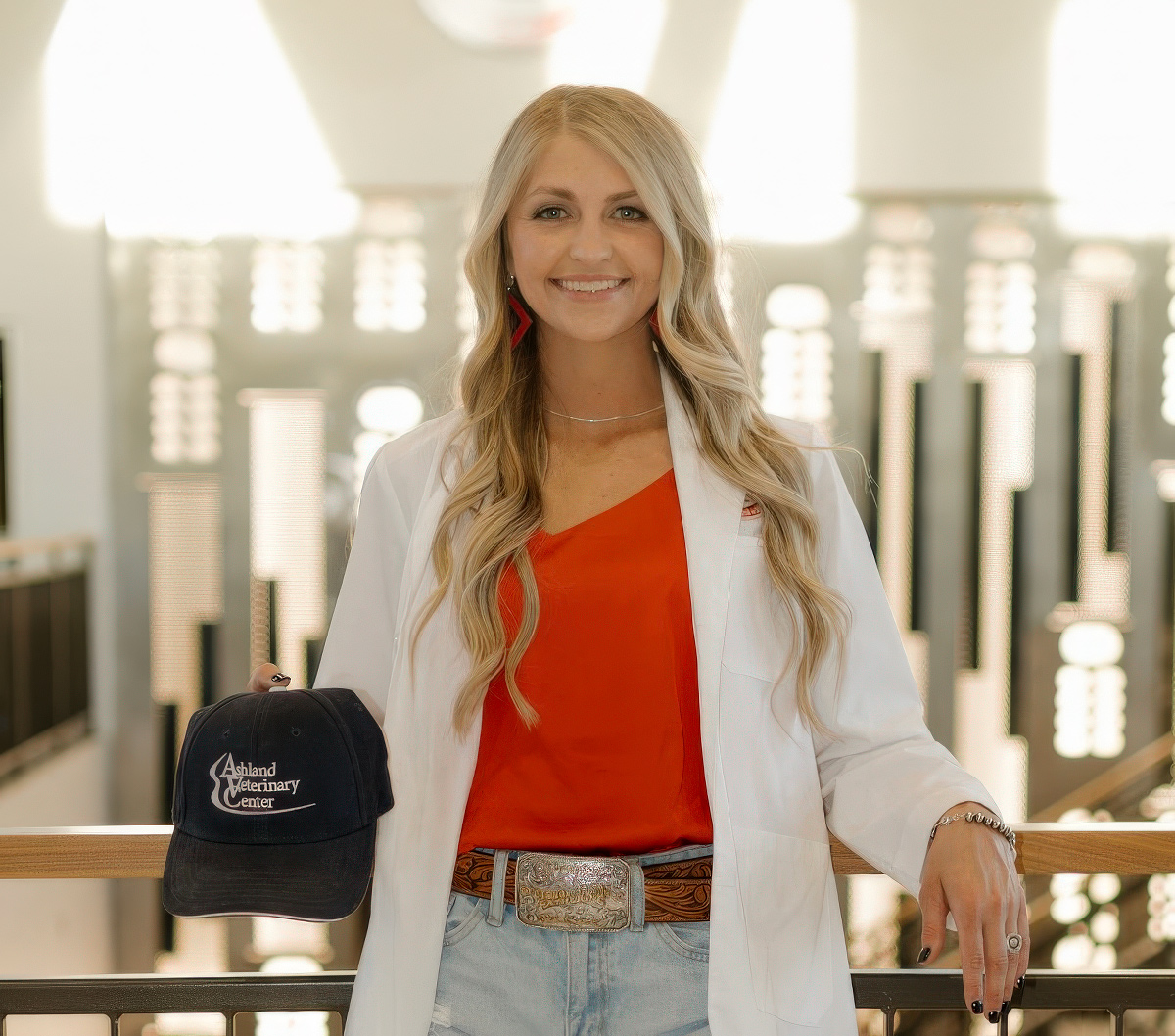
“I value what we bring to AVC clients and their production systems,” says Railey Rumohr. “The way we practice is exactly how I wanted to learn. It isn’t just medicine. It is so important to me that AVC strives to help their clients add value, rather than simply treating a symptom.”

Raised in a rural Texas community, Rumohr’s childhood goal was to become a veterinarian. To better prepare for eventually entering vet school, she transferred to Southwestern Oklahoma State University to complete her bachelor’s degree. Although Texas Tech was launching a new veterinary school, Rumohr was impressed with the structure and focus on producing rural mixed-animal practitioners. She graduated this spring from Texas Tech after earning a doctor of veterinary medicine degree.
“I value what we bring to AVC clients and their production systems,” says Rumohr. “The way we practice is exactly how I wanted to learn. It isn’t just medicine. It is so important to me that AVC strives to help their clients add value, rather than simply treating a symptom.”
“Beyond her clinical skills, Rumohr starts each day asking how can I help, who can we serve and what can I learn,” says Randall Spare, AVC president. “Working with fresh minds with a disciplined focus to learn and serve our clients every day is personally rewarding for me, and of great value to our clients professionally.”
Since 1990, AVC has been a rural mixed-animal practice in Ashland, Kan. AVC serves registered and commercial beef ranching operations, feedlots and pet owners in Kansas, Texas and Oklahoma Panhandle area, eastern Colorado, and southern Nebraska. The clinic provides services ranging from herd health management to equine surgery and nutrition consultation.
Market Makers Beef Genetics, a division of AVC, markets semen on elite multi-trait Angus sires to registered and commercial beef producers across the United States. The AVC team serves the diverse livestock production space and assists clients in navigating inherent industry volatility by adding value.
USDA makes more farm-to-school investments
 On July 7, Ag Secretary Rollins announced the second cohort of fiscal year (FY) 2026 Patrick Leahy Farm to School Grants, completing the largest ever single-year financial investment in the history of the grant program. This year, USDA awarded a total of nearly $20 million to 68 projects that will empower more American farmers, producers, ranchers and fishers to serve their local foods in school meals, summer meals and childcare settings.
“Without a doubt, farm to school is one of the most powerful ways to Make America Healthy Again by bringing real food back to the heart of America’s food culture and onto kids’ lunch trays,” says Rollins. “Our historic investment in farm-to-school projects is a win-win-win for kids, farmers and communities — students are nourished with farm-fresh, nutrient-rich foods; producers access dependable markets through schools; and local economies are strengthened.”
The Patrick Leahy Farm to School Grant Program increases the availability of local foods in child nutrition programs and connects children to the sources of their food through local procurement, education, taste tests, school gardens and field trips.
USDA announced the first cohort of FY 2026 grantees in April. Project descriptions for all of this year’s grantees can be found on the Patrick Leahy Farm to School Program website.
USDA reimagined the FY 2026 Farm to School Grant program to prioritize innovative, large-scale projects built on strong partnerships, resulting in the highest number of applicants and the most money awarded in a single year of the program. Since the Farm to School Grant program first launched in 2013, USDA’s Food and Nutrition Administration has awarded more than $119 million in grants, funding more than 1,265 projects throughout all 50 states, the District of Columbia, U.S. Virgin Islands, Guam, and Puerto Rico.
Editor’s note: Compiled from news releases provided by the respective organizations.
Angus Beef Bulletin EXTRA, Vol. 18, No. 7-A
Topics: Management , Pasture and Forage , Business , Industry News , Feedstuffs , News , Policy
Publication: Angus Beef Bulletin
Related Content



Current Angus Beef Bulletin
Our November issue focuses on the females of the herd and the records that validate them.