



Adaptability Is the Foundation of Cow Efficiency
Researcher discusses tips for selecting cows that fit the western range.
August 5, 2026

by Kaitlin Donovan for Beef Improvement Federation
Do your discussions on beef cow efficiency center around growth and feed conversion? That’s where many producers start, but Tim DelCurto warns that is the wrong place to focus.
“The cow has to calve every spring, breed during a defined breeding season, wean a calf each fall and do it all over again the next year,” DelCurto says. “Reproductive success is our most important metric for efficiency.”
Professor and head of the Department of Animal and Range Sciences at Montana State University, DelCurto is known for his research in range beef cattle nutrition and management. His studies have shown that efficiency isn’t determined by a single measurement, but by how well a cow matches the environment in which she’s expected to perform.
DelCurto says producers should consider thinking beyond popular selection trends and focus on biological adaptability.
What is biological adaptability?
Rather than searching for a universal “ideal cow,” DelCurto recommends identifying the type of female best suited for the forage base, climate and management system.
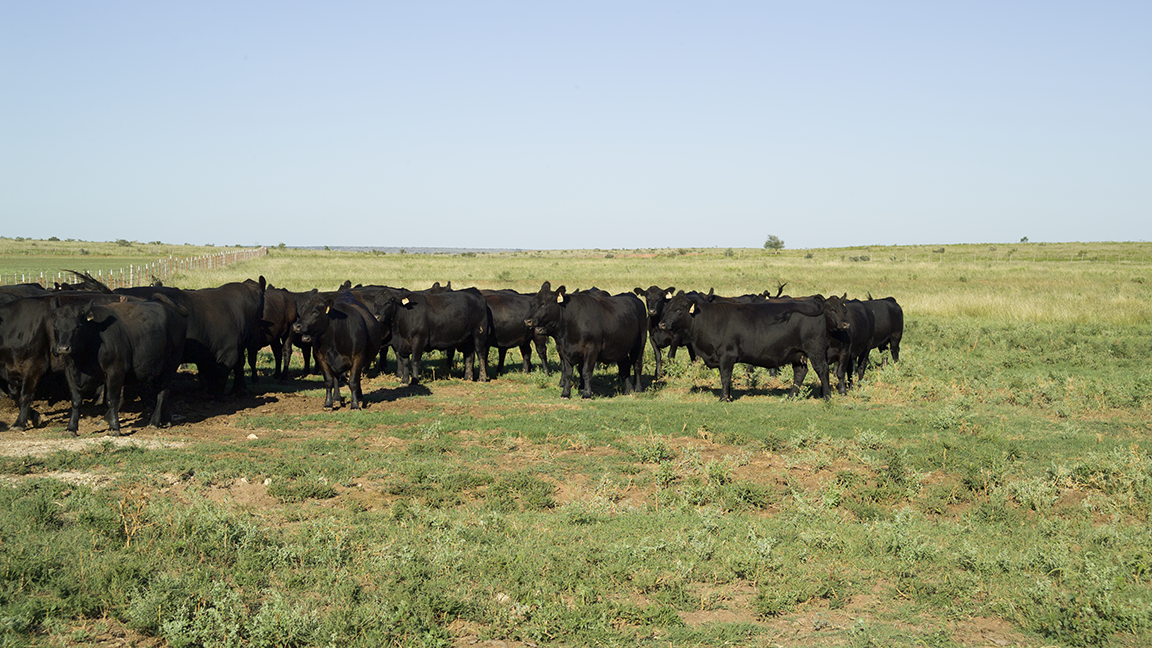
In the arid and semiarid rangelands of the western United States, where growing seasons are short and forage quality declines quickly, cattle must do more with less. Those conditions reward cows that maintain body condition, breed back consistently and efficiently utilize available forage.
“It’s an environment where you don’t maximize production,” DelCurto says. “It’s an environment where we try to optimize production.”

Tim DelCurto, professor and head of the Department of Animal and Range Sciences at Montana State University, discusses beef cow adaptability at the 2026 BIF Symposium and Convention in Boise, Idaho, in June. [Photo courtesy BIF.]

Key takeaways
- Reproduction is the ultimate measure of efficiency. A cow’s ability to calve, rebreed and wean a calf every year outweighs any single production metric.
- Match genetics to the environment. Cow size, milk production and growth potential should complement available forage and management resources.
- Optimize — don’t maximize — production. In limited-input environments, moderate cows that maintain body condition often provide greater long-term profitability.
- Don’t rely on one number. Traits such as pulmonary arterial pressure (PAP), residual feed intake (RFI), feet and leg scores, and growth expected progeny differences (EPDs) should be evaluated together rather than individually.
- Adaptability creates longevity. Cows that thrive under variable weather and forage conditions are the foundation of efficient, sustainable cow-calf operations.
- “Be careful when you read some of these studies looking at cow size. A lot of times they assume intake is proportional to the size of the cow. It is not.”
— Tim DelCurto
Focus on cow size
While larger-framed cattle often excel in feedlots or high-input production systems, DelCurto says moderate-sized cows with moderate milk production frequently outperform larger counterparts when feed resources become limited. However, that doesn’t mean producers should assume bigger cows automatically require more feed.
“Be careful when you read some of these studies looking at cow size,” he says. “A lot of times they assume intake is proportional to the size of the cow. It is not.”
Instead of focusing solely on mature size, DelCurto says producers should evaluate how genetics interact with available resources. Selecting for ever-increasing growth and milk production may improve individual performance traits, but this can also increase nutritional demands and reduce longevity in harsher environments.
“There’s no such thing as normal weather here in the western U.S.,” DelCurto says. “There’s an average, but everything deviates from the average.”
That annual variability makes adaptability one of the most economically valuable traits in a cow herd.
Building an adaptable cow profile
DelCurto says there is value in evaluating feet and leg structure, pulmonary arterial pressure (PAP) scores and residual feed intake (RFI), but only when done in the context of the production system.
Ultimately, he says, producers should strive for cows that require fewer inputs while remaining productive throughout their lifetime.
“The cattle we try to fit in an environment are the cattle we’d like to minimize nutritional inputs,” DelCurto says. “Those are the animals you’re really trying to match to your resources.”
As genetic technology continues to advance, DelCurto encourages producers not to lose sight of the fundamentals, from reproduction onward.
“What do we need them to do? What are our expectations? What kind of resources do we have?” he asks.
Answering those questions, he says, is the key to building a cow herd that is both biologically efficient and economically sustainable.
Editor’s note: DelCurto presented “Beef Cow Adaptability: The Western Range Cow as an Example,” at the 2026 Beef Improvement Federation (BIF) Research Symposium and Convention in Boise, Idaho. Access the presentation archive. DelCurto’s full presentation is available on the BIF YouTube page. [Lead photo by Shauna Hermel.]
Angus Beef Bulletin EXTRA, Vol. 18, No. 8-A
Topics: Events , Female Foundations , Management , Selection
Publication: Angus Beef Bulletin
Related Content


Current Angus Beef Bulletin
Our November issue focuses on the females of the herd and the records that validate them.