




Standing Corn Is Option for Grazing
Tips for grazing standing corn this summer, fall and winter.
August 5, 2026
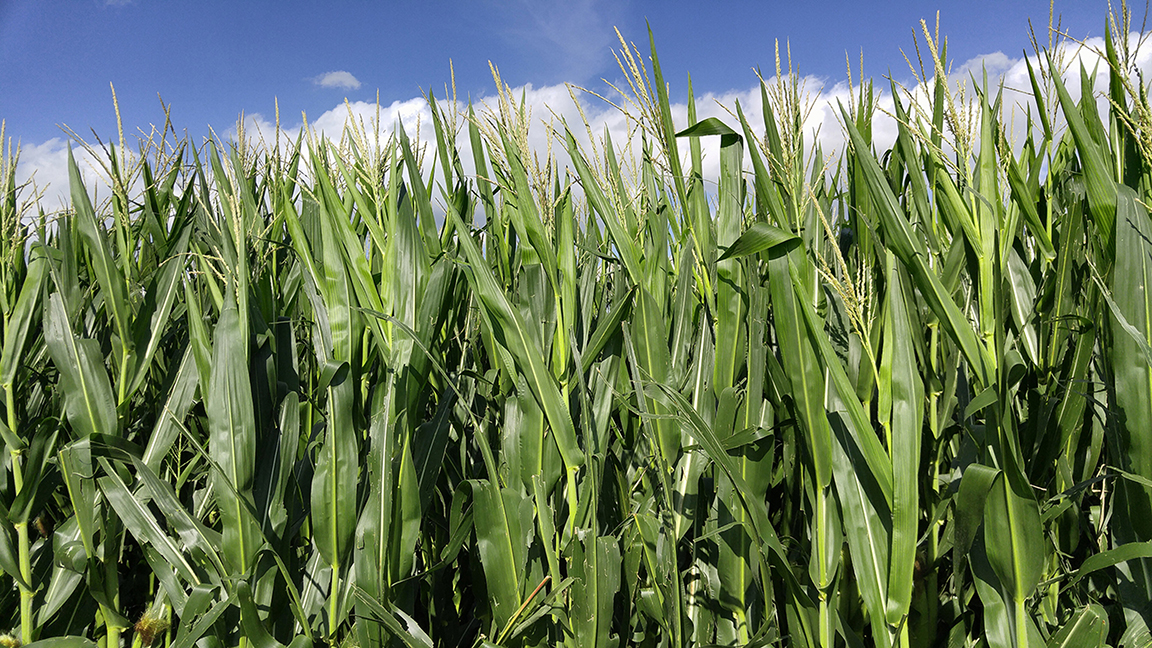

by Aaron Berger, University of Nebraska Extension
Pasture and hay are in short supply in much of Nebraska due to drought conditions, while the price of corn is currently below the cost of production. These circumstances are prompting producers to consider the opportunity of grazing standing corn with the cow herd as a feed option for the rest of the summer, fall and winter.
Grazing drought-stressed corn fields in summer
In some regions, drought-stressed corn may be released by crop insurance and would provide an option for grazing. A Nebraska Extension article titled “Forage Options for Drought-stressed Non-irrigated Vegetative Corn and Nitrate Concerns” provides information on utilizing dryland, drought-stressed corn as a harvested feed or grazing resource. When considering grazing drought-stressed corn, first check herbicide labels for any grazing restrictions.
Nitrates could be a potential concern. Cattle should not be turned out hungry. When grazing starts, cattle should self-adapt by eating any developing ears and the tops of plants first. Then they will be more acclimated to eating the higher-nitrate areas lower in the plant.
Make sure plenty of clean, fresh water is available to help reduce nitrate risk. Protein is higher when grazing corn in a vegetative stage than as it matures. Depending upon the state of maturity of the corn, as well as the stage of production for cattle grazing, protein supplementation may be needed to meet cattle nutrient requirements.
Grazing green, growing corn in good conditions
For many, the thought of grazing good, green, standing corn that is tasseling and forming ears is hard to imagine. However, corn is a warm-season, annual grass. Fields at this stage of maturity can provide a large supply of high-energy, quality forage.
For cow-calf producers who have access, strip-grazing standing corn can provide an alternative to feeding cows in drylot if pasture is short. It can be a competitively priced feed option when compared to buying hay or other feedstuffs and including the cost of equipment and labor needed for feeding.
When grazing standing corn that is progressing to maturity, strip-grazing will help efficiently utilize the crop and reduce the risk of acidosis as corn ears continue to form and grain is made. Usually, cattle are given two to three days of feed at a time with a target of 60%-80% grazing efficiency. Cattle will typically consume 2.5%-3% of their body weight on a dry-matter basis a day of this quality forage.
When grazing cow-calf pairs, don’t forget to count the calf in calculating the amount of feed that will be needed. Supplemental protein may be required depending on the maturity of the corn and nutrient needs of the cattle grazing.
Logistically, rows of corn will need to be laid down using an ATV or other equipment to build the temporary electric fence and keep cows from knocking standing corn down into an electric fence and shorting it out.
Always have a second and even a third grazing area ready with fence built ahead of where the cattle are currently. This helps limit cattle getting into the whole field if an escape happens.
Another option for strip-grazing standing corn is virtual fence technology. Research at the University of Nebraska has shown this to be an effective tool for strip-grazing annual forages, with containment rates exceeding 98%.
Does it work economically?
When considering the economics of grazing green standing corn, there are several questions that need to be asked.
- What is the cost of the next alternative feed option of comparable quality into the belly of the cow-calf pair or dry cow if grazing in the late summer, fall or winter?
- What are the benefits of reduced expenses by harvesting the crop with cattle vs. combining and hauling the grain? For example, the “2026 Nebraska Agricultural Custom Rates” report states harvesting irrigated corn is $0.32 per bushel (bu.) and hauling is $0.15 per bu. for a total of $0.47 per bu., or $94 per acre for harvesting costs if the crop yields 200 bu. per acre.
- What is the value of grazing and recycling nutrients being consumed from grain and stover back on the field as fertilizer (manure and urine) at today’s prices? Around 0.70 pound (lb.) of nitrogen, 0.31 lb. of phosphate, 0.27 lb. of potassium and 0.6 lb. of sulfur are in 1 bu. (56 lb.) of corn grain.
- What is the value of being able to plant additional forage for grazing later in the fall and next spring if standing corn is utilized this summer, providing the option to plant another crop?
- What is the availability of water access for cattle, convenience and cost of delivery?
Here is some quick math for grazing an irrigated corn crop in late summer/early fall with cow-calf pairs. A 200-bu. corn crop at $4.75 per bu. and corn residue grazing at $30 per acre generates a gross value of $985 per acre.
- Gross value per acre of grain harvest and grazing residue $985
- Reduced harvest expense of not combining and hauling corn ($94)
- Estimated value of corn grain nutrients retained [30% of nitrogen (N), 80% of phosphorus (P) and potassium (K)] ($125)
- Value of grazing per acre needed to equal the value of crop after credits $766
A corn crop is rapidly accumulating dry matter as it moves from the tassel stage when approximately 35% of total dry matter is present to full maturity, black layer, corn. Total plant dry matter is accumulating rapidly from tasseling to black layer and then begins to decrease as the corn plant dies.
As an estimate of dry-matter yield, based on historic silage yields with 200-bu. corn, we will assume that there is approximately 25 ton of forage per acre at 65% moisture when the crop is at the optimum silage harvest window for forage/grain available. This would be equal to 8.75 tons per acre on a dry-matter basis. If 60% of the standing corn crop at peak production, on a dry-matter basis, is consumed by the cow-calf pairs during the grazing period, this equals 5.25 tons consumed per acre. At a cost of $766 per acre divided by 5.25 tons of dry corn forage and grain, this equals $145 per ton on a dry-matter basis into the belly of the cow-calf pair. On a hay equivalent, if this was valued as a “hay” at 15% moisture, it would have a value of $125 per ton.
Is harvesting 5.25 tons of dry matter per acre with strip-grazing standing corn a realistic target? It will depend on the stage at which grazing is initiated and how efficiently grazing occurs. The cost of fencing, any needed protein and energy supplement, as well as management and care would need to be added to the feed cost of $145 per ton on a dry-matter basis to get a total cost per day.
Grazing standing corn in the fall and winter
When corn matures and is going to be grazed standing, limit daily feed access to efficiently utilize the grain and reduce the risk of overeating and acidosis. The amount of area to be allocated daily will be based on estimated corn yield. The amount of corn targeted to be consumed determines the amount of area being allocated.
Assuming dry, pregnant cows are being grazed and the corn yield is 200 bu. per acre with 85% utilization, 100 cows would require 0.15 acres per day to meet a target of 13 lb. of grain being consumed per day. Additional forage may need to be supplied, as the husks, leaves and stalk provided with the corn being consumed may not be adequate to meet fiber needed for rumen health. One way this can be accomplished is by combining the field and leaving strategic strips of standing corn that could be utilized with remaining crop residue.
Daily providing the ionophore Rumensin® with 1 lb. of a supplement that contains needed vitamins and minerals, and additional required protein will help to balance the cow’s diet, improve efficiency and help ensure nutrient requirements are met.
The grazing of standing corn is rarely utilized in Nebraska as a whole. However, with a shortage of forage for grazing and hay, current market conditions for fertilizer and corn, along with the advent of virtual fence technology, circumstances have come together to make it an option worth considering this year to feed the cow herd.
Editor’s note: Aaron Berger is an extension educator for the University of Nebraska. [Lead photo by Troy Walz.]
Sources:
- ANR-11 Using Corn for Livestock Grazing — The Ohio State University Extension
- D-152 Grazing Corn: An Option for Extending the Grazing Season in Kentucky — University of Kentucky Cooperative Extension Service
- Grazing Cattle on Corn — Manitoba Agriculture
- 2026 Nebraska Crop Budgets — Center for Agricultural Profitability, University of Nebraska-Lincoln
Angus Beef Bulletin EXTRA, Vol. 18, No. 8-A
Topics: Feedstuffs , Nutrition , Pasture and Forage
Publication: Angus Beef Bulletin
Related Content



Current Angus Beef Bulletin
Our November issue focuses on the females of the herd and the records that validate them.