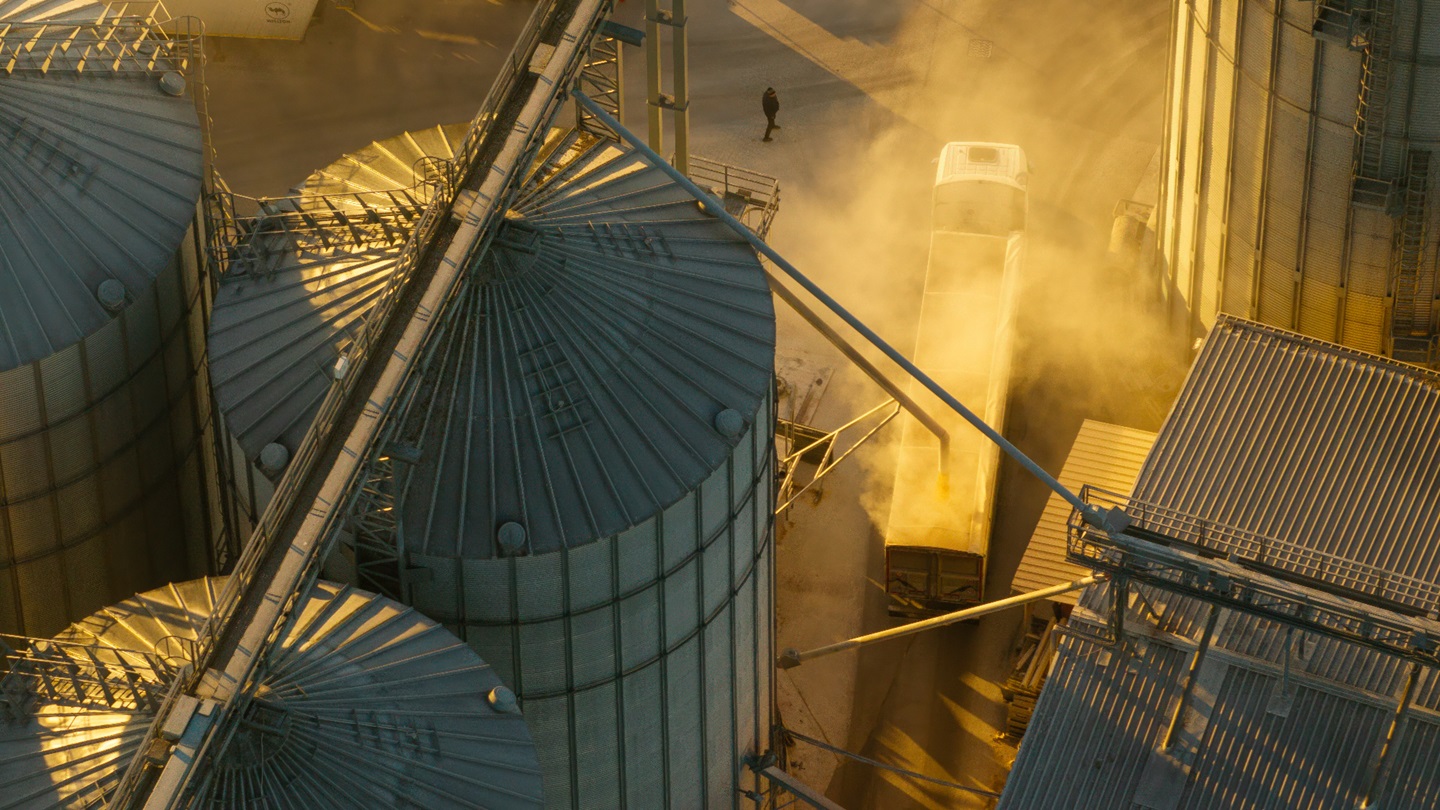
Ag Dust Poses Hidden Health Risks for Farmers
Expert warns of flu-like illness, chronic lung disease from common exposures.
July 23, 2026

by Pat Melgares, Kansas State University Extension
Dust is an unavoidable part of farming, but a Kansas State University expert says what’s floating in the air around grain bins, hay barns and livestock facilities can pose serious risks to farmers’ health.
Mitch Ricketts, professor of ag safety and health at Kansas State University, says agricultural dust is much more than just soil and plant material.
“Agricultural dust has a lot of different components in it,” Ricketts says. “Besides the soil and the plant material that we think about being in the dust, there’s also mold, bacteria, dust mites and a lot of other organisms. And when we breathe the dust that contains those organisms, it can cause allergic or toxic reactions.”
Ricketts says many people experience mild symptoms, such as a runny nose or itchy eyes. But in some cases, the health effects are far more serious and may require medical attention.
Organic dust toxic syndrome common
Though lesser known, one of the most common illnesses caused by farm dust is organic dust toxic syndrome, or ODTS.
“Researchers estimate that about one out of every four farmers experiences (ODTS) at least once during their career, and many farmers experience it over and over again,” Ricketts says.
ODTS typically develops a few hours after a farmer has been in an enclosed, dusty area, such as a grain bin, hay barn or other confined space with high concentrations of moldy or out-of-condition grain or hay. Symptoms resemble a severe case of the flu: fever, chills, cough, muscle aches, headache and shortness of breath.
To illustrate, Ricketts cited a case from a medical journal in which a worker was unloading old, moldy grain from a storage structure.
“It was so dusty as he was unloading it that he had to stop often because his eyes were burning and he was coughing,” Ricketts says.
A few hours after finishing the job, the worker developed shortness of breath, muscle pain, heavy sweating, high fever and constant coughing. He was hospitalized, and doctors found fluid in his lungs, indicating inflammation. He recovered fully within two days.
The typical progression of ODTS includes:
- A massive exposure.
- Rapid onset.
- Severe but short-lived illness.
Normally, an infected person has no permanent damage. Unlike allergies, ODTS is believed to be caused by toxins in bacteria and fungi, rather than an immune response.
When exposure becomes chronic
Ricketts warns that symptoms of ODTS can be similar to a much more serious condition: hypersensitivity pneumonitis, or HP, which can be acute or chronic and is driven by an overreaction of the body’s immune system to allergens and irritating substances in organic dust.
“The acute form (of HP) typically happens again after a very massive exposure,” he explains. “That one is typically going to require medical care to recover, and in some cases that can turn into a chronic illness.”
Chronic HP can be disabling. People who develop it become highly sensitive to certain allergens, and repeated exposures can severely affect their quality of life.
“In fact, many of them end up having to stop farming because it’s so serious,” Ricketts says.
Listen to an interview by Shelby Varner with Mitch Ricketts on the weekday radio program,
Agriculture Today.
Ag dust can also trigger or worsen asthma and contribute to chronic obstructive pulmonary disease (COPD), including chronic bronchitis and emphysema. COPD usually lasts a lifetime and, while it can be managed, “cannot be cured,” Ricketts says.
Reducing the risks
Ricketts urged farmers and ranchers to take steps to protect their lungs long before they get sick.
“The first thing you can do to protect yourself is think about whether or not you smoke,” he says, noting that all lung illnesses are more common and more severe among smokers.
He recommends that anyone with pre-existing conditions such as asthma, HP or COPD talk with their doctor before doing dusty work. Anyone who develops severe symptoms while working around dust should also seek medical advice.
Engineering controls can help reduce exposure. For equipment with enclosed cabs, Ricketts advises farmers to maintain air filtration systems, replace filters as needed and check door and window gaskets to keep dust out.
He also encouraged farmers to avoid entering bins and other extremely dusty spaces when possible. When that cannot be avoided, respirators may be needed.
For healthy individuals without heart or lung problems, an N95 dust mask can provide basic protection if it fits tightly and is NIOSH-approved. Ricketts says users should change masks when they become dirty or difficult to breathe through, remain clean-shaven where the mask seals to the face, and remember that N95s do not provide oxygen or protect against hazardous gases or vapors.
Other options include silicone facepiece respirators with P100 filters — which offer higher protection but can be less comfortable and more expensive — and powered air-purifying respirators, which can be used by people with beards and those who find it difficult to breathe through standard respirators.
Ricketts notes that farmers who require employees to wear respirators are subject to federal regulations that mandate a full respiratory protection program, including medical evaluations, cleaning schedules and training.
While dust may always be part of agriculture, Ricketts says awareness and simple precautions can help keep farmers safe: “It can have a profound impact on their life if we don’t take it seriously.”
More information on agricultural safety is available at local extension offices.
Editor’s note: Pat Melgares is a communications specialist, Global Food Systems at Kansas State University. [Lead photo by Simon Skafar from Getty Images.]
Angus Beef Bulletin EXTRA, Vol. 18, No. 7-B
Topics: Health , Human Health , Labor , Management
Publication: Angus Beef Bulletin
Related Content


Current Angus Beef Bulletin
Our September issue focuses on the females of the herd and the records that validate them.