




The Six Classes of Nutrients for Cattle
Ruminant nutritionist discusses rumen function, physiology and nutrient utilization.
June 18, 2026
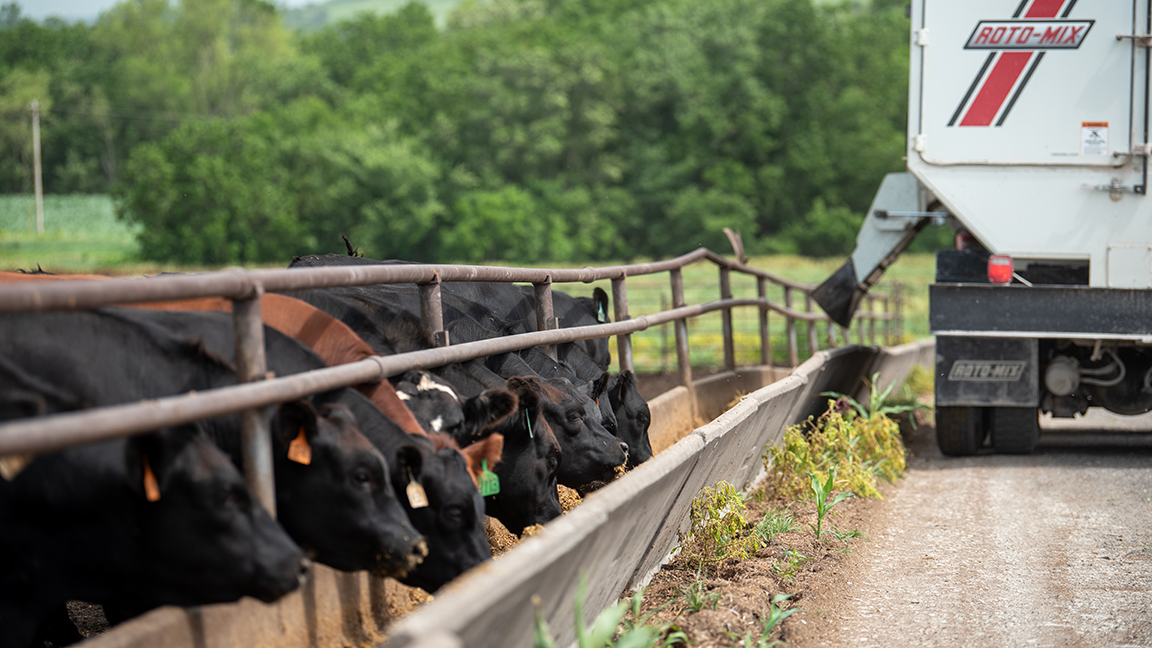

Ruminant animals convert human-inedible feeds into high-quality protein people can consume, said Natasha Mast, a ruminant nutritionist and faculty member at Texas A&M University Kingsville. “Rumen function is important because feed is the largest cost in most of our operations.”
Mast discussed rumen function, physiology and nutrient utilization at the Applied Nutrition Strategies for Grazing Livestock Lectureship hosted by the King Ranch Institute for Ranch Management in January 2026.
“Rumen function,” she explained, “determines multiple things that will impact your bottom line. Rumen function determines intake — how much the animal can actually consume. It determines digestibility — how much of the feed is actually digestible for the animal. Both of those things determine performance and health.”
Breaking down the nutrients
A nutrient is any part of the feed that supports life, Mast explained, naming six classes: water; carbohydrates, including both fiber and starch; lipids (fats); proteins; minerals; and vitamins.
All six are essential to our animals. A deficiency in any one will limit the entire system, even if it’s just a small thing like a mineral.
“Whatever we’re feeding our animal, whether it’s forage in the pasture or some kind of mixed ration, this is the diet,” she said. If we take a sample of that diet and send it to a lab for analysis, we want to find out what nutrients are there and at what levels.
Without enough water, feed won’t move through the system the same, which ultimately affects animal performance.
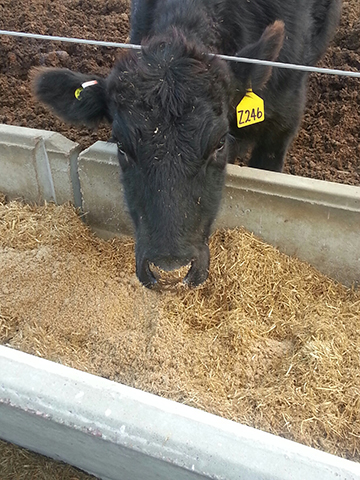
Straw is top-dressed with a protein-energy supplement. [Photo by Janna Block.]

“The first thing the lab does is take out the water, which leaves the dry matter,” Mast explained. “Then they pull out all the minerals, and we know how much mineral content there is. Everything left after that is organic matter — all the proteins, vitamins, lipids and carbs.”
Water — found in all parts of the body — is the most abundant nutrient. It has multiple roles, she said. The first is temperature regulation. In a hot environment, it helps keep the body cool. In a cold environment, it can help with keeping the body warm.
It also helps with digestion and absorption, and helps move nutrients through the gastrointestinal (GI) tract. Without enough water, feed won’t move through the system the same, which ultimately affects animal performance.
Water also transports nutrients and waste products. If water intake drops, feed intake drops. Hot days generally magnify that issue. If intake drops, performance drops, so everything is directly related.
“Carbohydrates, another class of nutrients, are the primary source of energy for our animals,” Mast said. “Carbohydrates are found in all feeds, forages and concentrates. In forages, it’s mostly fiber — just a different type of carb. Concentrates are our grains, where we mostly find starch,” said Mast.
Fiber is a little harder to digest. Starches move through the system faster, because they digest easier. Fiber moves through slower, fermented by rumen microbes into what we call VFA, or volatile fatty acids, that the animal uses as a source of energy.
“Protein, our next class of nutrients, supplies nitrogen to rumen microbes. When we talk about a ruminant animal, we’re talking about microbes and nitrogen, because nitrogen is how the microbes grow and survive,” she said.
There are two forms of protein we can feed — degradable intake protein (DIP) and undegradable intake protein, or UIP. The microbes can degrade DIP and utilize it, but not the UIP.
“Lipids are fats — a very concentrated form of energy for the animal. We generally feed them in smaller amounts than carbs because they’re super concentrated. They improve the energy density of a diet, but excess fat can depress fiber digestion.” Most of what cattle consume is fiber, so we don’t want to inhibit rumen microbes.
Minerals and vitamins are needed in very small amounts compared to other nutrients. Minerals are divided into two classes — macrominerals and microminerals.
“Macrominerals are the ones we need in larger amounts, but all are needed in small amounts compared to carbs and protein,” Mast said.
With vitamins, there are fat-soluble and water-soluble vitamins. Fat-soluble vitamins are A, D, E and K. “Water-soluble are the B complex and C vitamins and the rumen can synthesize some of these vitamins,” said Mast.
Understanding rumen function and nutrient utilization can help enhance cattle performance and efficiency to improve the bottom line.
Editor’s note: Heather Smith Thomas is a freelance writer and cattlewoman from Salmon, Idaho. [Lead photo by Lindsey Sawin .]
Angus Beef Bulletin EXTRA, Vol. 18, No. 6-B
Topics: Nutrition
Publication: Angus Beef Bulletin
Related Content



Current Angus Beef Bulletin
Our September issue focuses on the females of the herd and the records that validate them.