

News & Notes
News from across the country pertinent to those using Angus genetics.
June 17, 2026


This month’s “News & Notes” features articles on
- Joe Goggins elected LMA president
- Missouri farm recognized as Historic Angus Herd
- USDA issues directive to restore grazing on national forest lands
- Husker Harvest Days 2026 registration opens with new equipment demonstrations
- Funding available to support trade promotion programs
- Funding available to maintain and modernize ag research facilities
Joe Goggins elected LMA president
Joe Goggins, a lifelong livestock marketer and rancher was named president of the Livestock Marketing Association (LMA) during the association’s annual convention in June.
CEO of the Vermilion Ranch Corp. in Billings, Mont., Goggins oversees Public Auction Yards, Billings Livestock Commission, Western Livestock Auction, Northern Livestock Video Auction, the Vermilion Ranch Registered Angus Herd, Diamond Ring Ranch and other diversified business ventures. Prior to becoming CEO, he worked alongside his late father, Pat Goggins, and grew up immersed in the family’s operations. Along with his wife, Linda, Goggins operates J&L Livestock, a commercial cattle operation focused on breeding and raising Angus females.
He graduated from Montana State University with a degree in animal science before pursuing his passion for auctioneering. A longtime LMA supporter whose family has deep roots in the organization — his father also served as president — Goggins has been involved in the association for approximately 20 years, previously serving on the board of directors and executive committee.
While he’s been engaged in many organizations over the years, LMA has a special place in his heart, he says. “This board is made up of people that have skin in the game. Every day they’re out doing the work, worrying about their producers, their consignors and the whole industry.”
Goggins emphasizes the value the LMA provides to its more than 800 members, which include auction markets, order buyers and dealers. He highlighted the association’s industry-leading insurance products, prompt pay reform advocacy, buyer verification services and payment protection insurance.
Goggins is passionate about LMA’s broader role in the industry, stressing the importance of initiatives like the Common Ground Coalition that aim to unify the industry, keep producers on the land and sustain rural economies.
“We need producers,” he says. “We need folks on the land, and we’ve got to come up with some ways all across this industry to help these people.”
He describes LMA as a “well-oiled machine” with exceptional staff and plans to maintain its strong momentum while focusing on key priorities: protecting and enhancing payment protection, supporting policy efforts such as allowing auction market owners to own or invest in harvest facilities, making sure animal disease traceability rules work for producers and markets, and continuing industry unification efforts to support cow-calf producers.
“I’ve never been prouder to be part of an organization,” he says, “because they see the big picture: This country needs food security, and that only happens if we keep cow-calf producers on the land.”

“We need producers,” says Joe Goggins. “We need folks on the land, and we’ve got to come up with some ways all across this industry to help these people.”

Missouri farm recognized as Historic Angus Herd
The American Angus Association honored TEKO Angus Farm with a Historic Angus Herd Award, which recognizes breeders and immediate families who have been in continuous production of registered-Angus cattle for 50 years or more.
TEKO Angus Farm was founded in 1971 by Teddy Koontz of Butler, Mo. In 2003, the operation relocated to its current location at Sparta, Mo.
“When I started my herd, Angus cattle were and still are the carcass breed.” Koontz says. “I was selling processed beef through local processors, as I still do today, and have always adhered to the adage, ‘If you want to sell the best, you have to have the best.’”
In the beginning, Koontz purchased bulls from the University of Missouri Performance Tested Bull Sale. The foundation for his present herd was purchased from JD Taylor of Milan, Mo., in 2003. Since that time Koontz has made a few additions to the herd from Jack Baker of Butler, Mo.; Valley View Angus, Republic, Mo.; and other area consignment sales.
Koontz followed the advice of Eldon Cole, a University of Missouri beef cattle specialist, who said, “Better to breed up what you have than try to improve through purchases.” Over the years, Koontz says, he has found this guidance to be true.
He says he has consistently used the latest advancements in genetics to improve his herd — first by selecting the best available artificial insemination (AI) sires, then through ultrasound scanning and DNA testing, including parentage verification, and now by flushing top cows and using embryo transfer (ET).
In 2012, Koontz was recognized as “Seedstocker” of the Year by the Southwest Missouri Beef Cattle Improvement Association.
Today, he continues to manage his herd of 15 registered Angus cows in addition to a few commercial recipients, carrying on his commitment to genetic improvement and herd quality.
Visit www.angus.org for more information about the Historic Angus Herd Award or to view a list of awarded members since the program began in 1988.
Directive restores grazing on national forest lands and strengthens support for America’s ranchers
U.S. Secretary of Agriculture Brooke Rollins on June 12 announced the distribution of a comprehensive directive to all U.S. Forest Service employees from the Office of the Undersecretary for Natural Resources and Environment (NRE). These actions advance implementation of the Advancing Grazing on Forest Service and Bureau of Land Management (BLM) Lands Memorandum of Understanding (MOU) and the USDA–Department of the Interior Grazing Action Plan, restoring multiple-use management on federal lands and combating regulatory lawfare against producers.
“America’s ranchers are an integral component of our rural economies, our food security and our national strength,” said Secretary Rollins. “For too long, bureaucratic overreach and activist-driven lawfare have undermined the multiple-use mandate of our national forests and grasslands. Today, we are empowering line officers with clear direction and reaffirming grazing as an essential tool for healthy landscapes and vibrant rural communities.”
Key elements of the directives include:
- expanding access to prioritize permitting vacant and closed allotments;
- maximizing grazing flexibilities to keep working lands working;
- eliminating delays by streamlining permitting and allotment authorizations;
- elevating rural Americans by giving ranchers a better voice; and
- improving service by setting expectations for positive engagement with ranchers.
By elevating grazing as an administration priority, USDA is protecting the roughly 23,000 permittees and lessees who rely on public rangelands while delivering more affordable, American-raised protein to consumers.
Husker Harvest Days 2026 registration opens
Registration is open for Husker Harvest Days 2026, the Western Corn Belt’s premier ag showcase. The Farm Progress event returns to Grand Island, Neb., Sept. 15-17, 2026, featuring expanded hands-on equipment experiences and live demonstrations shaped by producer feedback.
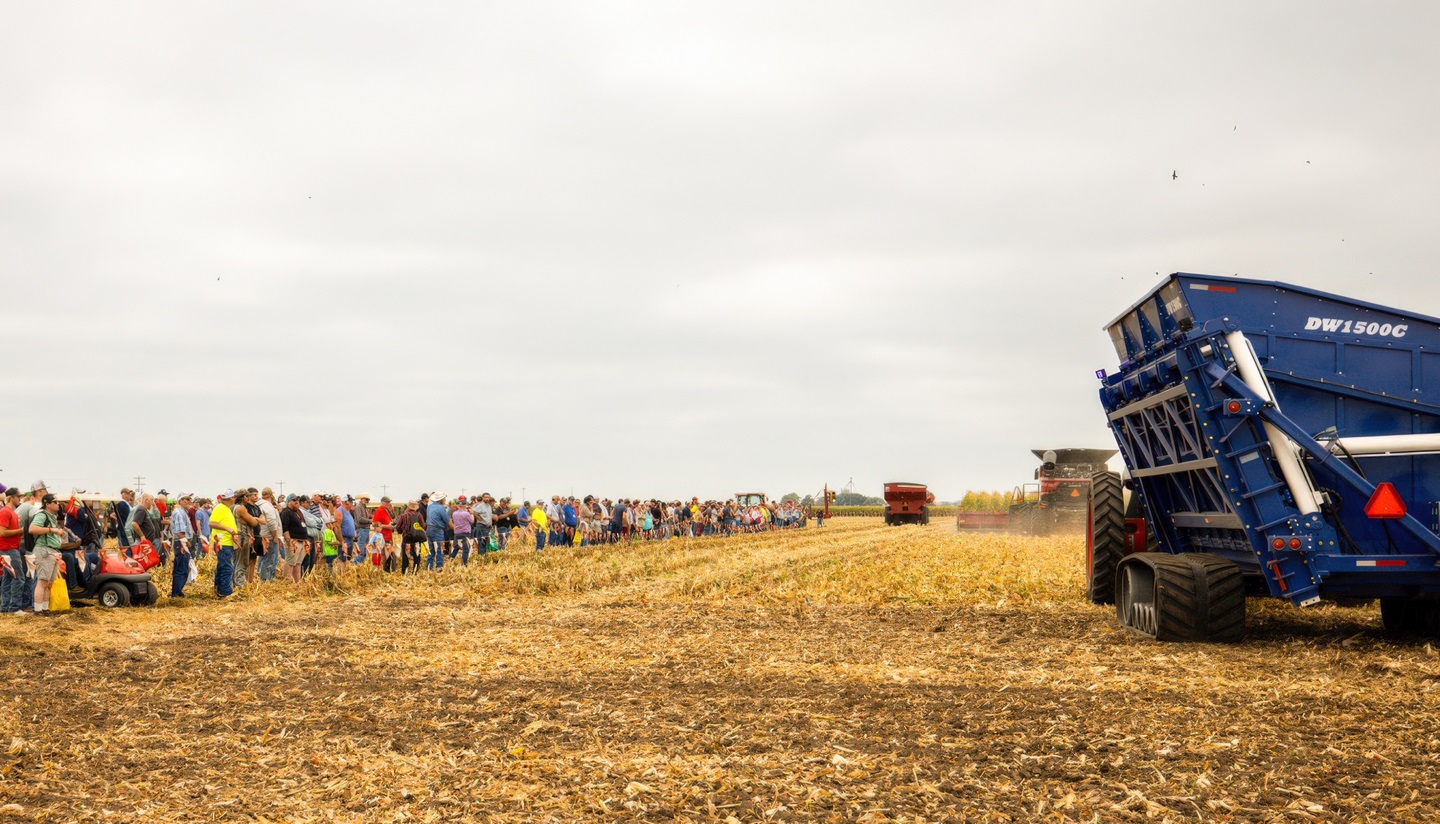

For 2026, Husker Harvest Days expands its lineup with new equipment experiences:
- Cornstalk baling: See specialized, heavy-duty machines turn scattered field debris into clean, tightly packed bales.
- Tub grinders: Watch leading manufacturers demonstrate efficient processing solutions for agricultural waste management and biomass handling.
- Feed mixers: Experience the latest innovations in feed-mixing technology engineered to optimize nutrition delivery and improve herd performance.
Returning favorites include:
- HHD Drone Zone: The HHD Drone Zone features live demonstrations of agricultural drones revolutionizing chemical application. This precision technology helps producers maximize efficiency while minimizing input costs through targeted applications.
- Field Demonstrations: Showcase essential equipment under real-world field conditions. The 12 categories include: (1) grain harvesting, (2) planting and tillage, (3) cornstalk raking and baling, (4) manure handling, (5) haying, (6) hay grinding, (7) grain drying and handling, (8) self-propelled sprayers, (9) strip-till, (10) autonomous equipment, (11) grain bagging and (12) feed mixers. Company experts will be available to answer questions after each demonstration.
Admission is free with online preregistration at www.huskerharvestdays.com. Gate admission is $25 for adults, $10 for students ages 13-17 (or free with a donation of five nonperishable food items), and free for children 12 and under.
Funding available to support trade promotion programs
Ag Secretary Brooke Rollins on June 10 announced USDA is accepting applications for fiscal year (FY) 2027 trade promotion programs. The programs operate as public-private partnerships, allowing USDA to work with farmers to lower trade barriers with foreign governments, creating space for American agribusinesses to secure overseas sales. Applications are being accepted through 5 p.m. EDT, Aug. 14, 2026.
Since 1977, every taxpayer’s dollar invested in these trade initiatives has generated $24.50 in return in export value. This expanding of global demand for American ag products injects an additional $45 billion into the U.S. economy each year and supports more than 225,000 jobs.
The specific trade promotion programs accepting applications under this funding cycle include:
- Market Access Program: Provides cost-share assistance to assist U.S. exporters and trade organizations to promote U.S. agricultural, fish and forest products. Notice of Funding Opportunity
- Foreign Market Development Program: Partners with nonprofit trade associations to build long-term international demand for U.S. commodities. Notice of Funding Opportunity
- Emerging Markets Program: Supports technical assistance that grows and develops opportunities for U.S. ag exports in emerging markets. Notice of Funding Opportunity
- Technical Assistance for Specialty Crops: Funds projects that address sanitary, phytosanitary and technical barriers that affect exports of U.S. specialty crops. Notice of Funding Opportunity
- Quality Samples Program: Helps trade organizations provide product samples to potential foreign importers to help familiarize them with U.S. ag products. Notice of Funding Opportunity
USDA’s Foreign Agricultural Service (FAS) will review all applications during the summer. FAS anticipates the announcement of final award selections this fall, with approved activities to begin in FY27.
Funding available to maintain and modernize ag research facilities
Rollins and Education Secretary Linda McMahon hosted land-grant university leaders at USDA June 15 for a roundtable discussion and announced the opening of the FY2026 funding opportunity for the Research Facilities Act program. President Trump’s Working Families Tax Cuts provided $125 million annually for the Research Facilities Act program, and this historic investment will help address decades of deferred maintenance and accelerate modernization of ag research facilities across the country.
The USDA National Institute of Food and Agriculture (NIFA) will administer this competitive funding opportunity, and the funding will support renovation, expansion and construction projects that strengthen research capacity and ensure America’s ag research enterprise remains equipped to meet the challenges facing America’s farmers, ranchers and producers.
Applicants must provide a dollar-for-dollar non-federal cash match to ensure strong local investment and stewardship of taxpayer resources, and eligible entities may receive funds for only one project at a time.
Projects will be funded at four levels:
- Level I: Planning Grants: $100,000-$200,000 for activities like needs assessments, site surveys, preliminary designs and cost estimates
- Level II: Small Facility Upgrades: $250,000-$2 million for activities like renovations and lab modernization
- Level III: Mid-scale Construction/Expansion: $2 million-$10 million for expansions, specialized research wings and major retrofits
- Level IV: Large-scale Research Complex: $10 million-$30 million for entire new buildings, specialized labs and controlled environment research facilities
The deadline for applications is July 17, 2026. For more information, visit nifa.usda.gov or email rfap@usda.gov.
Editor’s note: Compiled from industry news releases.
Angus Beef Bulletin EXTRA, Vol. 18, No. 6-B
Topics: Association News , Award winner , Feedstuffs , Health , Industry News , Management , Pasture and Forage , Policy , News
Publication: Angus Beef Bulletin
Related Content


Current Angus Beef Bulletin
Our September issue focuses on the females of the herd and the records that validate them.