



Get Better Hay, Better Returns With Small Changes
Tips for putting up, storing and feeding hay.
April 22, 2026

by University of Missouri Extension
Hay quality has a direct effect on livestock performance and feeding costs, yet many producers lose value long before hay reaches the feeder, says University of Missouri (MU) Extension Field Agronomist Rudra Baral.
The good news: Most quality losses are tied to management decisions that producers can control, says Baral. “Small changes in harvest timing, handling and storage can pay off in better animal performance and lower supplement costs.”
Harvest timing still biggest driver
The most important decision affecting hay quality is when you cut. As forage matures, fiber levels increase while digestibility and crude protein drop.
“Delaying harvest may increase tonnage, but it almost always lowers feeding value per bale,” he says, noting the best harvest window for cool-season grasses is during the boot stage to early heading. For legumes, the best harvest window is from the late bud to early bloom stage.
In Missouri, aiming for a first cutting by May generally supports higher-quality forage. But watch plant growth stages rather than the calendar, especially during warm springs when maturity advances quickly, says Baral.
“Delaying harvest may increase tonnage, but it almost always lowers feeding value per bale.” — Rudra Baral
Moisture management protects feed value
Baling hay at the right moisture prevents mold, heating and leaf loss. Target moisture levels are:
- small square bales: < 20%
- round bales: 15%–18%
- large square bales: < 16%
Hay that’s too wet can heat in storage, reducing nutrients and increasing fire risk. Hay that’s too dry becomes brittle, causing leaf loss, robbing hay of the most nutrient-dense part of the plant. Measure moisture with a meter and take multiple readings to avoid expensive mistakes.
Leaf retention makes or breaks protein levels
Leaves contain much more protein and digestible nutrients than stems, especially in legumes like alfalfa. Excessive handling when hay is too dry leads to leaf shatter and rapid quality loss. Some management tips to consider include:
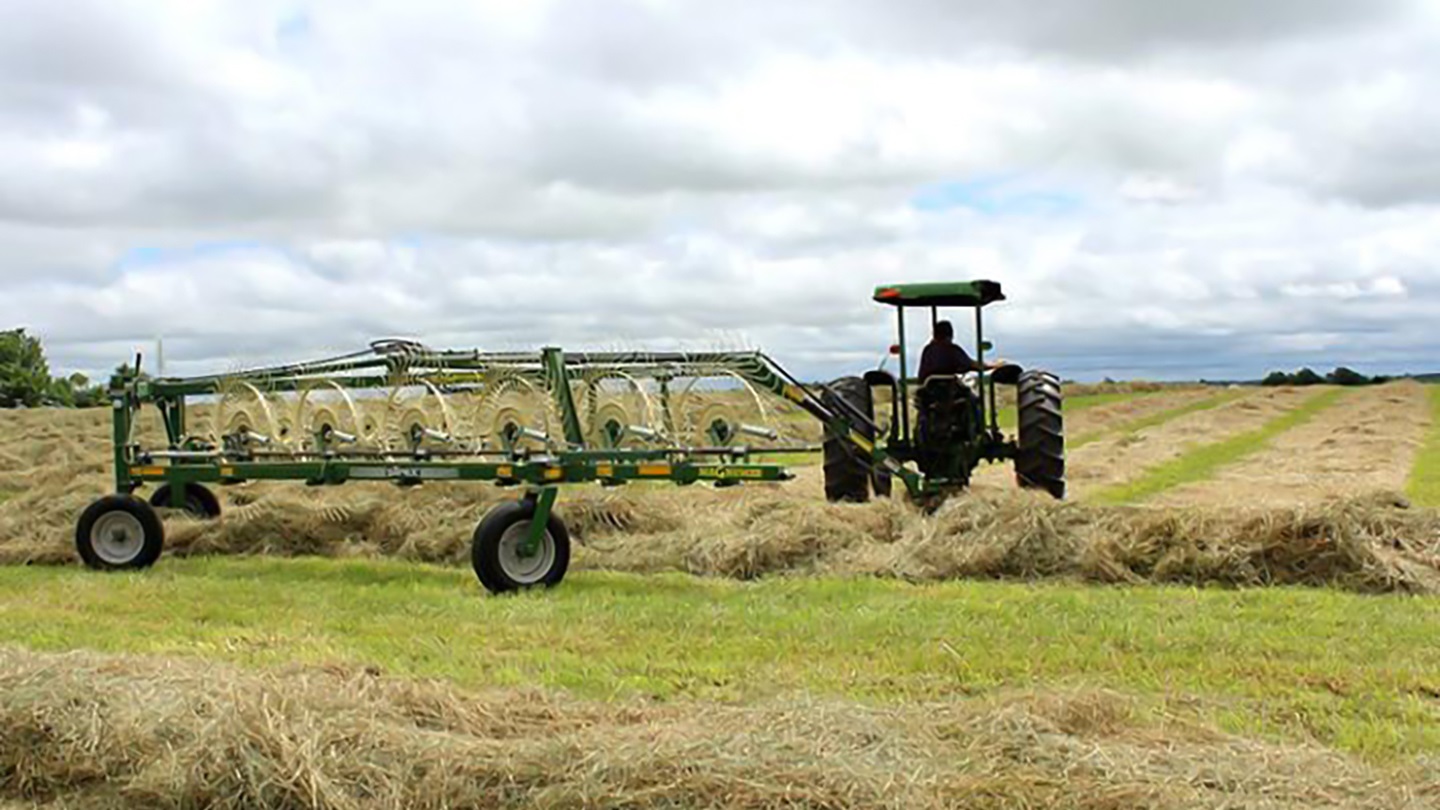
- Rake alfalfa when forage moisture is around 40% or higher.
- Adjust rake teeth to avoid soil contact.
- Limit the number of passes across the field.
Slowing down and handling hay carefully preserves nutrients that otherwise end up on the ground, Baral says.
Storage losses add up fast
How hay is stored can determine whether quality is maintained or wasted. Research shows round bales stored uncovered on bare ground can lose 25%-30% of nutrients within six months. After two years, losses may exceed 70%.
Good storage can reduce losses to less than 10%. Store hay off the ground. Cover bales or use net wrap. If storing outside, orient bales to improve drainage.
Test hay and match to livestock needs
Appearance alone doesn’t tell you what hay is worth. Forage testing is the only reliable way to match hay quality to livestock needs and avoid overspending on supplements, says Baral.
Recent Missouri hay testing shows many grass hays fall below the needs of growing cattle. Supplementing low-quality hay can cost producers thousands of dollars per feeding season, which often is more than the cost of producing better hay in the first place.
Feed the highest-quality hay to animals with the greatest nutrient demand, such as lactating cows, growing calves and replacement heifers. Lower-quality hay can work for dry, mid-gestation cows if body condition is monitored.
“Good hay doesn’t happen by accident,” says Baral. Timely cutting, correct moisture at baling, gentle handling, smart storage and routine forage testing work together to protect forage value— and your bottom line. The most cost-effective supplement for many Missouri operations is often better hay, not more feed.
Editor’s note: [Lead photo by Linda Geist.]
Angus Beef Bulletin EXTRA, Vol. 18, No. 4-B
Topics: Feedstuffs , Pasture and Forage , Nutrition
Publication: Angus Beef Bulletin
Related Content


Current Angus Beef Bulletin
Our November issue focuses on the females of the herd and the records that validate them.