



From the Field
Notes from your regional managers regarding flies, external parasites and drought.
May 21, 2026
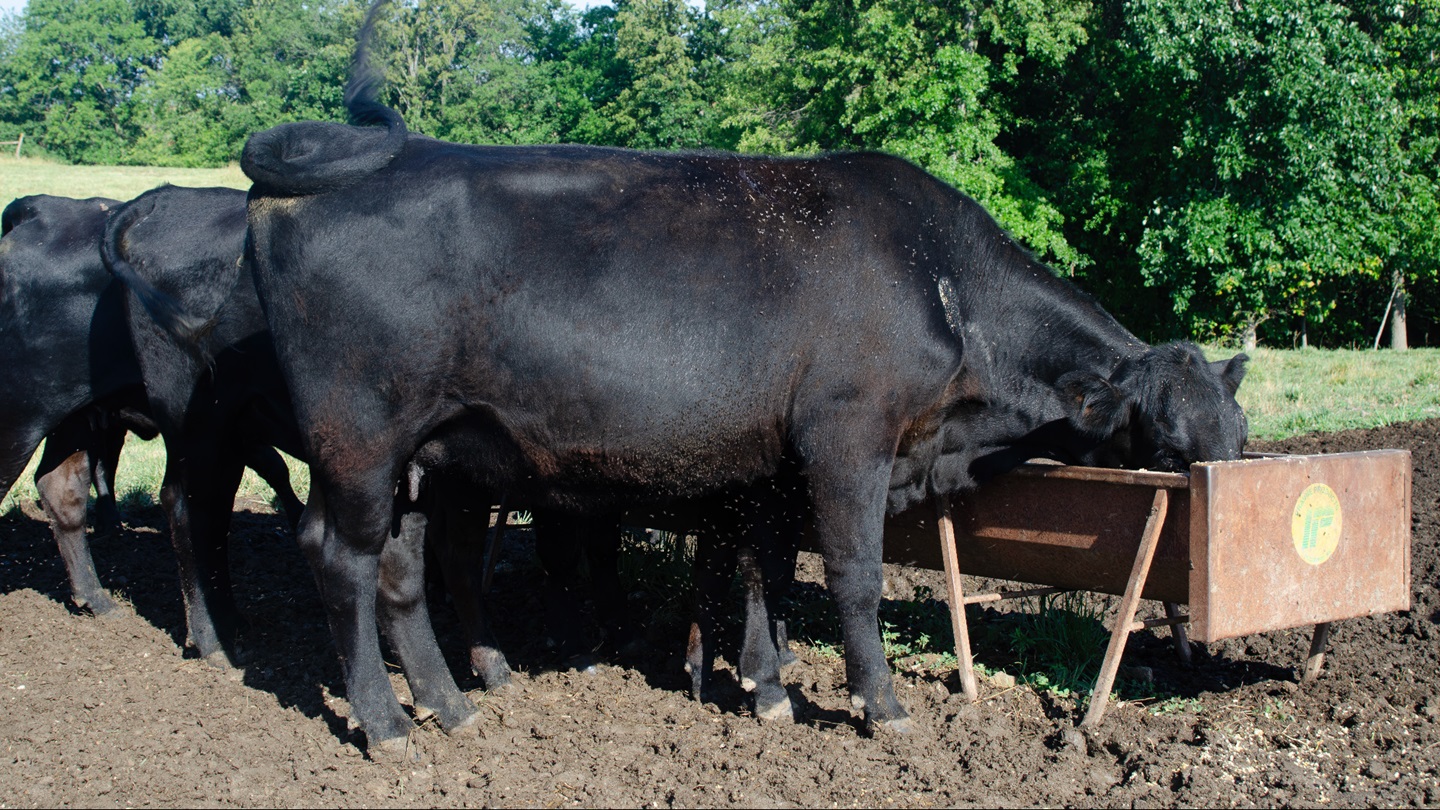

 We’ve said it before, and yet the statement still rings true: Life across much of the United States is getting pretty dry. Despite drought conditions throughout much of the country, various varieties of flies — unfortunately — seem to have been left off the memo.
In this edition of “From the Field,” regional managers Landon Andrews and Trevor Haney share their thoughts on the current drought and how producers can knock down persistent external parasites.
Rainfall welcome
A glance at the U.S. Drought Monitor shows much of the country is in the grips of moderate to exceptional drought. The layers of yellow, orange, red and maroon paint a worrisome picture of what cattlemen are up against.
For many Region 11 producers, says Andrews, drought conditions are a familiar theme.
“We’re in bad shape. I just filled out my monthly regional manager report. Utah, as of May 1, is at 18%-20% of our typical snowpack,” Andrews says, noting that this past winter was one of the driest he can recall. “That’s scary in a state that is always in a drought anyway. It’s rough, but we’ve been in a drought just about my whole life.”
Andrews says while portions of his territory are receiving moisture, lack of rainfall is forcing producers to feed hay longer, which in turn is causing some cattlemen to rethink their herd rebuild plans with the idea of downsizing until weather conditions begin to look more favorable.
Down in Region 13, drought looks a little different. While there are still showers popping up, portions of Alabama, Mississippi, Louisiana and Arkansas are still categorized as being in moderate to exceptional drought. There is still grass to turn cattle out on, but it is certainly not as plentiful as in previous years.
“The majority of the breeding season is wrapping up, minus some late falls or early winters, and everybody is turned out on what grass we do have,” says Haney, explaining that the drought hasn’t stopped producers from moving forward with their forage production plans. “We’re in the midst of starting hay season. Everyone just harvested their cool-season [forages] and are starting to get into the summer grass now.”
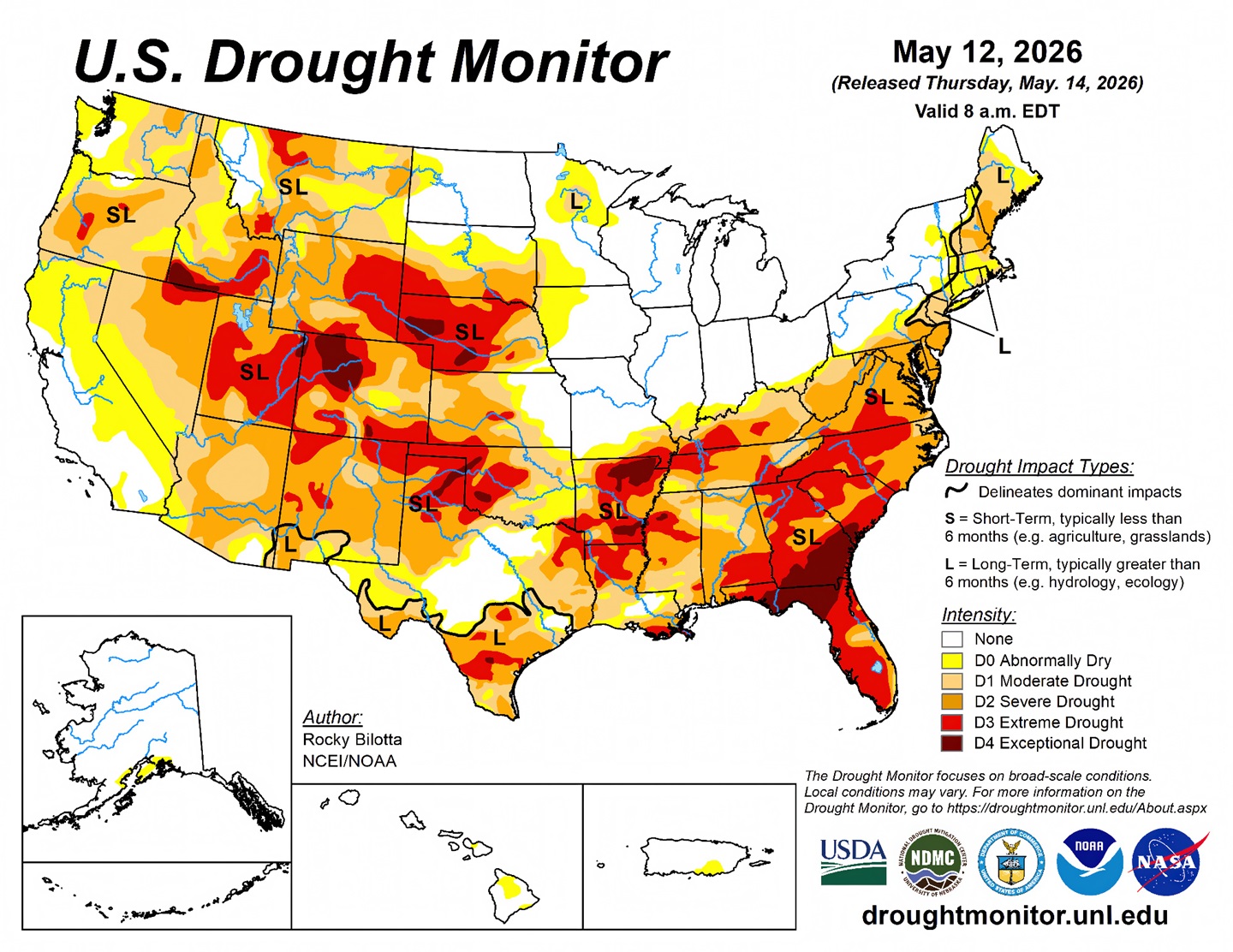
The U.S. Drought Monitor along with statistical data is available at https://droughtmonitor.unl.edu.

Battling biting insects
While moisture and humidity typically mean increased insect pressure, areas experiencing drought don’t receive a “get out of jail free” card. Insect pressure typically comes in waves, and being prepared helps manage midseason fly-related stress.
When exactly that pressure rears its head is a yearly debate, says Andrews.
“In my region, you’re going to see flies,” Andrews explains, noting that the arrival of the biting insects could span from early April into May. “Generally, most of the commercial guys in my region will [treat] at spring branding.”
Treating for flies could mean pouring cattle or applying fly tags, but flies aren’t the only biting insect worth noting. There may be fewer disease concerns in more arid climates, but ticks will still somehow manage to survive.
One tickborne disease of note for the Western United States is foothill abortion (or epizootic bovine abortion). As with many livestock diseases in the news recently, ticks catch considerable blame for spreading the disease.
“It’s just a tick, but it makes it extremely difficult to sell cattle into California,” Andrews says, noting that cattle need to be vaccinated or exposed to the disease to build potential immunity. “Nevada doesn’t really worry about it; but if you tried to sell a load of calves in California that were not foothill [abortion] exposed or vaccinated, you would be dead in the water. That’s as big as a problem as anything in my region.”
In Region 13, flies have already arrived and made themselves at home. Before the summer heat kicks in, many producers will get cattle through the chute to pour for flies or apply fly tags.
A management tool sometimes overlooked when it comes to cutting down on fly numbers? Rotational grazing.
“Move those cattle around so they’re not in the same areas. Making sure their pastures are clean, giving those breaks and using some kind of natural deterrent are all solid methods,” says Haney, explaining that getting ahead of peak fly season is crucial to decreasing their numbers. “Start early and get ahead of the flies. Once they’re here, it’s hard to catch up.”
Editor’s note: “From the Field” is a regular Angus Beef Bulletin EXTRA column featuring advice, industry news and Angus updates from regional managers of the American Angus Association. For information on how to contact your regional manager, click here. [Lead photo by Shauna Hermel.]
Angus Beef Bulletin EXTRA, Vol. 18, No. 5-B
Topics: Health , Industry News , Pasture and Forage , Management , News
Publication: Angus Beef Bulletin
Related Content


Current Angus Beef Bulletin
Our September issue focuses on the females of the herd and the records that validate them.