

News & Notes
News from across the country pertinent to Angus producers.
June 4, 2026


News items featured in this edition of the Angus Beef Bulletin EXTRA include:
- Autauga Farming Co. named BIF Commercial Producer of the Year
- NCBA backs FAIR Labels Act to ensure transparency in protein labeling
- FDA issues emergency use authorization for topical powder to prevent and treat New World screwworm in multiple species
- Omaha summit expands Common Ground Coalition recommendations to strengthen livestock industry
- Association, Angus Foundation offer INTRUST Bank credit card program to support education, youth and research
Autauga Farming Co. named BIF Commercial Producer of the Year
The Beef Improvement Federation (BIF) presented Autauga Farming Co. Inc. the 2026 BIF Commercial Producer of the Year Award June 2 during the group’s annual research symposium in Boise, Idaho. This national award recognizes a producer’s dedication to improving the beef industry at the commercial level.
Rooted in Autaugaville, Ala., Autauga Farming Co. has spent more than a century refining one of the Southeast’s most distinguished commercial cow herds. Founded in 1919 and now stewarded by the fourth and fifth generations of the Wendland family, the operation reflects a deep, unwavering commitment to beef improvement.
“Autauga Farming Company and the Wendland family symbolize the performance principles of the Beef Improvement Federation and have done so for generations,” says Michelle Elmore, Alabama Beef Cattle Improvement Association (BCIA) executive secretary.
At the heart of the enterprise is a fall-calving herd of 1,018 breeding females — a closed herd for more than 40 years. By eliminating outside female influence, the Wendlands have built a genetic program precisely tailored to Alabama’s sandy soils and climate. Their three-breed terminal rotation of Angus, Hereford and Charolais is engineered for maximum hybrid vigor and produces calves that excel in maternal traits, feedlot performance and carcass quality.
The family’s commitment to data backs every breeding decision. As charter members of the Alabama BCIA since 1964, the Wendlands have maintained 62 consecutive years of performance records — weaning weights, gain ratios and carcass data — now managed digitally through CattleMax and electronic identification technology. Carcass feedback from their customers directly informs sire selection, ensuring their genetics perform as well on the rail as in the pasture.
In 2025, they reintroduced artificial insemination into their replacement heifer program for the first time in 25 years to tighten the calving window and improve calf uniformity.
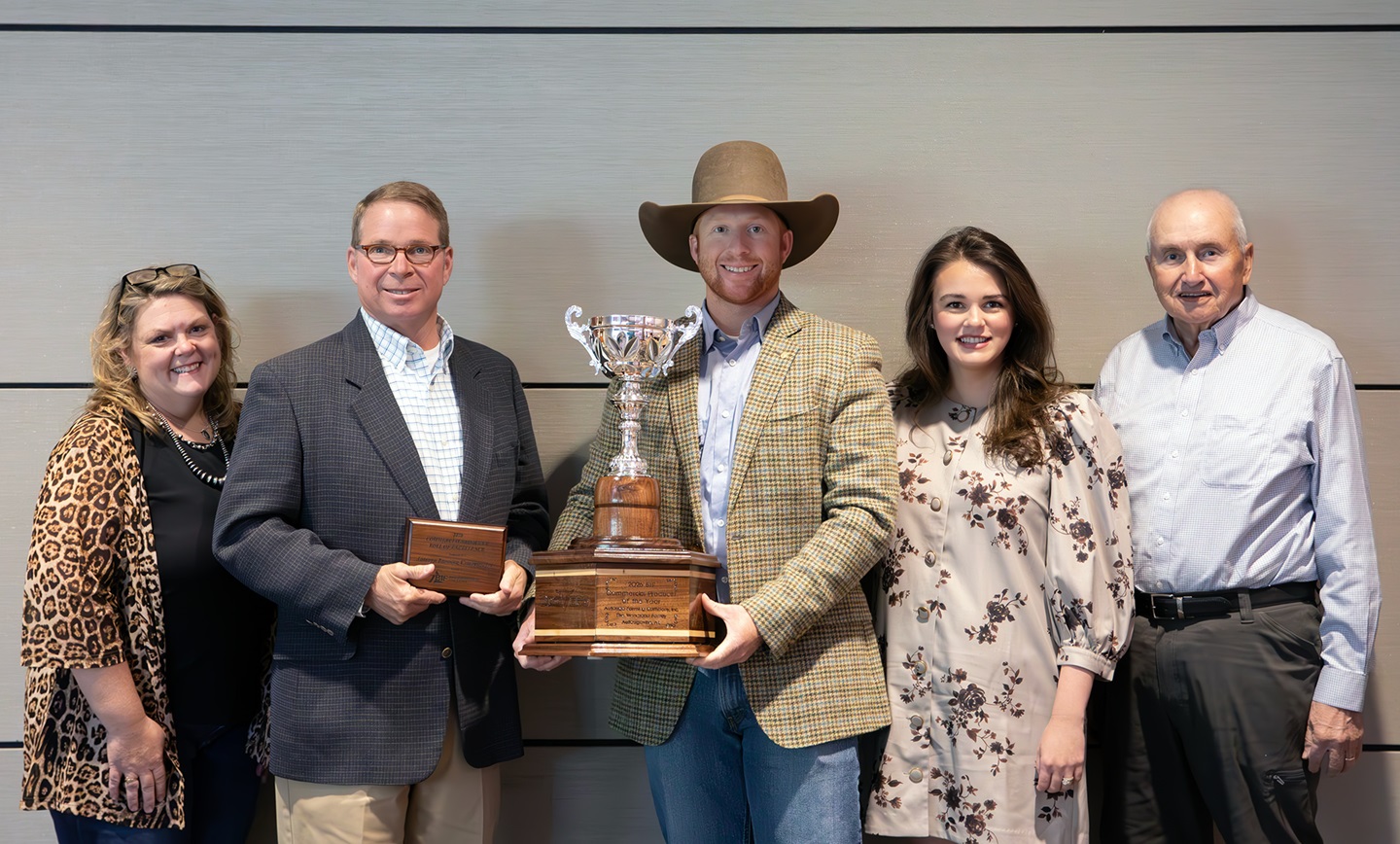
Autauga Farming Co. of Autaugaville, Ala., was honored June 2 as the 2026 BIF Commercial Producer of the Year. Pictured are (from left) Angie Denton, Drovers, sponsor; Andy Wendland, Dan Wendland and Susan Wendland, recipients; and Ken Odde, BIF vice president.

The Wendlands didn't just build a better herd; they built a better market. Co-founding the Producers Feeder Calf Sale in 1980, they established a regional benchmark for preconditioned, vaccinated, uniform calf loads that command premium prices.
“Their innovative spirit and love of agriculture have and will continue to make a positive and influential impact,” Elmore summarizes. “Each generation has served as a dedicated model for progressive agriculture. Autauga Farming Company will continue to be an advocate for improvement in efficiency, profitability and sustainability of agriculture.”
Autauga Farming Co. was nominated for the award by the Alabama BCIA.
NCBA backs ‘FAIR Labels Act’ to ensure transparency in protein labeling
The National Cattlemen’s Beef Association (NCBA) on April 30 endorsed the Fair and Accurate Ingredient Representation on Labels (FAIR Labels) Act. This legislation would ensure consumer transparency by addressing the labeling of cell-cultivated protein and plant-based alternative protein products. Sen. Pete Ricketts (R-NE) and Sen. John Fetterman (D-PA) sponsored the bipartisan Senate version of the FAIR Labels Act. Reps. Mark Alford (R-MO), August Pfluger (R-TX), Mike Flood (R-NE), Mike Simpson (R-ID), Buddy Carter (R-GA), and Tony Weid (R-WI), sponsored the House version.
“Currently, there is no federal statute for labeling cell-cultivated protein products in the marketplace. For far too long, lab-grown protein companies have exploited the use of terms like 'meat' and 'beef' to describe their products, creating the potential for consumer confusion through misleading marketing,” said Gene Copenhaver, NCBA president and Virginia cattle producer. “The FAIR Labels Act will establish a federal guideline for labeling cell-cultivated and plant-based alternative protein products, ensuring consumers can easily differentiate these products from real beef products produced by U.S. cattlemen and cattlewomen. We thank these members of the House and Senate for their efforts to protect truthful beef labeling and deliver clarity in the marketplace.”
The FAIR Labels Act would:
- Require lab-grown protein products to bear the label “cell-cultivated protein.”
- Require plant-based “meat” products to bear the label “plant-based alternative protein.”
- Mandate cell-cultivated and plant-based protein products include a disclaimer, noting the product in its final form was not derived from a live animal.
- Direct the secretaries of Agriculture and Health and Human Services (HHS) to revise their departments’ current Memorandum of Understanding (MOU).
- Direct the secretaries of Agriculture and HHS to coordinate in developing necessary common standards of identity for cell-cultivated and plant-based alternative protein products.
“For years, lab-grown and plant-based protein products have used traditional beef labeling terms, creating confusion for consumers,” said Ethan Lane, NCBA senior vice president of government affairs. “The FAIR Labels Act is a critical step toward protecting the integrity of real food animal products and ensuring consumers have clear, accurate information at the meatcase.”
FDA issues emergency use authorization for topical powder to prevent and treat New World screwworm in multiple species
The FDA on April 27 issued an emergency use authorization (EUA) for Negasunt® Powder (coumaphos, propoxur, and sulfanilamide topical powder) for the prevention and treatment of New World screwworm (NWS) infestations (myiasis).
The FDA has concluded that based on the scientific evidence available, it is reasonable to believe Negasunt Powder may be effective for the prevention and treatment of NWS myiasis in cattle; swine; goats; sheep; horses; donkeys; domestic hybrid equids (e.g., mules); and captive wild, exotic and zoo mammals, and that the known and potential benefits of the product outweigh its known and potential risks.
Currently, Elanco US Inc., the drug sponsor, intends to limit distribution of Negasunt Powder to the USDA for further distribution to authorized users. Prior to an incursion of NWS into the United States, Negasunt Powder is only available for use by employees of federal, state, local and federally recognized tribal agencies, and people working under their authority and at their direction. At the incursion of NWS into the United States (which occurred June 3; see story), the product may also be used by or on the order of a licensed veterinarian in NWS-infested zones and adjacent surveillance zones as defined by the USDA in the NWS Response Playbook (page 9).
Coumaphos and propoxur, two of the active ingredients in Negasunt Powder, can cause neurotoxicity. The EUA sets specific requirements to address this risk for people, animals and the environment.
It is important that authorized users of this product review all human and animal safety information, including the boxed warning and limitations of authorized use, and closely follow its conditions of use and disposal instructions as detailed in the Fact Sheet: Emergency Use Authorization of Negasunt Powder (coumaphos, propoxur, and sulfanilamide topical powder) for New World screwworm (NWS).
Food safety information:
- Treated animals must not be slaughtered for human consumption within 28 days of the last treatment.
- A milk discard time has not been established for this product; do not use in animals producing milk for human consumption.
- A withdrawal period has not been established for this product in preruminating calves; treated calves and calves born to treated cows must not be processed for veal.
This EUA will be effective until it is revoked or the HHS Secretary terminates the declaration that the potential public health emergency presented by NWS justifies the emergency use authorization of animal drugs for NWS.
Negasunt Powder is sponsored by Elanco US Inc. based in Indianapolis, Indiana.
Additional information:
- Freedom of Information Summary: Negasunt Powder (EUA 006653)
- Letter of Authorization: Negasunt Powder (EUA 006653)
- Fact Sheet: Emergency Use Authorization of Negasunt Powder (coumaphos, propoxur, and sulfanilamide topical powder) for New World Screwworm (NWS)
- Animal Drugs for New World Screwworm
- Emergency Use Authorization of Animal Drugs for NWS
Omaha summit expands Common Ground Coalition recommendations to strengthen livestock industry
The Common Ground Coalition convened its Midwest Regional Summit last week in Omaha, Neb., the second stop in a four-region tour to strengthen the livestock industry and build consensus on practical solutions that support rural communities and secure the U.S. food supply.
Doug Shepperd, a cattle producer and feeder from Nebraska, said the goal is to ensure livestock producers’ long-term success.
“It’s all about finding a path that allows producers, especially at the cow-calf level, to enter into and continue to grow in this business so we can preserve this industry for the future,” he said.
During the summit, attendees identified key priorities aimed at protecting the future of the livestock industry by expanding access to land and capital, supporting emerging producers, building the workforce pipeline, and improving risk management tools.
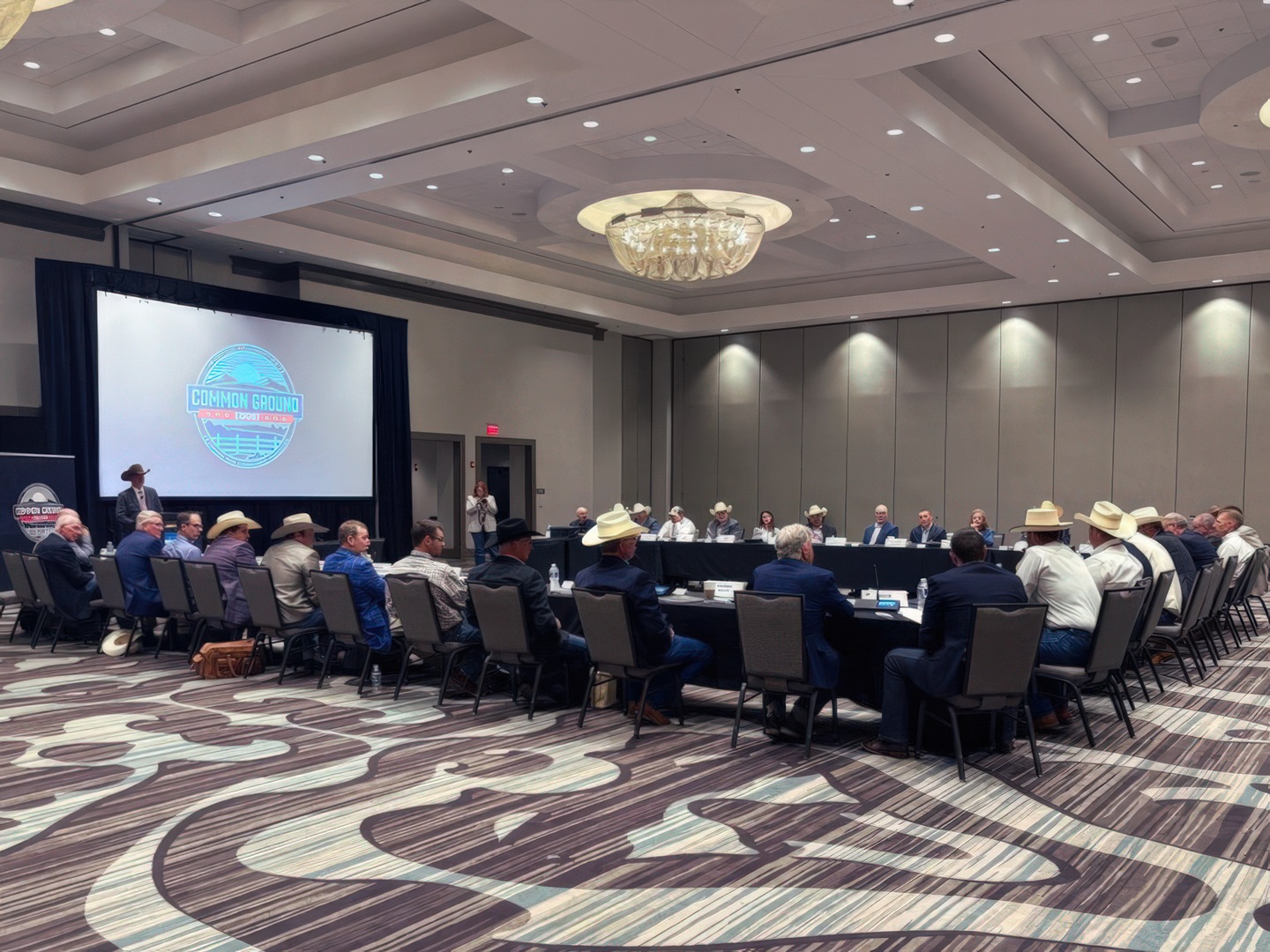
Attendees for the Midwest Regional Summit were selected through a process that began with the coalition’s original supporters from the Denver 2025 summit and expanded through nominations and outreach to producers across the country.

They agreed the following solutions would positively effect the industry:
- Expanding access to capital through improvements to Farm Service Agency (FSA) lending programs, increased flexibility in financing, and reforms to address the timelines for when producers can be defined as “young,” “beginning” or “emerging.”
- Exploring innovative funding approaches that leverage existing revenue streams and investor-backed mechanisms to expand access to affordable capital for livestock producers, particularly those entering or growing within the industry.
- Enhancing risk management opportunities by expanding Livestock Risk Protection (LRP) coverage to include beef stock cows and beef cull cows, while improving affordability and increasing adoption through producer and lender education.
- Developing mentorship, succession and land transition pathways to help people enter the industry; grow their operations; and connect with established producers through lease-to-own arrangements, partnerships and succession-planning tools.
- Improving the livestock workforce pipeline through expanded internships, apprenticeships, career development opportunities, and partnerships with high schools, vocational programs, colleges and agricultural education organizations.
- Advancing targeted H-2A guest worker reforms by reducing or eliminating seasonality restrictions to better reflect year-round livestock operations. Expanding program eligibility to include livestock auction markets, feedyards and dairies and streamlining the renewal process to improve workforce stability.
- Improving access to affordable healthcare and benefits to support workforce retention in rural communities.
- Advancing tax policy improvements, including Section 179 enhancements, capital gains modifications, and 2032A revisions, to support reinvestment and land transfer for agricultural use.
- Improving access to land by expanding grazing opportunities on public lands, Conservation Reserve Program (CRP) acres, and other underutilized resources, while reforming CRP to allow more flexible and timely grazing, especially in advance of and during drought conditions.
- Enhancing Environmental Quality Incentives Program (EQIP) and cost-share programs to better reflect current input costs and improve program usability.
Reflecting on the outcomes, Wyoming rancher Andrew Wasserburger said there was strong alignment in the room around what’s making it harder for livestock producers and operators to stay in or grow in this business — and what needs to change.
“As participants, we were challenged to look beyond our individual operations and focus on solutions that could deliver lasting, generational impact — ensuring livestock producers, especially ranching families, have the opportunity to grow and remain on the land for years to come,” he said.
To learn more or to sign on to the Common Ground Coalition, visit commongroundcoalition.net.
Association, Angus Foundation offer INTRUST Bank credit card program to support education, youth and research
The American Angus Association and the Angus Foundation have partnered with INTRUST Bank to offer an exclusive credit card program designed for Angus breeders and supporters across the country. The INTRUST Bank American Angus Association Credit Card allows cardholders to show their Angus pride while accessing a range of valuable rewards and benefits.
Branded with Angus imagery and available in multiple card options, the program offers Angus enthusiasts the opportunity to select a card that best fits their lifestyle. Whether seeking cash back rewards or travel perks, cardholders will enjoy strong protection features and everyday advantages that enhance convenience and peace of mind.
The Angus Foundation is excited to offer a simple way to support the Angus mission while enjoying meaningful financial benefits for all parties. This partnership allows individuals to celebrate their connection to the breed in a way that also gives back to programs shaping the future of our industry.
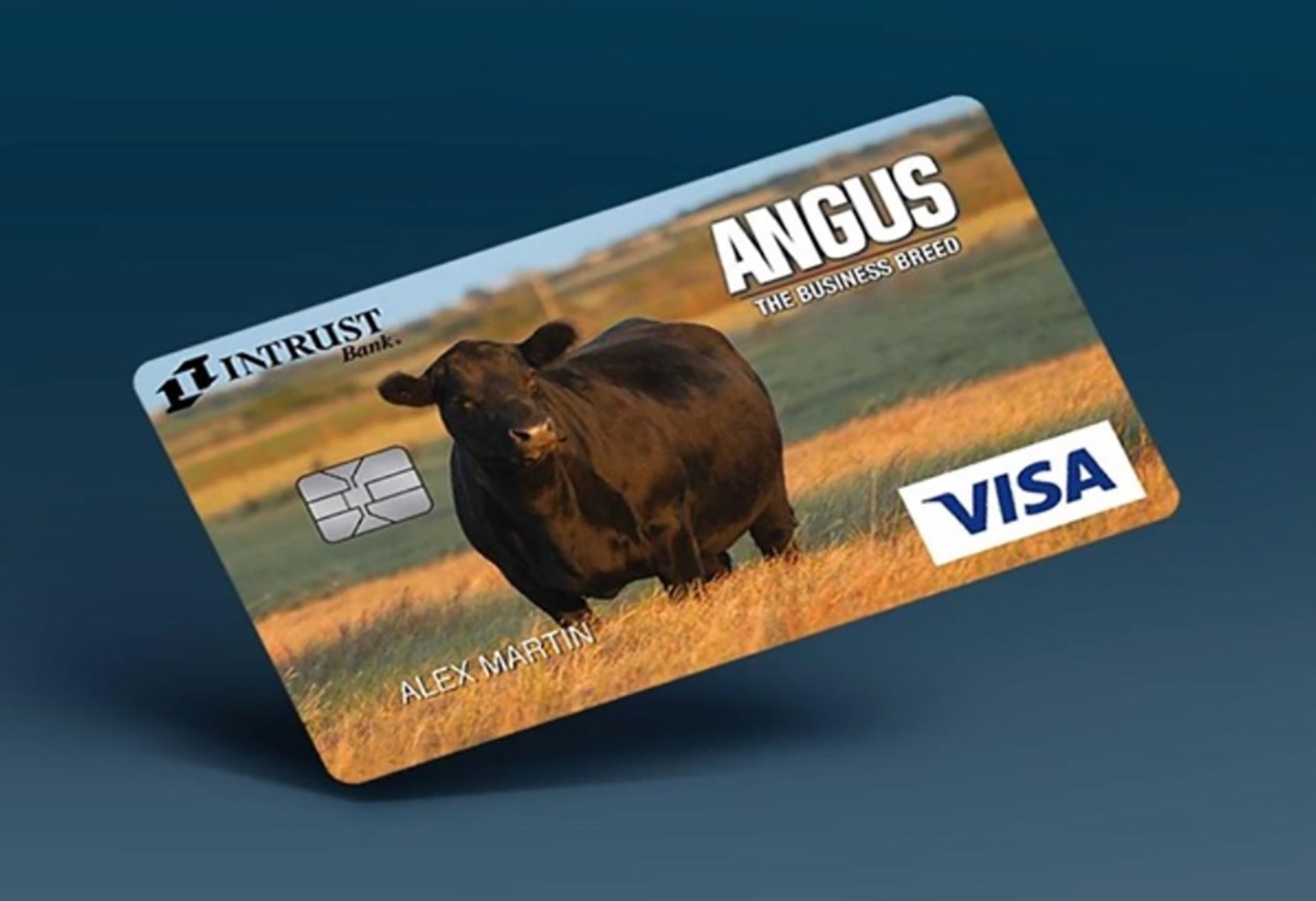
The INTRUST Bank American Angus Association credit card offers members exclusive rewards while giving back to the Angus Foundation.

INTRUST Bank, a respected ag lender with roots in the cattle business, serves as the proud partner for this initiative. As part of the agreement, royalties generated through the program will directly support the Angus Foundation’s education, youth and research efforts, strengthening its ability to invest in the next generation and advance the breed.
“Every card application helps fuel educational opportunities and programing, leadership development and research priorities that continue driving progress within the Angus breed,” said Jaclyn Boester, Angus Foundation executive director.
Individuals interested in applying for the credit card can explore card options and submit an application online.
Editor’s note: Articles adapted from multiple news releases. [Photos provided by respective companies.]
Angus Beef Bulletin EXTRA, Vol. 18, No. 6-A
Topics: Association News , Award winner , Equipment / Facilities , Events , Health , Management , Industry News , News , Policy
Publication: Angus Beef Bulletin
Related Content