



Health & Husbandry
The power of postmortems.
September 29, 2026


Putting a puzzle together can be fun, but challenging. Sometimes the full picture cannot be appreciated until the final pieces lock into place. Postmortem examinations can help fill in those critical pieces when trying to understand herd health problems. While focusing on live and diseased animals is critical during a disease outbreak, investing time to complete postmortem examinations can uncover information to help prevent future mortalities.
A postmortem examination allows a veterinarian to thoroughly evaluate major body systems, identify pathologic changes and ideally determine a cause of death. A dead animal is always a loss, but valuable information can be gained about the disease that will benefit the herd. The goal of this article is to provide basic information on what to expect from a postmortem examination and how results can be used to improve animal health decisions.
Postmortem overview
A good postmortem examination follows a systematic process rather than simply evaluating one area in search of the most obvious or expected lesion. The process seeks to identify abnormalities contributing to death. Typically, a postmortem begins with an external examination of the animal before proceeding to evaluation of the internal organs and major body systems.

Visual appraisal is useful for identifying many common diseases. Gross examination cannot identify specific pathogens responsible for the disease, but a postmortem can provide important information about type, severity, distribution and approximate duration of disease. Determining if the disease process was likely limited to the individual animal or if it may be indicative of a disease that could affect the rest of the group is an important goal.
Even if the animal’s cause of death is apparent prior to mortality, a postmortem examination can be beneficial. Concurrent pathologies may be present that need to be addressed, or sometimes the most interesting findings are unexpected pathologies present in seemingly clear-cut cases. Consistently examining and recording mortalities provides data to evaluate health programs and identify changes in disease patterns over time.
Not every case can be diagnosed through visual examination alone. Samples may be collected and submitted to a diagnostic laboratory for additional testing. Laboratory testing can provide information about specific pathogens involved in disease and identify microscopic lesions or other abnormalities not apparent during gross examination.
Even when the postmortem examination does not immediately reveal a diagnosis, it provides an important opportunity to collect tissues, fluids or other samples that may become valuable if additional similar cases occur.
Data to decisions
One of the greatest benefits of postmortem examinations is the opportunity to evaluate current diagnostic, treatment and prevention programs. To fully utilize these findings, postmortem results should be matched with other data about the animal. Useful information may include pen or pasture location, age or class of cattle, source, timing of death, days since arrival, clinical signs and previous treatment history. Together, these records create a valuable database for monitoring herd health changes.
Identifying disease in live cattle is challenging, especially determining duration and severity of illness. A postmortem examination often provides a much clearer picture of both the length of the disease process and the amount of actual pathologic changes. Comparing postmortem findings with the animal’s diagnostic and treatment history can help veterinarians and caregivers improve live-animal disease detection and decision-making.
Several useful questions can be asked when reviewing findings from each mortality:
- Was the live animal diagnosis of the disease correct?
- Were additional diseases contributing to death?
- Was the animal identified as diseased and treated at the appropriate time?
- Was the treatment protocol appropriate for the actual cause of death?
- What, if anything, could be done differently with the next similar case?
Answers to these questions determine where future health program efforts should be focused. For example, repeated findings of advanced chronic pneumonia in animals treated only shortly before death may suggest disease detection is occurring too late, encouraging an emphasis on rapid disease identification.
In contrast, cattle treated appropriately, but dying with severe progressive disease may indicate a need to reevaluate treatment strategies or expected treatment success.
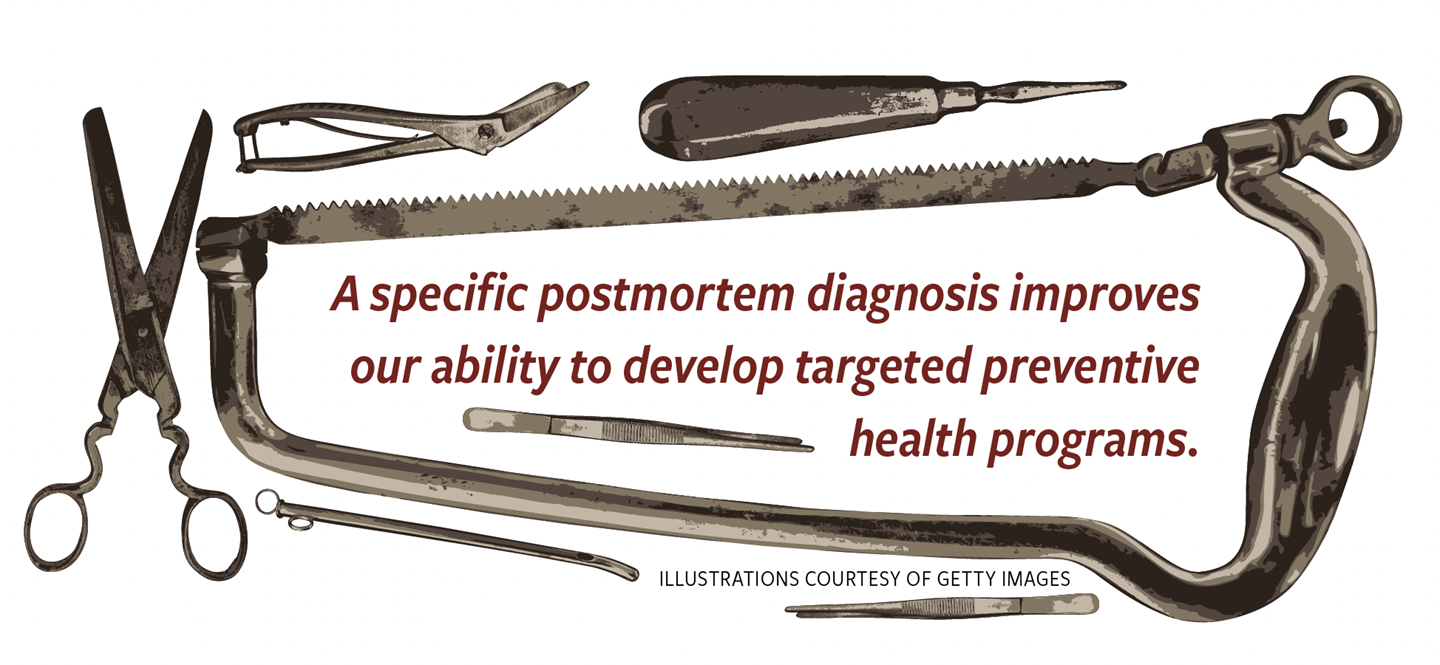
A specific postmortem diagnosis also improves our ability to develop targeted preventive health programs. Disease is often not the result of a single pathogen, but rather the interaction among pathogens, the animal’s immune response, management and the environment. Changes in vaccination, nutrition, receiving programs or other management practices may be monitored through postmortem findings.
Categorizing postmortem diagnoses across multiple cases allows meaningful patterns to emerge, informing the preventative health and management programs.
Conclusions
A mortality is always a loss, but a postmortem examination can help recover some value from that loss by providing information to benefit the remaining cattle. Consistently recording postmortem findings and combining them with animal health records creates an opportunity to improve diagnostic, preventive and treatment programs.
The postmortem exam should be more than an afterthought. When used consistently, postmortem examinations build a database helping veterinarians and producers learn from the cattle that were lost to make better decisions for those that remain.
Editor’s note: Author Brad White is the E.J. Frick Chair at Kansas State University College of Veterinary Medicine and serves as director of the Beef Cattle Institute. The Beef Cattle Institute has two weekly podcasts focused on a variety of cattle topics: Cattle Chat and Bovine Science with BCI. Learn more at www.ksubci.org.
Angus Beef Bulletin EXTRA, Vol. 18, No. 10-A
Related Content


Current Angus Beef Bulletin
Our November issue focuses on the females of the herd and the records that validate them.