



Outside the Box
Tripping over the truth.
August 20, 2026
It was the fall semester of 1978, and I was about to trip over the truth. Tom Sutherland, son of Scotland, was raised on a diversified farm and was a brilliant animal breeder. One of those dynamic professors who attracted students like bees to blooms, he was a master educator who had the unique capacity to bring theory to practice, to invite vigorous debate and to guide a pack of eager young stockmen to embrace the power of data.
Sutherland laid out the power of performance data as the central way to make sound breeding decisions. In his estimation, the industry had to move from the notion that certain gifted livestock evaluators possessed the elusive insight that distinguished some as having “the eye of the master,” thus making them the equivalent of Rembrandt or Michelangelo — the rare few gifted with a nearly mystical power.
To be honest, I wanted to possess that power — to hone my observational skills to the point of being added to the roll call of that most elite fraternity of breeders. Thus, on this day, I was determined to play the contrarian.
“Hold on,” I protested. “Breeding great cattle cannot be reduced to a set of equations. What about the power of creativity, the value of astute observation, and the role of the elite breeder who has the keen insight most will never possess? All this talk of numbers will remove the anticipation of the next calf crop and the very joy of finding the great sires and dams.”
It would have been easy for him to dismiss my romantic notion of livestock breeding, but instead he invited me to his office for a longer conversation. In that discussion, he opened the door to an entirely new way of thinking. He then pulled out a bottle of Johnnie Walker Red™ from the bottom file drawer, poured each of us a dram of the amber spirits, and then spent the next 30 minutes introducing me to the intricacies of the poetry of Robert Burns.
Power in quantitative genetics
I think of Tom Sutherland and those discussions often, finding myself grateful for an invitation that opened my mind to the power of quantitative genetics and began a lifetime journey of discovery based on analytics at the core, but never far from the creative process.
Today, we find ourselves nearly drowning in a sea of data, striving to practice discernment while bombarded with both volume of information and a torrent of messaging that urges us to simply trust the power of artificial intelligence. I find it useful to take on the vantage point of the skeptic and the contrarian urge to not hand it all over to an algorithm.
Data-driven vs. data-informed
Data is a powerful tool — but only when it generates information useful in decision-making. In some cases data should drive decision-making so bias isn’t introduced, precise processes are followed to the letter and decisions are made quickly to solve upstream problems before they proliferate (Table 1). Data-driven decisions are best when conditions are relatively stable and the metrics for success are limited in number.
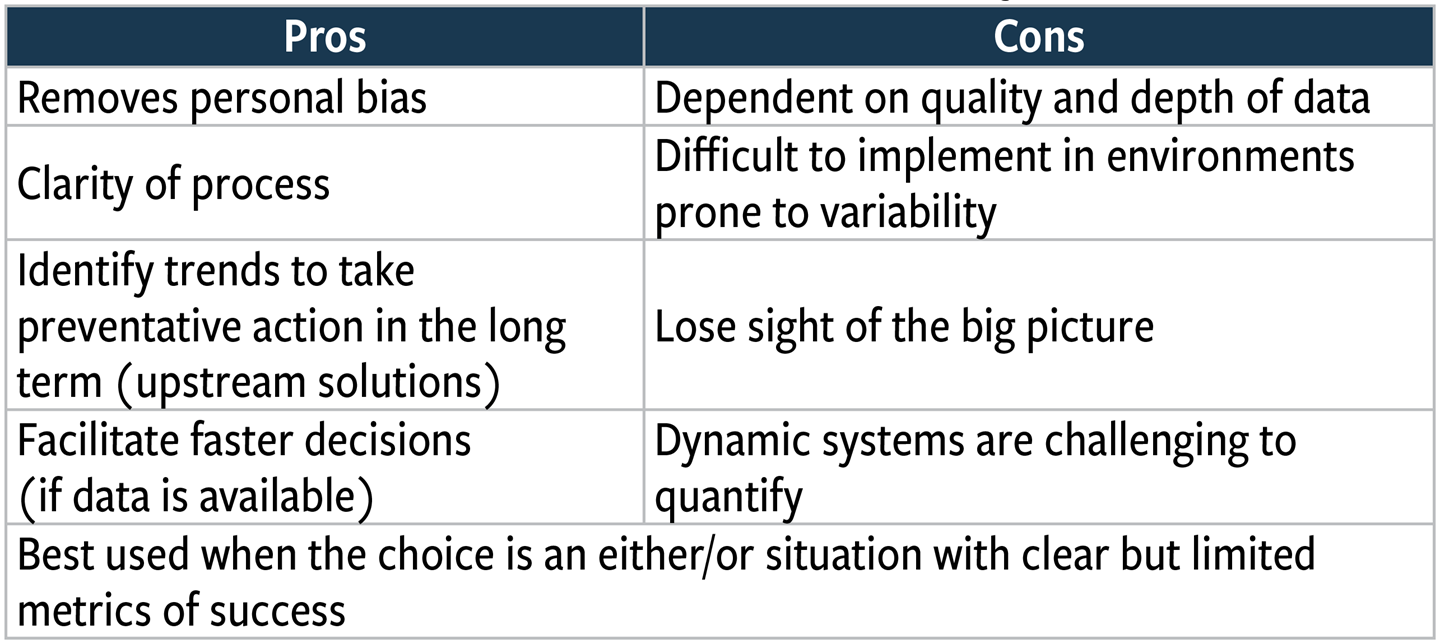
Table 1: Data-driven — Decisions based solely on the data

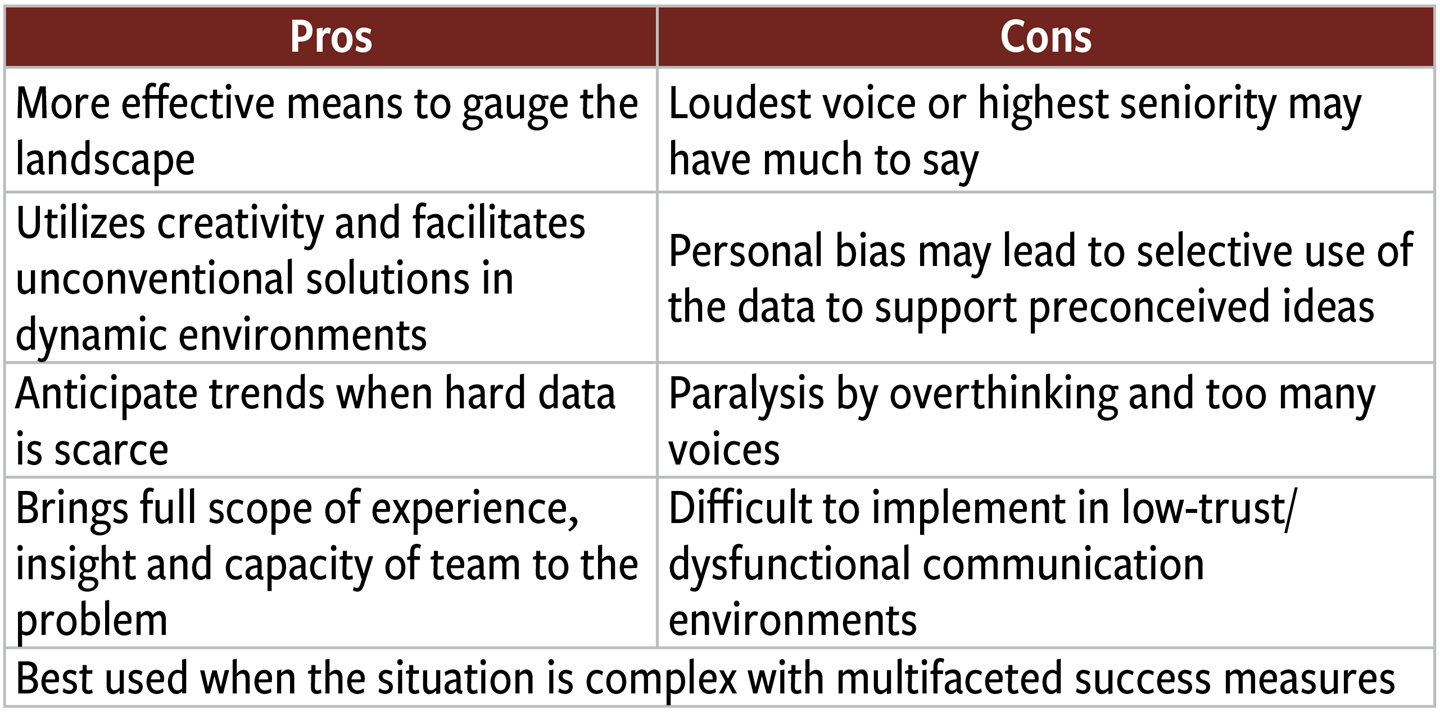
Table 2: Data-informed — Data is one of several inputs in decision-making

However, not all scenarios call for data-driven decisions. For those conditions where variability, if not chaos, is close at hand, where measures of success are multifaceted, and data is either scarce or difficult to measure, then decision-making must pivot to data-informed approaches (Table 2).
In either case, pros and cons are in place requiring the decision-maker to discern when to depend solely on the data and when to step back and bring multiple perspectives to the problem at hand. In retrospect and deference to my favorite Scot, selection decisions ought to rely heavily on data. However, I think Sutherland would agree that it is useful at times to pause for reflection, a bit of sipping whisky, and to connect to the bard’s cadence reminding us that we are indeed part of life’s poetry and its mystery.
Editor’s note: In “Outside the Box,” a regular, separate column in both the Angus Journal® and the Angus Beef Bulletin, author Tom Field shares his experience as a cattleman and his insightful perspective on the business aspects of ranching. Field is director of the Engler Agribusiness Entrepreneurship Program at the University of Nebraska–Lincoln, where he holds the Paul Engler Chair of Agribusiness Entrepreneurship.
Related Content


Current Angus Beef Bulletin
Our November issue focuses on the females of the herd and the records that validate them.