


The Hits Keep Coming
Natural disasters can have long-term negative effects on cattle health.
February 20, 2026
In his worst nightmares, John Hill never imagined the amount of destruction Hurricane Michael created on Oct. 10, 2018.
“We had no idea it was going to be like this,” says the Marianna, Fla., cattleman. “When a hurricane hits Panama City as a Category 3, it’s a tropical storm by the time it gets here. This time, it was still a Category 4 when it got here.”
After finally sawing his way out of his house the next morning, he recalls, “I told my banker everything I had worked for the last 35 years was gone.” Working pens, 15 miles of fence, equipment — all were under fallen trees and/or flattened. There were so many trees down he couldn’t get his cattle to water — not that his wells worked anyway, with no electricity.
Typical of people in the cattle industry, Jason Johns, then at ZWT Ranch in Crossville, Tenn., took Hill’s bred Angus and commercial heifers until he could get his operation functioning again. Then the abortions started.
“The cows here lost more calves than usual, too,” says Hill. “I think it was from the stress and from being blown around and the limbs hitting them.”
The Hurricane Michael-caused devastation on Stuart Griffin’s Bainbridge, Ga., family farm was just as horrific.
“It was three days before we could go a half mile down the road — and that was on a four-wheeler,” he says, estimating 40 miles of fence on the row-crop and commercial cattle operation were damaged or destroyed.
The damage was so overwhelming and widespread, he didn’t know the building where the ag chemicals and fertilizer were stored was damaged until he found dead cows around the building.
“It was sickening,” Griffin says. “We lost over 20 animals — cows, calves and bulls.”
Christine Navarre, Louisiana State University (LSU) AgCenter Extension veterinarian, isn’t surprised. A veteran of more hurricanes than she’d like to count, most notably Hurricane Katrina in 2005, she says: “Chemical contamination is a huge issue with hurricanes. Feed stores get contaminated. Hay gets flooded. Wells don’t work either because there isn’t electricity or they get contaminated.”
Poisoning can also happen when people try to haul water to cattle using tanks that previously had chemicals or fertilizer in them, she says. “It doesn’t take a lot of leftover chemical in a tank to contaminate it. You really need to stick to a tank that has only been used to transport water.”
Navarre says salt-water contamination is another hurricane-related problem when cattle are near the coast, along with skin diseases from standing in floodwater.
There are also mosquitoes, swarms and swarms of mosquitoes.
“We had cattle and horses just covered. They would be black from the mosquitoes. Not only would they worry the animals to death and stress them, there were also enough mosquitoes to make those animals lose blood and get anemic,” Navarre says. “It takes a lot of mosquitoes to do that.”
Producers turned to crop dusters to spray for the pests.
“Other than that, there isn’t a lot you can do. There was no place for the animals to go. It’s terrible,” she says.
“The other thing we see during hurricanes is buildings and shades get blown down. When it’s hot, cattle get heat stress,” she says. “I like those portable shades made of drill-stem pipe and shade cloth. You can move them around and they’re inexpensive, so those work well.”
Wildfire hot spot
Possibly even more horrific are wildfires. Obviously, there are burns.
Oklahoma State University (OSU) Extension Beef Specialist and Veterinarian Rosslyn Biggs says, “Assess those animals as quickly as you can. We can see burned udders, which of course make it difficult if a cow has a calf or is close to calving. It can create a lot of orphans.”
Thermal injuries can affect any part of the animal’s body, she warns, particularly the feet and legs. Calves can have burns all over the body.
“As we look at those wildfire injuries, we’ve got to keep animal welfare at the top of our mind,” Biggs says. “Just because we can keep them alive, that may not be in the best interest of those animals. It can be a long, incredibly painful process if we can even get them to recover.”
Respiratory complications can potentially be longer-term problems, Biggs says. “They may have breathed a lot of air that was incredibly smoky.”
Biggs says it is hard to put a timeline on when the damage will show.
“That can be highly variable depending on the level of exposure,” she explains. “These animals need to be monitored on a regular basis multiple times a day, immediately after the fire and for at least several weeks after.”
When it comes to diagnosing and/or treating the damage from smoke inhalation, she says, get your local veterinarian involved.
Abortions or early calving can also increase after a wildfire, Biggs says. “Just the stress response will put cattle into preterm labor.”
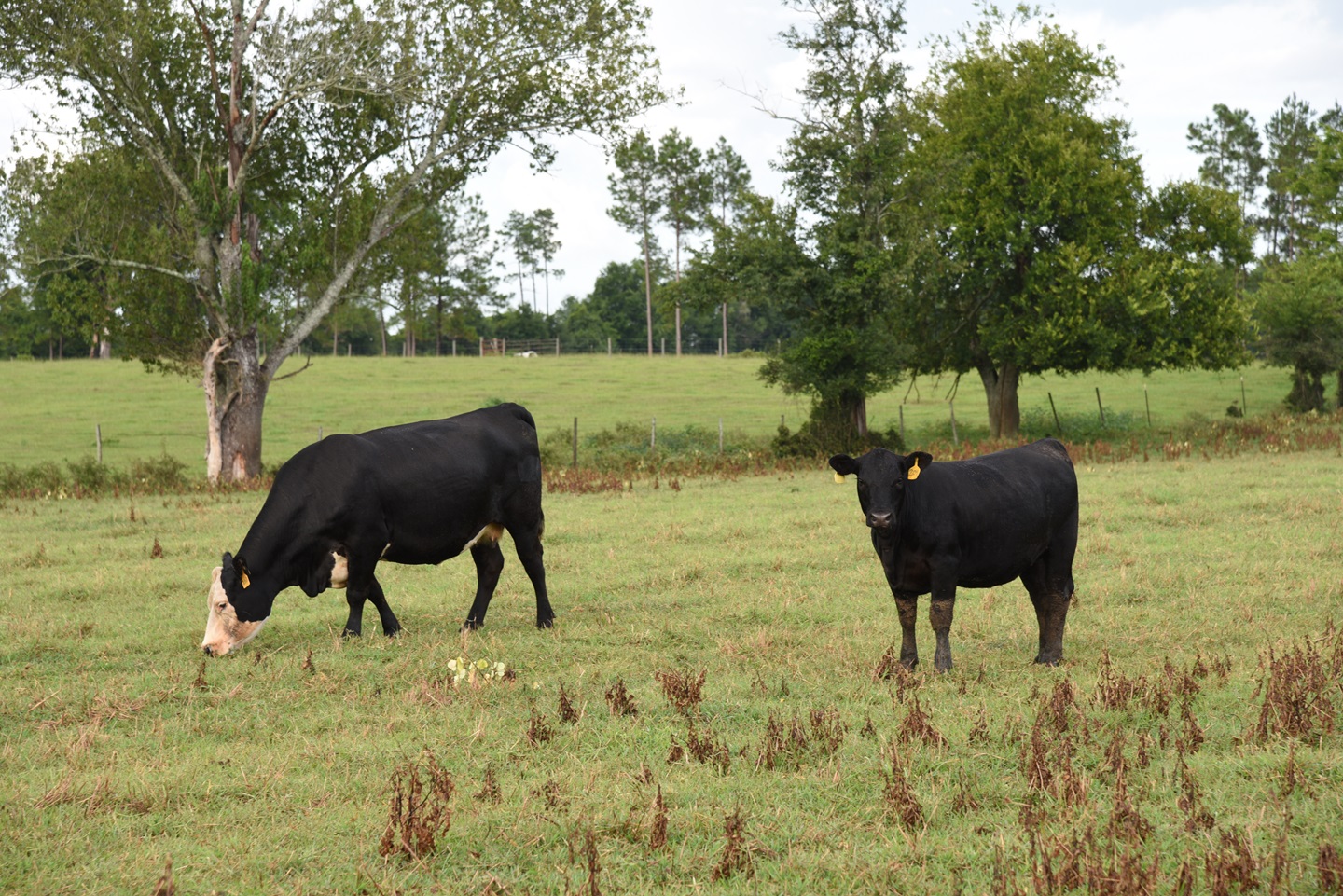
After Hurricane Michael, John Hill’s cows and heifers had an increased incidence of abortion.

Tornadoes
Tornadoes are another threat to cattle, especially considering their fondness for putting almost anything in their mouths, Biggs says.
“We can see materials like insulation blown into pastures. Hardware disease is also an increased concern with tornadoes.” (See “Curiosity Killed the Calf?” in the January 2026 Angus Beef Bulletin.)
Hardware disease occurs when cattle swallow nails, wire or other sharp objects that puncture their stomachs. They typically lose weight, have an arched back and don’t want to move or eat.
Cattle and horses can both develop other health problems well after a tornado, Biggs says. “We need to monitor them for weeks after. Immediately after the event, if they survived, they may look good, but have projectiles blown into their skin.”
Blizzard warning
Blizzards are another health threat in parts of cattle country. Julie Walker, South Dakota State University (SDSU) Extension beef specialist, says the worst threat is when a blizzard follows rain. In October 2013, Winter Storm Atlas hit the Black Hills region of the state. First it rained. Then wet snow fell, along with winds gusting up to 60 mph. An estimated 60,000-75,000 head of cattle, or roughly 10%-20% of the state’s cattle herd, died.
“With a dry winter hair coat, the lower critical temperature is 19°. Once we get a wet coat, we’re talking a different ball game; 60° F is typically where we consider the lower critical temperature,” says Walker, referencing the temperature at which additional energy is required for the animal to stay warm or maintain a stable state.
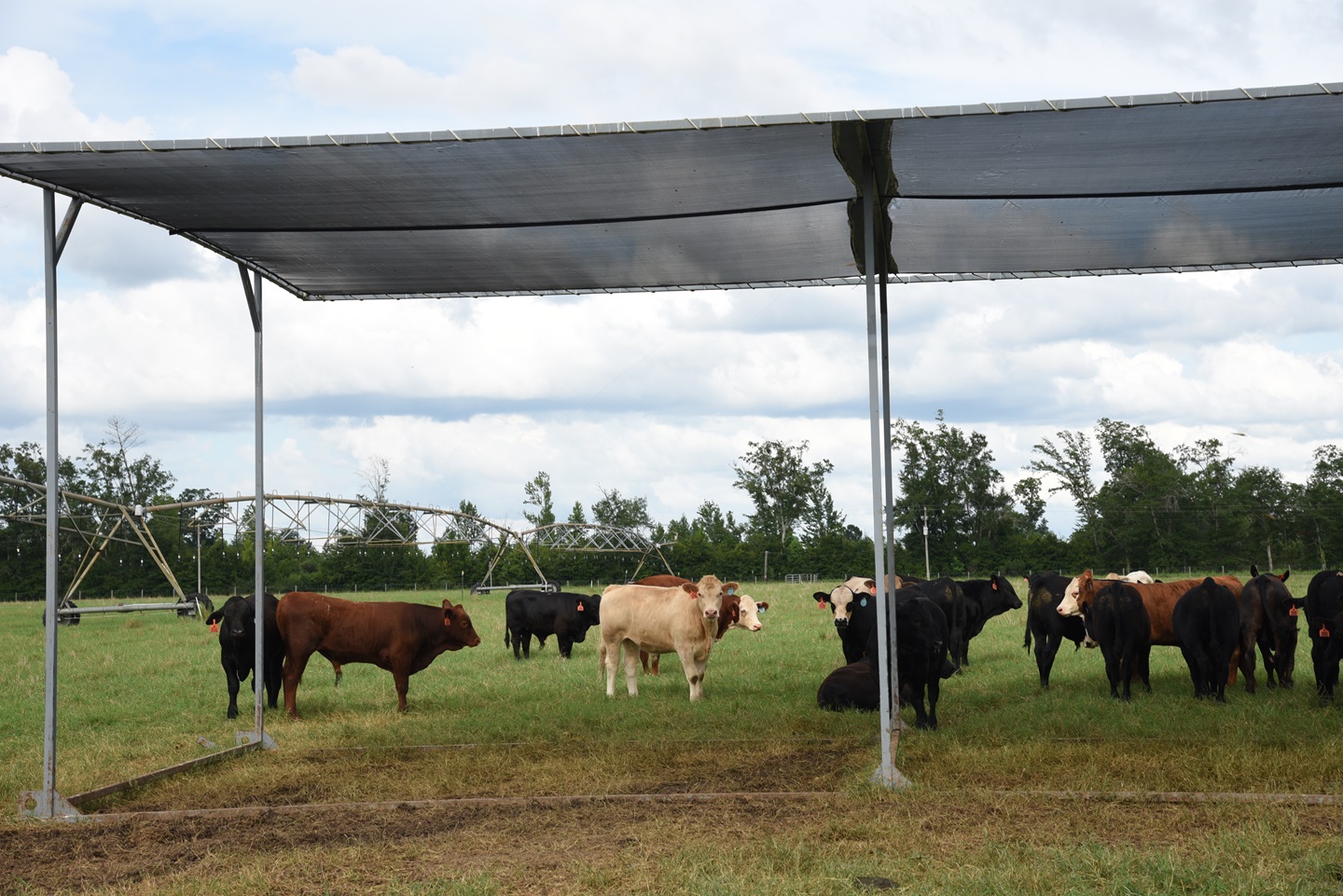
Portable shade structures can help prevent heat stress in cattle after storms knock down trees.

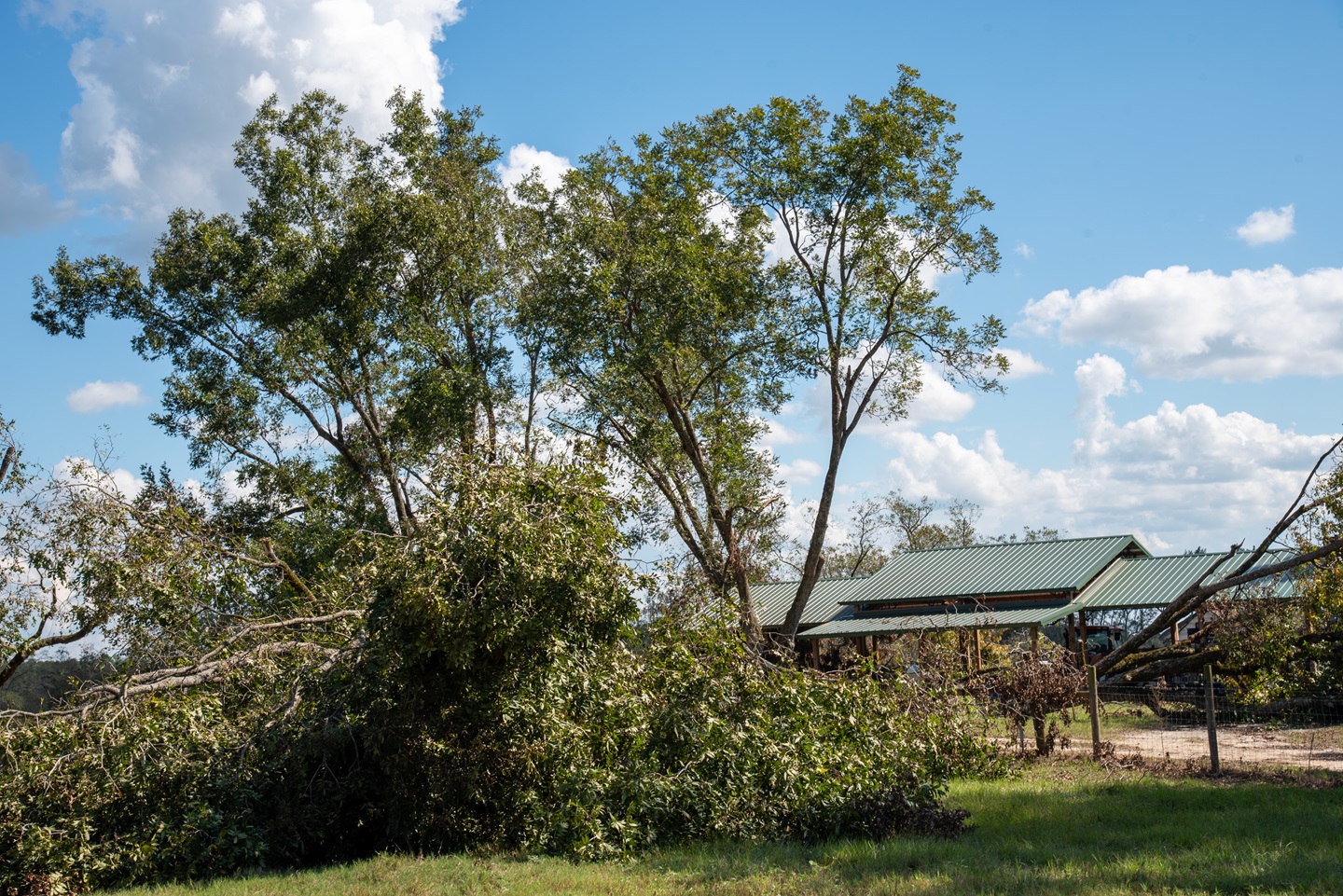
Hurricanes and tornadoes can knock down trees, leading to a lack of shade for cattle.

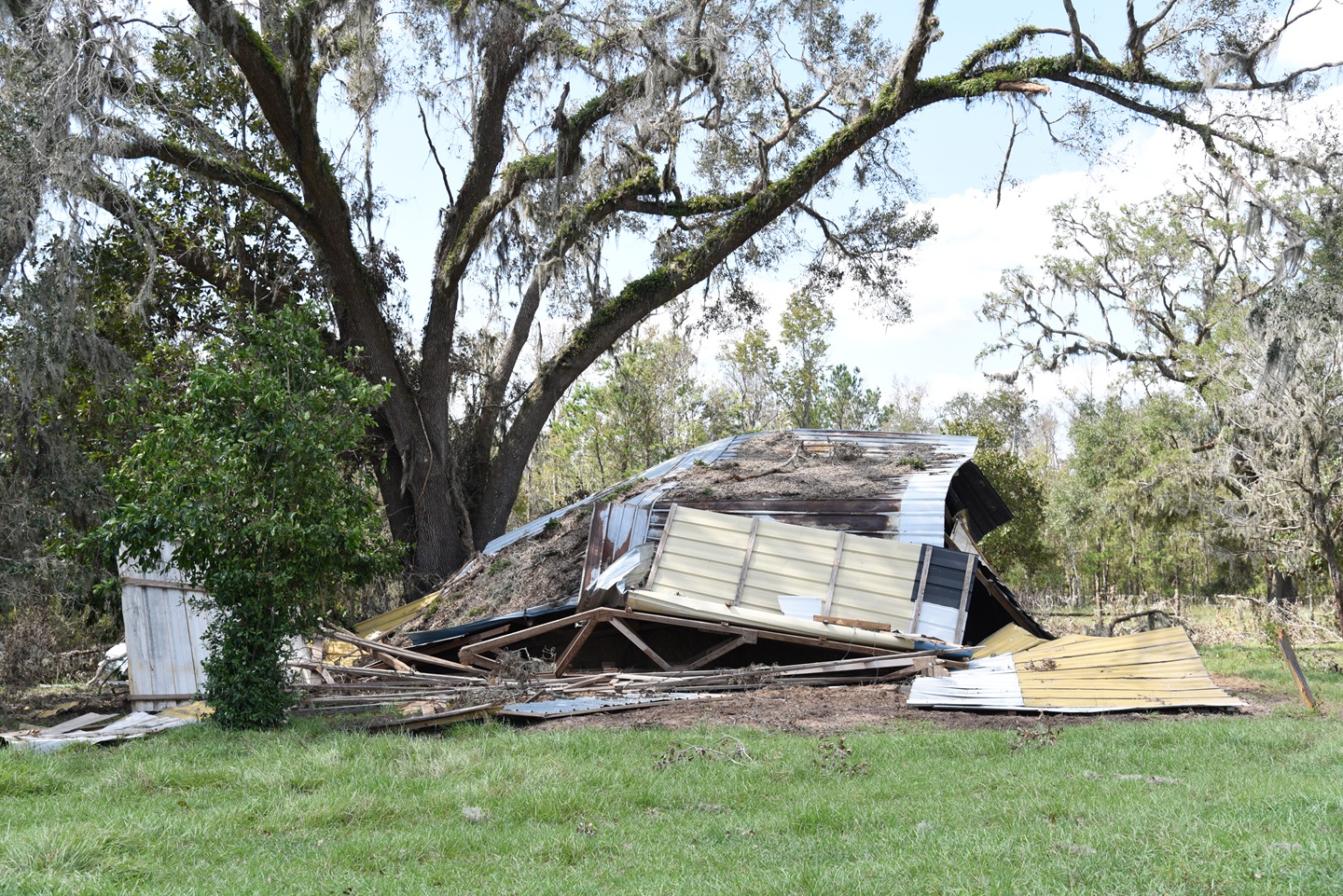
Buildings can be knocked down and debris spread through pastures after hurricanes and tornadoes, leading to hardware disease in cattle.

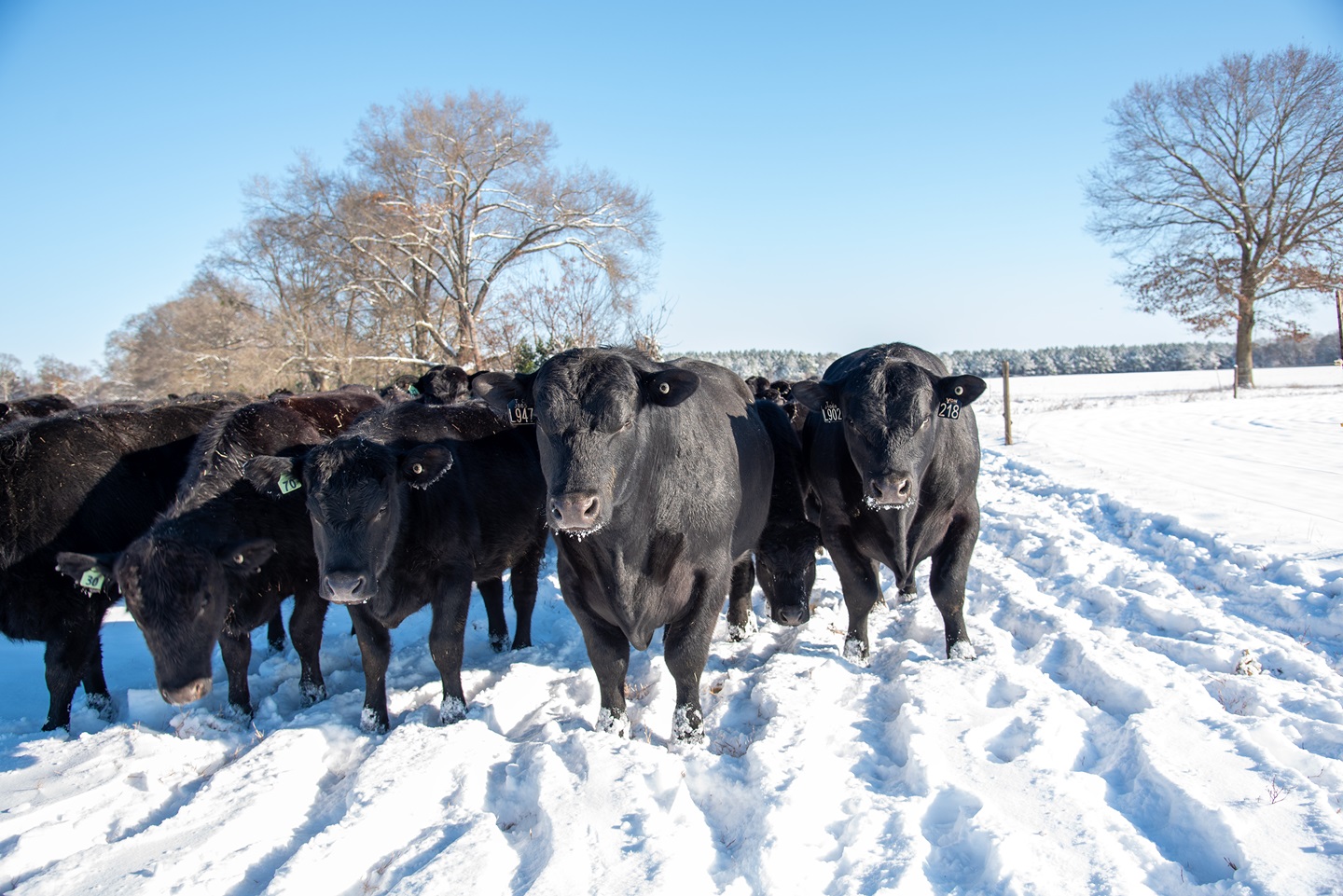
Bulls need to have bedding during cold weather to head off damage to their scrotums.

Typically, producers have their cattle in areas protected from the wind and can feed and water them, she says. “Then we don’t really see a tremendous impact. We might get some snotty noses or pneumonia.”
A cow’s nutritional needs go up in frigid conditions, though, so extra hay, preferably of high quality, is needed, Walker says. “They need more energy for the cold. They can only eat so much, but with higher-quality hay, they’re getting more nutrients.”
She warns: “Do not pour out corn for them, because that’s going to upset their rumen.”
Lower-quality hay or baled cornstalks can serve as much-needed bedding and protection from the frozen ground or snow.
“It’s probably more critical for the bulls than it is the cows, because we certainly don’t want the scrotum to freeze,” says Walker. “That kind of damage will take quite a while to heal. That’s going to decrease their capacity to breed cows until it gets healed up. Then they need about 60 days clear before the breeding season to get non-injured sperm ready to go because it takes 60 days for sperm to develop.”
Walker emphasizes that keeping waterers open is critical.
“Cattle need water even in a blizzard,” she says. “Yes, they can eat snow, but typically they won’t eat enough to meet their needs.”
While you can’t head off a hurricane, tornado, wildfire or blizzard, LSU’s Navarre says you can help minimize the long-term damage.
“Keeping those cattle well-vaccinated is critical. After a natural disaster, their immune system is going to be down and a lot of diseases are going to be more common,” she says. “Keep them in good shape and work with your veterinarian to keep herd health top notch. There’s a lot we can’t control, but we can have them go into a natural disaster as healthy as possible.”
Editor’s note: Becky Mills is a freelance writer and cattlewoman from Cuthbert, Ga.
Topics: Equipment / Facilities , Health , Management
Publication: Angus Beef Bulletin
Issue: March 2026
Related Content


Current Angus Beef Bulletin
Our September issue focuses on the females of the herd and the records that validate them.