




Curiosity Killed the Calf?
When livestock eat undigestible materials, there can be consequences.
January 6, 2026
eager to know or learn something
The late afternoon sun fades away and dust billows behind a pickup as the driver takes the long way home from town, enjoying the break from the wind gusts that so often rock the Texas Panhandle.
Up ahead, a glint catches the eye: a mylar balloon wrapped around the top wire on a five-strand fence. That balloon likely presided over an event filled with joy in recent days, but what once brought smiles now poses a danger to nosy livestock as it is capable of causing irreparable damage to their digestive tract.
Opportunity knocks
When Joe Freeman and his brother took over Clint & Sons Processing in White Deer, Texas, from their father back in 1980, the landscape of meat processing was a far cry from modern-day meatpacking. Over the years protocols for operating have changed, but the family continues to evolve with the times.
The initial challenge began when companies interested in internal organs quit paying Clint & Sons for that product. While those same services offered to pick up offal free of charge for a time, eventually the deal changed to charging by the pound for pickup. Suddenly, the family faced paying anywhere from $1,500 to $2,500 per month just to offload their offal.
Something had to change. Nearly a decade ago, the Freemans decided to go a different route and invested in composting. They haven’t looked back. Not only is composting their offal cost-effective, but the added benefit to the fertility of their grass pastures was a welcome bonus.
“We’re not big farmers, but now we have plenty of compost for all of our improved grass,” says Freeman, noting that the family processes roughly 40 head of cattle per week. “But when we started composting, we also started noticing an issue.”
Concerns unearthed
Cattle are undoubtedly curious creatures. While cattle producers can spend a chunk of time seeing to herd health and nutrition, somehow our livestock seem to have a different definition of holistic health in mind.
Prior to beginning their own composting, there was never any reason to investigate the contents of any rumen, says Freeman. Offal was simply collected and stored until pickup. After the Freemans began composting on their own, interesting items began showing up in their turned compost piles.
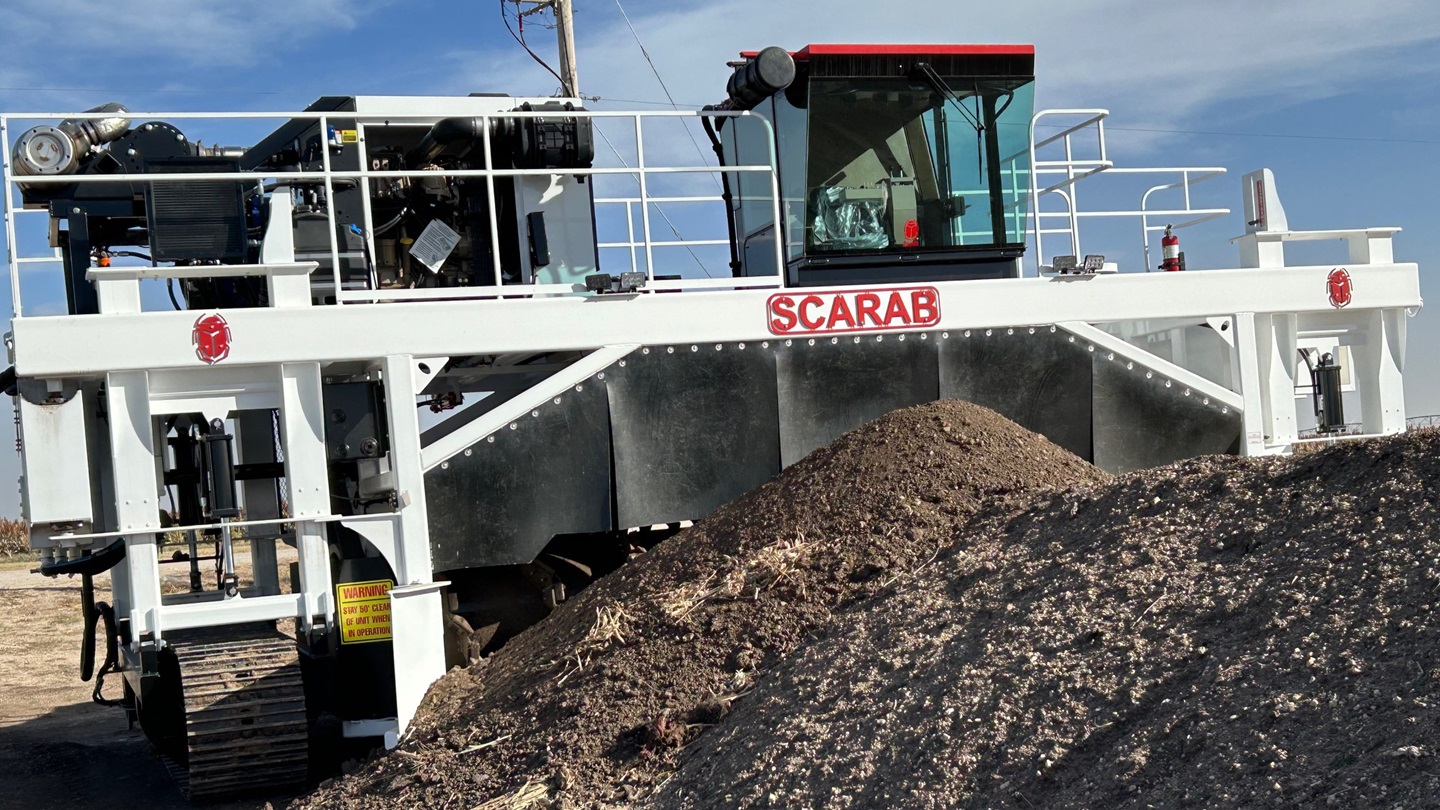
When the compost lines at Clint & Sons grew large enough, Freeman hired out for help to turn the compost. They unearthed an issue.

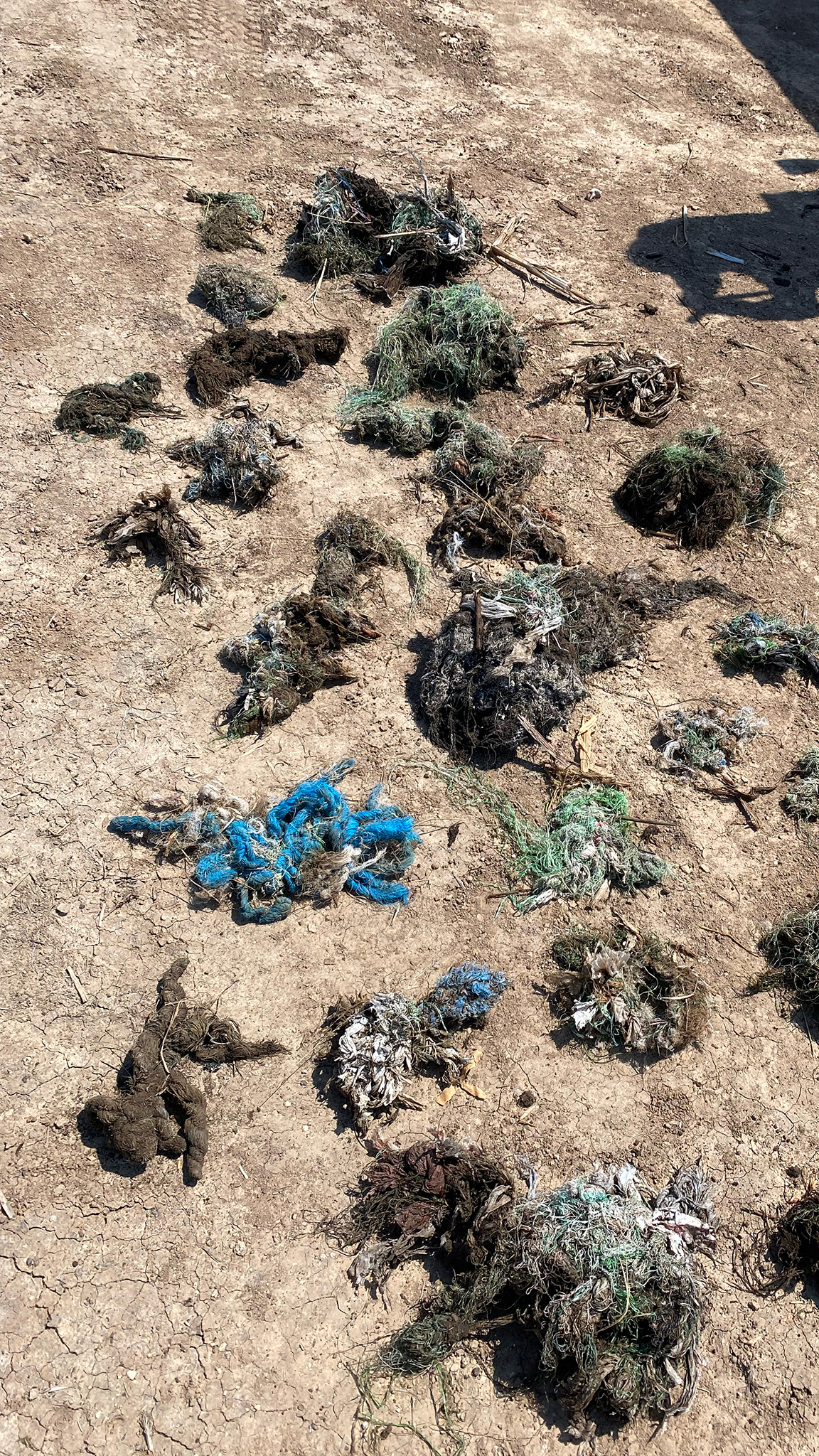
Rumen contents became visible after composting — plastic grocery bags, baling twine, balloons, net wrap. Some may take 100 years to decompose.

Plastic grocery bags woven together like macramé. Wads of net wrap so tightly bound that the fibers seemed ground together. Loops of baling twine. What appeared to be balloons and other forms of loose plastic. All being unearthed when the massive Scarab compost turner made its way down the rows of 4- to 5-year-old compost.
“In our compost piles everything decomposes pretty quickly except net wrap, baling twine and the like,” says Freeman, explaining that research shows polypropylene and polyethylene material can take 100 years or longer to degrade if left in the environment. “Pictures can be deceiving, but we have some pieces that are as big as a basketball. It’s unbelievable.”
Perhaps more worrisome was the fact that even after picking through the compost piles with a rake to remove visible debris, plastic was being transported to their fields. While Freeman and his sons are diligent in collecting any trash visible when compost is turned, missed items have been known to pop up in fields when plowing.
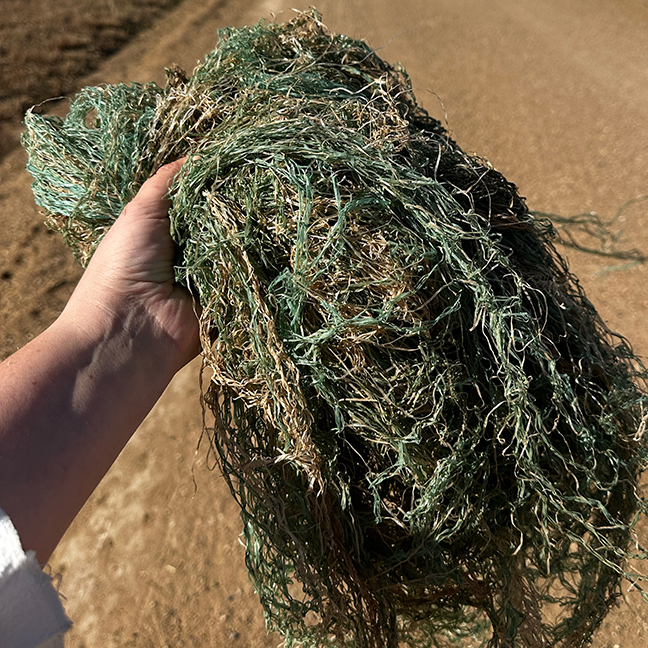
“In our compost piles everything decomposes pretty quickly except net wrap, baling twine and the like,” says Joe Freeman. “Pictures can be deceiving, but we have some pieces that are as big as a basketball.”

It never fails
One afternoon this past August while sorting out undigested materials, Freeman decided to snap some images for social media in the hopes of sharing what he was finding while checking the compost lines.
“One day I was walking down one row of compost and picking out the plastic. Out of our five rows, the photos I took were one-third of what I saw on that single row,” Freeman shares. “These inedible items are almost woven together. Half the time it looks like somebody tied it by hand.”
No matter how diligent producers are at picking up leftover materials, these inedible items have a way of multiplying. When the wind picks up, plastic bags and balloons can go flying, while net wrap can be swept off the back of flatbeds. Those errant materials always seem to find their way into pastures where curious cattle may find them a worthy snack.
While these materials can be consumed without animals showing initial outward signs of illness, enough of the wrong material winding up in the rumen can spell disaster for anything from calves to grown animals.
Freeman himself experienced the effects of plastic consumption when a formerly thrifty bottle calf started looking worse for the wear. Having seen the amount of undigested materials cattle were consuming through the locker, he began to suspect the calf may have bitten off more than it could chew.
“At about 4 months, this calf starts looking a little rough. We treated him and he started looking better. Within four to six weeks, he went downhill again,” says Freeman, noting that the family worked with the calf before ultimately losing it. “We wanted to know what happened, so we had a postmortem done. [The calf] had eaten so many plastic bags that his rumen was packed full, and he couldn’t eat any more.”
Pasture-related ‘hardware disease’ poses potential health risk to cattle
Cattle will eat just about anything that looks interesting in the pasture, so producers need to pick up as much debris as possible following weather events that have strong winds, according to Oklahoma State University (OSU) experts.
Insulation and plastic bags can cause bloat, impaction and gastrointestinal problems when consumed, including possible hemorrhaging of the rumen, says Barry Whitworth, OSU Extension veterinarian and food animal quality and health specialist.
“Nails and other small pieces of metal can cause what is often called hardware disease,” says Whitworth. “The most common source of hardware disease is baling wire or similar small objects that are consumed along with forage.”
Primary concerns are not only the cattle eating bits of metal directly, but that items will be picked up during the baling process and be included with hay fed later.
A single piece of baling wire consumed with forage or hay will drop down into the reticulum, or first stomach, where it potentially can pierce the heart, notes Whitworth.
Other problems sometimes associated with hardware disease are the shutting down of the rumen, depression, acute pain and decreased milk production.
“Cattle producers may want to consider using rumen magnets, given the increased amount of metal debris potentially strewn across pastures after tornadoes or storms with sustained high winds,” says Rosslyn Biggs, OSU Extension veterinarian and director of continuing education for OSU’s College of Veterinary Medicine.
Rumen magnets attract and capture fine metal material before it damages an animal’s rumen and reticulum. Local large-animal veterinarians should have information on rumen magnets, including associated costs and availability, Biggs says.
OSU recommends producers collect and remove larger pieces of insulation and plastic and watch for animals exhibiting symptoms of related health problems. Signs may include irritation, vomiting, diarrhea or stomach discomfort. Producers should contact their local veterinarian immediately if such symptoms are present.
“The local veterinarian will treat on a case-by-case basis,” Biggs says. “This might mean using a treatment with laxatives, mineral oil, fluid therapy or, in appropriate cases, surgery.”
— by Oklahoma State University Extension
Related Content


Current Angus Beef Bulletin
Our November issue focuses on the females of the herd and the records that validate them.