

Policy Matters
Animal Health’s Three-legged Stool: Why preparedness pays off for cattle producers.
February 20, 2026
There’s an old saying that the best time to plant a tree was 20 years ago. The second-best time is now. Animal disease preparedness works the same way. It is critical to invest before a significant disease outbreak.
When a foreign animal disease threatens the U.S. herd, preparedness becomes urgent in a hurry. Cattle movement can slow or stop. Markets get nervous. Export customers look elsewhere. Uncertainty spreads faster than facts.
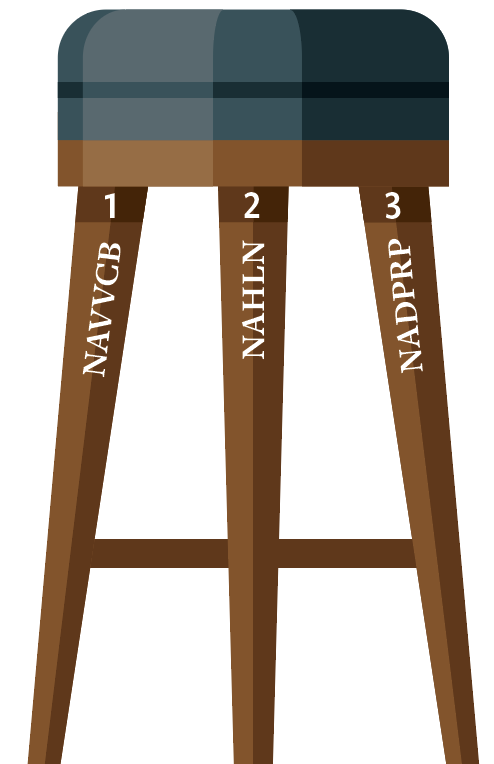
That is why the cattle industry has worked with Congress and the USDA to invest in animal health preparedness through a three-legged-stool approach. Each leg plays a different role, but all three are needed to keep the system standing when disease pressure rises.
Those three legs are:
- the National Animal Vaccine and Veterinary Countermeasures Bank (NAVVCB), which stockpiles vaccines and tools before they are needed;
- the National Animal Health Laboratory Network (NAHLN), which provides rapid, reliable disease detection; and
- the National Animal Disease Preparedness and Response Program (NADPRP), which funds planning, training and on-the-ground readiness.
Most producers will never interact directly with these programs, but they benefit from them every day, whether they realize it or not. Recently, through the One Big Beautiful Bill, there has been a sevenfold increase in investment in the programs.

Preparedness is about more than prevention
Preventing disease is always the goal. But preparing for one is just as important.
Foreign animal diseases continue to circulate around the world. Increased travel, wildlife movement and global trade all raise the odds that a high-consequence disease could eventually reach U.S. borders.
USDA estimates a significant outbreak of foot-and-mouth disease (FMD) in the United States could cost the livestock sector tens of billions of dollars, even if it is contained relatively quickly. The real damage is not just sick animals. It is the loss of movement, market access and confidence.
That is where the three-legged stool comes in.
 Leg 1: Vaccines and countermeasures ready in advance
The first leg of the stool is the NAVVCB.
The NAVVCB was created under the 2018 Farm Bill as part of USDA’s broader Animal Disease Prevention and Management Program. Its purpose is to stockpile vaccines and other veterinary countermeasures so the United States is not starting from scratch during a disease outbreak.
The highest priority has been FMD, which spreads rapidly and can shut down livestock movement almost immediately. Having access to FMD vaccine antigen concentrate allows USDA and state animal health officials to move quickly to control the disease if it were ever reintroduced into the United States.
Vaccination helps reduce the amount of virus animals shed and limits clinical signs of illness. While an outbreak would likely still disrupt international markets in the short term, vaccination allows animals to continue moving through domestic production channels.
Since the program’s creation, the USDA Animal and Plant Health Inspection Service (APHIS) has invested more than $80 million in FMD vaccine antigen concentrate. The bank has also expanded to include other veterinary countermeasures, such as diagnostic test kits; and is planning for additional vaccines to address other high-consequence diseases.
In July 2025, Congress significantly increased funding for the NAVVCB to $153 million per year, reflecting growing recognition of the program’s value.
From a producer standpoint, NAVVCB functions like insurance. It is rarely noticed when everything is going well, but critical when something goes wrong.
 Leg 2: Fast answers when time matters
The second leg of the stool is diagnostics, handled through the NAHLN.
NAHLN was established in 2002 following lessons learned from the 2001 FMD outbreak in the United Kingdom. That outbreak exposed a major weakness: the lack of laboratory surge capacity to test large numbers of animals quickly during a disease emergency.
NAHLN began as a small collaboration among 12 state and university laboratories working closely with federal labs. Over time, the network expanded significantly, especially after Homeland Security Presidential Directive-9 in 2004 emphasized the importance of agricultural security and laboratory preparedness.
Today, NAHLN includes more than 60 state, university and federal laboratories across the country. These labs follow standardized testing methods and reporting protocols, ensuring results are accurate, trusted and comparable across states.
NAHLN acts as an early warning system for the livestock industry. Rapid detection of emerging, foreign or endemic diseases allows animal health officials to respond quickly and contain outbreaks before they spread widely.
That early response reduces economic losses, minimizes disruptions to domestic and international trade, and helps preserve consumer confidence. A recent example where NAHLN labs were critical was the spread of highly pathogenic avian influenza (HPAI) into the dairy sector.
Since receiving permanent funding through the 2018 Farm Bill, APHIS has invested more than $36 million in NAHLN projects aimed at strengthening disease prevention and preparedness.
 Leg 3: Planning, training and preparing people
The third leg of the stool focuses on readiness, and that is where the NADPRP comes in.
NADPRP funds projects that help producers, veterinarians and states prevent, prepare for, respond to and recover from foreign animal disease outbreaks.
Since 2019, APHIS has provided more than $74 million through NADPRP to support more than 330 projects nationwide.
These projects have helped:
- states develop and practice plans to control high-consequence animal diseases quickly;
- train producers, veterinarians and responders to perform critical outbreak response activities;
- increase the use of practical, effective biosecurity measures;
- improve carcass disposal and decontamination capabilities;
- test and refine animal movement and continuity-of-business plans; and
- educate livestock owners about what to expect during an outbreak.
Since fiscal year 2023, NADPRP has provided up to $17 million per year to support high-priority projects, including biosecurity at livestock commingling locations such as auctions and markets, animal disease traceability, and vaccine distribution planning tied directly to the NAVVCB.
In other words, NADPRP helps make sure that when vaccines are available and diagnostics identify a problem, there is already a plan in place to act.
How the three programs work together
The strength of the system comes from how the programs connect.
As the NAVVCB stockpiles FMD vaccine, states are using NADPRP funds to develop and practice vaccine distribution plans. At the same time, NAHLN laboratories are enhancing their ability to rapidly detect FMD and other high-consequence diseases.
If an outbreak were to occur, diagnostics would help identify where the disease is, preparedness plans would guide response actions, and vaccines would be deployed quickly to stop the spread.
Rosemary Sifford, USDA’s chief veterinary officer, often emphasizes preparedness is about coordination, not just tools.
“Preparedness only works when all the pieces are in place,” Sifford says. “Rapid diagnostics tell us where the problem is, preparedness planning tells us how to respond, and vaccine stockpiles give us the tools to control disease and keep animals moving. Those systems have to be built long before they’re needed.”
Investment today reduces disruption tomorrow
Since fiscal year 2019, APHIS has invested approximately $203 million in Farm Bill funding across these three animal health programs. In July 2025, the One Big Beautiful Bill increased funding from $30 million per year to $233 million per year for fiscal years 2026 through 2031. Of this annual appropriation, $10 million is specifically set aside for NAHLN labs, $70 million for NADPRP and $153 million for the vaccine bank.
Those numbers may seem large, but they are small compared to the potential economic losses from a major disease outbreak.
Animal disease preparedness is rarely urgent until it suddenly is. By the time a disease appears, the most important decisions have already been made, either years earlier through planning and investment, or not at all.
The systems that protect cattle producers today were built quietly over time, long before they were needed. Just like planting a tree, the value of preparedness comes from acting early.
Continued investment in animal health preparedness helps ensure that when the next disease threat emerges, the roots of planning are firmly established and the cattle industry is ready to respond quickly, keep cattle moving, and protect markets.
Editor’s note: Chelsea Good is an advocate, strategist and attorney with deep roots in the cattle industry and a proven record of shaping ag policy at the state and federal levels. She founded Good & Associates to help ag clients navigate complex issues, strengthen stakeholder relationships and turn challenges into strategic wins. Prior to launching the firm, she served as vice president of government and industry affairs and legal at the Livestock Marketing Association (LMA), where she successfully led policy efforts resulting in major legislative wins. She is also a former Angus Journal® intern.
Topics: Business , Management , Industry News , News , Policy
Publication: Angus Beef Bulletin
Issue: March 2026
Related Content


Current Angus Beef Bulletin
Our September issue focuses on the females of the herd and the records that validate them.