



Drought Causes Nitrate Concerns
Certain management and environmental conditions can lead to accumulation of toxic levels in some forages.
June 18, 2026
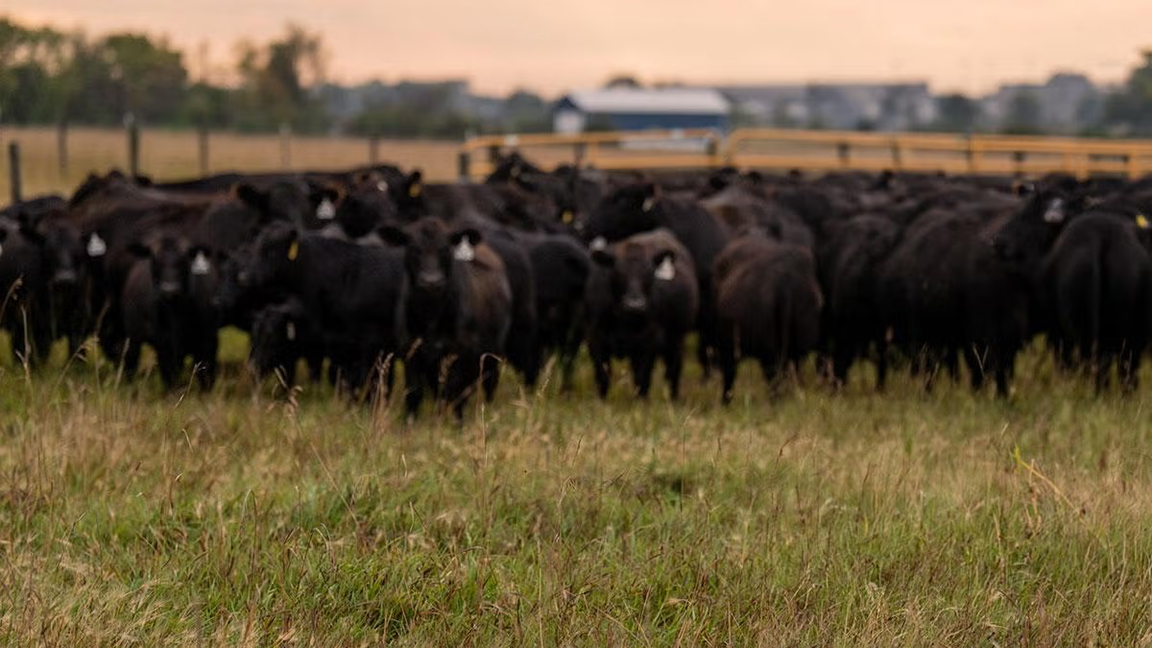
[Photo courtesy SDSU College of Agriculture, Food and Environmental Sciences.]

by Kim Ricardo and Parker Witt
It is shaping up to be another dry year across much of the country, and many producers are evaluating forage supplies and considering alternative feed options for their cow herds. While drought-stressed forages can provide valuable feed, they may also carry an increased risk of nitrate accumulation. Producers should be aware of the danger before grazing, harvesting and feeding these forages.
Nitrates are found in many forage species, including millet, oats, wheat, corn, sorghum, sorghum-sudangrass, kochia, pigweed, lambsquarter, bromegrass, and orchard grass. Plants absorb nitrates from the soil through their roots, and these nitrates are normally converted into amino acids, proteins and other nitrogen-containing compounds.
While all forages contain some level of nitrates, certain management and environmental conditions can lead to accumulation at toxic levels. Fields that received significant nitrogen fertilization or manure applications prior to drought, as well as plants under drought stress, are at the greatest risk.
Nitrate concentration also varies within the plant, with the highest level typically found in the lower one-third of the stem.
Managing nitrate risks
When livestock consume forages with excessive nitrate levels, rumen microbes convert nitrate to nitrite. Nitrite interferes with the blood’s ability to carry oxygen, leading to symptoms such as rapid or labored breathing, weakness, muscle tremors, staggering, abortions and, in severe cases, sudden death. Fortunately, nitrate risk can often be managed successfully with proper planning.
Forage testing is one of the most effective and economical tools for managing nitrate risk. SDSU Extension offers nitrate testing services to help producers make informed decisions. If elevated nitrate levels are detected, forage can often still be used safely by diluting it with low-nitrate feedstuffs, limiting intake, or gradually adapting cattle to the feed. When adapting cattle to higher-nitrate forages, proper supplementation is critical to prevent overconsumption and allow rumen microbes time to adjust. Ensiling can reduce nitrate concentrations, but it does not eliminate the risk; therefore, ensiled forages should still be tested before feeding. Producers should also avoid turning hungry cattle directly into pastures that contain high-nitrate forages.
With breeding season being in full swing and abortion being a key symptom of nitrate toxicity, careful management of pregnant females is especially important. One strategy to reduce nitrate exposure is to avoid overgrazing drought-stressed forages, where nitrate levels may be elevated. Because the highest nitrate concentrations are found in the lower stem, allowing cattle to selectively graze leaves and upper portions of the plant can help reduce intake. This selectivity is reduced when pastures are overstocked, increasing the likelihood of excessive nitrate consumption.
Because nitrate reduces the blood’s ability to transport oxygen, there can be a decrease in oxygen delivery to the fetus that leads to abortion. Abortions occurring in the second or third trimester may be associated with nitrate toxicity. A telltale sign is dark or chocolate-brown blood, indicating oxygen deprivation. Additional signs may include bluish discoloration of the mucous membranes or around the eyes.
Producers should also remember that rainfall following drought conditions does not immediately eliminate nitrate concerns. In fact, nitrate levels may significantly increase for several days after a rain event, as plants resume nitrogen uptake faster than they can convert it into protein. Other environmental stressors, such as frost, hail damage or extended periods of cloudy weather, can further increase nitrate accumulation.
Testing guidelines
Below is a chart showing nitrate concentrations based on the nitrate strip quick-test procedure, along with general interpretation guidelines. However, if elevated nitrate concentrations are detected, nitrate strip test results should be confirmed through laboratory analysis to ensure accuracy. These tests are intended to provide rapid information for preliminary management decisions, but they do not offer the same level of precision as laboratory testing.
Table 1: Nitrate management guidelines
|
Nitrate test strip reading |
Estimated forage nitrate |
Interpretation |
|
0 |
< 1,000 |
Safe |
|
10 |
1,000 |
Generally safe |
|
25 |
2,500 |
Use caution with pregnant cattle |
|
50 |
5,000 |
Risky, limit intake, dilute ration |
|
100 |
10,000 |
Dangerous, avoid feeding free choice |
|
250 |
25,000 |
Potentially toxic |
|
500 |
50,000 |
Highly toxic |
Table adapted from Meccage et al., 2019.
Sample collection
To collect forage for a nitrate strip test, clip green forage just above the soil surface from multiple locations throughout the field. Place the samples in a dry paper bag with adequate airflow to promote drying during transport to the testing facility. For stored or ensiled forages, collect multiple representative samples from the forage source and similarly store them in a paper bag for delivery to a testing facility, such as one of the SDSU Regional Extension Centers (see Table 2).
If nitrate strip test levels exceed 10 mg/L (~1,000 ppm), laboratory testing is strongly recommended. Quick tests can indicate the presence of elevated nitrate levels, but laboratory analysis is necessary to accurately determine nitrate concentrations and guide appropriate forage management decisions.
FREE TESTING LOCATIONS
|
SDSU Extension Regional Center |
Address |
Phone |
|
Aberdeen |
Second Ave SE, Aberdeen, SD 57401 |
605-626-2870 |
|
Lemmon |
401 Sixth Ave W, Lemmon, SD 57638 |
605-374-4177 |
|
Mitchell |
1800 E Spruce St, Mitchell, SD 57301 |
605-995-7378 |
|
Pierre |
412 W Missouri Ave, Pierre, SD 57501 |
605-773-8120 |
|
Sioux Falls Regional Center |
4101 W 38th St, Ste 103, Sioux Falls, SD 57106 |
605-782-3290 |
|
Watertown Regional Center |
1910 W Kemp Ave, Watertown, SD 57201 |
605-882-5140 |
|
West River Research and Extension |
711 N Creek Dr, Rapid City, SD 57703 |
605-394-1722 |
|
Winner |
325 S Monroe St, Ste 125, Winner, SD 57580 |
605-842-1267 |
Sources: Meccage, E., Z. Miller, and D. Peterson. 2019. Forage Nitrate Analysis: What Method to Use? Montana State University Extension Bulletin. MT20187A
Editor’s note: Kim Ricardo is an SDSU Extension forage field specialist. Parker Witt is an SDSU Extension crop-livestock systems field specialist.
Angus Beef Bulletin EXTRA, Vol. 18, No. 6-B
Topics: Feedstuffs , Health , Management , Pasture and Forage
Publication: Angus Beef Bulletin
Related Content


Current Angus Beef Bulletin
Our September issue focuses on the females of the herd and the records that validate them.