



A Packer’s Perspective on Carcass Size
Glen Dolezal shares perspective on how packers and brands have adjusted to accommodate larger carcass size.
May 6, 2026
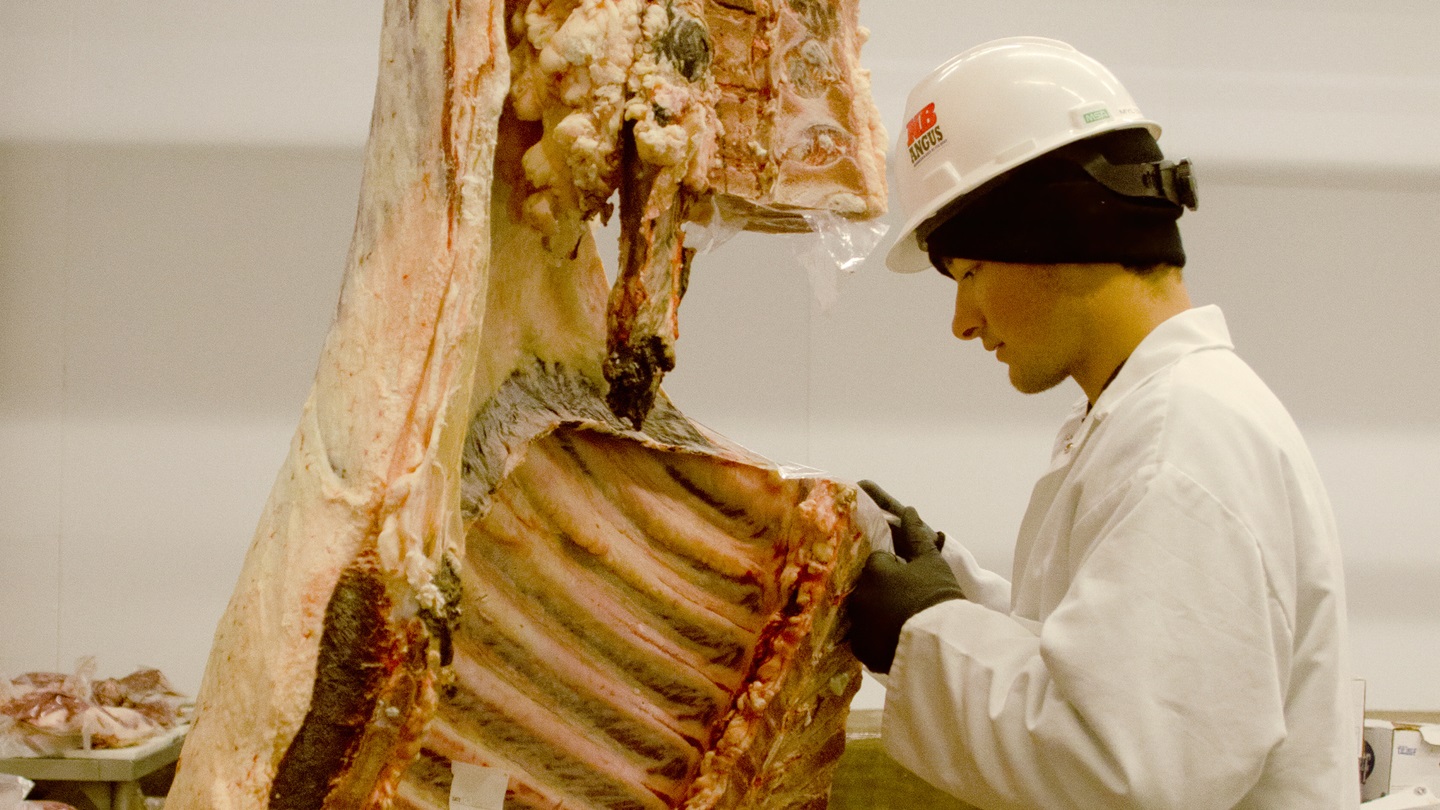

The King Ranch Institute for Ranch Management (KRIRM) hosted its 22nd Annual Holt Cat® Symposium on Excellence in Ranch Management Nov. 6-7, 2025. The topic this year was “Impacts of Beef Carcass Size on System Production Efficiency.”
Glen Dolezal, retired assistant vice president of Cargill Protein, presented the packer perspective. He talked about many things that have changed in the beef industry, including the fact that, over time, the number of cattle for beef production has constantly fallen.
“But beef production and average carcass weights have been going up, and we’re still seeing that trend continue — at a faster rate today than previously — for various reasons,” he said.
Carcass weights have been increasing by at least 5 pounds (lb.) per year, Dolezal pointed out. “Year on year, steer carcass weights are up 40 pounds, and this year we are adding a lot more pounds than the 5-pound average per year that we’ve seen previously.
“But, we needed to do that,” he said.
Analysts forecast the headcount would be down 4%-5% this year, he explained. “Yet, we’re only down 1% or less on volume or product produced. Feedyards have increased carcass weights, to increase red meat, and this has helped us weather the supply issue.”
Feedyards have extended time on feed to add more weight at lower cost of gain and to overcome high input costs of high-priced feeder cattle.
“If they can put on more pounds at cheaper cost of gain, they can make ends meet and still make quite a bit of profit,” Dolezal said. “Packers realized more profitability with heavier carcass weights to offset fixed costs like labor, utilities, et cetera.”
CattleFax forecasts the average weights this year could approach 950 lb. for steer carcasses.
“I think we’re going to meet or exceed that,” Dolezal said. “When I came to Cargill in 1999, the average carcass weight was 750 pounds. Time on feed to finish, especially with a long yearling being placed in a feedyard, oftentimes was 90 days or less.” But some of those carcasses were not very tender.
“One of the corrective actions we implemented was to not sort feedlot cattle fed less than 100 days in a tenderness brand. It bought us some time to ‘get out of jail’ on that issue. Today, time on feed may exceed 200 days,” Dolezal said.
There are some health concerns with the increased finished weights, and these include lameness, more heat stress, heart failure and other issues; and the industry is trying to address these. “Quality of beef’s never been higher in my career, however, and we don’t want to import something that’s going to erode that,” he said.
Dolezal referred to data presented by Certified Angus Beef (CAB) comparing 2008 to 2024 data on why Angus-type carcasses did not qualify for the brand. Most of those failing to meet the criteria failed due to insufficient marbling. However, there were 12% fewer in 2024 that had less than Modest or average-Choice marbling compared to 2008.
“So, the industry, through both genetics and time on feed with a high-energy diet, has done a better job of depositing marbling and meeting that need,” he pointed out.
To qualify for the Certified Angus Beef® (CAB®) brand, hot carcass weight in 2008 couldn’t exceed 1,000 lb., and 2.6% of the cattle exceeded that.
“In 2024, they changed it to 1,100 pounds,” Dolezal explained. “There were 8.6% last year that were too heavy. They made every other CAB criteria, but they were over 1,100 pounds. Ribeye area is supposed to be 10 to 16 square inches. In 2008, only 6% exceeded 16 square inches but met all other criteria. In 2024 it was 20%. One out of five had too big a ribeye.”
Cattle have gotten fatter, Dolezal noted, and backfat is another point of disqualification for the CAB brand.
“CAB can’t have more than an inch of external backfat, and 8.6% exceeded that last year,” he said.
Larger carcasses have also resulted in larger ribeye areas. After much thought, in March 2025, CAB increased the upper limit of its ribeye area specification from 16 to 17 square inches.
“There have been big changes in the industry that we’ve had to accommodate,” Dolezal said. “But in the current U.S. beef industry, in my opinion, carcass quality, all-time high. Beef demand’s strong, despite high prices.”
Editor’s note: Heather Smith Thomas is a freelance writer and cattlewoman from Salmon, Idaho. [Lead photo by Lindsey Sawin.]
Angus Beef Bulletin EXTRA, Vol. 18, No. 5-A
Topics: Events , Genetics , Industry Insights , Marketing , Selection
Publication: Angus Beef Bulletin
Related Content


Current Angus Beef Bulletin
Our September issue focuses on the females of the herd and the records that validate them.