



The Importance of China in Global and U.S. Beef Markets
China/Hong Kong generally represents significant beef export potential for the United States in the absence of political barriers.
May 20, 2026
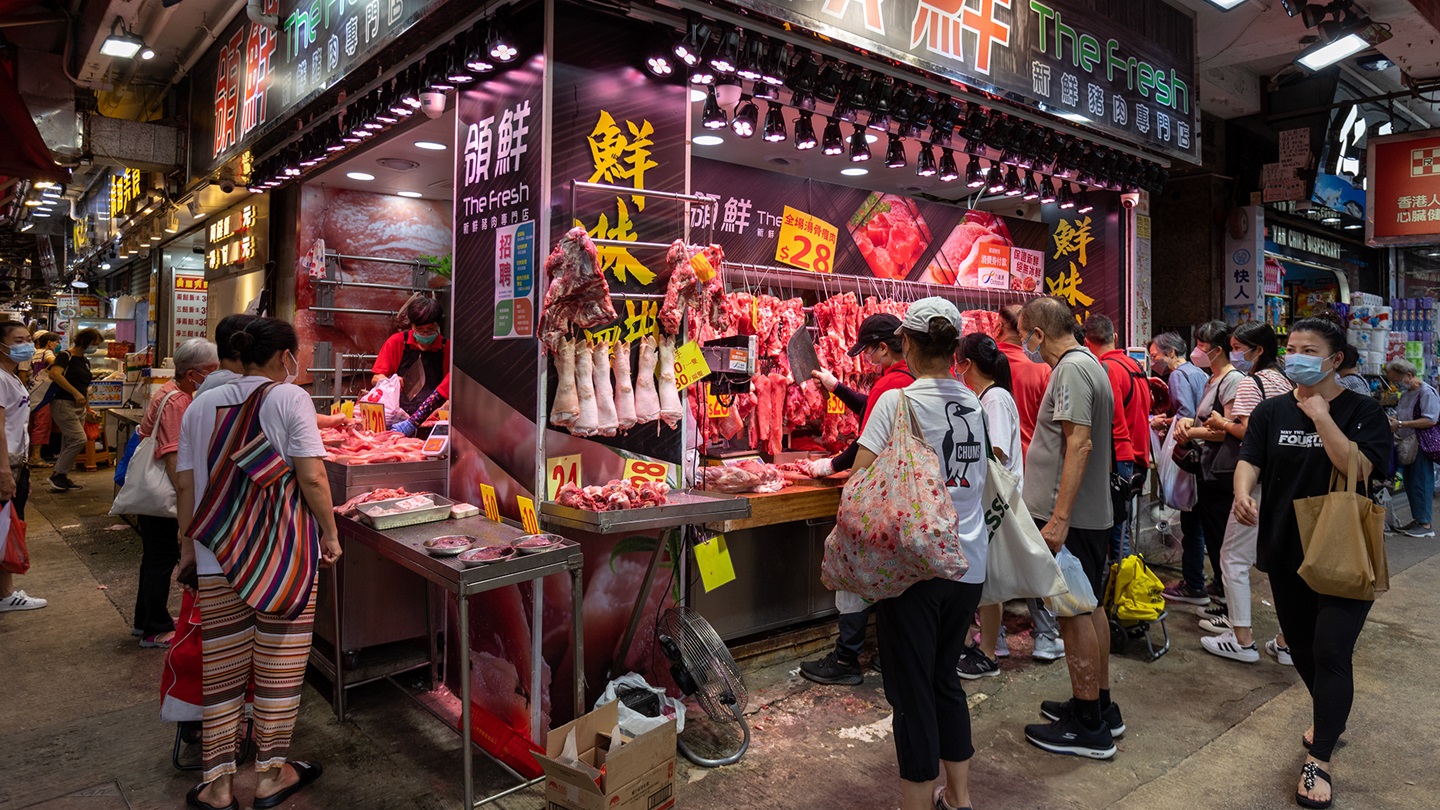
Shoppers at a butcher shop in Mong Kok, Kowloon, Hong Kong.

by Derrell Peel, Oklahoma State University
The role of China in global beef markets has changed rapidly in the past two decades. China [including Hong Kong (HK)] was not a player at all in global beef markets as little as 15 years ago, but it has risen rapidly to become the largest beef importer in the last decade (see Fig. 1).
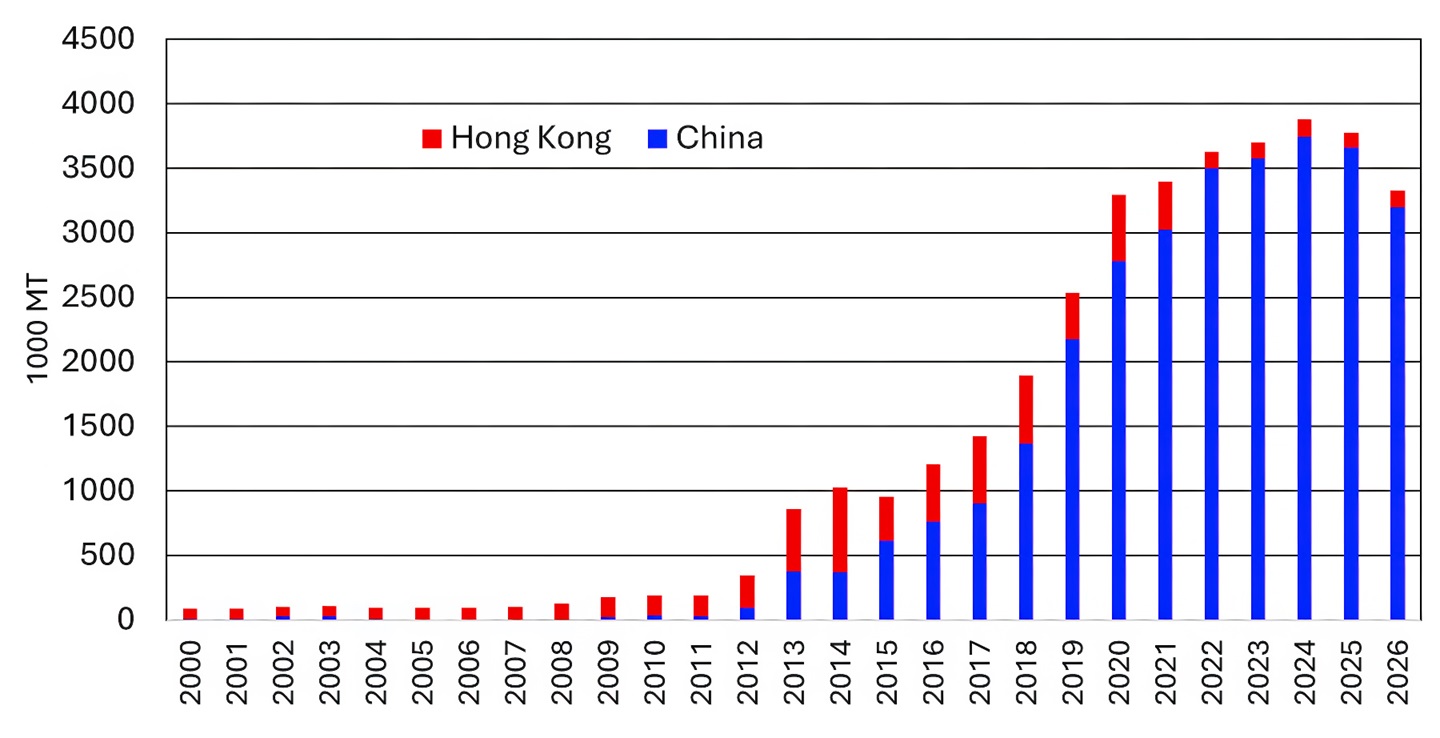
Fig. 1: China Hong Kong beef imports

For many years, China was a large beef-producing and -consuming country, but it had almost no presence in global beef markets. Starting about 2013, rising beef consumption in China began to exceed domestic beef production, leading for the first time to significant beef imports.
Although per capita beef consumption in China remains relatively low, roughly 13 pounds (lb.) compared to 59 lb. in the United States, the large population means that small increases in beef consumption represent large amounts of beef in total. As a result, China/HK quickly became the largest beef-importing country, surpassing the United States by 2017 (see Fig. 2). As recently as 2022, China/HK accounted for greater than 35% of global beef imports.
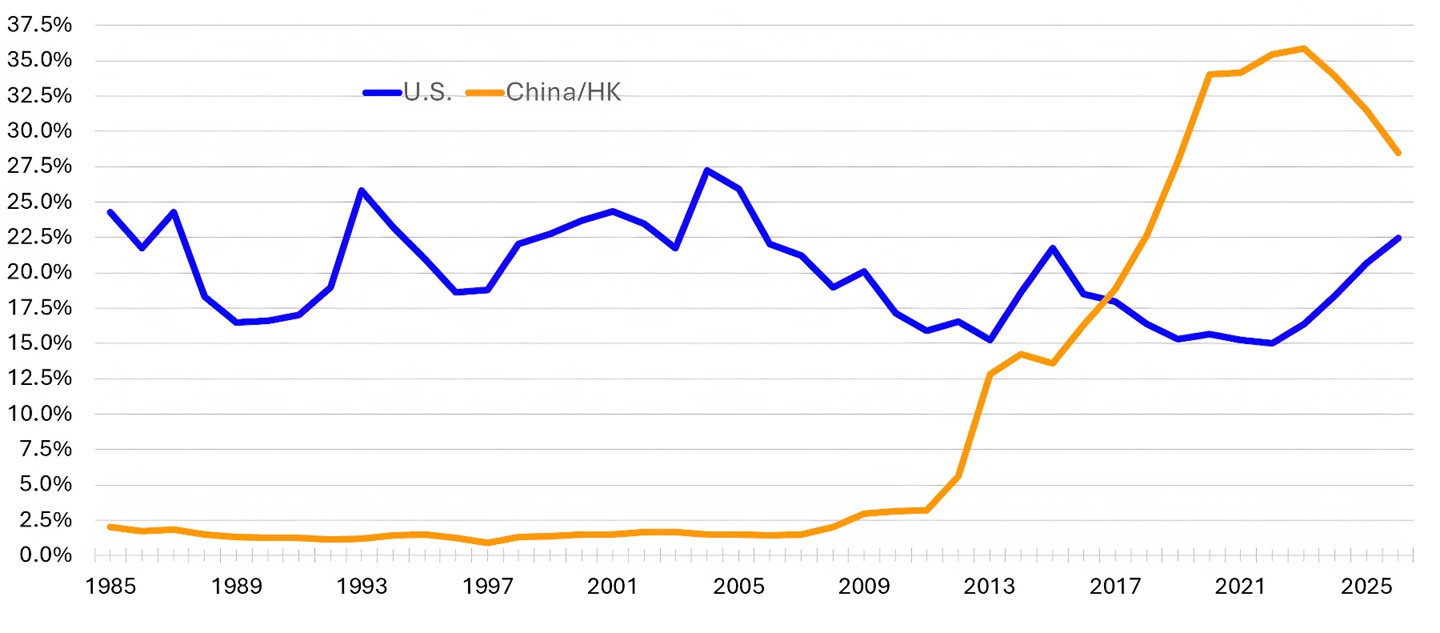
Fig. 2: U.S. and China/HK beef import share
% of global total

Part of the growth in beef imports in China/HK included increased exports of U.S. beef to China. Hong Kong was a significant beef export market in the 2010s, representing as much as 16% of total U.S. beef exports, and was the No. 3 export market. It was generally recognized that a portion of exports to Hong Kong were subsequently transshipped into China.
After the United States achieved official access to China, beef exports began to grow, with exports to Hong Kong decreasing as expected (see Fig. 3). For this reason, data from China and Hong Kong are combined, although still reported separately.
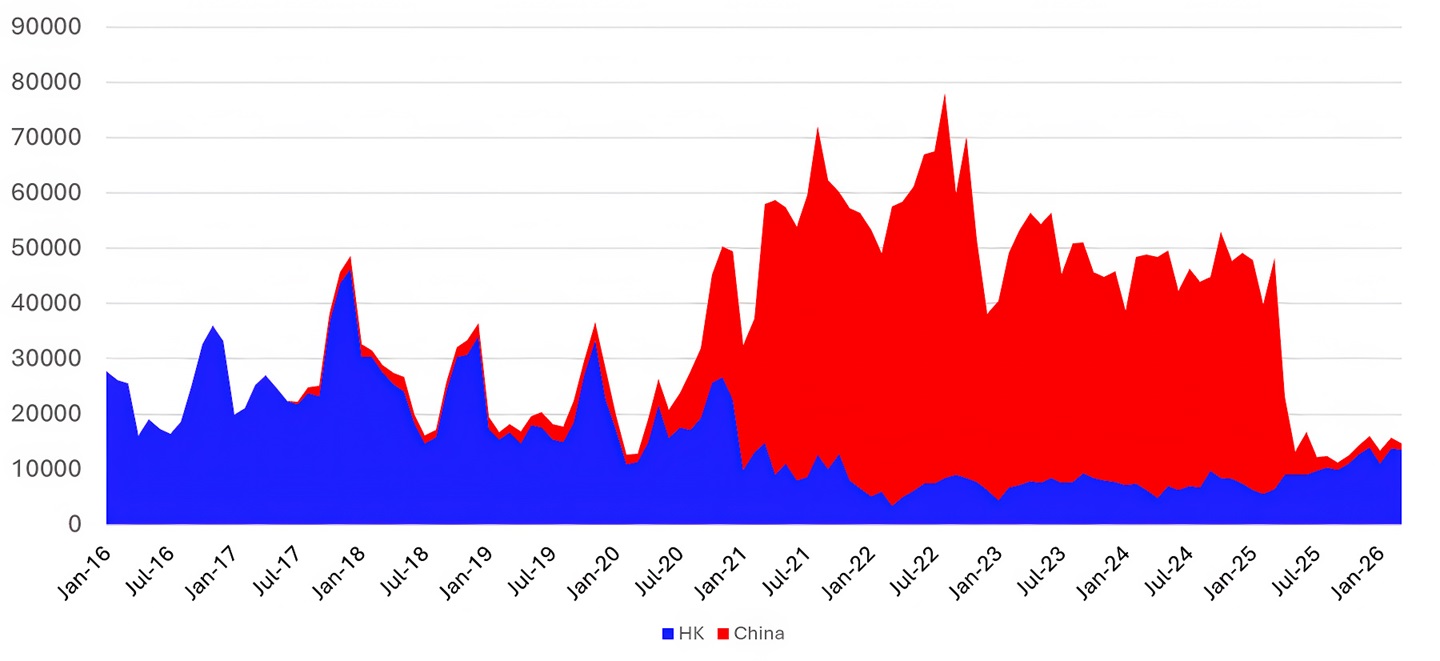
Fig. 3: Beef exports to China/Hong Kong
1,000 lb., monthly

In 2025, with tariffs in place and U.S. access to China revoked, exports to China/HK decreased sharply, although beef exports to Hong Kong increased to slightly offset the total decrease (due to different political responses in Hong Kong). The China/HK share of U.S. beef exports dropped from 18.7% (third-largest) to 10.4% of total beef exports and fourth place among beef export destinations (see Fig. 4).
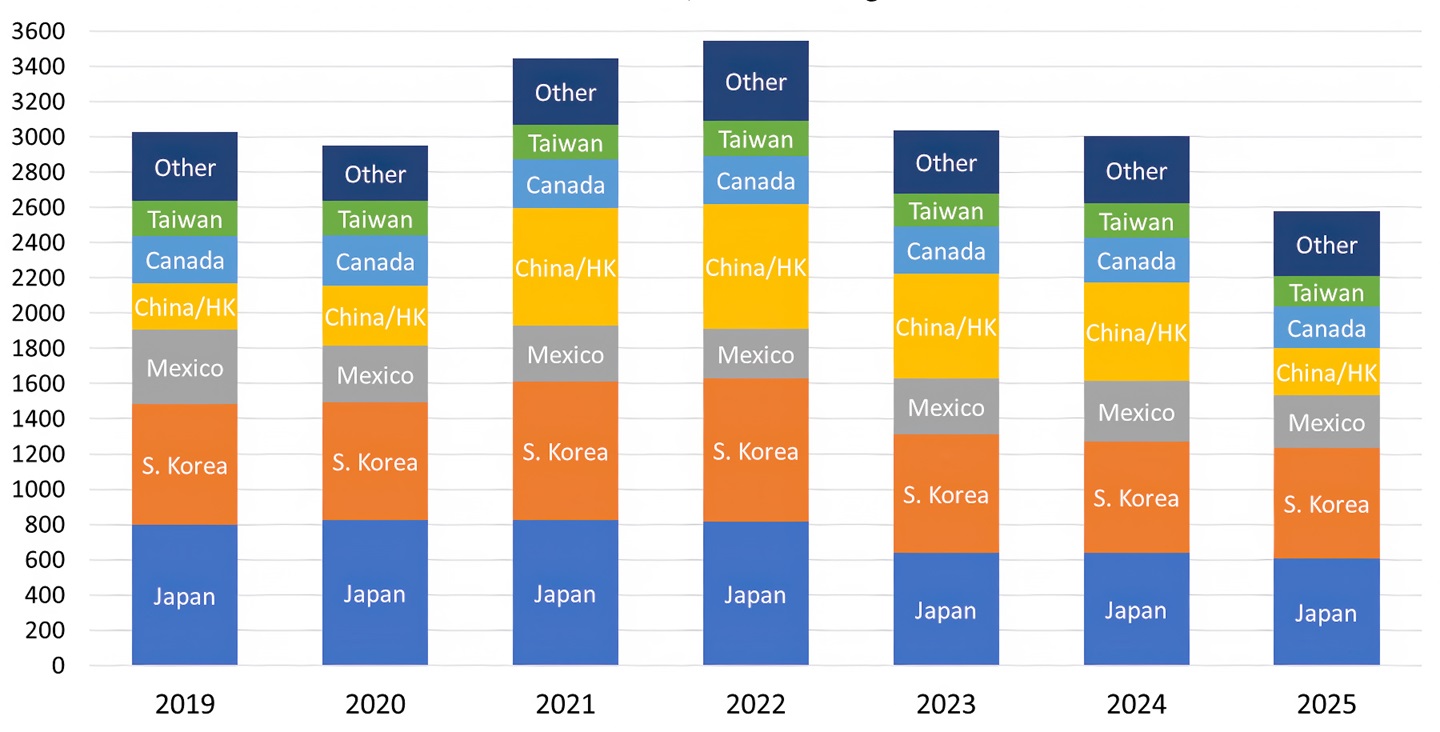
Fig. 4: U.S. beef exports, 2018-2025
Million pounds, carcass weight

While China/HK quickly grew to be a major U.S. beef export market after 2020, the U.S. share of total China/HK beef imports has been relatively small. The U.S. share of total beef imports in China/HK peaked at 8.8% in 2022 and dropped to 3.7% in 2025. There is no doubt that China/HK generally represents significant beef export potential for the United States in the absence of political barriers.
Fig. 4 shows the dramatic loss of China/HK beef exports in 2025 relative to other major beef export markets. Decreased beef exports to China/HK accounted for 68% of the total decrease in U.S. beef exports in 2025. The ramification of this loss in U.S. beef market was largely unrecognized, simply because the domestic U.S. market was so strong and trending higher. Under different market circumstances, the effect would be much more evident. Part of the future prospects for herd rebuilding and increased beef production in the United States will depend on maintaining and building robust beef export markets, and China/HK will certainly be a key component.
Editor’s note: Derrell Peel is livestock marketing specialist with Oklahoma State University Extension, which provided this article. [Lead photo by winhorse from Getty Images.]
Angus Beef Bulletin EXTRA, Vol. 18, No. 5-B
Recent developments in U.S.-China beef trade
China’s General Administration of Customs (GACC) has granted a five-year registration extension to 425 overdue U.S. beef establishments in China’s Food Import Food Establishment (CIFER) system. Additionally, 77 new U.S. beef establishment registrations have been added to the CIFER system with an effective date of May 15, 2026, and registrations are valid for five years. Thirty-eight beef establishments remain suspended. Of the suspended facilities, 25 were also expired and are now renewed, but remain ineligible for export.
“USMEF greatly appreciates U.S. beef access being prioritized at the summit meeting between President Trump and President Xi,” says Dan Halstrom, president and CEO of the U.S. Meat Export Federation (USMEF). “Renewal of U.S. beef establishment registrations is a critical step forward for U.S. beef exports to China. We await more details and a further readout from USTR’s engagements with China, and note with appreciation Ambassador [Jamieson] Greer’s optimism for U.S. agricultural trade with China.
“China’s renewal of U.S. beef establishments is excellent news for the U.S. beef industry and for the customers in China who are anxious to resume purchases.”
— by USMEF
Topics: Marketing , Industry News , News , Policy
Publication: Angus Beef Bulletin
Related Content


Current Angus Beef Bulletin
Our September issue focuses on the females of the herd and the records that validate them.