In the Cattle Markets
Could adoption of beef on dairy be leading to more heifers on feed?
May 5, 2026

by David Anderson, Texas A&M University
Beef on dairy remains among the most discussed topics in the beef industry. Questions have been raised about the effects of beef on dairy on beef production, which we discuss in a 2024 Cattle Market Notes Weekly article. A question that has received less attention, but we believe is just as important, is whether growth in beef on dairy has the potential to mask changes in cattle inventories in USDA-National Agricultural Statistics Service (NASS) reports. Specifically, the January and July Cattle Inventory reports and the monthly and quarterly
The objective of this article is to explain how beef on dairy could affect cattle inventory reporting. Specifically, we examine scenarios in which growth in beef-on-dairy programs may increase the number of cattle entering the beef supply and change the composition of those cattle.
Beef on dairy can affect beef supplies in two ways:
- the total number of cattle entering the beef supply; and
- the composition of cattle in the U.S. beef supply.
First, beef on dairy may change the number of cattle entering the beef supply chain by altering the relative value of dairy heifers. Historically, dairy heifers are valued highest as dairy cow replacements. Excess heifers, those in excess of dairy cow replacement needs, entered the beef supply chain.
However, growth in beef-on-dairy programs can increase the value of dairy heifers and bull calves as part of the beef supply chain. This could potentially influence heifer retention decisions in the dairy sector and affect the share of dairy heifers retained for herd replacement each year.
Second, beef on dairy alters the composition of cattle by shifting dairy-origin calves that would traditionally enter the system as straight-bred dairy steers and heifers into a distinct beef-on-dairy category. This effectively creates a third class of animal in the beef production system alongside traditional straight-beef and straight-dairy breeds. Although we might argue that these are simply another crossbred type of cattle.
Simply reporting beef-on-dairy cattle as a separate category in existing USDA reports is not a straightforward solution to what we believe is a potential measurement and interpretation problem in these reports.
Fig. 1 offers an illustrative example of how beef on dairy may increase the number of cattle entering the beef supply chain. It plots annual dairy cow inventory and dairy replacement heifers as a percent of dairy cow inventories in the United States from 2006 to 2026. The data is from the January Cattle Inventory report. Fig. 1 shows that from 2017 to 2026 the dairy cow herd has ranged from 9.34 million to 9.57 million head. At the same time, the ratio of dairy replacement heifers to dairy cows has declined from 50.7% in 2017 to 40.8% in 2026. While the dairy herd has been relatively stable during that time, the pool of heifers being held for dairy replacement has been shrinking.
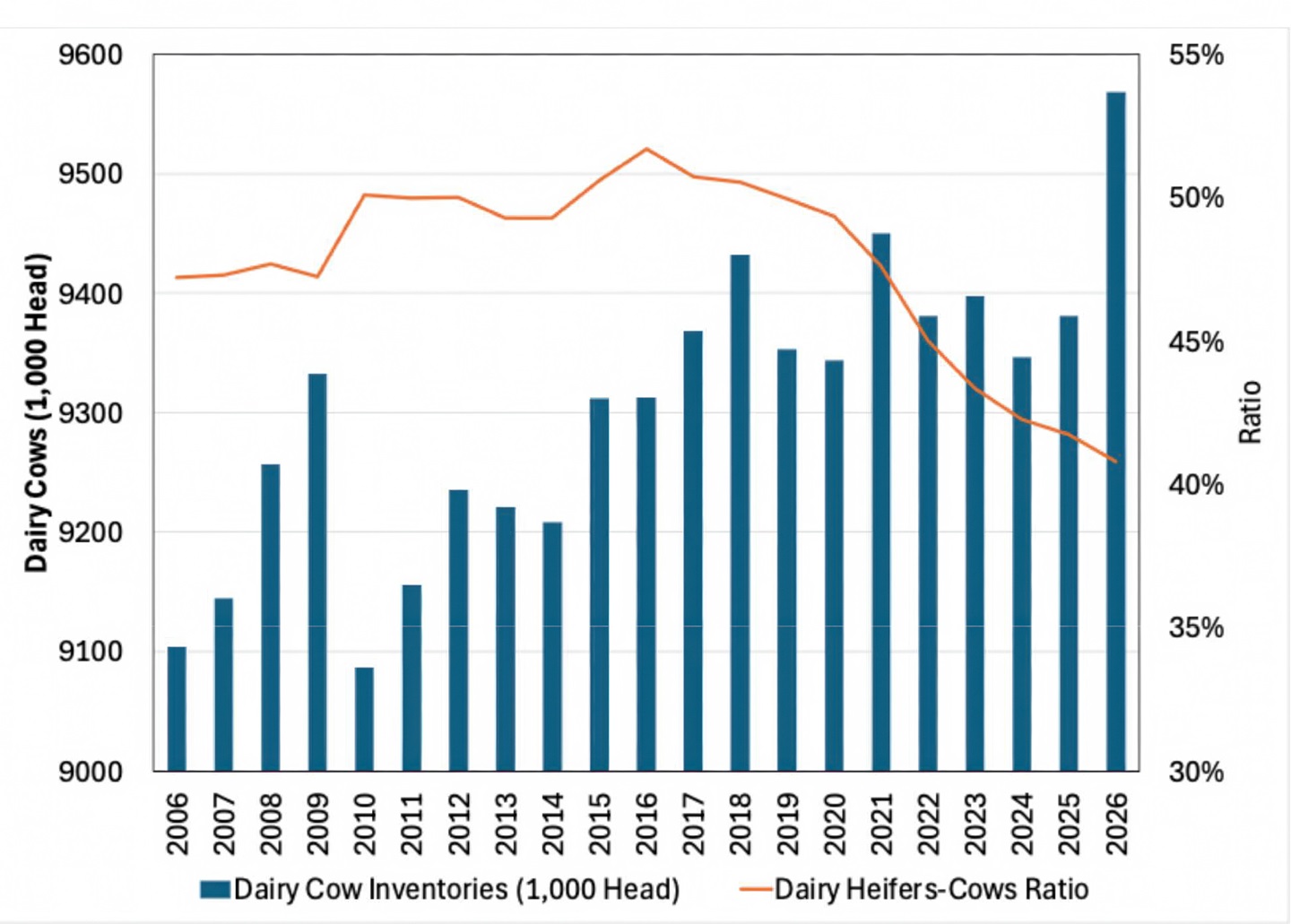
Fig. 1: Jan. 1 dairy cow inventories and dairy replacement heifers as a percent of dairy cow inventories
Source: USDA-NASS and LMIC.

While some of this is likely due to producers more efficiently targeting heifer semen to the right cows, one must also think some of this is due to the potential value of those non-replacement dairy calves, many of which are now beef-sired. The proliferation of information for better decision-making on dairies has led to fine-tuning the number of replacement heifers needed, especially given the cost of heifer development, and freeing up more beef-sired calves for the record-high calf market.
One industry report that the beef cattle sector pays close attention to, because of its implications for herd rebuilding, is the quarterly Cattle on Feed (COF) report from USDA-NASS. In the quarterly COF, published at the beginning of each quarter, cattle-on-feed inventories are reported separately for steers and heifers, and the key statistic discussed is heifers on feed as a percent of total cattle on feed.
When heifer retention increases for the purpose of beef cow herd expansion, heifers represent a small share of total on-feed inventory. However, the reported number of heifers on feed does not distinguish between beef, dairy and beef-on-dairy heifers. Higher adoption of sexed semen for dairy replacement heifers, combined with incentives to use more beef semen on dairy cows, has the potential to result in more calves born from dairy cows being placed on feed. A good portion of these are likely heifers, which suggest it could also inflate heifers on feed as a percent of total cattle on feed. If this were occurring, it could mask early signs of beef cow herd rebuilding.
The January 2026 COF reported that heifers on feed totaled 4.435 million head, or 38.7% of total cattle on feed. To estimate the potential effects of beef-on-dairy and sexed-semen adoption, we subtract the estimated increase in heifers associated with increased adoption of both from total reported heifers on feed.
A key challenge is that assumptions about beef-on-dairy and sexed-semen adoption rates are hard to pin down. Our baseline assumes a 50/50 steer-heifer dairy calf crop with no sexed semen and no beef on dairy. The increase in heifers is calculated assuming 75% adoption of sexed semen for dairy replacement heifers and 25% adoption of sexed semen for beef-on-dairy steers.
Under these assumptions, we estimate that a little more than 1.5 million dairy heifers enter feedlots annually, compared to a little less than 940,000 under the baseline scenario. This implies an increase of approximately 600,000 heifers entering feedlots each year relative to the baseline. After applying this adjustment, the implied beef breed heifers-on-feed total for January 2026 is 4.186 million head, or 36.6% of total cattle on feed. Even after adjusting for potential beef-on-dairy heifers, it is still a relatively large number of beef breed heifers on feed and doesn’t really change drastically the implications about herd expansion.
For perspective, the estimated increase of roughly 600,000 heifers entering feedlots annually is large relative to recent changes in beef inventories. For example, the beef cow herd declined by about 1%, while beef heifer inventories increased by only about 41,000 head, suggesting these dynamics could meaningfully influence how cattle inventory data are interpreted.
Rather than focusing on any single assumption about adoption rates, Fig. 2 calculates the combinations of sexed semen use that would generate the same adjusted heifer share of total cattle on feed. The line in the figure represents combinations of adoption rates that produce a heifer share of approximately 38.7%, which matches the heifer share implied by the January 2026 Cattle on Feed report. Points along the line yield the same implied heifer-on-feed percentage. Combinations above the line result in a larger adjusted heifer share, while combinations below the line result in a smaller share.
For example, if the industry adopts 70% sexed semen for dairy replacement heifers, then adoption of sexed semen for beef-on-dairy steers above approximately 42% would imply an upward adjustment in the heifer-on-feed percentage above 38.7%. Alternatively, adoption below approximately 42% would imply a heifer share below 38.7%.
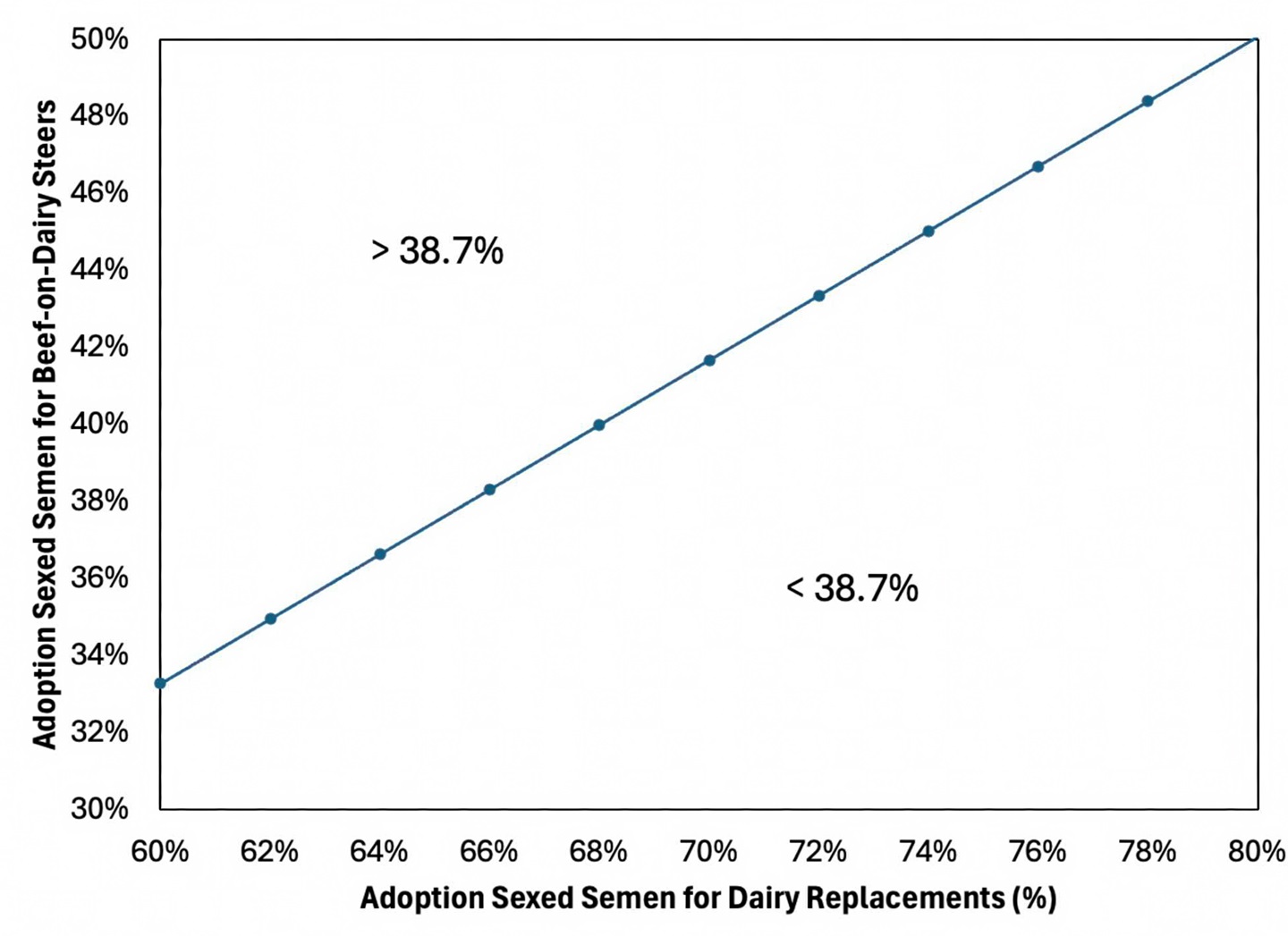
Fig. 2: Adoption rate combinations yielding a 38.7% heifer share of total cattle on feed
Note: The line represents combinations of sexed semen adoption rates for dairy replacement heifers (x-axis) and beef-on-dairy steers (y-axis) that produce an adjusted heifer share of 38.7%, consistent with the heifer share implied by the January 2026 “Cattle on Feed” report. Points along the line yield the same heifer share. Combinations above the line imply a heifer share greater than 38.7%, while combinations below the line imply a smaller heifer share.
Source: USDA-NASS and LMIC.

This approach shifts the emphasis away from identifying a single assumed adoption rate and instead highlights the tradeoff between dairy replacement and beef-on-dairy adoption. Because no comprehensive industrywide data exist documenting adoption of sexed semen for either dairy replacements or beef-on-dairy programs, presenting the results in this way allows us to evaluate how alternative combinations of adoption rates would affect the implied heifer share, without requiring a definitive assumption.
Beef on dairy and the use of sexed semen in the dairy industry both have implications for the beef industry, particularly for how cattle inventories are interpreted in USDA-NASS reports. As an example, we have shown how these changes in the dairy industry might affect the quarterly estimate of heifers on feed in the USDA-NASS COF report. This is something that analysts need to keep in mind when they interpret the gender breakdown from these quarterly reports.
An additional issue is that beef-on-dairy cattle are not always easily distinguishable from straight-beef cattle once they enter feedlots. As a result, simply reporting beef-on-dairy cattle as a separate category in existing USDA reports is not a straightforward solution to what we believe is a potential measurement and interpretation problem in these reports. This is a separate issue that is worth having its own article.
Editor’s note: David Anderson is professor and extension livestock and food product marketing specialist in the Department of Agricultural Economics at Texas A&M University.
Angus Beef Bulletin EXTRA, Vol. 18, No. 5-A
Topics: Marketing , Management , Genetics , Feedyard
Publication: Angus Beef Bulletin
Related Content


Current Angus Beef Bulletin
Our September issue focuses on the females of the herd and the records that validate them.