Drought Threatens the Herd Rebuild
While cow culling is down and the beef replacement heifer inventory is up slightly, widespread drought threatens herd rebuilding efforts.
May 6, 2026

by Derrell Peel, Oklahoma State University
Moving into May, drought conditions take on a new urgency. Pasture and hay production in the next few weeks will determine cattle production potential for much of the year.
The latest Drought Monitor (see Fig. 1) shows drought is widespread across much of the country. The Drought Severity Coverage Index (DSCI) is calculated from Drought Monitor categories to provide a summary measure of drought. The current DSCI for the continental United States is a value of 202, down fractionally from 204 the previous week. The current DSCI is the largest value for the end of April in the history of the Drought Monitor, which dates back to 2000.
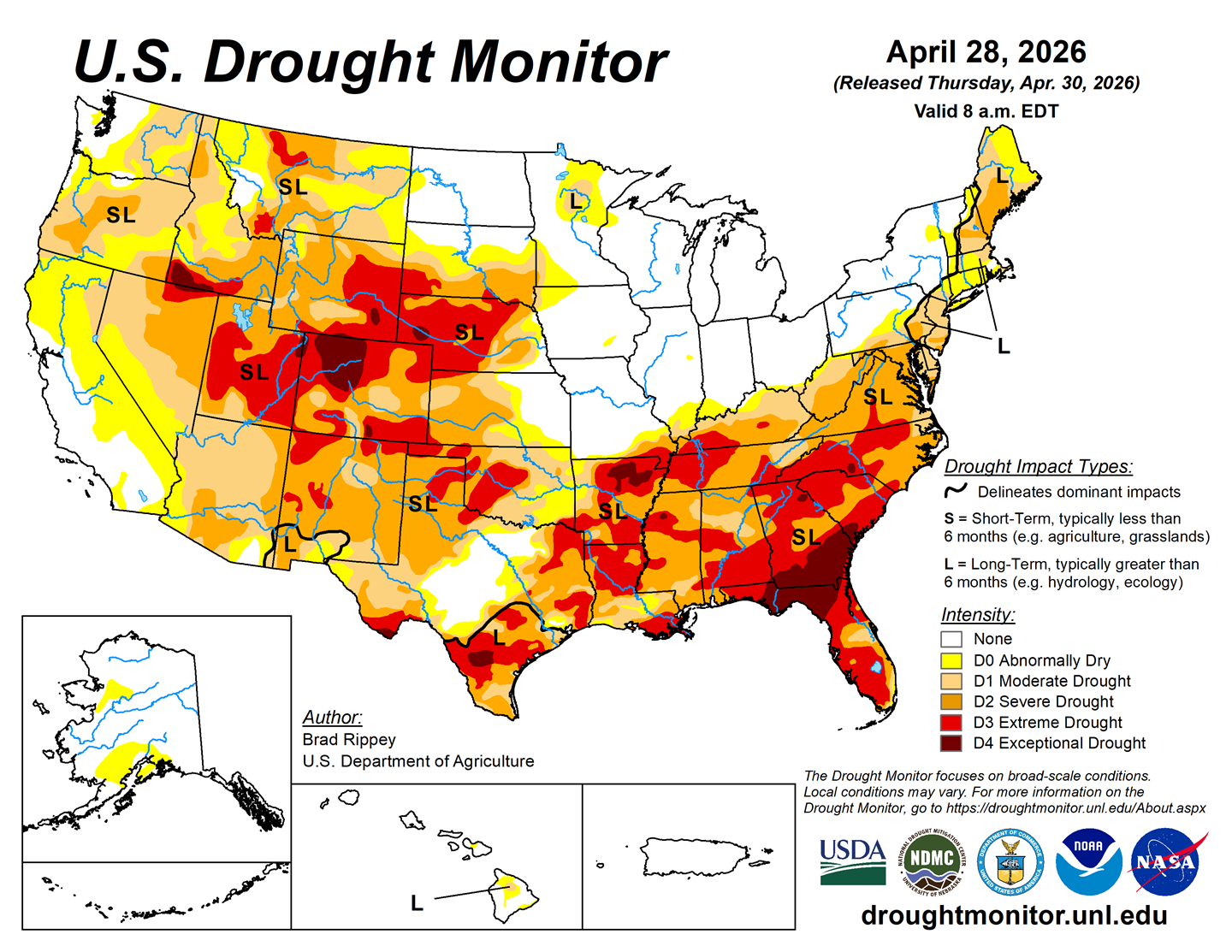
Fig. 1: U.S. Drought Monitor for April 28, 2026

Not only has the DSCI never reached a value of 200 at this time of year, the DSCI for the United States has only exceeded a level of 200 a total of 26 times in 1,374 weeks since the Drought Monitor began. The DSCI has averaged 108, ranging from 11 to 215 over the last 26+ years. The current values greater than 200 are more than two standard deviations above average and have occurred less than 2% of the time in the history of the Drought Monitor.
The DSCI provides a measure of drought intensity but does not specifically address drought affecting beef cattle production. In 26 states accounting for 88% of the 2026 beef cow inventory, the percentage of drought in each state is applied to the beef cow inventory in each state. Results show more than 79% of the beef cow herd in those 26 states is currently affected by drought. That means that more than 70% of the total beef cow herd is affected — even without considering drought in any remaining states. It is clear drought is a significant threat to beef cattle production and potential herd rebuilding in 2026.
Decreased cow culling is an important part of stopping herd liquidation and stabilizing the cow herd. Beef cow herd culling dropped sharply in 2023-2025, reaching a cyclically low level of 8.4% in 2025. Thus far in 2026, beef cow slaughter is down more than 17% year over year, a level that would lead to an annual herd culling rate of roughly 7.0% if it persists for the balance of the year. This would be a record low culling rate and would certainly help stabilize the beef cow herd. However, current drought conditions may cause cow slaughter to increase and lead to additional herd liquidation.
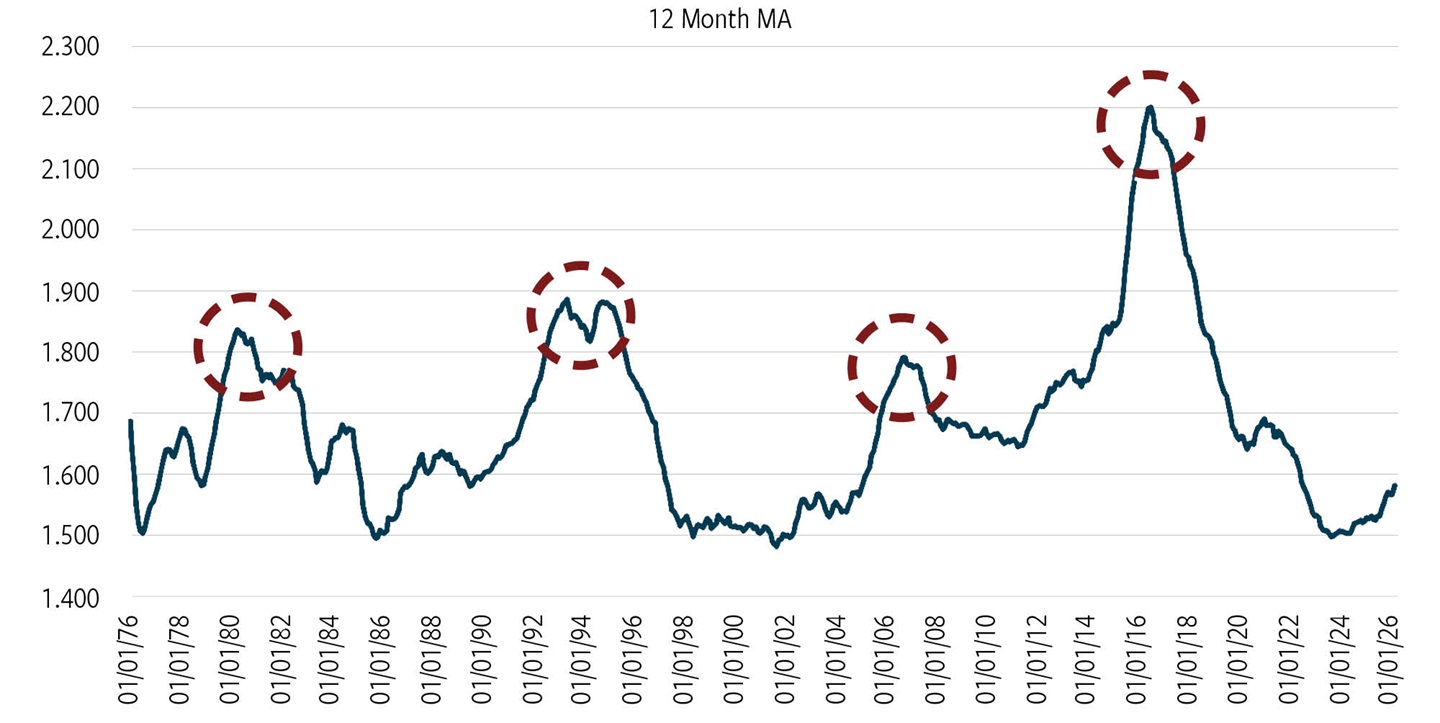
Fig. 2: Steer:heifer slaughter ratio

There are indications of the very early stages of heifer retention, as well. The Jan. 1 beef replacement heifer inventory was up slightly, by 0.9%, year over year. This is consistent with the indications in the steer-to-heifer slaughter ratio in Fig. 2. This ratio has peaked in each of the last four herd expansions and typically starts increasing prior to the herd inventory low. The chart shows that the ratio has started to increase and indicates the very early stages of heifer retention. Little or no herd rebuilding is indicated for 2026, but the process may be starting for later. However, continued or accelerated drought in 2026 could interrupt early heifer retention and further delay herd rebuilding.
Editor’s note: Derrell Peel is a livestock marketing specialist for Oklahoma State University Extension and first wrote this article for the Cow-Calf Corner newsletter. He discusses the effects of delayed herd expansion on the cattle markets on the U.S. Farm Reports college roadshow visit at Oklahoma State University here. [Lead image by Leann Schleicher using Adobe Photoshop and Firefly.]
Angus Beef Bulletin EXTRA, Vol. 18, No. 5-A
Topics: Feeder-Calf Marketing Guide , Marketing
Publication: Angus Beef Bulletin
Related Content


Current Angus Beef Bulletin
Our September issue focuses on the females of the herd and the records that validate them.