




Cattle Feeders’ Perspective on Our Beef Industry
COVID taught us we could feed cattle longer, yet days on feed don’t equate to more marbling unless you have the right genetics.
April 22, 2026
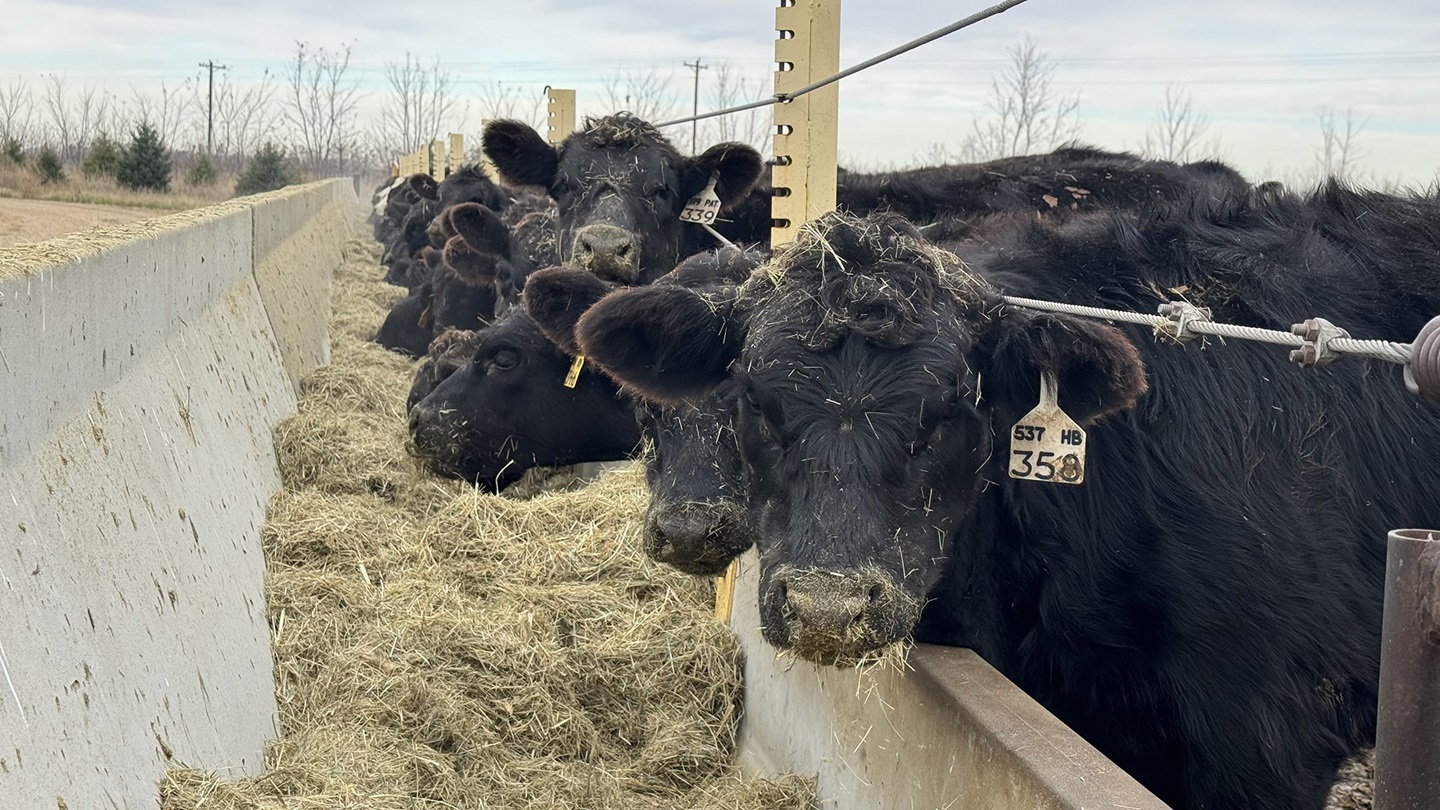

Since 1980 we have produced more beef with fewer cows. In fact, cow numbers have dropped about 25%, while beef production has increased 27%, said Justin Gleghorn, former director of cattle risk management with Cactus Feeders. Now with Smith Cattle Co. in Texas, Gleghorn presented the feeder perspective on the ramifications of more days on feed at the King Ranch Institute for Ranch Management’s 22nd Annual Symposium on Excellence in Ranch Management.
Have we made that increase in beef production by adding days on feed?
“Not necessarily. I think it’s largely driven by improvement in the genetics we’ve invested into our beef herds, especially over the last 30 years. These cattle are getting bigger through selection,” he said.
“Normally, with increased days on feed, the animals become less efficient from a live basis because they have so many maintenance requirements; more of the calories they consume are diverted towards maintenance. Yet from a carcass gain standpoint, these cattle are more efficient the heavier they get,” said Gleghorn.
“It’s not uncommon for a steer, if he’s gaining about 2.2 pounds (lb.) of live weight per day, to transfer about 90% of that live weight gain into sellable carcass gain. This changes the math on how you can buy cattle, and your decisions on feeding them if you plan to sell live weight versus carcass weight,” he said.
Some of the cattle held during COVID were about 80 days beyond their projected days on feed, and we learned more about these animals.
“Before that, we never were forced to add days,” said Gleghorn, noting he was concerned about what those extra days would mean in terms of animal welfare, mobility and structural soundness. “They handled it extremely well — so much that, today, we’re making cattle even bigger, and we have confidence to do it.”
It’s a combination of feed and good genetics.
Some of the cattle do get extremely fat, he admitted. “You can see fat around the tail head, the deep brisket and you cannot see a rib. You think that since they’re big and fat, they have to grade.”
He showed a harvest sheet of cattle that weighed about 1,400 lb. Only two out of 65 head graded Select or lower.
“But, in the feedyard, especially when feeding cattle for customers, you’ll see a little bit of everything. If you take a set of cattle that you didn’t know the background on, I would not put much confidence in the ability of these cattle to grade,” he said.
Days on feed and back fat don’t equate to intramuscular fat, or marbling, Gleghorn warns. “That animal’s ability to marble was determined the day the breeder put the bull on the cow. It’s the producer’s job not to screw it up. Then when those cattle get into the feedyard, we give them the opportunity to express that genetic potential to marble through adequate days on feed and adequate daily caloric intake. Just because you get them fat, does not mean that they’re great.”
There’s a lot of talk about the importance of quality grade.
“It’s all about dollars,” says Gleghorn. About 2019, the premium for Prime reached about $40 per hundredweight (cwt.). After COVID, in the summer of 2021, that Prime premium reached $80.
“With a nine-weight carcass, the premium for a Prime carcass was $720,” he explained. This gets a person’s attention, to try to produce more of that. But it also speaks to the market demanding that kind of product.
“Somebody was willing to buy a Prime at those price levels. Going back to post-COVID, something changed. The demand structure has shifted dramatically, especially for that highly marbled product, and prices reflect that,” said Gleghorn.
“Consistent demand is being expressed via price. The premium for Certified Angus Beef ® (CAB®) tends to run about $3 to $8 a hundredweight. It’s been pretty static for a number of years,” he said.
“When you look at the spread between Choice and Select, they discount you for Select, and Choice is considered middle (with Prime earning a premium). That line is trending lower, with more discounts as we progress through time,” Gleghorn said. “Select product is difficult to market, and expressed in the discount associated with it. It’s getting more penalty every day. Grade matters.”
Editor’s note: Heather Smith Thomas is a freelance writer and cattlewoman from Salmon, Idaho. [Lead photo by Warren Rusche.]
Angus Beef Bulletin EXTRA, Vol. 18, No. 4-B
Topics: Feedyard , Genetics , Management , Marketing , Selection
Publication: Angus Beef Bulletin
Related Content


Current Angus Beef Bulletin
Our November issue focuses on the females of the herd and the records that validate them.