



Market Closeout: Record Prices Don’t Last
While prices may not last, proven genetics do.
February 19, 2026
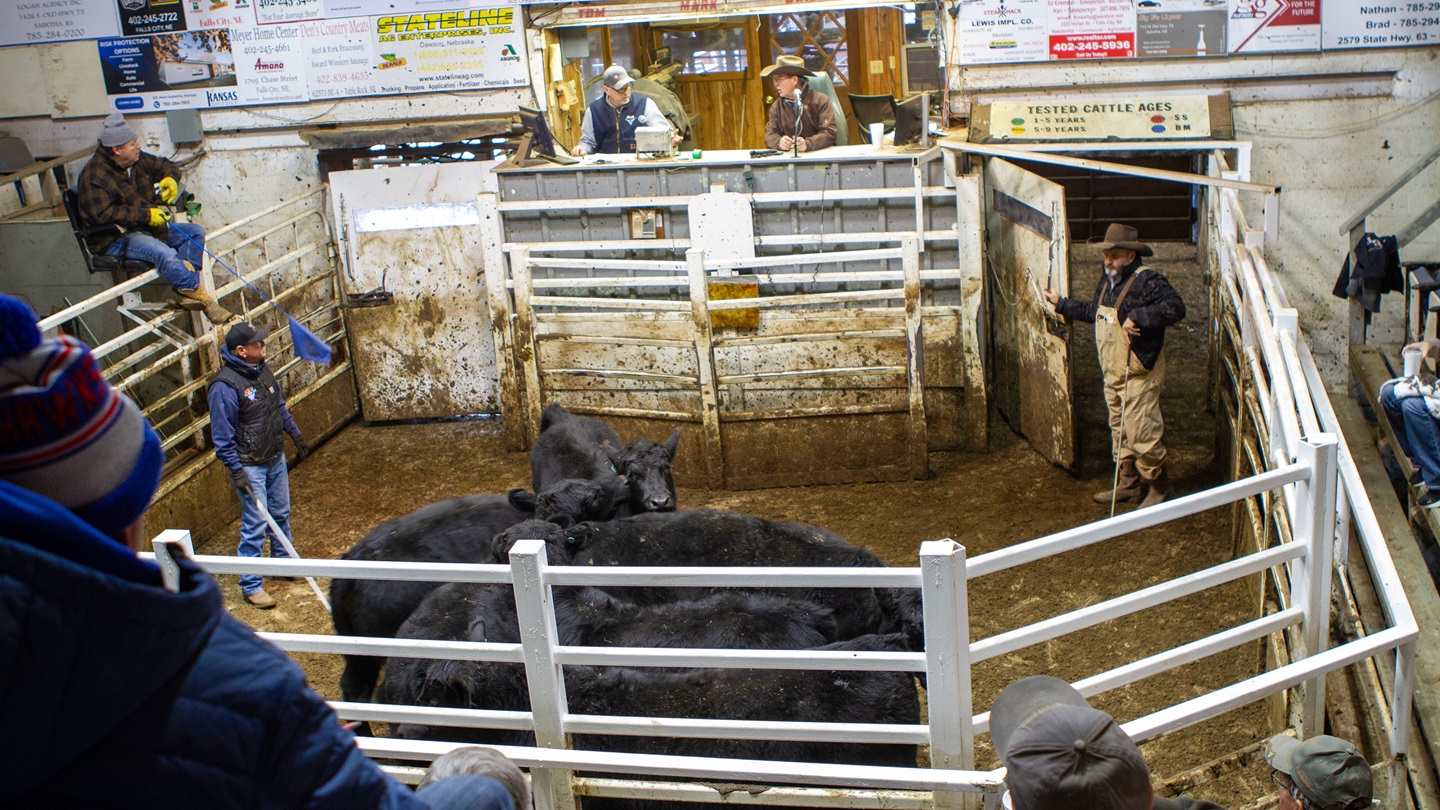

 The U.S. cattle industry finds itself in a rare moment: Calf prices are strong, inventories are tight, and demand signals remain supportive from feeder to packer. It’s an encouraging environment — and one that rewards good management across the board.
It’s tempting to sit back and celebrate our good fortune. It is well-deserved, but history reminds us of something equally important. Record prices are cyclical; disciplined marketing is not.
Anyone who has followed the markets over time knows every high market carries within it the seeds of the next correction. The producers who emerge strongest on the other side are rarely those who timed the market properly, or who rested on their laurels, but those who used good times to sharpen their systems, document their value and reduce future risk.
That context matters when considering tools like the Genetic Merit Scorecard® (GMS) and AngusVerifiedSM. Often discussed as marketing enhancements, these programs in reality function as something more fundamental: risk-management systems for a data-driven marketplace.
Good vs. tough markets
Good markets move cattle. Tough markets sort them.
In high-priced environments, most cattle sell well. Buyers compete, margins compress downstream, and the market has less need to differentiate between “good” and “better.” But when markets normalize — and they always do — differentiation increases quickly.
It is true cattle enrolled in AngusLink® experienced record-high premiums last year, which might appear contradictory to the statement above; but my argument is price spreads and market differentiation will continue to increase at an even faster pace in the next phase of the cattle cycle.
The next market downturn will not reward volume, health and low-cost producers alone. It will reward predictability, uniformity/consistency, verified performance and documented outcomes.
That reality is already visible in feeder-cattle procurement, retained-ownership decisions and branded-beef supply chains. Buyers are increasingly unwilling to rely on assumptions — even when those assumptions are rooted in historically strong breeds or reputations.
They want certainty.

Genetic merit no longer abstract
For decades, genetic potential was largely inferred: strong management, pedigree strength, phenotype, reputation and trust built over time. Those elements still matter; however, today they are no longer sufficient on their own.
We have improved genetic selection and refined expected progeny differences (EPDs) through indexes, genomics, improved statistical analysis, and more sophisticated data collection. This has fundamentally changed what we can know — prove — and communicate about cattle.
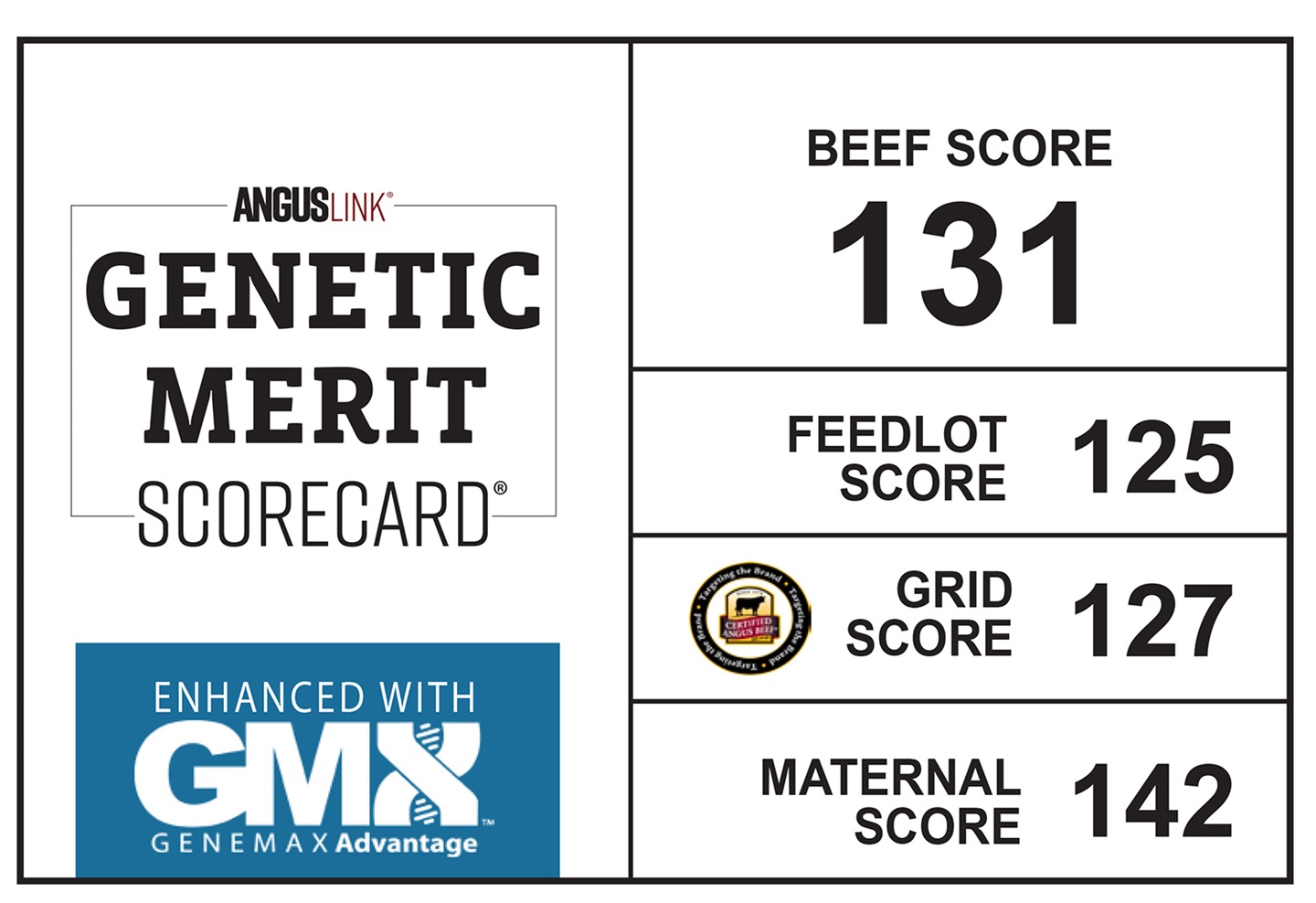
The Genetic Merit Scorecard exists because the industry reached a point where: (1) genetic differences are measurable, (2) economic outcomes can be predicted, and (3) performance claims can be verified at scale.
This is not theoretical science. The accuracy gains delivered through genomic-enhanced EPDs and commercial validation datasets have already proven themselves in the feedyard and on the rail.
The GMS takes that complexity and translates it into something the marketplace can act on: clear, comparative genetic value.
Transparency expected
One of the most important shifts in today’s cattle business isn’t technological — it’s cultural.
Data sharing is no longer viewed as optional; it’s becoming an expectation.
The biggest mistake producers can make during strong markets is postponing structural improvement.
AngusLink plays a critical role in this evolution. Linking calf crops to verified genetics, management practices and enrollment standards creates a signal that is increasingly rare and valuable in agriculture: intentional transparency.
Enrollment communicates several things at once:
- confidence in the cattle;
- willingness to be measured; and
- commitment to improvement over time.
This matters not just today, but five and 10 years down the road as supply chains continue tightening their specifications or targets, and documentation becomes central to market access and market premiums.
Prepare now
Preparing for the next cycle starts in this one.
The biggest mistake producers can make during strong markets is postponing structural improvement. One of the biggest improvements we can envision is moving the industry toward a common currency, which makes it easier to compare animals, capitalize on our existing market structure, and communicate differences clearly and cost-effectively.
High prices reduce urgency — but they also reduce friction. They provide cash flow, confidence and flexibility. Those are precisely the conditions under which durable systems should be built.
Producers who use programs like the GMS, AngusVerified and GeneMax® AdvantageTM in good markets do so from a position of strength. They are not reacting to price pressure; they are preparing for it.
The result is:
- better-informed heifer selection;
- more disciplined bull sourcing;
- clearer feedback loops between segments;
- increased market access and demand; and
- a growing data asset that compounds over time as the more cattle are enrolled in AngusLink, the more valuable the cattle become.
That compounding effect matters. Genetic improvement is incremental, but documented improvement is exponential in its market value.
Marketing vs. credibility
It’s easy to frame AngusLink as a marketing aid. I have made this mistake myself. To be clear, AngusVerified and the GMS do support marketing, but the more important benefit is in building credibility and brand value for your operation.
Marketing tells buyers what you believe.
Credibility shows them what you can prove.
As price spreads widen again — between enrolled and not-enrolled cattle, and between documented and undocumented programs — credibility will dictate access to market premiums more than slogans or tradition.
Programs like the GMS and AngusLink don’t promise top prices every year. What they promise is relevance — the ability to stay competitive, regardless of where the market turns.
Value creation in a data-driven industry
Ultimately, this conversation is about documenting and creating brand value that helps you get rewarded for all the things you are doing right — brand value based on:
- genetics refined over generations;
- customer trust earned through consistency; and
- an industry increasingly asked to justify its claims.
The cattle business has always been built on relationships. Data doesn’t replace those relationships; it strengthens them. It allows trust to scale and reputation to persist beyond individual transactions.
Record prices are an opportunity, not a conclusion. They are a moment to invest in systems that endure. The Genetic Merit Scorecard and AngusLink represent that kind of investment — one rooted not in speculation, but in measured performance, transparency and long-term value creation.
Markets will change.
Producers who prepare will not just survive the changes — they’ll lead them.
Editor’s note: Troy Marshall is director of Commercial Programs for the American Angus Association. For more visit www.anguslink.com or call 816-383-5100. [Lead photo by Leann Schleicher.]
Angus Beef Bulletin EXTRA, Vol. 18, No. 2-B
Topics: Business , Feeder-Calf Marketing Guide , Industry News , Marketing , News
Publication: Angus Beef Bulletin
Issue: April 2026
Related Content



Current Angus Beef Bulletin
Our November issue focuses on the females of the herd and the records that validate them.