



Market Closeout: Creating Value in the Commercial Cattle Market
Why differentiation matters more in today’s market than ever.
January 21, 2026
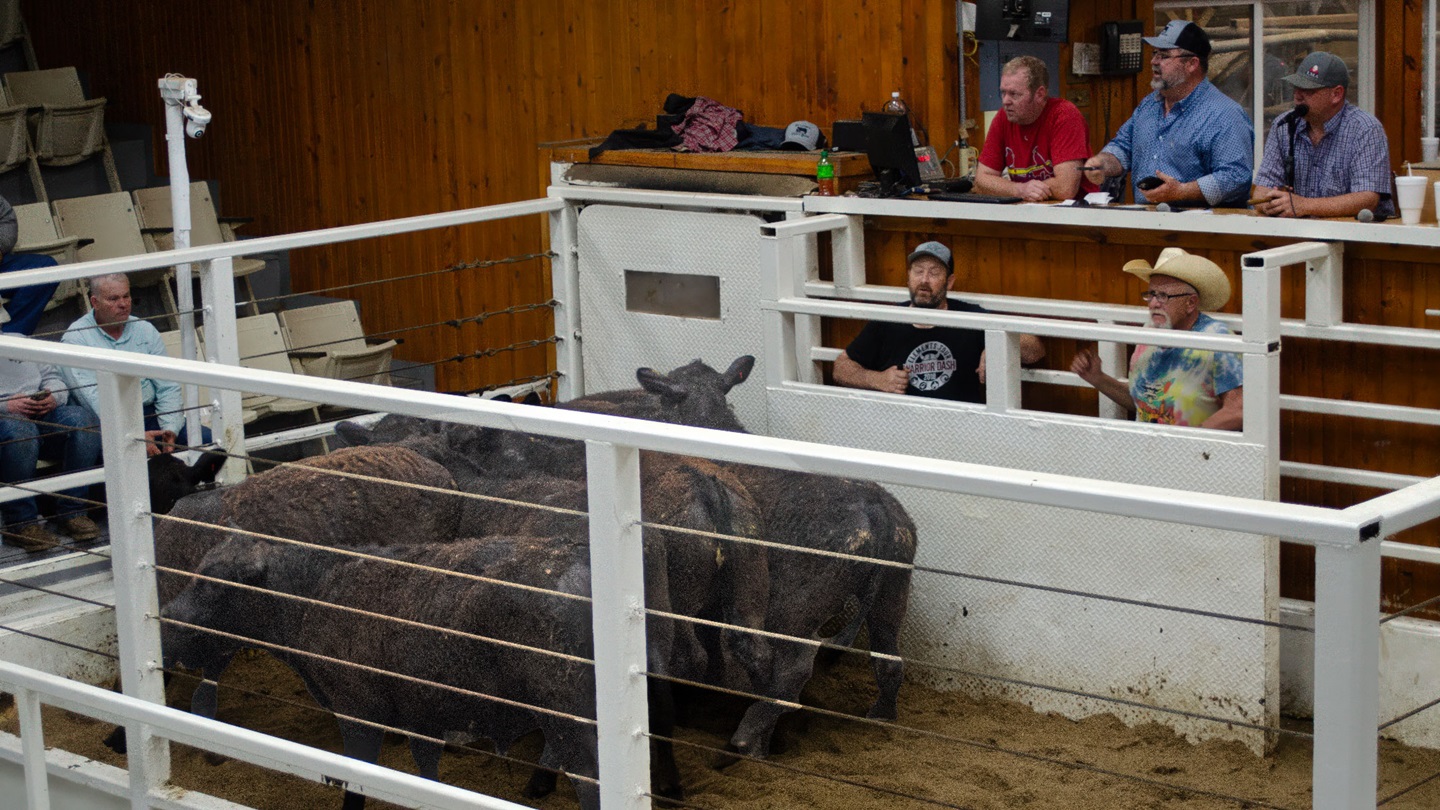

 For my entire lifetime, success in the commercial cattle business was measured by efficiency, low-cost production and risk mitigation. If you could produce pounds, control costs, understand the cattle cycle and market timing, and avoid getting overextended while creating economies of scale, you could stay in business.
That mindset built today’s industry, and it still matters. Yet quietly — and steadily — the way value is rewarded in the cattle market is changing.
We are enjoying unprecedented prices; but, unlike other cattle cycles, this is less about supply and more about demand. Strong prices tend to hide the incredible rate of change we are seeing.
With the value differences expanding exponentially due to improved genetics, relying solely on weight and averages increasingly leaves value on the table, and the way cattle are marketed is changing as a result.
The reality is many commercial cattlemen are creating value they never get paid for.
If the market can’t see it, it can’t pay for it.
Where value leaks out
Most producers invest heavily in genetics and management. They select better bulls, manage cows more intentionally, and produce calves that are healthy and provide market flexibility and market access. Yet when cattle change hands, much of that effort remains invisible.
The market largely prices what it can see and verify.
Undocumented quality becomes invisible quality.
Commodity markets excel at what they were designed to do — provide transparency, liquidity and competition. Those strengths are essential.
However, commodity systems struggle to consistently price variation appropriately and, as a result, rely on averages. They do not appropriately reward cattle in accordance to their contribution to profitability and predictability.
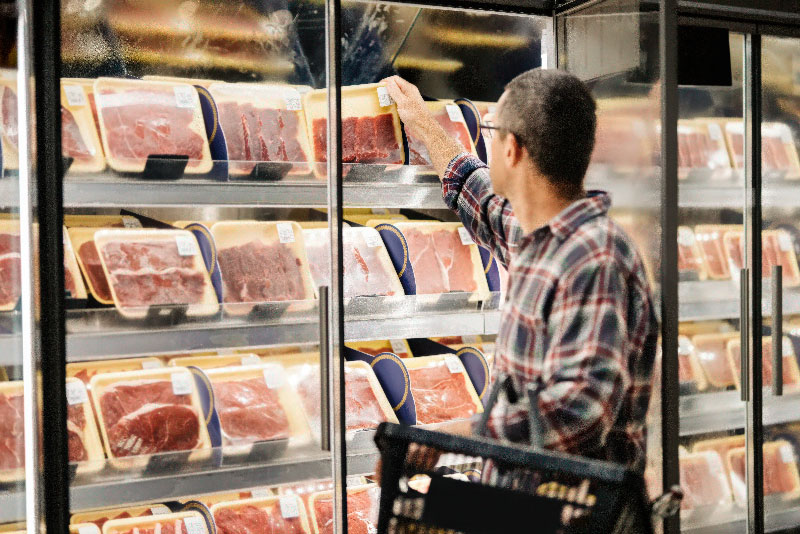
Unlike other cattle cycles, today’s unprecedented prices are less about supply and more about demand.[Photo by Giselleflissak from Getty Images.]

As a result, above-average cattle are not fairly compensated, as they are used to subsidize below-average calves.
Proof the market is differentiating
At the fed-cattle level, the evidence is clear. Grid and formula pricing now dominate much of the market. These systems explicitly price differences in quality grade, yield and specification compliance. Premiums and discounts are wider than ever for quality, meaning two cattle of the same weight can be worth very different dollars.
Branded beef programs reinforce the same signal. They exist because buyers are willing to pay for documented, repeatable quality. Over time, premium dollars paid through these programs have grown materially. Beef demand has increased in proportion to the industry’s ability to improve quality and consumer demand. The market is not just willing — but eager — to reward predictability and proof.
Much of this shift in differentiation is being driven by buyers’ growing confidence in documented genetics and repeatable performance. Commercial producers have long known the value of expected progeny differences (EPDs) and genetic tools. These same types of tools are increasingly expected throughout the commercial supply chain. Prices are increasingly linked to their contribution to system profitability.
Producers have responded. During the past two decades, the percentage of cattle meeting Certified Angus Beef ® (CAB®) brand and Prime specifications has risen dramatically. Growth and efficiency has continued to grow. Genetics and management changed because the market sent a clearer signal. When buyers reward quality consistently, behavior follows.
Value is created when outcomes become more predictable.
What ‘value’ really means
Value in today’s cattle market is not a single trait. It is the alignment of four things:
- genetic potential
- management discipline
- predictability of outcomes
- market alignment
Buyers pay premiums not simply for quality, but for reduced risk. Predictability lowers their exposure, smooths their operations and protects downstream margins. When cattle arrive as expected, they are worth more.
Genetics are necessary, but not sufficient
Genetics create potential. Systems capture value.
EPDs and genomics transformed the seedstock industry. That transformation is now moving into the commercial sector, but it requires more than good cattle. Genetics must align with environment, management and market end point. One-size-fits-all decisions leak value in a world that increasingly rewards precision.
The maternal side of the business illustrates this clearly. Heifer development is capital-intensive and risky. Longevity is one of the most powerful drivers of profitability, yet it compounds slowly and quietly. Without intentional systems, maternal value is absorbed as overhead rather than captured as return. Tools like GeneMax® AdvantageTM (see “Sorting Gate,” page 82, and “The Link,” page 73, in the March Angus Beef Bulletin) are giving producers opportunity to make proper selection decisions, to better characterize their cow herd and to market their calves.
Genetics create potential. Systems capture value.
Where value is actually created
Value is not created at the sale barn. It is created years earlier through alignment.
Alignment looks like:
- environment-specific genetic selection
- disciplined reproductive management
- consistent data and documentation
- intentional marketing channels
When these pieces point in the same direction, value becomes visible — and therefore payable.
Why scale matters
Individual producers can do everything right and still struggle to capture value. Scale is not just size; it is leverage.
Aggregated systems reduce per-unit costs, improve bargaining power and create marketing optionality. They also allow data to compound. Individual records are useful; aggregated intelligence is powerful. Scale turns good management into measurable advantage.
Programs like AngusLink® provide an objective, reliable way to describe the genetic merit in a pen of feeder cattle — giving buyers the confidence they need to pay premiums for better cattle. AngusLink also provides the marketing leverage that enables small-scale to midsize producers to market their cattle more effectively.
This new hybrid model is the future for marketing cattle
The future is not abandoning commodity markets. It is combining their strengths with value-based discipline.
Competition, transparency and liquidity remain essential. But layered on top must be documentation, verification and trust. This hybrid model preserves price discovery while allowing differentiated cattle to be rewarded appropriately.
The strategic question
Every commercial operation already creates value. The real question is simple: What do you want to be paid for? Weight alone? Or documented predictability and margin contribution?
Markets are already answering that question. Differentiation is real. Premiums are growing. Risk is being priced.
The next era of profitability belongs to producers who move beyond production alone and begin positioning their cattle so the value they create can finally be seen, trusted and paid for.
Editor’s note: Troy Marshall is director of commercial industry relations for the American Angus Association. [Lead photo by Shauna Hermel.]
Angus Beef Bulletin EXTRA, Vol. 18, No. 1-B
Topics: EPDs , Feedyard , Genetics , Management , Marketing , Selection
Publication: Angus Beef Bulletin
Related Content


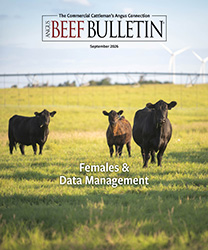
Current Angus Beef Bulletin
Our September issue focuses on the females of the herd and the records that validate them.