




What Do Consumers Want When They Buy Beef?
Symposium features discussion on what consumers really think about beef quality, nutrition and prices.
December 17, 2025

Quality does not mean the same thing to all consumers, said Danette Amstein, co-founder and manager of Midan Marketing, a strategic marketing research agency. Speaking at the 22nd Annual Holt Cat Symposium on Excellence in Ranch Management this past November, she shared research into how consumers think.
Some consumers would say being from this country would be the most important quality attribute, she explained. Being all-natural is also important to some.
“That doesn’t mean they buy it, but they relate it to quality,” Amstein added. “We talk about yield grades, marbling, quality grades — but for the consumer it’s a much broader definition for what quality means to them.”
“A year ago, if we’d tried to determine where consumers would start to fall away because of higher price, would anyone have thought we would make it this far? We’ve never seen anything like this.” —Danette Amstein
Amstein relayed results of a survey of 1,000 consumers.
Consumers were presented a couple different health messages:
- “Meat is a wholesome and nutritious part of a balanced diet.”
- “Meat is an excellent source of complete protein, providing all the essential amino acids your body needs for muscle growth, tissue development, repair, and supporting immune function.”
Asked which message would inspire them more to make a purchase, 22% of those surveyed said the short one as they could get more info online, while 78% said they wanted more detail, Amstein said.
“We asked ‘Who should deliver the message if we’re talking about health?’ Doctors and dietitians were at the top,” she said. “For a brand, it’s like tooting our own horns and not as trustworthy; 38% said a health message should come from a dietitian or a doctor, 24% want to find it on the package or on the menu, and 16% said ‘I can find it online.’”
The survey asked consumers which of the two messages on sustainability would inspire them to pick up the package and buy it:
- “This meat comes from animals raised on farms committed to sustainable agricultural practices.”
- “This meat comes from animals raised on farms that are committed to conserving soil and water, improving plant diversity, and promoting native wildlife.”
“Forty percent were more interested in the first message, and 60% wanted more information,” she said.
Then she brought up the question of prices and supply. “Consumers don’t understand that there are fewer cattle. They hear it, because it’s made mainstream news. But what they really care about is that when they get to the grocery store, they see the price has gone up again. And yet, they’ve hung in there with us,” Amstein said.
“A year ago, if we’d tried to determine where consumers would start to fall away because of higher price, would anyone have thought we would make it this far?” Amstein asked. “We’ve never seen anything like this. They’ve hung in there with us this far, and I’m hoping they’ll hang in for the full ride. But we’ve got to be able to carry that message forward, as we have fewer cattle.”
Consumers might skimp on certain things or buy a little less; but, when they want to celebrate, they’ll choose an affordable indulgence like eating out or having a steak at home, Amstein said. “We want to fit both ends of the spectrum — cheaper options for day-to-day, and the expensive quality product to celebrate.”
The popularity of protein is also helping fuel demand, she said, pointing out even Starbucks has protein you can add to your coffee and Cheerios™ touts itself as enriched with protein.
“We need to keep reminding consumers that the very best source is what we are raising. 67% of consumers say they are trying to get more protein than they did last year. Get it in your Cheerios, buy it at Starbucks, but make sure there’s beef on your plate because that’s your best source of protein,” she said.
Increasing carcass weights can create problems with consumers when, to keep weights the same, the bigger ribeyes are cut thinner. That makes them easier to overcook, Amstein said. “We want bigger ribeyes, because it makes sense for the industry and efficiency; but, we must tell the consumer to not cook it like they did before, or this beef doesn’t taste good. And they spent how much for that?
“The amount of Prime and Choice we’re producing tells us we are meeting demand and selling it at higher and higher prices,” she noted. However, we still need to communicate better with consumers.
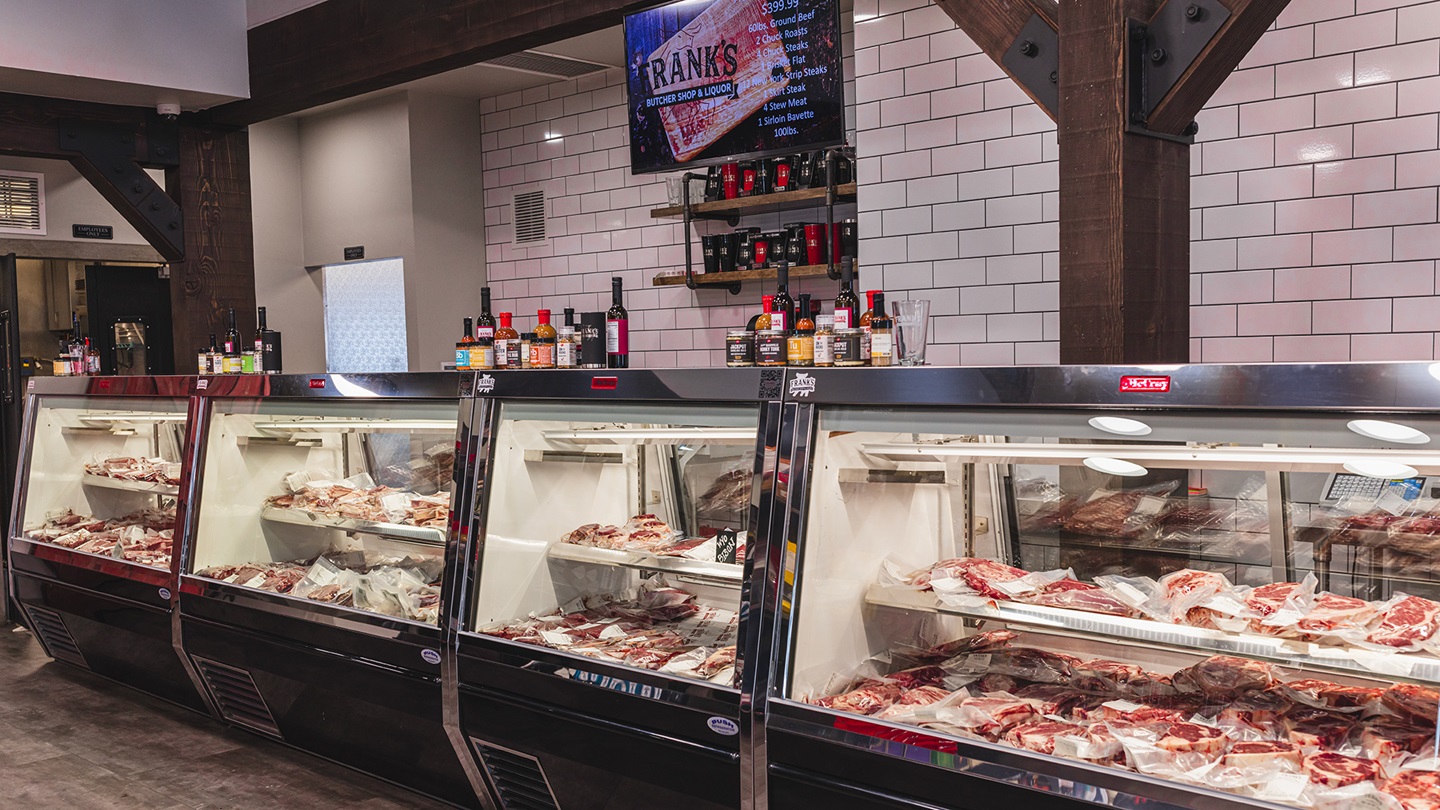
Editor’s note: Heather Smith Thomas is a freelance writer and cattlewoman from Salmon, Idaho. [Lead photo by Erin Potter Photography courtesy Frank’s Butcher Shop, Wyo.]
Angus Beef Bulletin EXTRA, Vol. 17, No. 12-B
Topics: Consumer , Marketing , Sustainability
Publication: Angus Beef Bulletin
Related Content



Current Angus Beef Bulletin
Our November issue focuses on the females of the herd and the records that validate them.