



Picking Apart Straw
Straw can have a place in cattle diets, provided nutrition is balanced.
November 19, 2025
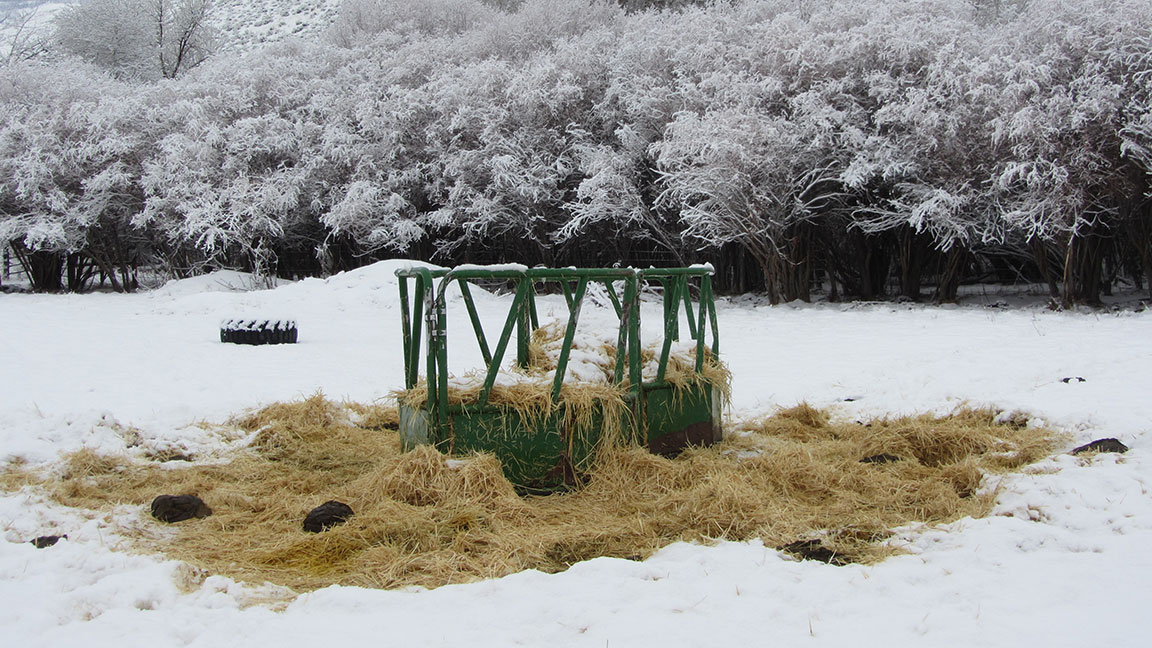

Straw is often used for bedding or as part of the diet for cows, especially during winter. Tim DelCurto, Department of Animal & Range Science, Montana State University, did studies for several years on feeding straw when he was at Oregon State University.
“The straws from perennial grasses (which are harvested after the grass seed is harvested) are actually very good feed resources. This would include bluegrass straw, perennial ryegrass straw, tall fescue straw, et cetera,” he says. “Many of the perennial straws are similar to native meadow hays that have reached advanced stages of maturity. These have more nutrients than straw from annuals like oats, barley or wheat.”
Annual cereal crops put all their energy and effort into producing grain (a large seedhead); the stems of the mature plant are mainly just fiber with very little leaf material. If you want to use it as forage, to make good hay it needs to be cut earlier, while still immature.
“Wheat straw is the lowest quality as feed and not very palatable. Cows will eat some, but generally it’s used as bedding. Barley and oat straw have more nutrient value as feed, but in many cases are used as filler,” says DelCurto. Straw has a lot of benefit during cold weather when cattle need more roughage; digesting fiber in the rumen (being broken down by rumen microbes) creates usable energy and body heat.
“When I was working with a big grazing co-op, in drought conditions they needed a place for the cows to stay when the cows ran out of pasture. They decided to just buy really high-quality alfalfa, which was about the only forage available, and limit-feed it — at about 20 pounds (lb.) per head per day. This didn’t work; the cows didn’t have enough gut fill and were not happy,” he says.
“On paper, they were meeting the cows’ nutritional needs, but they were not providing enough fiber for good gut function,” he explains. “The cows were still hungry.”
When the people from the co-op called to ask what they could do, DelCurto suggested they buy some straw to go with the alfalfa.
“That made all the difference,” he says.
In cold weather, high-quality low-fiber alfalfa isn’t enough to keep cattle warm. In winter, straw works well as a filler as long as you are making sure the diet is balanced and meets a cow’s nutritional needs. Cattle will eat a lot of straw if it is provided free-choice during cold weather.
“Straw has a place in cattle diets throughout the West when other forages are short.” — Tim DelCurto
“Straw has a place in cattle diets throughout the West when other forages are short. We’ve seen a lot of regional droughts, with shortages of pasture and hay. People can feed straw to stretch the more expensive or scarce higher-quality forages,” he says. “A person can limit-feed some alfalfa grass and put some straw out there, too, to provide the needed filler.”
Straw can make a very good complementary portion of the diet, as long as the diet is balanced, particularly for protein. It is frequently used when there are forage shortages and is most useful when the cows are dry, which is after weaning up to calving.
“In Montana I see a lot of barley straw used as part of beef cow rations in the winter. To some degree, people also use oat straw for feed, but wheat straw is mainly used just for bedding,” he says.
When using straw as feed, it’s often wise to have it tested for nitrate levels. “If it was put up after being harvested as a grain crop (fully mature), it is not as likely to have high levels. Where we generally run into problems with nitrates is when it’s been put up as hay, during periods of extended cloud cover and cool weather, and with the plants still growing,” he explains.
Editor’s note: Heather Smith Thomas is a freelance writer and cattlewoman from Salmon, Idaho. [Lead photo courtesy Heather Smith Thomas.]
Angus Beef Bulletin EXTRA, Vol. 17, No. 11-B
Topics: Feedstuffs , Nutrition , Pasture and Forage
Publication: Angus Beef Bulletin
Related Content


Current Angus Beef Bulletin
Our November issue focuses on the females of the herd and the records that validate them.