

News & Notes
News for March 3, 2026.
March 3, 2026

In this edition of “News & Notes,” you will find the following news items:
- Nebraska Extension to host March 17 webinar on confinement feeding cow-calf pairs
- Henry C. Gardiner Scholarship award winners announced
- NCBA, PLC deliver lesser prairie-chicken delisting
- Paul Hill to be the 2026 Saddle & Sirloin Portrait Gallery inductee
- Scholarship applications due May 1
- Farm Bill 2.0 provides additional certainty to American cattle producers
- Enrollment period for Farmer Bridge payments announced
- U.S.-Indonesia trade deal expands access for U.S. beef
- USDA food purchase supports U.S. producers and strengthens America’s food supply
Nebraska Extension to host March 17 webinar on confinement feeding cow-calf pairs
Nebraska Extension will host a webinar titled “Confinement Feeding Cow-calf Pairs in the Face of Limited Perennial Grass Options” March 17 at 6:30 p.m. Mountain time.
As drought continues to expand across Nebraska and the western Great Plains, pasture rental and purchase prices remain high while many harvested feed commodities are moderately priced. The webinar will explore the potential of adding a confined cow operation to an integrated cattle and crop system, along with nutritional and management considerations when drought limits or delays perennial grass growth.
“Both the feed needs of the cow and calf have to be accounted for,” says Karla Wilke, Nebraska Extension cow-calf systems specialist. “Either the calf needs to be fed in a separate creep area, or the feed delivered to the pair needs to be increased as the calf grows to meet its needs.”
Wilke says lactation requires significantly more protein and energy than gestation.
“While we can use low-quality forages or residues in confinement diets, we have to add a source of energy and protein to meet the needs of the pair appropriately,” she says.
The webinar will provide practical information producers can use this spring and summer as they evaluate drylotting operations. Wilke will highlight lessons learned from university research and from producers who have utilized drylot systems for cow-calf pairs.
Topics will include:
- logistics for drylotting pairs, including needed bunk space, water, fence, shade and creep access for calves;
- ration examples and feed cost estimates based on current commodity prices;
- limit-feeding vs. full-feeding;
- use of annual forages to complement drylot feeding;
- health considerations for cows and calves; and
- breeding strategies in a drylot setting.
A computer and internet connection are required to participate in the webinar. The webinar is free, but registration is required. To register, contact Aaron Berger at aberger2@unl.edu.
Henry C. Gardiner Scholarship award winners announced
Six elite undergraduates at Kansas State University (K-State) planning to continue careers in agriculture were recently awarded Henry C. Gardiner Scholarships. The 2026-2027 scholars are Lyle Perrier, Eureka, Kan.; Drew Mickey, Taylorville, Ill.; Anna Webel, Farmington, Ill.; Brooklyn Plumb, Haxtun, Colo.; Avery Ziegler, WaKeeney, Kan.; and Laken Dyn, Jordanville, N.Y.
In addition to a written essay, applicants compete in a rigorous, in-person interview with a panel of K-State faculty and industry leaders. Academic excellence, work ethic, community service, written and verbal communication skills and future goals are considered.
“The Henry Gardiner scholarships are the largest scholarships we give in the department,” says Dave Nichols, a faculty representative on the selection committee since 2012 . “Students that have received the scholarships are the who’s-who in their collegiate endeavors and have gone on to become young industry leaders. It is a strong selection process, but the rewards are phenomenal.”
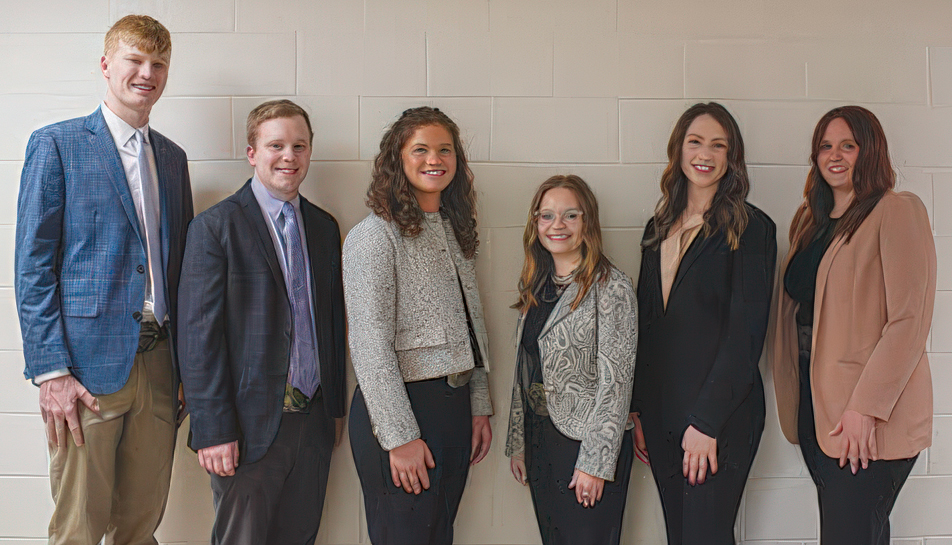
The 2026-2027 Henry C. Gardiner Scholars are (from left) Lyle Perrier, Drew Mickey, Anna Webel, Brooklyn Plumb, Avery Ziegler, and Laken Dyn. [Photo courtesy Gardiner Angus Ranch.]

“Henry Gardiner believed in hard work. But he also believed in curiosity, lifetime learning and using those skills to improve, leaving his sphere better than he found it,” says Mark Gardiner. “The 2025-2026 Henry Gardiner scholars are examples of his perpetual pursuit for excellence.”
The Henry C. Gardiner Scholarship is made possible through the generous contributions of Gardiner customers, friends and family continuing the legacy of Henry Gardiner. To date, 66 undergraduate students have received $322,500 in scholarships.
More information can be found at www.gardinerangus.com.
NCBA, PLC deliver lesser prairie-chicken delisting
On Feb. 26, the U.S. Fish and Wildlife Service (FWS) finalized removal of the Northern and Southern Distinct Population Segments (DPS) of lesser prairie-chicken from the Endangered Species Act (ESA) list. The National Cattlemen’s Beef Association (NCBA) and the Public Lands Council (PLC) filed litigation to remove this listing when the lesser prairie-chicken was first listed in 2022 due to the protections being both legally and scientifically flawed.
“The ESA listing of the lesser prairie-chicken, coupled with the designation of critical habitat across cattle country, created an unnecessary and unlawful burden for ranchers. Established science has repeatedly proven that healthy rangelands maintained by cattle grazing is exactly where the lesser prairie-chicken thrives,” says NCBA president and Virginia cattle producer Gene Copenhaver. “Grazing creates robust, sustainable habitat for the bird, and by removing this listing, the Trump administration is helping ranchers continue that stewardship.”
This listing took effect on March 27, 2023, affecting all states in the species’ range, including Colorado, Kansas, New Mexico, Oklahoma and Texas. In 2025, the U.S. Federal District Court of Western Texas vacated the lesser prairie-chicken’s 4(d) rule, holding that the bird should no longer be protected as “threatened” under the ESA because FWS failed to consider economic implications of issuing the listing. Today’s action by FWS aligns agency action with an existing federal court mandate and is long overdue.
Paul Hill to be the 2026 Saddle & Sirloin Portrait Gallery inductee
Paul Hill will be inducted into the Saddle & Sirloin Portrait Gallery Nov. 15, 2026, during the North American International Livestock Exposition (NAILE) and the National Angus Convention, at the Kentucky Exposition Center, Louisville, Ky.
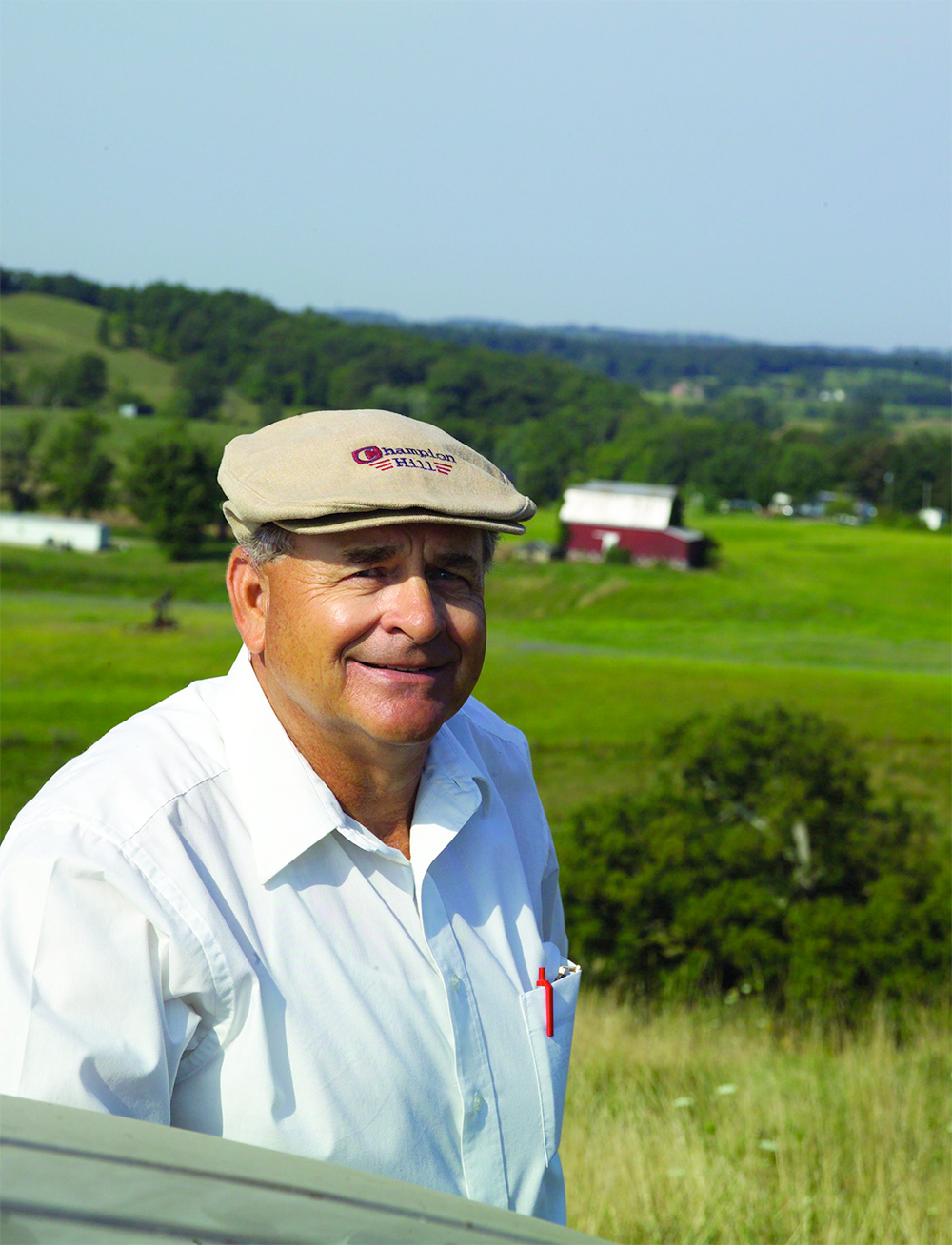
Paul Hill is the 2026 Saddle & Sirloin Portrait Gallery inductee. [Photo by Shauna Hermel.]

Hill’s success in leading Angus seedstock operations throughout the past half century is well-documented. He was managing partner of Champion Hill, Bidwell, Ohio, from 1990 to 2017, and previously led Northcote Farm, Cobble Pond Farm, Hayes Star Ranch, South Fork Angus Ranch and Briarhill Angus Farm. In his youth he was herdsman for Malloy Polled Herefords and was involved in 4-H and FFA livestock judging and land evaluation.
He has bred and developed many leading Angus cattle and has positively influenced the cattle business through interactions with partners, customers, employees, competitors, industry professionals and youth.
Hill’s work ethic, wisdom and personality have distinguished him as a unique leader. A Florida native, he served in the U.S. Army from 1968 to 1970. He received the Army Commendation Medal for Exceptionally Meritorious Service in 1970 and was twice Battalion Soldier of the Month in 1968-1969.
He was both student and instructor at the American Herdsman Institute from 1966-1968.
A skillful breeder and exhibitor of Angus cattle, he has shown hundreds of national champions. Yet his key to success is perhaps in his slogan, “Where winning is only the beginning.”
Hill has attended nearly every All-American Angus Breeders’ Futurity, Atlantic National, and NAILE since their inceptions. He has attended the National Western Stock Show nearly every year for approximately 50 years, most of which he was a competitive exhibitor. His experience, enthusiasm and mentorship have helped build generations of future Angus leaders.
His leadership roles with the American Angus Association include serving on the Board of Directors from 2000 to 2008, including stints as treasurer, vice president and president. During his time on the Board, he was instrumental on the cabinet for the Vision of Value Campaign for Angus Leadership from 2006 to 2011, and served as chairman of the Angus Foundation Board from 2004 to 2007 and as chairman of the Angus Productions Inc. Board in 2006-2007.
He co-founded of the Atlantic National Angus Show in 1987 and has served as the chairman of the board since 2002. He has been a member of the All-American Angus Breeders’ Futurity board since 1977.
Hill was named Beef Improvement Federation (BIF) Seedstock Producer of the Year in 2009 and received BIF Roll of Excellence honors in 2009 and 2006. In 2017, he was inducted into the Honorary Angus Foundation, received the Atlantic National Merit Award, was recognized with Proclamation of Paul & Lynn Hill Day by the Gallia County Commissioners and received the Ohio Cattlemen’s Association Storyboard Recognition of Service Award. He was named among Pioneer Angus Breeders From Around the World 1824-2016, was inducted into the Angus Heritage Foundation in 2009 and received the Distinguished Service Award of the Ohio Angus Association in 2009 among other honors. Hill was named the Seedstock Producer of the Year from the Ohio Cattlemen’s Association in 2006, as well as recognitions at the All-American Angus Breeders’ Futurity as Pioneer Breeder in 2017, Master Breeder in 1997, Manager of the Year in 1987 and Outstanding Herdsman in 1973.
Renowned as an astute judge of livestock, he accepted livestock evaluation assignments at the All-American, NAILE, Atlantic National, National Western, American Royal, Canadian Royal, Argentina National Angus Show & Sale and the Brazil National Angus & Livestock Shows along with numerous state & regional livestock shows and conferences.
Paul and his wife, Lynn, reside in Martinsville, Ind., and have two adult daughters, both of whom were active as Angus juniors — Sarah Hill Schaffer, private practice pediatrician, and Neenah Hill Jain, partner and CFO of Armory Square Ventures. They have three grandchildren.
Scholarship applications due May 1
Now through May 1, students can apply for the Angus Foundation’s broad suite of undergraduate, graduate, vocational or technical, and commercial cattlemen’s scholarship programs.
Multiple scholarship categories ensure a pathway for students from different operations and educational goals:
Commercial Cattlemen Scholarship. The Angus Foundation will award five $1,500 scholarships to undergraduate students who use Angus genetics in a commercial cattle operation. The applicant or their parent/guardian must have transferred or been transferred an Angus registration paper in the last 36 months (on or after May 1, 2023) and must be considered commercial and not seedstock in their operation. The scholarship applies to any field of study.
Vo-Tech Scholarship. New in 2026, the Angus Foundation will award scholarships to support students pursuing vocational or technical education related to the beef industry. The Vo-Tech Scholarship is designed for individuals seeking specialized training at accredited technical schools, community colleges or certification programs that prepare them for hands-on careers in agriculture and allied industries.
Undergraduate and graduate scholarships. The Angus Foundation Scholarship Application is available to all National Junior Angus Association (NJAA) members. One completed application creates eligibility for all listed scholarships. NJAA members can apply via AAA Login through May 1, 2026.
External scholarships. In addition to the many scholarships available through the general undergraduate scholarship application, NJAA members may be eligible for additional Angus Foundation scholarships administered by partners who share its mission.
The Angus Foundation encourages all eligible youth to apply for this year’s scholarship opportunities. Applications for programs including undergraduate, graduate, vo-tech and commercial cattlemen’s scholarships are due May 1. Deadlines for external scholarships vary. Application links and full details are available online.
Farm Bill 2.0 provides additional certainty to American cattle producers
House Agriculture Committee Chairman G.T. Thompson released the text of Farm Bill 2.0 (the Farm, Food, and National Security Act of 2026). NCBA welcomes the provisions that strengthen the agriculture measures included in the One, Big, Beautiful Bill (OBBB).
“We appreciate Chairman Thompson’s leadership and diligent work to provide legislative answers to the ongoing needs of cattle producers,” says NCBA President and Virginia cattle producer Gene Copenhaver. “Chairman Thompson’s bill includes important provisions to streamline voluntary conservation programs, protect grazing as a land management tool, address the critical shortage of rural veterinarians, and establish an important pilot program to safely explore better options for direct-to-consumer sales of locally raised beef.”
Farm Bill 2.0 significantly builds on the accomplishments secured by the beef industry in the OBBB that included expanded access to drought relief, depredation reimbursement, funding to protect the U.S. cattle herd from foreign animal diseases, and an increased estate tax exemption. These new provisions included in Farm Bill 2.0 will help ensure the success of cattle producers by:
- improving the implementation of conservation programs;
- expanding access to credit and increasing outdated agricultural loan limits;
- amending veterinary grant programs to relieve ongoing rural veterinary shortages;
- clarifying animal disease traceability eligibility under the National Animal Disease Preparedness and Response Program (NADPRP); and
- establishing a five-year pilot program to help expand custom-exempt processing facilities and increase consumer access to locally raised beef.
“This bill is the culmination of the years-long Farm Bill process that addresses the needs of cattle producers which weren’t included in the reconciliation bill last year,” said Ethan Lane, NCBA senior vice president of government affairs. “Cattlemen and women are already seeing the benefits of the historic achievements included in the reconciliation bill … We strongly urge the House and Senate to swiftly pass this bill to fill the remaining legislative gaps facing animal agriculture.”
Enrollment period for Farmer Bridge payments announced
U.S. Secretary of Agriculture Brooke Rollins on Feb. 20 announced the USDA is opening the enrollment period for the Farmer Bridge Assistance (FBA) program, providing $11 billion in one-time bridge payments to row-crop producers in response to temporary trade market disruptions and increased production costs. The FBA enrollment period opens Feb. 23 and closes April 17, 2026.
These bridge payments are authorized under the Commodity Credit Corporation Charter Act and are administered by the Farm Service Agency (FSA). Producers who have a Login.gov account can access and submit their pre-filled application from https://fsa.usda.gov/fba. Additionally, producers can request their pre-filled FBA application from their FSA county office.
April 17, 2026, is the deadline to submit completed FBA applications. Producers can complete FBA applications online or submit to their FSA county office. For assistance creating a Login.gov account, visit https://login.gov/help/.
U.S.-Indonesia trade deal expands access for U.S. beef
Feb. 20, the NCBA welcomed the announcement that U.S. beef exports will now have duty-free access to Indonesia. Gaining access to the Indonesian market, where U.S. beef has faced significant barriers, has been a priority for NCBA for years. As part of the trade deal, Indonesia will purchase at least 50,000 metric tons of U.S. beef annually and now recognizes USDA authority on food safety and animal health, opening more opportunities for exports.
USDA food purchase supports U.S. producers and strengthens America’s food supply
Ag Secretary Rollins on Feb. 19 announced the USDA’s intent to purchase up to $263 million in dairy and agricultural products to distribute to food banks and nutrition assistance programs across the country. These purchases are being made through USDA’s authority under Section 32 of the Agriculture Act of 1935 and will assist producers and communities in need.
“From milk and dairy to fruits, legumes, and tree nuts, these staples are essential for feeding families and sustaining America’s agricultural economy,” said Rollins. “Through these Section 32 purchases, USDA is delivering wholesome, real food to Americans while injecting critical dollars into local economies.”
The USDA Agricultural Marketing Service (AMS) continuously purchases a variety of domestically produced and processed ag. These “USDA Foods” are provided to USDA’s Food and Nutrition Service (FNS) nutrition assistance programs, including food banks that operate The Emergency Food Assistance Program (TEFAP).
USDA AMS will purchase up to $263 million of the following commodities:
- Butter: $75 million
- Cheddar cheese and cheese products: $32.5 million
- Swiss cheese: $10 million
- Fresh fluid milk: $20.5 million
- Ultra-high temperature milk: $10 million
- Chickpeas: $12 million
- Dried beans (black and pinto): $25 million
- Fresh pears: $15 million
- Lentils: $14 million
- Pecans: $10 million
- Split peas: $24 million
- Walnuts: $15 million
Angus Beef Bulletin EXTRA, Vol. 18, No. 3-A
Topics: Feedstuffs , Health , Management , Pasture and Forage
Publication: Angus Beef Bulletin
Related Content


Current Angus Beef Bulletin
Our September issue focuses on the females of the herd and the records that validate them.