

Storage, Not Age, Determines Hay Quality
For older hay, forage testing should be paired with visual assessment and observation of animal behavior to accurately estimate nutrient intake.
March 4, 2026

by Ben Beckman, Jerry Volesky and Daren Redfearn, University of Nebraska
When provided with hay more than a year old, it’s common to assume the quality is poorer than hay harvested more recently. While this may be commonly true, the real answer is a bit more complicated. Time alone does not drive hay quality decline — storage conditions do. Age is really a proxy for how long hay has been exposed to moisture, oxygen and physical handling. Those factors determine whether quality is largely preserved or steadily declines.
If hay is baled dry and stored indoors with stable moisture and temperature, biological activity is minimal and forage quality can be maintained for long periods of time.
In practice, however, most hay experiences some level of moisture exposure during storage. Any time a bale becomes wet and warm enough for microbes (bacteria and fungi) to become active again, decomposition resumes. As microbes grow, they use the forage as a food source and release carbon dioxide, which results in loss of dry matter (DM).
Moisture + heat → microbial activity → DM loss
DM loss is the foundation of quality decline
DM loss represents forage that is no longer available to the animal, regardless of what a forage test says. Losses occur through microbial respiration, weathering on the outside of bales, leaching of soluble nutrients, and physical loss during handling. Even if nutrient concentrations appear unchanged, fewer pounds of forage — and fewer pounds of nutrients — remain.
This DM loss sets the stage for most of the quality changes we associate with older hay.
TDN typically declines with storage
Total digestible nutrients (TDN) are especially sensitive to storage and weathering losses. The most digestible parts of the plant — particularly soluble carbohydrates and other readily available energy sources — are the first components microbes utilize. As these components are lost, the remaining forage becomes more fibrous and less digestible.
Over time, this shift leads to lower digestibility and reduced energy availability, so TDN tends to decline fairly consistently, especially when hay is stored outside, exposed to precipitation, or in contact with the ground where moisture can wick into the bale.
Values are based on a 58% TDN alfalfa baseline and published relative losses in digestible dry matter under different storage conditions. Actual results vary with moisture exposure, bale density and storage duration.
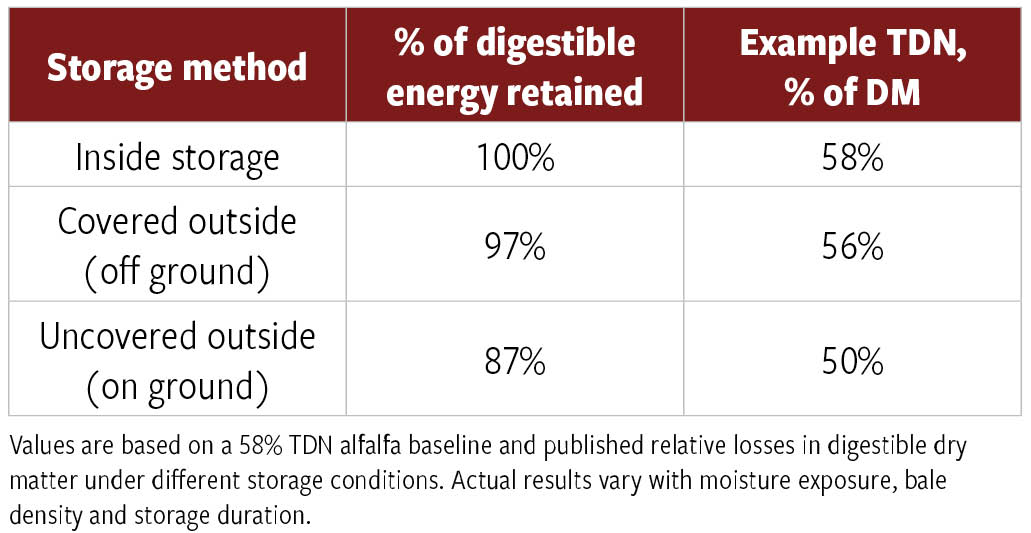
Fig. 1: Effect of storage method on alfalfa hay energy (TDN).
The table shows highest TDN with inside storage, followed by covered outside (off the ground). The lowest TDN was uncovered outside (on the ground).

CP is more complicated
Crude protein (CP) behaves differently than TDN during storage. CP can decline when the highest-quality portions of the plant are physically lost, which is most common in alfalfa. Leaves contain a large share of the protein in alfalfa, and dry hay is prone to leaf shatter. Each time a bale is moved, some leaves are lost, reducing the protein content of the hay that is actually fed. CP can also decline when soluble nitrogen (N) compounds are leached during repeated wetting events.
At the same time, CP is measured as a percentage of DM and is based on nitrogen concentration. If a bale loses DM primarily from sugars and other digestible energy components, CP concentration may remain unchanged or even appear slightly higher on a forage test. This does not mean the hay improved — it simply reflects that the bale has “shrunk” in total dry matter while nitrogen losses were proportionally smaller.
Heating affects protein availability
Another important storage issue is heating. If hay is baled too wet or becomes wet during storage, heating can occur as microbes respire. Heating causes some protein to become bound to fiber through the Maillard reaction. In these cases, CP may still appear normal on a forage test, but protein availability to the animal is reduced. Heat-damaged protein is best identified using additional forage tests such as acid detergent insoluble nitrogen (ADIN) or neutral detergent insoluble crude protein (NDICP).
Sorting changes what cattle actually consume
One of the most overlooked issues with older or weathered hay is animal sorting. Quality loss in outside-stored hay is often concentrated in the outer layer of the bale. This is especially important for round bales, where the outside layer can represent a large portion of the total bale.
Cows commonly sort against weathered or moldy material, leaving behind lower-quality forage. As a result, forage tests may overestimate feeding value because they represent the bale average, not what cattle actually consume. Intake declines, feeding waste increases, and energy and protein intake can be substantially lower than ration calculations suggest.
At the same time, sorting is not always a bad thing. In situations where hay contains some moldy or low-quality material but is not severely spoiled, allowing cattle to sort can actually be used as a management tool. By giving cattle access to loose hay or unprocessed bales, animals can select the higher-quality portions and avoid the material most likely to cause intake or health issues. This approach does result in more feeding waste, but it can allow producers to safely utilize otherwise poor-quality bales when better forage is limited.
The key tradeoff is recognizing that sorting shifts the system from maximizing feed efficiency to managing risk. When producers are willing to accept some waste, sorting can reduce the likelihood of cattle consuming problematic material while still capturing value from the better portions of the bale.
A real-world reminder
A useful illustration often shared by Jerry Volesky, UNL range and forage specialist, comes from extremely old, well-stored hay in the Nebraska Sandhills. In some cases, hay baled decades ago and stored dry still contains identifiable plant species and recognizable structure.
While this does not mean the hay was nutritionally adequate for modern cattle, it highlights an important principle: Without moisture, decomposition is extremely limited.
When quality loss occurs, it is almost always tied to moisture exposure and resulting DM loss rather than age alone.
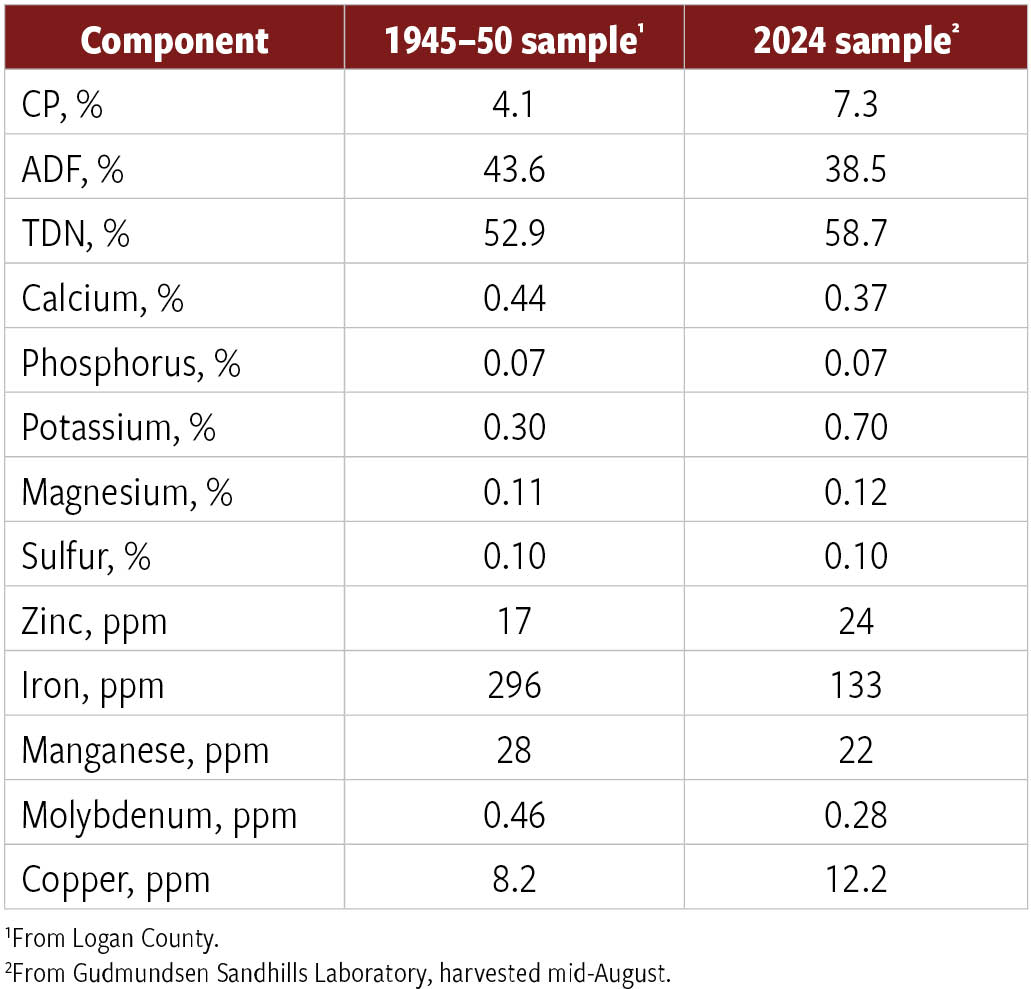
Fig. 2: Comparison of forage quality and mineral concentrations between an extremely old upland Sandhills hay sample (baled 1945–1950) and a contemporary 2024 sample
Results illustrate mineral concentrations can persist under dry storage, while organic forage quality measures are more sensitive to degradation over time.

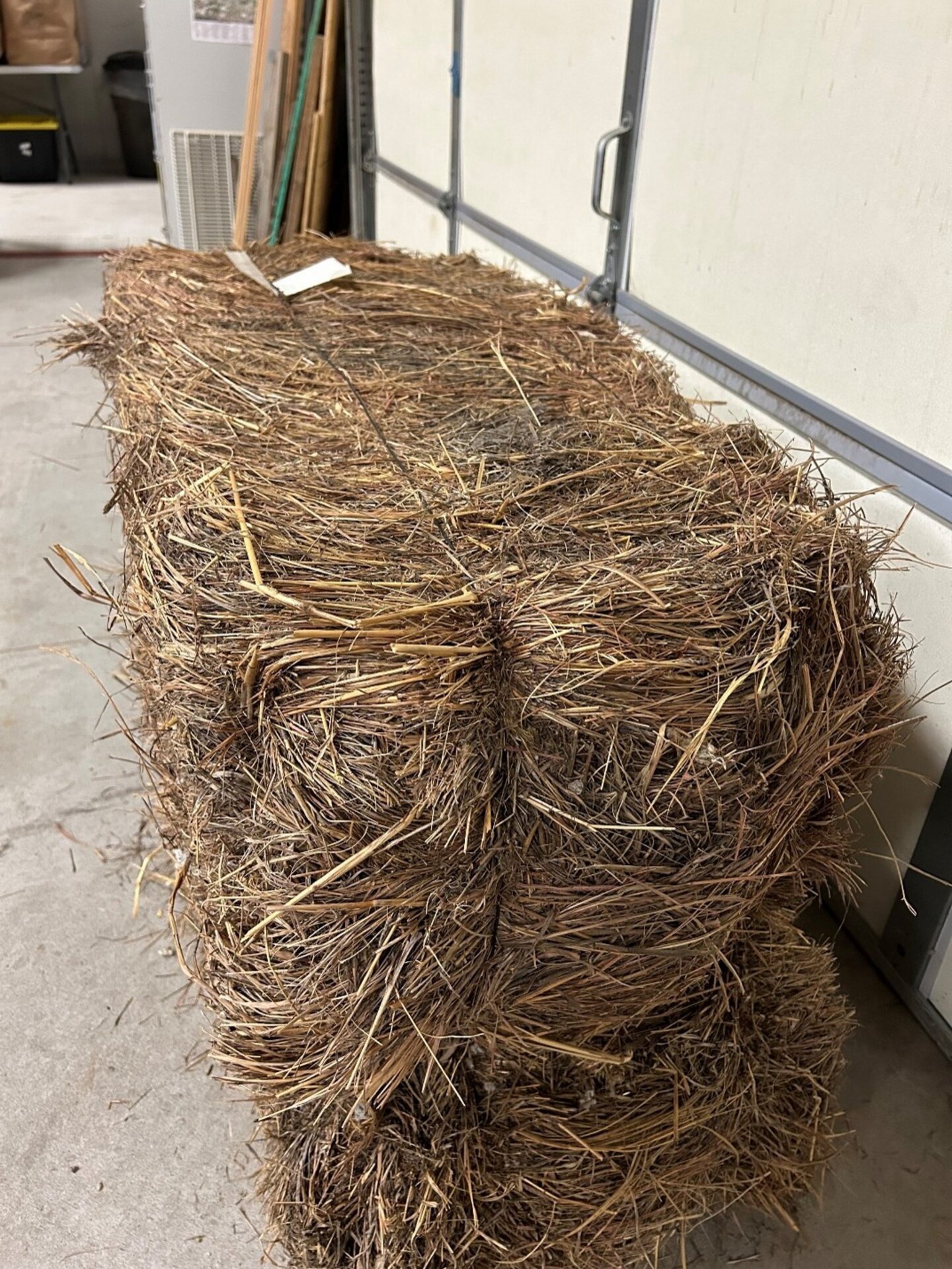
Extremely old small square bale (1945/1950) used by Jerry Volesky (UNL) as an illustration of long-term hay preservation under dry conditions. Despite its age, limited moisture exposure prevented complete decomposition, reinforcing that storage conditions — not time alone — drive hay quality loss.

Bottom line
- TDN typically declines with storage and weathering as digestible components are lost.
- CP may decline, stay similar or increase as a percentage, depending on leaf loss, leaching and DM loss.
- DM loss and animal sorting often have a greater effect on cattle performance than forage test values alone.
- For older hay, forage testing should be paired with visual assessment and observation of animal behavior to accurately estimate nutrient intake.
Editor’s note: Ben Beckman is Nebraska Extension educator; Jerry Volesky is Extension range and forage specialist; Daren Redfearn is Nebraska Extension forage and crop residue specialist for the University of Nebraska. [Lead photo by Troy Walz.]
Angus Beef Bulletin EXTRA, Vol. 18, No. 3-A
References:
Coblentz, W.K., & Hoffman, P.C. 2009. “Effects of spontaneous heating on forage quality and digestibility.” Journal of Dairy Science 92:483–497.
Shewmaker, G.E. 2015. “Understanding hay storage losses.” Proceedings, California Alfalfa & Forage Symposium.
USDA–NRCS. Agronomy Technical Note No. 7: Hay Storage Losses.
Iowa Beef Center. Minimize Hay Storage Losses and Feeding Waste.
Undersander, D., et al. Hay storage: Dry matter losses and quality changes. University of Wisconsin Extension.
Jerry Volesky. Nebraska Sandhills range and forage observations on long-term hay storage and weathering losses (personal communication and Extension presentations).
Yuan, N., et al. 2022. Effects of harvesting period and storage duration on volatile organic compounds and nutritive qualities of alfalfa. Agriculture 12:1115.
Topics: Feedstuffs , Management , Nutrition , Pasture and Forage
Publication: Angus Beef Bulletin
Related Content


Current Angus Beef Bulletin
Our September issue focuses on the females of the herd and the records that validate them.