



Texas A&M Study on Tylosin Use and Liver Abscess Control
A study finds shorter tylosin feeding periods reduce liver abscess risk, though continuous use remains most effective.
March 3, 2026

by Texas A&M University Newswire
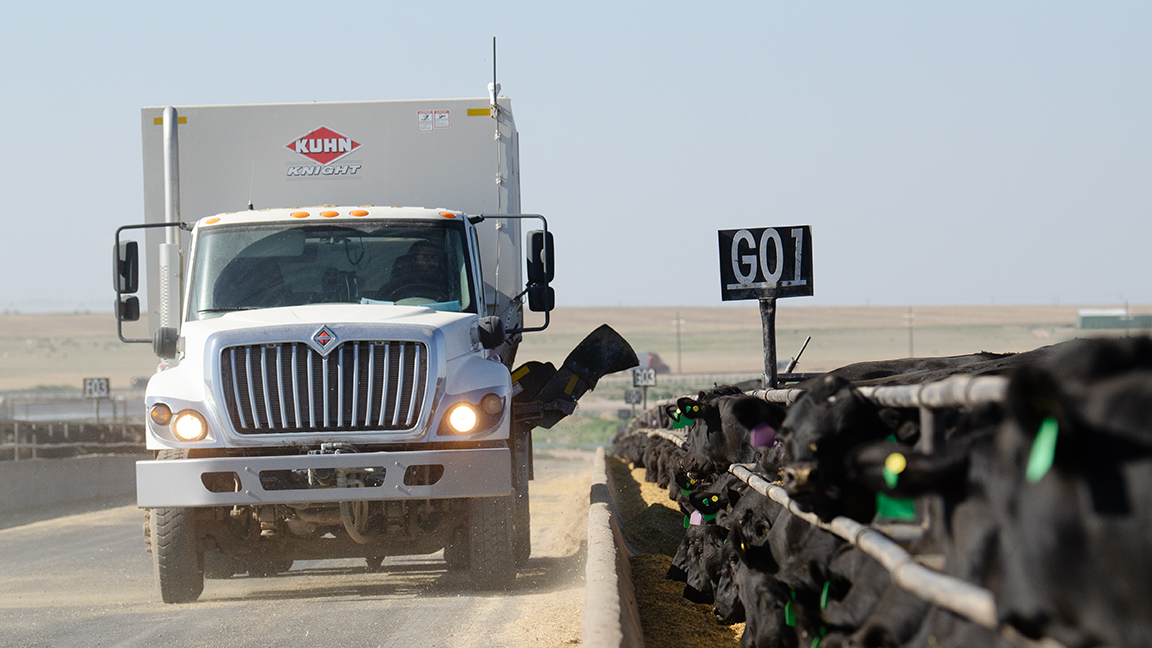
As consumer demand for beef continues to reach historic highs, feedlot operators are paying close attention to anything that affects cattle health, performance and carcass value — including liver abscesses, a long-standing and costly challenge in feedlot cattle.
To help address that issue, researchers from Texas A&M’s Veterinary, Education, Research and Outreach (VERO) initiative in Canyon, Texas, partnered with the cattle feeding industry to study how tylosin, a commonly used feed antibiotic, can be managed to reduce liver abscess risk while also supporting responsible antibiotic use, including whether shorter feeding durations could still provide meaningful protection.
The Texas Cattle Feeders Association (TCFA)-supported study found that reduced-duration feeding strategies can lower liver abscess risk compared to not using tylosin at all, though continuous feeding throughout the finishing period remains the most effective option for control.
Paul Morley, director of research for Texas A&M’s VERO initiative within the College of Veterinary Medicine and Biomedical Sciences (VMBS), says the study was designed to help producers better understand the tradeoffs associated with different tylosin feeding strategies.
“Rather than prescribing a single solution, these findings provide producers, veterinarians and nutritionists with clearer information to help weigh management decisions that affect animal health, operational efficiency and long-term sustainability,” says Morley, the study’s principal investigator.
A longstanding challenge with real economic impact
Liver abscesses have challenged the cattle feeding industry for decades, with industry estimates suggesting these infections cost the U.S. beef industry approximately $257 million each year, which highlights the scale of the issue and its economic effect on feedlot operations.
“Liver abscesses represent a major loss to the cattle industry on an ongoing basis, and we’re really no better at preventing them than we were decades ago,” Morley says. “The only method that has consistently shown efficacy is feeding antimicrobials, primarily tylosin, and of course we want to use less if we can.”
Liver abscesses have challenged the cattle feeding industry for decades, with industry estimates suggesting these infections cost the U.S. beef industry approximately $257 million each year.
Beyond packer discounts, cattle affected by liver abscesses often gain weight less efficiently, making prevention both an animal health and economic concern for producers.
“There’s evidence that cattle with abscesses don’t perform as well,” Morley says. “So, this is both a health and welfare issue.”
Evidence-based insights into tylosin feeding strategies
In the study, cattle fed tylosin throughout the finishing period had the lowest overall risk of liver abscesses. Cattle fed tylosin for shorter periods still experienced reduced risk compared to cattle that received no tylosin, though not to the same degree as continuous feeding.
In practical terms, reduced-duration feeding refers to stopping tylosin earlier in the finishing period rather than feeding it continuously until harvest. Because cattle consume more feed as they grow, changes late in the feeding period have a larger effect on total antibiotic use.
“If producers stop use in the last 10% to 15% of the feeding period, it represents a significant portion of the total antibiotic use,” Morley says.
That timing, he says, helps producers better understand how adjustments in feeding strategies affect both antibiotic use and liver abscess risk.
The role of industry collaboration
Morley emphasizes the project was built through extensive collaboration across the cattle feeding sector — a model he says reflects how complex industry challenges are addressed.
“This was truly an industry partnership that produced an industry-driven answer,” Morley says. “It exemplifies how research at public universities is supposed to work. The scientists involved were not limited to academic — this was a multidisciplinary collaboration across the cattle industry, bringing together researchers from five universities, production scientists and veterinarians from private companies, and partners from the pharmaceutical sector.”
The research was funded by the U.S. Food and Drug Agency, conducted with invaluable support from a commercial feedlot where the research took place. Additional industry partners contributed data to ensure the findings had the greatest relevance for real-world production systems. This level of collaboration is especially important as consumer demand for beef remains strong and the industry seeks science-based solutions to support sustainable production.
“Consumer beef demand is at a 40-year high, which shows producers are taking many of the correct steps to produce a beef product consumers desire,” says Ben Weinheimer, TCFA president & CEO. “At the same time, the cattle feeding industry is always looking for ways to improve feeding efficiencies and cattle health.”
Weinheimer says partnerships between member feedlots, allied industry, TCFA and Texas A&M’s VERO program are critical to maintaining progress.
“Having science-backed information helps cattle feeders make decisions that move the industry forward,” he says. “It also allows them to continue producing the highest-quality, safest beef for consumers — not just here in the U.S., but across the globe.”
While the study provides clearer insight into how tylosin feeding duration influences liver abscess risk, Morley says important questions remain — particularly around why liver abscesses develop and how antibiotics reduce risk.
He says answering those questions will be key to identifying future prevention strategies that reduce reliance on antimicrobials while still protecting cattle health and performance.
For now, the research highlights the value of science-based, industry-driven collaboration in addressing complex challenges facing the cattle feeding industry — providing producers with data they can use to make informed decisions in a rapidly evolving production landscape.
While the study provides clearer insight into how tylosin feeding duration influences liver abscess risk, Morley says important questions remain — particularly around why liver abscesses develop and how antibiotics reduce risk.
Editor’s note: This article provided by the Texas A&M University Newswire. [Lead photo by Lindsey Sawin.]
Angus Beef Bulletin EXTRA, Vol. 18, No. 3-A
Topics: Feeder-Calf Marketing Guide , Feedyard , Nutrition , Health
Publication: Angus Beef Bulletin
Related Content


Current Angus Beef Bulletin
Our September issue focuses on the females of the herd and the records that validate them.