Reimaging Red Meat Yield
Texas Tech researchers determined to find a better way to calculate true red meat yield.
August 6, 2025
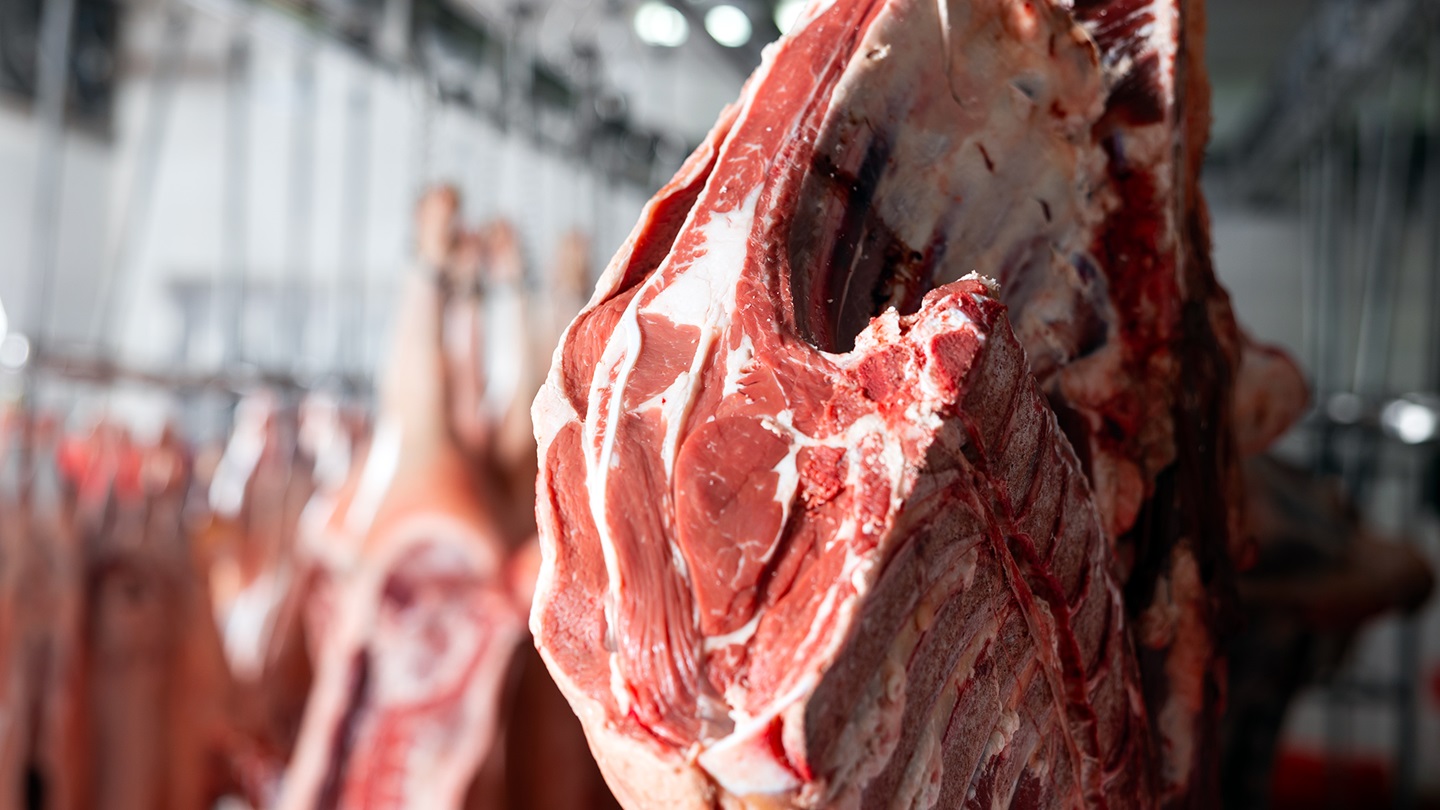

Did you know the existing yield grade equation used across the beef industry was developed from research conducted in the late 1950s? While groundbreaking at that time, cattle type and kind have changed dramatically during the last 60+ years.
On an episode of the Angus at Work podcast, Angus Beef Bulletin editor Shauna Hermel sat down with Dale Woerner, Cargill Endowed Professor in the Department of Animal and Food Sciences at Texas Tech University, to discuss the importance of calculating red meat yield and how research stands to completely change what obtaining that calculation might look like in the future.
History of red meat yield
The U.S. cow herd has come a long way from the belt-buckle-sized cattle of the 1950s. While purebred Hereford and Angus cattle were used to develop the original calculation, cattle genetics, phenotype and management have all improved since then.
“As cattle changed over time, industry working groups began to question the accuracy of yield grade as it related to the muscle, fat and bone makeup of carcasses [otherwise known as saleable yield and cutting yield],” says Woerner. “Right now we just don’t have a really good indicator with yield grade as it’s being applied to truly separate and incentivize red meat yield. It’s just largely inaccurate.”
In order to understand the issues surrounding the existing yield grade equation, it’s important to understand a few key details. Yield grade is a calculation that was developed using statistical regression techniques dating back to the 1950s and 1960s. Hot carcass weight, ribeye area, fat thickness at the 12th rib, and then internal or kidney, pelvic and heart (KPH) fat are calculated into that equation.
“I truly believe we can do this as an industry. Genetic advancements, reproductive technology advancement? We live in an era now where we can multiply the power of our genetics more than we ever have been able to before.” — Dale Woerner
As we input individual measurements for those factors, we use a computation to get to a number ranging from 1 to 5 on yield grade. Yield Grade (YG) 1 indicates the leanest, highest-yielding cattle and YG 5 indicates the fattest, lowest-yielding cattle.
The good news is marbling works to indicate eating quality. The bad news is yield grade is not working, says Woerner.
“Unfortunately, for whatever reason, the relationship between ribeye area and true carcass muscling has grown apart to the point where ribeye area doesn’t explain very much at all of the true variation in muscularity,” says Woerner. “In fact, if you take ribeye area and red meat yield from a carcass, it’s about 4% related. Not 40%, but just 4%.”
So, what’s next?
So how do we go about fixing a seemingly broken metric? Technology is the key, Woerner says.
Technology capable of grading at processing line speeds could take our industry to the next level, but previously this technology has been restricted to the medical field.
“Medical technology seems to be where we always start in [agriculture] when we look at precision measurements, specifically on the animal or the carcass,” Woerner notes. “We’ve evaluated CT scanning, which is an x-ray technology. We’ve even looked at MRI scanning and DEXA scanning, but with x-ray technologies we’re able to look into the animal’s fat, muscle and bone. Those technologies are not only accurate, they are measurements of yield.”
With the help of these innovations, our industry could quantify — with a very high level of accuracy and confidence — how much muscle, fat and bone is in a carcass. The issue? Medical equipment is incredibly costly and — unless specialized — isn’t designed for anything larger than a human.
With that in mind, Texas Tech University researchers began looking at technologies that could predict what x-ray shows us. The current project involves 3D images being used to measure confirmation, shape and volume of carcasses.
Through statistical modeling and even some artificial intelligence models, researchers were able to estimate red meat yield with a high level of accuracy. Early models are showing 90% or greater accuracy with a 3D image that can be captured in an instant, Woerner shares.
“I truly believe we can do this as an industry. Genetic advancements, reproductive technology advancement? We live in an era now where we can multiply the power of our genetics more than we ever have been able to before,” Woerner stresses. “What it takes to make those improvements, though, is good data. We’re lacking good data because yield grade is failing us.”
With the help of peer institutions, the Texas Tech University research team is ready to begin collecting crucial data. To ensure accuracy, data will need to be collected from the South, the Midwest, the North, the East and the West. With collaboration from fellow institutions and the weight of discovering a solution growing heavy, the researchers at Texas Tech are poised to begin bringing this dream to reality.
The information above is summarized from the Sept. 25, 2024, episode of Angus at Work. To access the full episode — including more information on red meat yield and the current cattle-processing chain here in the United States — check out our Angus at Work archive on www.angus.org.
Editor's note: [Lead photo by JackF from Getty Images.]
Angus Beef Bulletin EXTRA, Vol. 17, No. 8-A
Topics: Meat Science , Industry News , Industry Insights , Marketing
Publication: Angus Beef Bulletin
Related Content


Current Angus Beef Bulletin
Our September issue focuses on the females of the herd and the records that validate them.