



Destocking to Rebuild
Nebraska Extension specialists share tips for how to destock the cow herd strategically to promote future rebuilding.
July 9, 2026

by Aaron Berger and Brock Ortner, University of Nebraska
For many cow-calf operations in central and western Nebraska, significant culling may be required to match cow numbers to the forage available, not only for 2026, but also for the next few years. For operations that have spent generations building the type of cow they want, there is a strong commitment to retain a core of foundation females from which to rebuild the herd when it rains again.
This article covers considerations and possible strategies to retain a core of females to rebuild a cow herd.
1. Conduct a comprehensive herd assessment
Before proceeding with retention and culling decisions, consider conducting a comprehensive assessment of current cow herd suitability for operational goals:
- What is the type and kind of cow that is in the operation now?
- Is that same type and kind of cow going to be a fit for the expected resources and environment going forward?
- Are environmental conditions likely to get easier or harder?
- Is a cow with greater resilience going to be needed?
- Will labor, equipment and infrastructure be less or more expensive?
- Is there currently a core of the cow herd that fits the identified type and kind that is desired for the future?
While subjective, these questions can establish a foundation for future decision-making. If a shift in breeding objectives is desired, now may be an opportune time to do it.
2. Identify primary culling candidates
For most operations, the easy cows to cull from the herd have probably already been identified. These are cows that have one or more obvious strikes against them. Flawed/blemished cows continue to garner historically high prices relative to previous years, allowing more discriminating culling decisions.
- Cows without a calf, or those that have been poor producers, are the first to go.
- The second group is poor temperament, eyes, udders, feet, structure, as well as gimps, lumps, bumps and significant dental deterioration. Most operations have already sold these cows.
Assuming cows in the herd meet your goals, what strategies allow for numbers to be reduced while best positioning for rebuilding rapidly when the opportunity is right?
3. Understand class of female and income tax rate implications
After primary culling candidates have been selected, the next question to ask is what class of female will provide both the greatest flexibility and profit potential should precipitation allow herd rebuilding? Yearling heifers being bred this year and unweaned heifer calves will likely appreciate relative to their current market value. Additionally, young females are easier to manage than cows in a drylot scenario. They can also be sold as feeders should conditions dictate and are candidates for price risk protection. Yearling heifers also lend themselves well to artificial insemination (AI) and the use of female-sorted sexed semen. This option could help to accelerate herd rebuilding.
Home-raised heifers, when held to 2 years of age and sold as breeding stock, move from being classified as ordinary income to capital gains income.
Home-raised heifers, when retained to 2 years of age and sold as breeding stock, move from being classified as ordinary income to capital gains income. This is a significant tax advantage. For more information on this topic, see the article “Do Heifers Have More Potential Value than Steers?” Both weaned heifer calves and yearling heifers tend to be less expensive and easier to ship than older cows, eat less total feed, and can exhibit acceptable growth performance when receiving diets containing grain, coproducts, and forage in drylot situations.
4. Accounting for price relationships among available feedstuffs
This drought is somewhat unique in that grain prices and coproducts are currently priced relatively inexpensively compared to what they have been at times historically. These energy and protein-dense products can be purchased and fed with low-quality forage, or cattle can be shipped to areas where these resources are readily available. Prices for cattle are historically high compared to where they have been over the last decade. In contrast to scenarios with expensive commodities and inexpensive cattle, confinement feeding the core herd and/or replacement heifers may be justifiable.
5. Leverage reproductive management tools
The next step in considering which cows to keep is to take stock of where the cow herd is in the production cycle.
- Are cows pregnant, currently being bred, or calving now?
- Is it possible to partially delay selling decisions until females have an opportunity to be bred?
Ultrasonography pregnancy diagnosis can be a simple and cost-effective aid for cow retention decisions. Ultrasound can detect pregnancy as soon as 30 days after breeding and can be used to sex fetuses 55-100 days after conception. Consider contacting your veterinarian well in advance of bull removal to arrange a pregnancy determination date to expedite culling decisions and prolong forage supply.
If future herd rebuilding is desired, early-calving yearling heifers or cows carrying heifer calves should be considered for retention.
Conclusion
Being forced to destock and deciding which cows to sell and which ones to keep is a difficult process. Today’s market conditions and current commodity prices for grains and coproducts provide a set of circumstances that are different than sometimes has happened with past droughts. For producers wanting to retain a core of genetics and rebuild the herd from within, the flexibility of keeping weaned heifer calves and yearling heifers, using ultrasound technology to early identify pregnancy and females carrying heifer calves, as well as leveraging sexed semen, are strategies to consider.
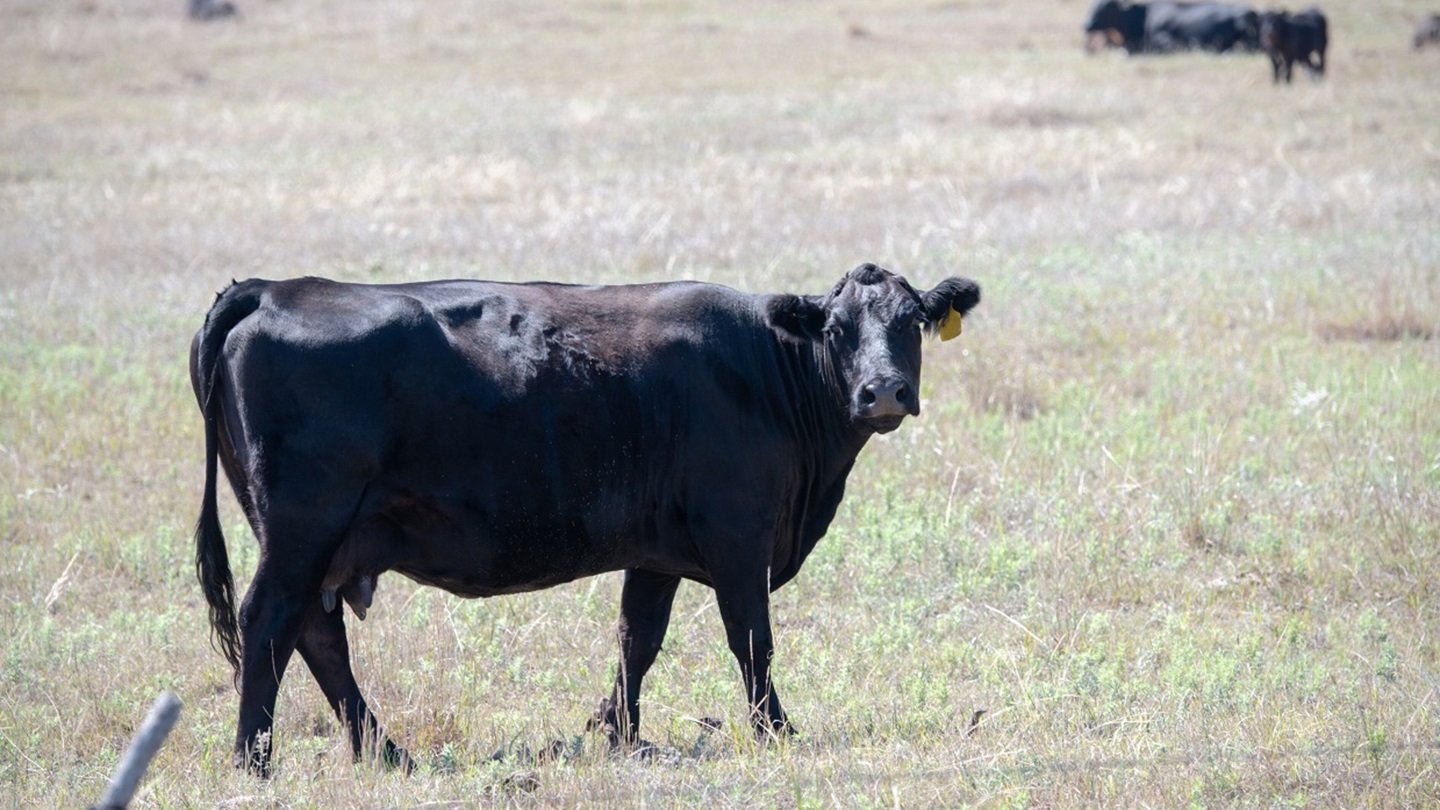
Editor’s note: Reprinted with permission from the University of Nebraska–Lincoln’s BeefWatch newsletter. Aaron Berger is an extension educator, and Brock Ortner is an extension livestock system educator for the University of Nebraska. Listen to a discussion of the content in this article on the BeefWatch podcast. [Lead photo by Troy Walz.]
Angus Beef Bulletin EXTRA, Vol. 18, No. 7-A
Topics: Female Foundations , Management , Selection
Publication: Angus Beef Bulletin
Issue: September 2026
Related Content


Current Angus Beef Bulletin
Our September issue focuses on the females of the herd and the records that validate them.