



Breathing Under Pressure
Recurrent laryngeal neuropathy in horses.
July 9, 2026

by Jennifer Gauntt, Texas A&M College of Veterinary & Biomedical Sciences
The summer season is rolling in, and the heat is on the rise. For horses, these high temperatures also mean an increased risk of respiratory issues, such as recurrent laryngeal neuropathy (RLN).
Dustin Major, a clinical assistant professor of equine soft tissue surgery at the Texas A&M University College of Veterinary Medicine and Biomedical Sciences, explains the ins and outs of RLN and how the condition is diagnosed and treated.
Nerves on high alert
RLN is a degenerative process that almost exclusively affects the left recurrent laryngeal nerve — an important nerve that plays a key role in a horse’s ability to breathe, neigh and make other vocalizations.
“The nerve at risk runs from the base of the skull down the neck, wraps around the aorta inside the chest, and then courses back up the neck to support the various muscles that control the larynx — also referred to as the voice box,” Major says.
As the nerve degenerates, the muscle responsible for opening the larynx to allow air to pass through begins to weaken and the airway’s diameter decreases; when this happens, an action as simple as breathing becomes a struggle.
“A characteristic ‘roaring’ sound is often the first thing noted by owners,” Major says. “As the horse draws in air, the pressure within the airway causes one of a pair of cartilages in the larynx (colloquially known as a “flapper”) to collapse, which impedes the flow of air and vibrates as air passes by it. This results in a higher-pitched, vibrating sound as the horse breathes.”
As the condition progresses, exercise intolerance and decreased performance may also become noticeable symptoms, especially for highly active horses.
Risk factors
Although RLN is idiopathic — meaning veterinarians don’t really know why it happens — there are various factors that can increase risk and severity.
“The condition is more common in larger horses, presumably because the nerve is longer,” Major says. “Racing Thoroughbreds, warmbloods, larger quarter horses like those used for barrel racing, and draft breeds are the most affected breeds.”
The season and climate can also play a role in horses developing RLN, with cases increasing as the temperature does.
“The heat can significantly exacerbate the condition, as this results in higher demands on the respiratory system to assist in cooling, particularly when exercising,” Major says. “We often have an uptick in these cases in spring and summer when people are actively showing their horses.”
Trauma to the throat and leakage around blood vessel injection sites of medications can also result in RLN.
Recognizing and resolving
When diagnosing RLN, veterinarians take several factors into consideration. They begin by reviewing the horse’s medical history, including any past trauma. Next, they will perform a physical examination of the larynx; any suspected abnormalities are confirmed with an upper airway endoscopy, a procedure that uses a small camera to visually access the horse’s airway.
In addition to those methods, Major also recommends exploring dynamic endoscopy, a diagnostic procedure available at some larger veterinary hospitals.
“This diagnostic option utilizes a specialized endoscope that is worn on the horse’s head while it is exercising,” Major says. “This allows us to diagnose more subtle forms of RLN and assess for the development of other airway abnormalities that may result secondary to the disease.”
Once RLN is detected, surgery is usually necessary, as the issue can lead to complete paralysis of the left side of the larynx. Veterinarians will use a “tie back” procedure to retract the “flapper” from the airway so the horse can exercise more easily while still preventing food from entering the lungs.
“It is important to understand that we will never return the affected horse’s airway to its original state,” Major says. “We are just trying to improve airflow to a level that the horse can return to its intended level of performance.”
Breathing a sigh of relief
Supporting your horse on their road to recovery is just as vital as the surgery itself.
“The horse will undergo six weeks of rehabilitation with at least one recheck to ensure that things are proceeding as planned prior to a full return to activity,” Major says. “Patients will also need to be fed from the ground for a couple of weeks. If they have no coughing in that time frame, they can return to normal feeding.”
Once these milestones are achieved, there are no long-term management issues, according to Major. The horse will be free to breathe healthily and happily once again.
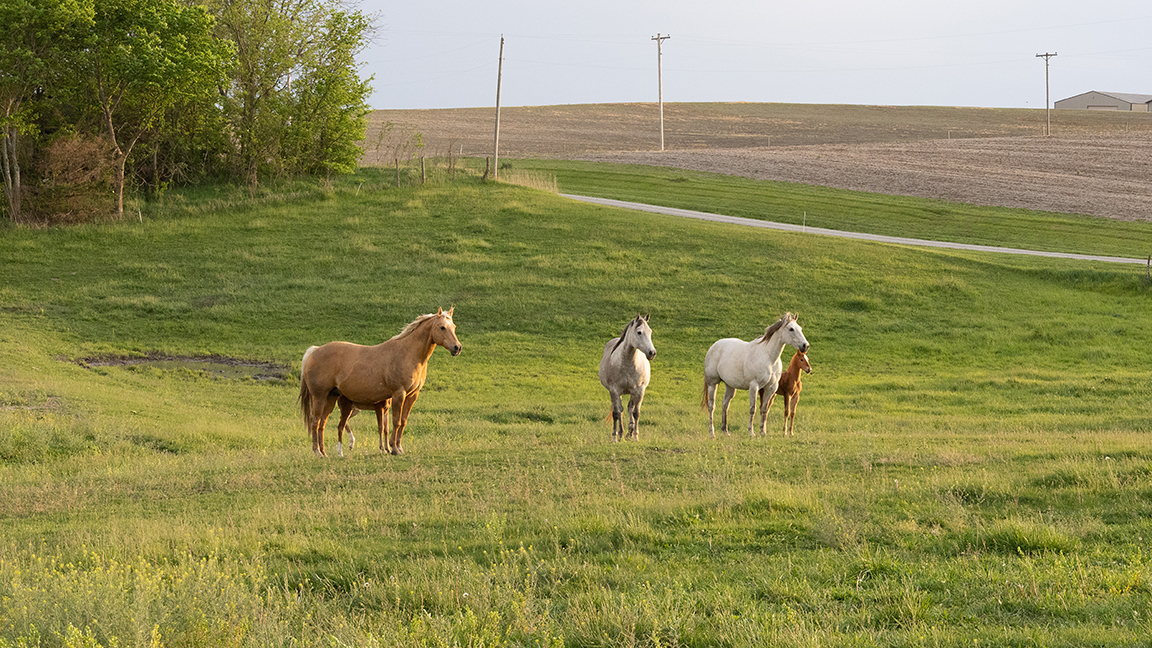
Editor’s note: This article is reprinted with permission from the Texas A&M College of Veterinary Medicine & Biomedical Sciences Pasture Talk newsletter. [Lead photo by Heather Lassen.]
Angus Beef Bulletin EXTRA, Vol. 18, No. 7-A
Topics: Health
Publication: Angus Beef Bulletin
Related Content


Current Angus Beef Bulletin
Our September issue focuses on the females of the herd and the records that validate them.