

News & Notes
News from around the country pertinent to cattlemen with Angus genetics.
April 8, 2026


This edition of “News & Notes” features the following:
- NCBA and PLC participate in grazing roundtable, MOU signing
- Association members, are you eligible to vote?
- Learn to rebuild, retain a better cow herd
- North Dakota Angus University Feed-out to begin in May
- U.S. farmers expect to plant less corn and more soybean acres
- Angus Foundation selects 2026 YCC representative
NCBA and PLC participate in grazing roundtable, MOU signing
Public lands ranchers joined Ag Secretary Brooke Rollins and Interior Secretary Doug Burgum March 31 as the secretaries signed a memorandum of understanding (MOU) to launch their Grazing Action Plan (see “MOU to Cut the Red Tape on Grazing Public Land”).
National Cattlemen’s Beef Association (NCBA) and Public Lands Council (PLC) leaders and members then participated in a roundtable discussing cooperative work to address longstanding challenges for federal lands grazing permittees. PLC President Tim Canterbury, PLC Past President Mark Roeber and Industry Issues Committee Chairman Nate Thomson were joined by NCBA President-elect Kim Brackett, American National CattleWomen (ANCW) Past President Nikki Weston, Washington ranchers Stephanie and Nick Martinez, Arizona permittee Dan Bell, and Colorado rancher Nancy Roberts in raising critical ranching issues to be addressed.
“Public lands ranchers are resilient by nature, but we still need significant relief from the burdensome federal regulations that make it harder to do our jobs every day. This MOU will make it easier to ranch on public lands and will help improve the health of Western landscapes,” said PLC President and Colorado permittee Tim Canterbury. “By speeding up the permitting process and expanding the use of targeted grazing, the federal government is ensuring that more ranchers will keep ranching and that rangelands will face less degradation and destruction from wildfires and mismanagement.”
The MOU outlines cooperation between the U.S. Forest Service (FS) and the Bureau of Land Management (BLM) on the Grazing Action Plan, released by USDA last year. This plan focuses on boosting rancher resiliency by assessing vacant allotments, unifying permitting frameworks between agencies, expanding the use of targeting grazing to prevent wildfires, and establishing a rancher liaison program for wildfire incident command centers.
“When you raise cattle on federal lands, it requires a great deal of work to sort through the government red tape. This plan will cut bureaucracy by streamlining the permitting process, expanding grazing access, and optimizing targeted grazing in areas that are the most vulnerable to wildfires,” said NCBA President-elect and Idaho rancher Kim Brackett. “This MOU will provide much needed regulatory relief to ranchers and make it easier for us to carry out the voluntary conservation essential to maintaining these working lands.”
Association members, are you eligible to vote?
American Angus Association members wanting to participate in the election of delegates and alternates to the 143rd Annual Convention of Delegates need to meet four eligibility requirements before 4:30 p.m. CDT on April 17, 2026.
According to Section 3.6 of the Association Bylaws, only eligible voting members can nominate, be nominated, vote or be elected in the annual election of delegates. To participate in the electoral process, a member must be an eligible voting member, meeting all the following requirements by 4:30 p.m. CDT on April 17:
- Active life or regular member. Dues must be current on regular membership.
- 18 years of age or older.
- Registered at least one animal or completed at least $250 of business with the Association or Angus Genetics Inc. (AGI) within the last 12 months — between April 20, 2025, and April 17, 2026.
- Be current with all financial obligations to the American Angus Association and its subsidiaries.
To review your current eligibility status, you can sign into your AAA Login account and visit the My Account drop down, clicking on My AAA Member Information.
Those who have met eligibility requirements by the end of day April 17 will receive an email from the American Angus Association on April 20, the start of the nomination period, containing delegate nomination information.
Contact the Member Services Department at 816-383-5100 or angus@angus.org with any questions.
The 143rd Annual Convention of Delegates will be Monday, Nov. 16, during the 2026 Angus Convention in Louisville, Ky. Online registration for the convention will open Aug. 1. Visit Angus.org/events/angus-convention for more information.
Learn to rebuild, retain a better cow herd
University of Missouri (MU) Extension will host an educational program on rebuilding and retaining the cow herd May 5-6 at the MU Beef Research and Teaching Farm in Columbia.
Jamie Courter, MU Extension state beef genetics specialist, says the program will help beef producers make long-term, profitability-focused decisions. Courter will be joined by beef reproductive physiologist Jordan Thomas, beef nutritionist Eric Bailey and MU Extension ag business specialist Wesley Tucker for the program themed “Retain With Intention: Building a Better Missouri Cow Herd.”
The program will focus on helping producers make informed decisions about replacement heifers by using genetics, nutrition and reproductive management, Courter says.
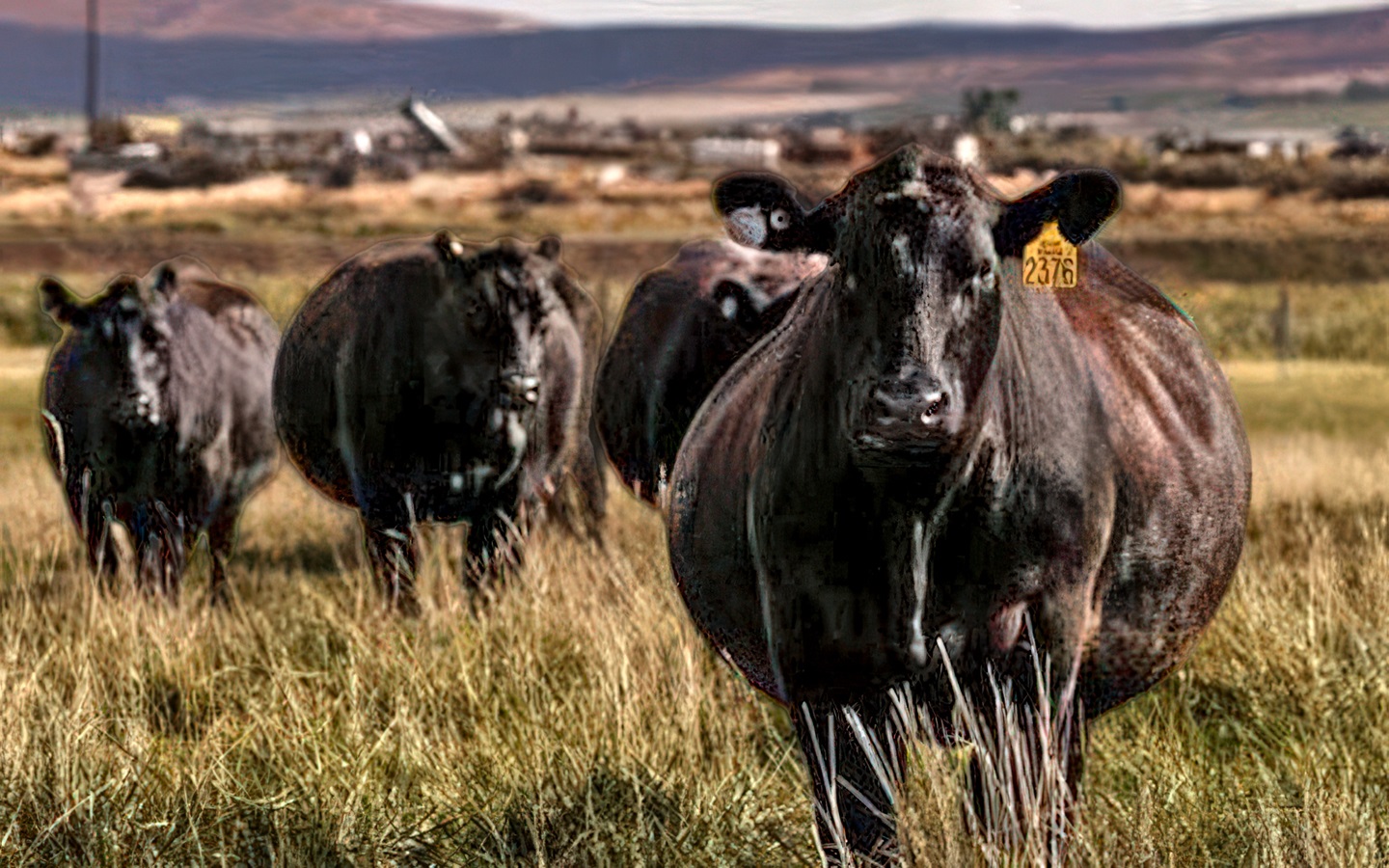
The program will focus on helping producers make informed decisions about replacement heifers by using genetics, nutrition and reproductive management, says Jamie Courter, MU Extension state beef genetics specialist.

“The goal is to equip producers with practical tools to identify, develop and manage females that will remain productive in the herd long term,” she says. “Rebuilding the cow herd is more than keeping back a few extra heifers. It’s about making intentional decisions that shape your operation for years to come.”
Courter says this multifaceted, hands-on program will provide tools to evaluate genetics, nutrition, fertility and performance data when selecting and developing replacement females. Participants will leave with a clear, step-by-step framework for choosing heifers that fit their environment, improve longevity and strengthen long-term profitability.
By the end of the program, participants will be able to:
- Evaluate replacement heifers using performance records, genomic information and visual appraisal to make more informed retention decisions.
- Develop a nutrition plan that supports proper growth, puberty attainment and first-breeding success in replacement females.
- Design a reproductive management strategy that improves first-service conception rates and long-term fertility.
- Calculate the long-term economic effect of heifer retention vs. sale at weaning.
- Implement a structured replacement selection framework tailored to their operation’s environment, forage resources and marketing goals.
Topics include:
- Defining breeding objectives for replacement females.
- Using expected progeny differences (EPDs), genomic tools and performance data in heifer selection.
- Development strategies to ensure heifers reach puberty and breed early.
- Reproductive benchmarks and management for first-calf heifers.
- Economic considerations and marketing alternatives for replacement females.
The program is 7:30 a.m. to 4 p.m. Tuesday, May 5, and 7:30 a.m. to noon Wednesday, May 6. Register by April 28.
North Dakota Angus University Feed-out to begin in May
Cattle producers will have an opportunity to see how Angus‐sired cattle from their operation perform in a feedlot during the North Dakota Angus University calf feed‐out program in the upcoming summer and fall of 2026.
North Dakota State University’s Carrington Research Extension Center is partnering with the North Dakota Angus Association to sponsor the North Dakota Angus University Feed-out. This is the 15th year of the program.
“Feed-out projects like North Dakota Angus University are a great way for producers to learn more about their calves’ performance compared to other herds,” says Karl Hoppe, NDSU Extension livestock systems specialist at the Carrington Research Extension Center.
Ranchers can consign steers to the program by contacting the Carrington Research Extension Center. Consigned steers must be at least 50% Angus genetics and weigh between 900 and 1,100 pounds (lb.) at delivery. Consigned cattle will be delivered to the Carrington feedlot May 26-29, 2026.
Ranchers who consign cattle pay the feeding costs for their pen of cattle plus veterinary costs and a modest yardage charge. The Carrington Research Extension Center will carry the feed, veterinary and yardage costs until the cattle are marketed. After the cattle are marketed, costs and all applicable fees are deducted from the sale price without interest. Consigners of the program must also be NDAA members.
Participants will receive periodic progress reports on their calves’ performance, as well as a final report on overall performance, efficiency and carcass traits of their calves.
In the 2025 feed-out, calf performance was measured during a 133-day feeding study. Steers had an average daily gain of 4.14 pounds (lb.). Shrunk live weight at harvest averaged 1,484 lb., and carcass weight averaged 932 lb. The cattle graded 97% USDA Choice or better, with 51% meeting Certified Angus Beef® (CAB®) brand specifications and 19% Prime quality grade.
The NDAA offers $1,500 in prizes to the top three carcasses at the end of the feed-out.
More information is available at ndsu.ag/NDAU-enroll-26.
For further information or to consign a group of cattle, contact Hoppe at 701‐652‐2951 or karl.hoppe@ndsu.edu; or Sydney Glasoe Caraballo, NDAA feed-out program chair, at 678-989-7189.
U.S. farmers expect to plant fewer corn and more soybean acres
Producers surveyed across the United States intend to plant 95.3 million acres of corn in 2026, down 3% from last year, according to the Prospective Plantings report released March 31 by USDA’s National Agricultural Statistics Service (NASS).
Planted acreage intentions for corn are down in 37 of the 48 estimating states. Acreage decreases of 300,000 acres or more from last year are expected in Illinois, Iowa, Minnesota, Nebraska, North Dakota, South Dakota and Wisconsin. If realized, the area of corn planted in Nevada and Washington will be the largest on record, while Connecticut, Massachusetts, Pennsylvania and Rhode Island will be the smallest on record.
Soybean growers intend to plant 84.7 million acres in 2026, up 4% from last year. Acreage increases from last year of 300,000 or more are expected in Arkansas, Iowa, Kansas, Mississippi, Nebraska, South Dakota and Wisconsin. Record-high acreage is expected in Wisconsin.
The Prospective Plantings report provides the first official, survey-based estimates of U.S. farmers’ 2026 planting intentions. NASS acreage estimates are based on surveys conducted during the first two weeks of March from a sample of nearly 74,000 farm operators across the nation. Other key findings in the report are:
- All wheat planted area for 2026 is estimated at 43.8 million acres, down 3% from 2025.
- Winter wheat planted area, at 32.4 million acres, is down 2% from both the previous estimate and from last year.
- Area planted to other spring wheat for 2026 is expected to total 9.42 million acres, down 6% from 2025.
- Durum wheat planted is expected to total 1.95 million acres for 2026, down 11% from last year.
- All cotton planted area for 2026 is expected to total 9.64 million acres, up 4% compared to last year.
NASS also released the quarterly Grain Stocks report to provide estimates of on-farm and off-farm stocks as of March 1. Key findings in that report include:
- Corn stocks totaled 9.02 billion bushels (bu.), up 11% from the same time last year. On-farm corn stocks were up 21% from a year ago, while off-farm stocks were down 2%.
- Soybeans stored totaled 2.10 billion bu., up 10% from March 1, 2025. On-farm soybean stocks were up 3% from a year ago, while off-farm stocks were up 16%.
- All wheat stored totaled 1.30 billion bu., up 5% from a year ago. On-farm all wheat stocks were down 3% from last year, while off-farm stocks were up 8%.
- Durum wheat stored totaled 46.5 million bu., up 21% from March 1, 2025. On-farm durum stocks were up 40% from a year ago, while off-farm stocks of durum wheat were down 4%.
The Prospective Plantings, Grain Stocks, and all other NASS reports are available online at nass.usda.gov.
Angus Foundation selects 2026 YCC representative
The Angus Foundation selected Drake Yon of Ridge Spring, S.C., as its representative for the 2026 National Cattlemen’s Beef Association (NCBA) Young Cattlemen’s Conference (YCC). Yon, a lifelong Angus breeder, will join a class of emerging industry leaders who will travel nationwide in June to engage with all facets of beef production, policy and consumer relations.
Yon has been actively involved in the Angus breed since childhood. His years in the National Junior Angus Association (NJAA), service within the South Carolina Angus Association and participation in the Beef Leaders Institute have shaped him into an emerging leader.
Today, he is an integral part of his family’s multigenerational operation, overseeing their breeding program and data collection.
“Drake not only has an outstanding work ethic, but a very inquisitive mind to learn the utilization of new technology for more efficiently producing food that meets our consumers’ expectations,” says Sam Hands of Triangle H of Garden City, Kan., and mentor to Drake. “As a young leader in our agriculture industry, Drake also possesses excellent communication and people skills.”
Yon’s selection reflects not only his involvement within Angus, but his extensive industry leadership. From speaking on industry panels to serving on the South Carolina Cattlemen’s Association Board, including his role as legislative chair, he has actively engaged in policy discussions affecting animal health and industry innovation.
His work with the South Carolina Farm Bureau has advanced resolutions supporting rural health access and agricultural land protections. His efforts extend beyond policy, often hosting groups on the farm from dietitians and chefs to state lawmakers to provide transparent, on-the-ground education about beef production. A passionate advocate for the story behind the CAB brand, Yon frequently leads farm tours and industry visits.
“I look forward to the relationships formed through the YCC experience,” Yon said in his application. “Connecting with fellow cattlemen from across the country, hearing new perspectives, and learning more effective ways to advocate for our industry is a once-in-a-lifetime opportunity. Every interaction with policymakers is a chance to tell our family’s story and work toward positive change. I’m honored for the opportunity to represent the Angus breed.”
The YCC program provides participants with a robust understanding of the cattle industry from feedyards and packing plants to retail and policy development. The Angus Foundation is proud to sponsor an Angus breeder each year.
For more information about the Angus Foundation or the Young Cattlemen’s Conference, visit www.angus.org.
Angus Beef Bulletin EXTRA, Vol. 18, No. 4-A
Topics: Association News , Events , Health , Industry News , Management , News , Pasture and Forage , Policy
Publication: Angus Beef Bulletin
Related Content


Current Angus Beef Bulletin
Our September issue focuses on the females of the herd and the records that validate them.