



Arctic Blast and Cattle on Feed
Prolonged cold weather will affect beef supplies and future cattle supplies.
February 4, 2026

by Derrell Peel, Oklahoma State University
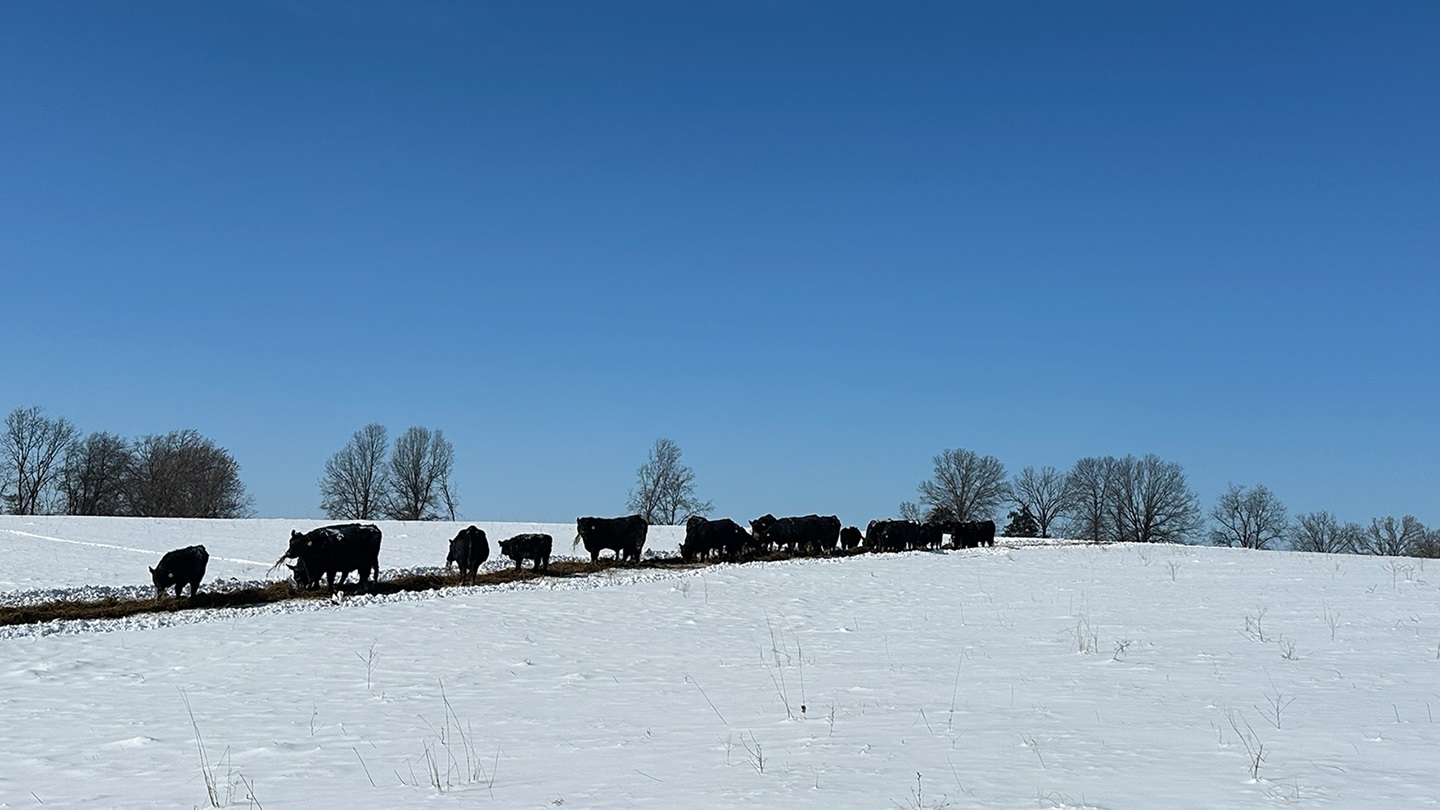
Much of cattle country is in the midst of a severe winter event, including extremely cold temperatures and, in some regions, heavy snow and/or ice. These conditions create numerous management challenges for cattle producers and will affect cattle markets in the coming weeks and perhaps months.
Prolonged subfreezing temperatures require much additional effort by cattle producers to ensure water availability (chopping ice) and provide additional feed required to maintain cattle. For cow-calf operations in calving season, the challenges are greater. Newborn calves are especially vulnerable to cold weather until they get dried off and successfully nurse. It takes additional effort to save calves and avoid frozen ears, tails and feet. Calf losses may affect cattle supplies in the coming months. The cold temperatures will reduce feedlot cattle performance, adding additional days to finish cattle, and reducing carcass weights and beef production in the coming weeks.
The January Cattle on Feed report showed an on-feed total of 11.45 million head to start the year, down 3.2% year over year and the 14th consecutive month of declining feedlot inventories. Average feedlot inventories for the past year (12-month moving average) are now at the lowest level since September 2018 and are down 3.8% from the cyclical peak in September 2022.
December feedlot placements were down 5.4% from one year ago and were the ninth consecutive month of lower placements. Total placements for the last six months account for 92% of the current feedlot inventory and were down 8.2% year over year. Fig. 1 shows the sharp decrease in average feedlot placements and marketings.
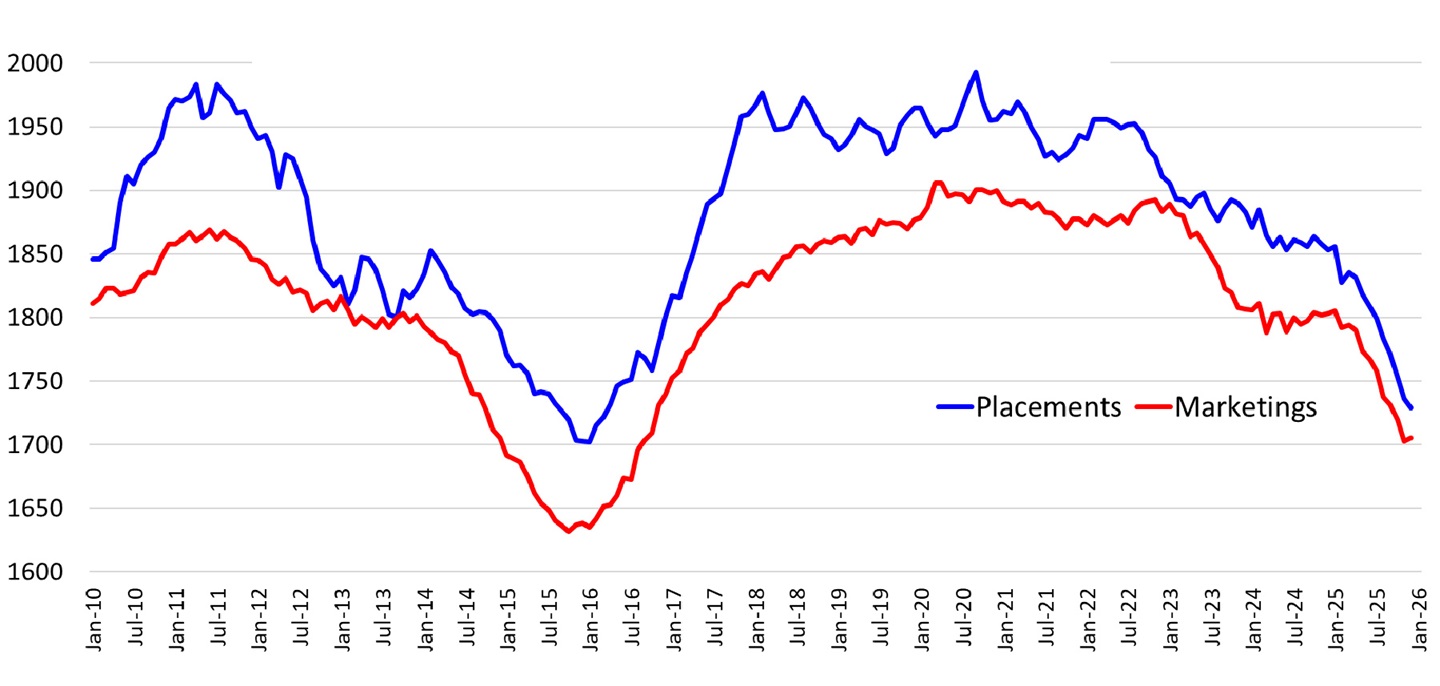
Fig 1: Feedlot placements and marketings, 1,000 head, 12 month
Average feedlot inventories for the past year (12-month moving average) are now at the lowest level since September 2018 and are down 3.8% from the cyclical peak in September 2022.

Feedlot marketings in December were higher than last year, up 1.8% year over year. Slightly higher December marketings follow an 11.9% drop in November marketings and were the first increase in monthly marketings in eight months. Total marketings in the past six months are down 6.9% year over year.
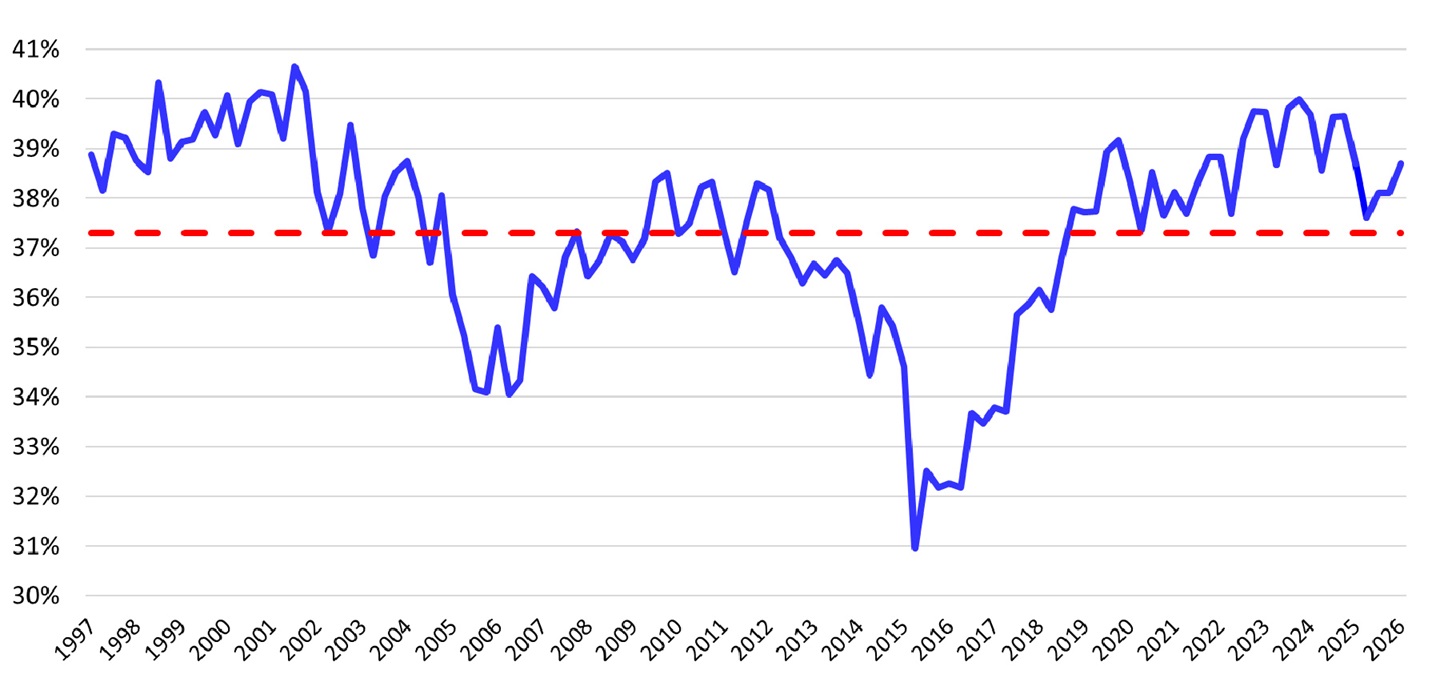
Fig 2: Heifers as percent of total cattle on feed, quarterly
Fig. 2 shows that heifers continue to make up an above-average share of total cattle on feed and suggests limited heifer retention thus far.

The January Cattle on Feed report also included the quarterly inventory of steers and heifers in feedlots. Heifers as a percentage of feedlot inventories increased to 38.7%, the highest level in the last year. Fig. 2 shows that heifers continue to make up an above-average share of total cattle on feed and suggests limited heifer retention thus far. USDA will release the Cattle report on Jan. 30 and provide data on cattle inventories, including the inventory of replacement heifers.
Derrell Peel, livestock marketing specialist, breaks down the latest cattle market trends, what’s driving the rebound and what producers should watch for in the coming weeks on SunUpTV from Jan. 17, 2026.
Editor’s note: Derrell Peel is an extension livestock marketing specialist for Oklahoma State University. [Lead photo by Shauna Hermel.]
Angus Beef Bulletin EXTRA, Vol. 18, No. 2-A
Topics: Feeder-Calf Marketing Guide , Feedyard , Industry News , Marketing , News
Publication: Angus Beef Bulletin
Related Content


Current Angus Beef Bulletin
Our November issue focuses on the females of the herd and the records that validate them.