



Rumors Affect Cattle Markets Again
Analysts consider why the selloff Jan. 15 ahead of three-day weekend.
January 21, 2026


by Steiner Consulting Group
Cattle futures were sharply lower Jan. 15 on rumors of New World screwworm (NWS), defensive positioning ahead of the long weekend, and profit taking. It was a reminder of how fickle the cattle market has become, vulnerable to even the smallest rumor, which can quickly trigger an avalanche of electronic trading.
The rumor was that NWS had been found in the United States. As far as we know, this was not true. What is true is that Mexico is now finding more cases of NWS within the 400-mile buffer zone that was supposed to remain clear of the infestation. If earlier cases were tied to cattle imported from the south, more recent cases appear to be truly local. There are now 11 active cases of NWS in the state of Tamaulipas (see map), with eight of those reported last week alone.
The question we struggle to answer is why feeder cattle sold off on speculation that NWS had entered the United States. All else equal, a finding in the United States would, in our view, be highly disruptive and would further limit availability, based on the restrictions that would likely follow, even before considering production losses.
As has been the case more than once, you sell first and ask questions later.
One possible line of thinking is that if NWS enters the United States, it eliminates the rationale for keeping the border closed. USDA has not taken a position on this, so we simply do not know. What is clear is that traders chose to take no chances, especially given the rally to date and the upcoming long weekend. As has been the case more than once, you sell first and ask questions later.
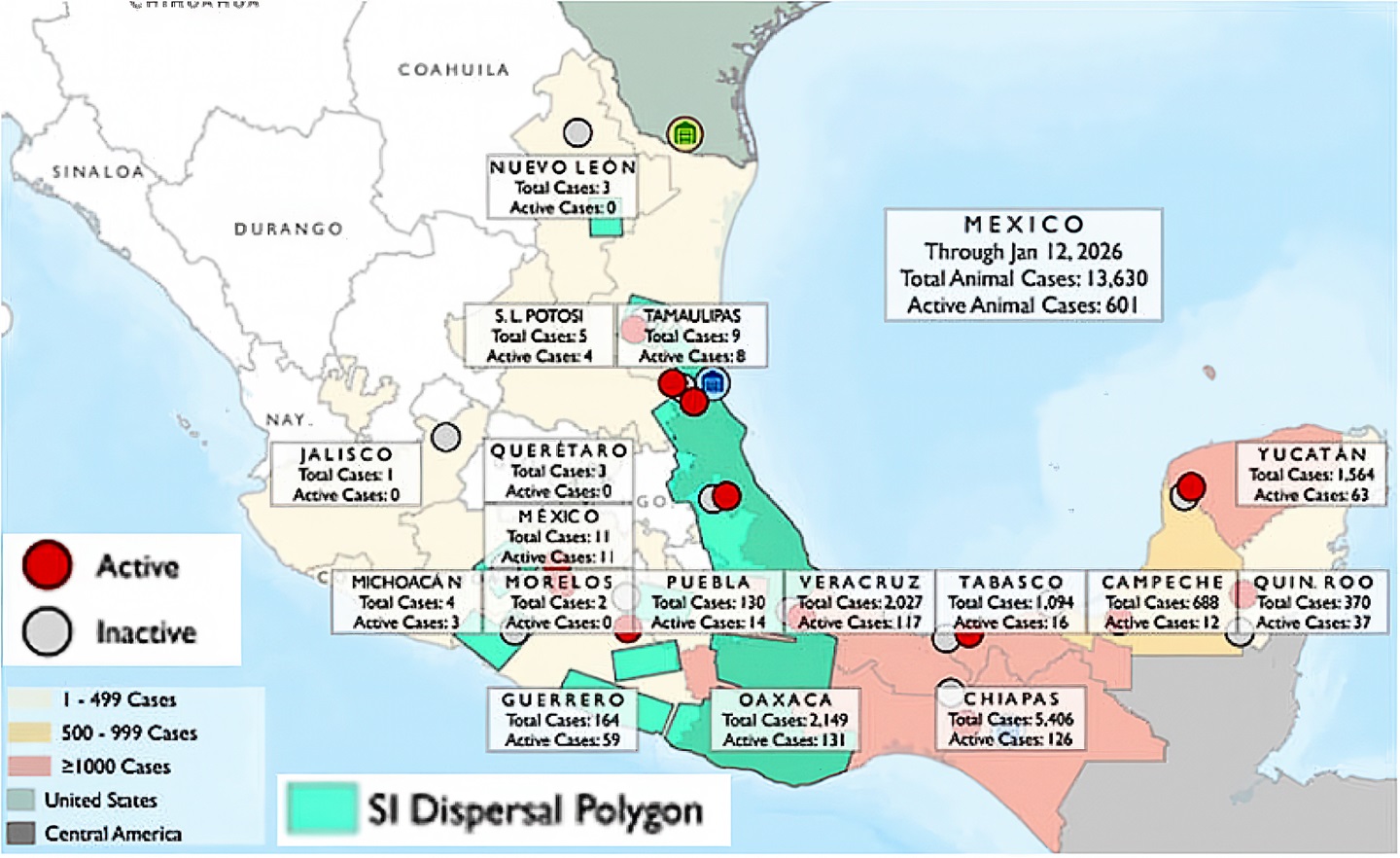
Fig. 1: New World screwworm cases in Mexico
Source: USDA-APHIS.

Packer margins collapsed toward the end of December and early January, as the end of the holidays also marked the end of the insatiable appetite for rib roasts and steak dinners. Bone-in ribs traded at $8.86 per pound (lb.) Jan. 14, down $4.20 per lb. (-32%) since Dec. 1. The value of the rib primal during this period is down 26%, removing roughly $19 per hundredweight (cwt.) from the Choice cutout.
The decline in the loin primal shaved another $7.40 per cwt. from the cutout. Packers have tried to offset some of this by adding money to items that typically see better demand this time of year, including chuck and round roasts and ground beef. It has not been enough, and the cutout today is roughly $8 per cwt. lower than in early December.
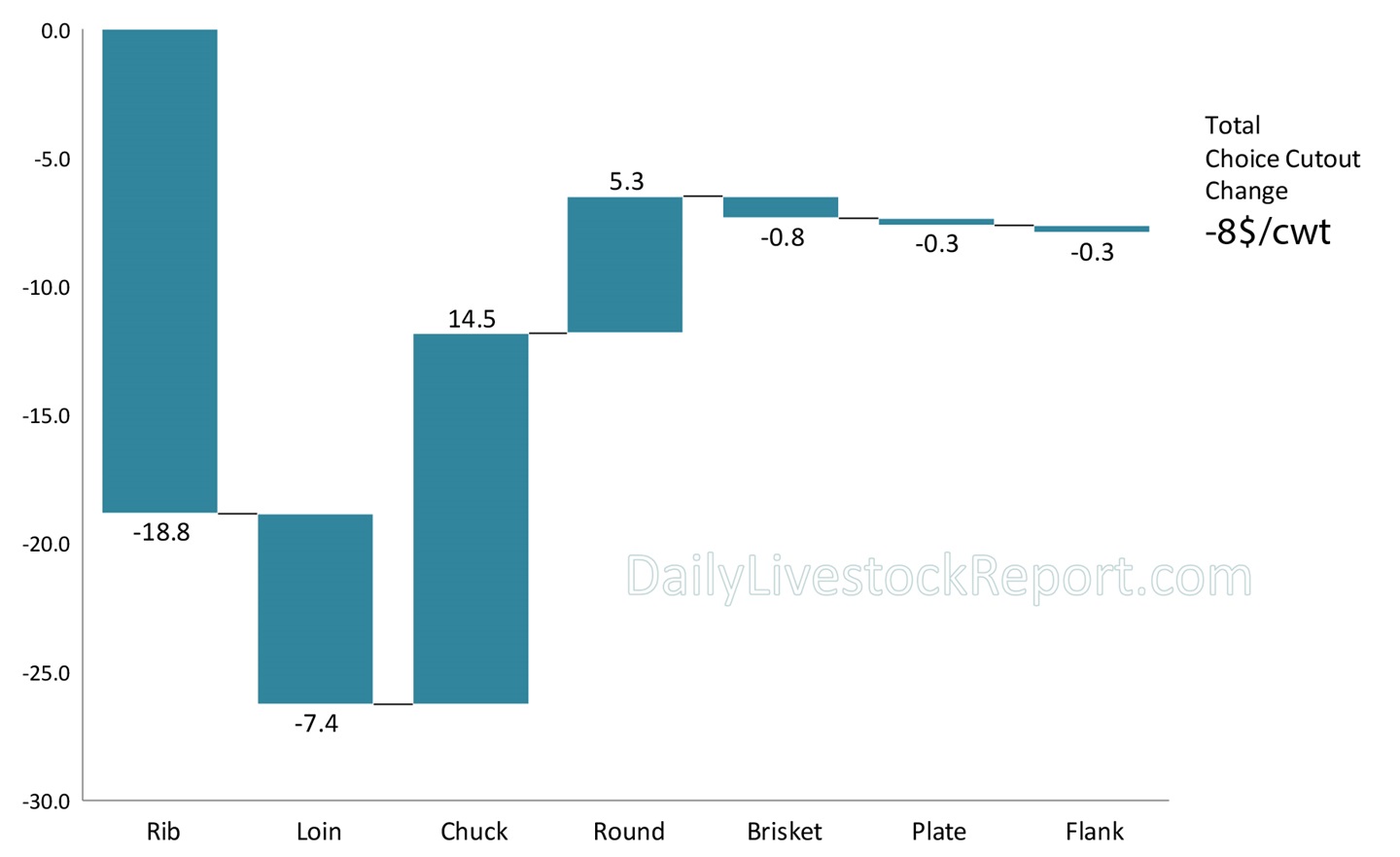
Fig. 2: Choice beef cutout value since Dec. 15 and contribution by primal
Source: Based on USDA-MPR data. Analysis by Steiner Consulting.

Live cattle prices, meanwhile, have gained $23 per cwt. Above-average temperatures have likely contributed to above-average carcass gains and heavier weights. For now, feedlots appear content to hold inventory, given the lack of replacement cattle.
The current impasse is likely to persist into the spring, with feedlots limiting showlists and feeding cattle longer, while packers run shorter production weeks as they struggle to get cattle bought. Given continued robust demand, higher prices will likely be needed to ration a tightening supply.
Editor’s note: The Jan. 15 edition of the “Daily Livestock Report” is reprinted with permission from the Steiner Consulting Group. To subscribe visit www.dailylivestockreport.com.
Angus Beef Bulletin EXTRA, Vol. 18, No. 1-B
Topics: Feeder-Calf Marketing Guide , Industry News , Marketing , News
Publication: Angus Beef Bulletin
Related Content


Current Angus Beef Bulletin
Our September issue focuses on the females of the herd and the records that validate them.