



Dietary Guidelines Released
Kennedy, Rollins unveil historic reset of U.S. nutrition policy; put real food back at center of health.
January 7, 2026


U.S. Department of Health and Human Services (HHS) Secretary Robert Kennedy Jr. and U.S. Department of Agriculture (USDA) Secretary Brooke Rollins on Jan. 7 released the Dietary Guidelines for Americans, 2025–2030, marking the most significant reset of federal nutrition policy in decades. The new guidelines deliver a clear, commonsense message to the American people: Eat real food.
The United States faces a national health emergency, according to Kennedy and Rollins. Nearly 90% of health care spending goes toward treating chronic disease, much of it linked to diet and lifestyle. More than 70% of American adults are overweight or obese, and nearly one in three adolescents has prediabetes. Diet-driven chronic disease now disqualifies many young Americans from military service, threatening national readiness and limiting opportunity.
“These guidelines return us to the basics,” Kennedy said. “American households must prioritize whole, nutrient-dense foods — protein, dairy, vegetables, fruits, healthy fats and whole grains — and dramatically reduce highly processed foods. This is how we make America healthy again.”
“Thanks to the bold leadership of President Trump, this edition of the Dietary Guidelines for Americans will reset federal nutrition policy, putting our families and children first as we move towards a healthier nation,” Secretary Rollins said. “At long last, we are realigning our food system to support American farmers, ranchers and companies that grow and produce real food. Farmers and ranchers are at the forefront of the solution, and that means more protein, dairy, vegetables, fruits, healthy fats and whole grains on American dinner tables.”
The 2025–2030 guidelines reestablish food — not pharmaceuticals — as the foundation of health and reclaim the food pyramid as a tool for nourishment and education. They emphasize simple, flexible guidance rooted in modern nutrition science:
- Prioritize protein at every meal.
- Consume full-fat dairy with no added sugars.
- Eat vegetables and fruits throughout the day, focusing on whole forms.
- Incorporate healthy fats from whole foods such as meats, seafood, eggs, nuts, seeds, olives and avocados.
- Focus on whole grains, while sharply reducing refined carbohydrates.
- Limit highly processed foods, added sugars and artificial additives.
- Eat the right amount for you, based on age, sex, size and activity level.
- Choose water and unsweetened beverages to support hydration.
- Limit alcohol consumption for better overall health.
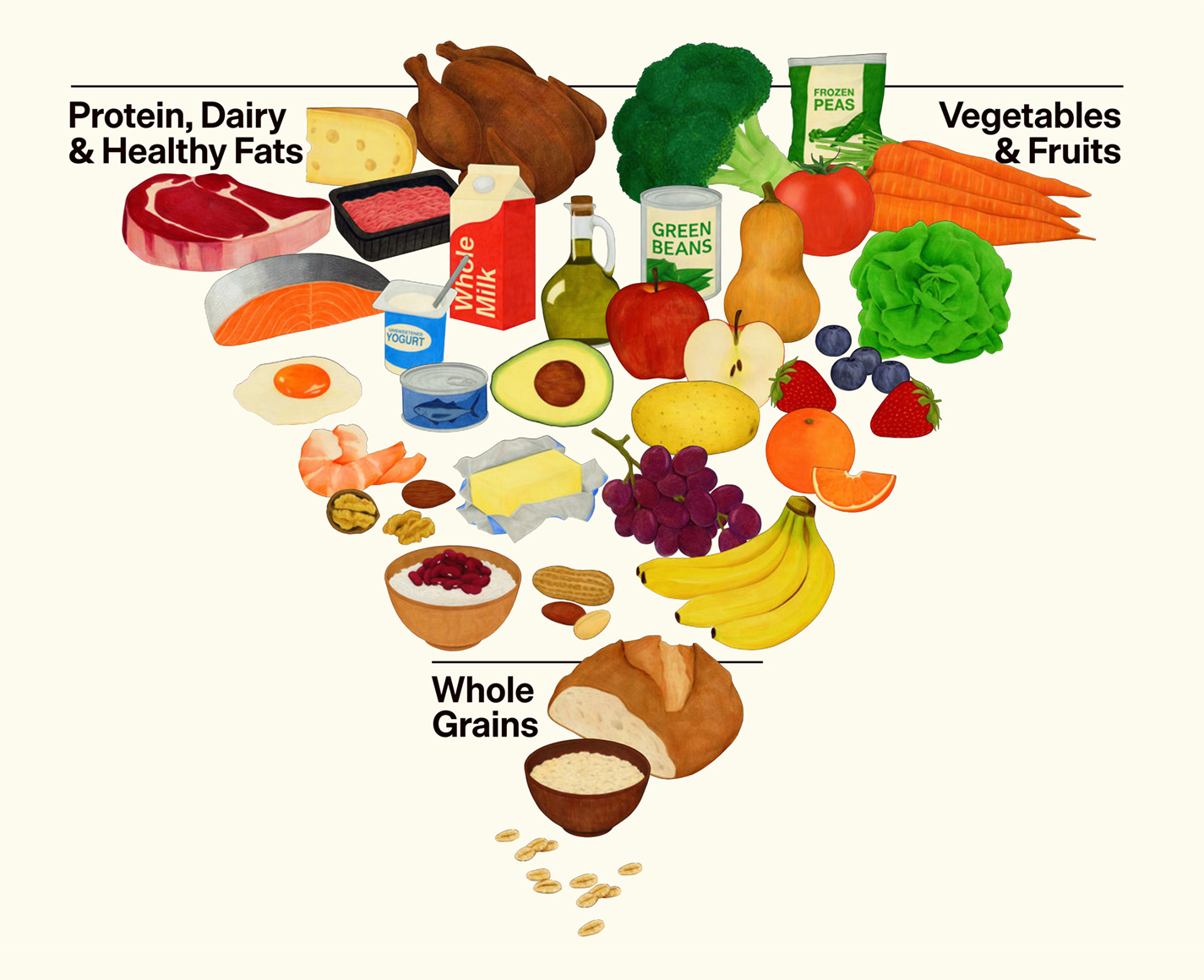
“These guidelines return us to the basics,” said Secretary Robert Kennedy Jr. “American households must prioritize whole, nutrient-dense foods — protein, dairy, vegetables, fruits, healthy fats and whole grains — and dramatically reduce highly processed foods. This is how we make America healthy again.”

The guidelines also provide tailored recommendations for infants and children, adolescents, pregnant and lactating women, older adults, individuals with chronic disease, and vegetarians and vegans, ensuring nutritional adequacy across every stage of life.
With the release of the guidelines, the federal government will begin applying them across federal programs.
Industry reaction
The new guidelines emphasize beef’s place in a healthy diet, according to the National Cattlemen’s Beef Association (NCBA), noting in a response to the release that the new guidelines nearly double the recommended daily amount for protein intake, increasing it to 1.2-1.6 grams per kilogram of body weight depending on age and individual caloric needs.
"The updated and simplified dietary guidelines will help more families like mine learn the facts about beef’s nutritional value and make the best decisions when they’re shopping for a nutrient-rich, whole and delicious protein,” said Kim Brackett, an Idaho rancher and NCBA vice president. “Beef provides high amounts of protein plus nine other essential nutrients, like iron and B vitamins; and gold-standard clinical studies have consistently shown that it is easy to incorporate beef into a balanced, heart-healthy diet.”
According to NCBA, the more streamlined approach to the dietary guidelines taken by Rollins and Kennedy keeps science-backed recommendations at the heart of the guidelines while making them more practical for the families, caregivers, school administrators and medical professionals making decisions every day about what to feed those in their care.
Other recommendations in the dietary guidelines pointed out by NCBA:
- Incorporate beef tallow and other healthy fats into the cooking process.
- Use healthier cooking methods like baking, broiling, roasting, stir-frying or grilling, all of which can be used with the wide variety of retail beef cuts available to American families.
- Introduce nutrient-dense foods like meat during infancy and early childhood to support growing children.
The new guidelines do not make any changes to the existing recommendation that saturated fats should not make up more than 10% of daily calories. They do note that healthy fats are a natural part of real foods like meat, and these fats support many important functions in the body, like nutrient absorption.
"As Americans face the double burden of being overfed and undernourished, they are searching for reliable, affordable solutions to meet their nutritional needs and personal preferences. Thankfully, there are a wide range of beef options in the marketplace,” said Shalene McNeill, a registered dietitian and nutrition scientist who serves as executive director of nutrition science for NCBA. “On a per-gram basis, beef offers more nutrient value than many other animal and plant options. Incorporating beef in the diet can help support the overall health and well-being for all Americans.”
The National Pork Producers Council (NPPC) also applauded the release.
"America’s pork producers appreciate the 2025 Dietary Guidelines’ putting pork front and center on the plate. They took note of producer concerns and rightly gave pork and other high-protein, nutrient-dense and delicious meats their due when it comes to Americans’ health and dietary habits,” said Rob Brenneman, NPPC president-elect and pork producer from Washington, Iowa.
“NMPF thanks HHS and USDA for recognizing dairy’s critical role in a healthy diet in the new Dietary Guidelines for Americans, as shown by its continued recommendation of three servings of dairy for Americans, its recognition of dairy’s benefits at all fat levels and dairy’s prominence in diverse diets,” said Gregg Doud, president and CEO of the National Milk Producers Federation.
“As also shown in the scientific report that preceded today’s guidelines, reducing or eliminating dairy from the diet leads to undernourishment in key nutrients for millions of Americans. These guidelines encourage consumption of dairy nutrients critical to human health,” Doud said. “Meanwhile, not all fats are created equal, and because the guidelines acknowledge this, dairy’s benefits are better reflected in this iteration of the guidelines.”
For more information, read the Fact Sheet: Trump Administration Resets U.S. Nutrition Policy, Puts Real Food Back at the Center of Health or visit the website https://realfood.gov/.
Editor’s note: This article is adapted from a USDA announcement of the release of the guidelines and industry reaction to the announcement. [Lead photo by Kar-Tr from Getty Images.]
Angus Beef Bulletin EXTRA, Vol. 18, No. 1-A
Topics: Consumer , Industry News , Human Health , News , Policy
Publication: Angus Beef Bulletin
Related Content


Current Angus Beef Bulletin
Our September issue focuses on the females of the herd and the records that validate them.