



Market Update with Derrell Peel
With a banner 2025 almost wrapped up, here is a beef cattle market outlook moving into the new year.
December 3, 2025
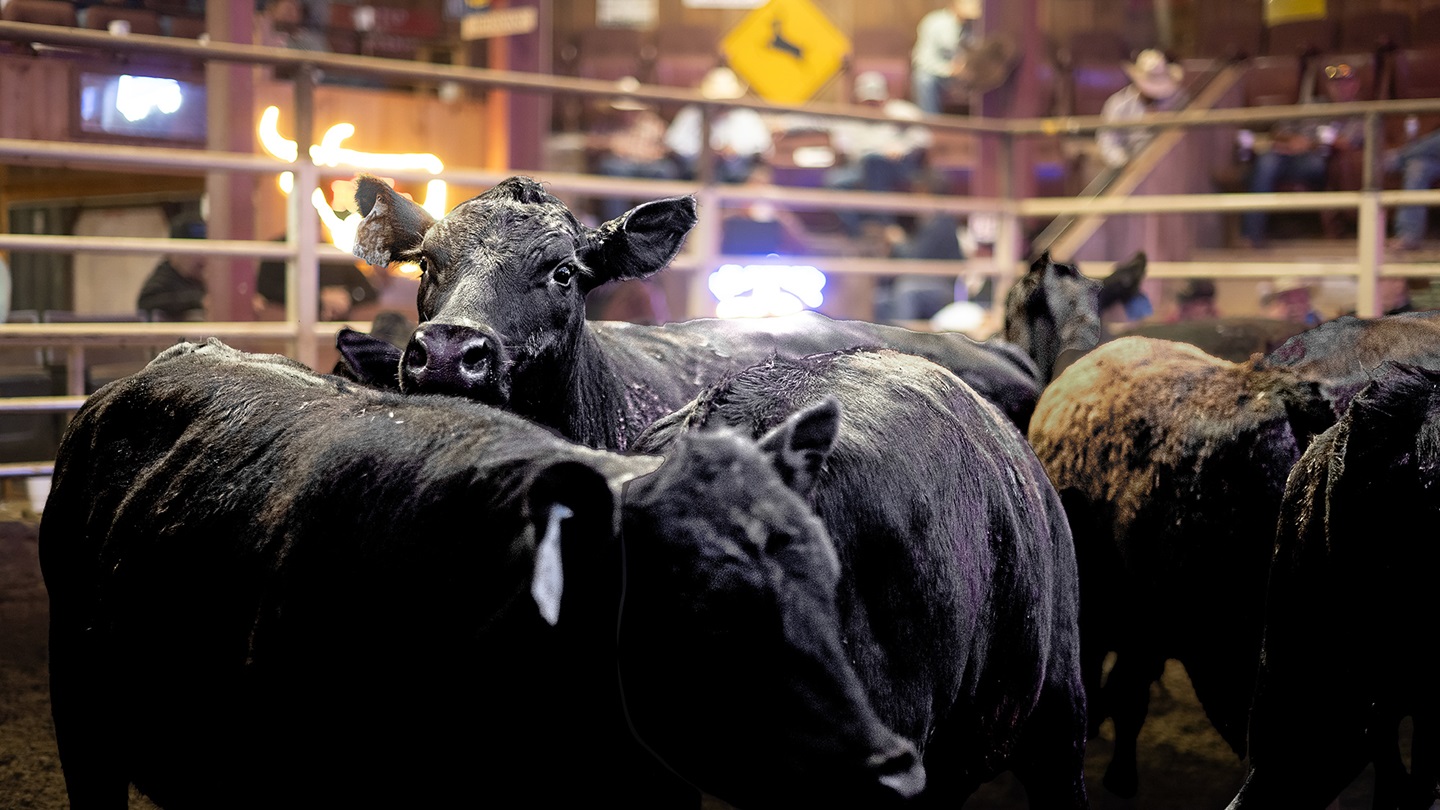

Despite what the mainstream media is reporting, beef producers don’t have to look too far to find positive news these days. A solid market for feeder cattle and consumer demand for beef are certainly worth celebrating.
How well did 2025 treat producers, exactly? On this episode of the Angus at Work podcast, we visited with Derrell Peel, Oklahoma State University ag economist, regarding what 2025 looked like from a market standpoint, as well as what opportunities and challenges exist for cattle producers in 2026.
The state of beef
It’s been an outstanding year by and large for cattle producers, with the beef business seeing a tremendous run in terms of prices. Three years of continual upward movement have contributed to record levels for all classes of feeder cattle and fed cattle.

“Our expectation is that we will see prices continue to improve in 2026 and 2027. If you time it out right now, we’re going to be in very tight supplies for the rest of the decade. So we’re going to be in pretty good shape, I think, to finish out the next three or four years at a minimum.” — Derrell Peel
The market is being driven by several factors, including the underlying supply situation. Combined with the demand side, those elements are supporting record price levels, Peel says.
“Demand has been outstanding. All you really need to say about beef demand is that it has been remarkable from a supply standpoint,” Peel says, noting that in 2025 the beef cow herd was at its smallest level since 1961. “The market is telling us we’re smaller than we need to be, and the market is trying to provide incentives for this industry to rebuild back up to a higher level than we currently have.”
Another man’s treasure
One casualty of high beef prices and the need for more breeding females has been the cull-cow market. Peel says that sector has seen a pretty sharp decline.
“We’re down about 40% from the peak [cull-cow market] in 2022. Following the herd peaking in 2019, we began liquidation. You started seeing some elevated cow slaughter initially, but now that’s dropping,” Peel explains, emphasizing that stabilizing the herd is happening right now by decreasing cow slaughter. “We’re taking [fewer] cows out of the herd. As a result of the decreases in cow slaughter, we’ve seen continual advances in those cull-cow prices.”
While cull-cow prices are up, the desire to increase the number of feeder calves is incentivizing a second look at females who may otherwise have found their way into a lean ground beef product.
According to Peel, it’s a situation that happens in this type of market: One man’s cull is another man’s new cow.
“A lot of times an individual producer might preg-check and cows come up open or are bred late. They’re not going to fit your herd anymore and — for that person — they’re a cull,” Peel suggests. “But, in a lot of cases, other producers are taking them home to see if they can get another calf or two out of them to take advantage of these high feeder-cattle markets.”
 Looking forward
With all that said, where is the cattle market headed in 2026? Peel says he doesn’t have a portal to the future, but the market is telling.
“I don’t have a crystal ball exactly, but the story we’ve been telling hasn’t really changed much for about three years as this supply situation has developed. Again, in conjunction with very strong demand, we’ve got record-high prices,” Peel says.
The size of the U.S. calf crop peaked in 2018 and has gotten smaller over the last seven years. The 2025 calf crop is projected to be the smallest total U.S. calf crops since 1941, Peel explains. That means numbers are tight and prices are likely to stay elevated.
“When you think about moving forward, we have to take that tight feeder-cattle supply and retain heifers out of that. We have to pull some additional animals out of that feeder supply to invest in the future herd rebuild,” Peel notes. “Our expectation is that we will see prices continue to improve in 2026 and 2027. If you time it out right now, we’re going to be in very tight supplies for the rest of the decade. So, we’re going to be in pretty good shape, I think, to finish out the next three or four years at a minimum.”
Editor’s note: The information above is summarized from the Nov. 26, 2025, episode of Angus at Work. To access the full episode — including more information on cattle markets and risk management — check out our Angus at Work archive on www.angus.org. [Lead photo by Lynsey McAnally.]
Angus Beef Bulletin EXTRA, Vol. 17, No. 12-A
Topics: Business , Feeder-Calf Marketing Guide , Industry News , Marketing , News
Publication: Angus Beef Bulletin
Related Content


Current Angus Beef Bulletin
Our November issue focuses on the females of the herd and the records that validate them.