




Researching Novel Strategies for Horn Fly Control
Auburn University researchers target horn flies in fight for cattle health.
November 4, 2025
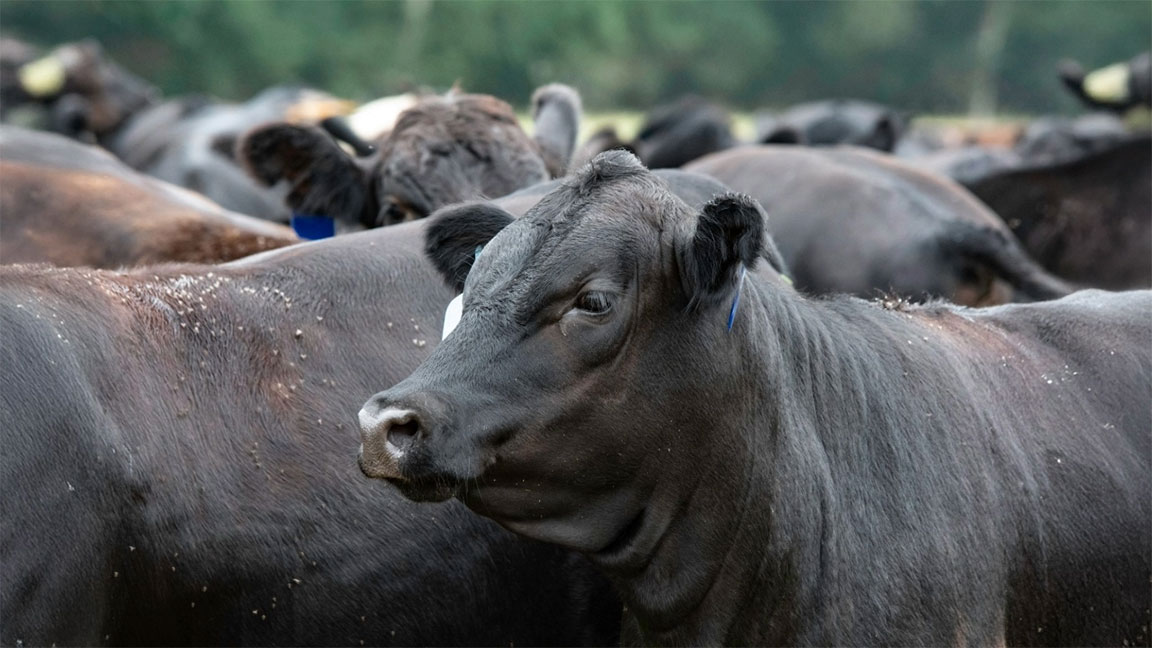

by Clay Pierce, Auburn University
The common parasitic horn fly (Haematobia irritans) can drain up to a pint of cow blood every week, and they are fast becoming resistant to insecticide. Researchers at the Alabama Agricultural Experiment Station are working to develop smarter solutions for Alabama’s cattle producers by shifting from traditional cattle-based experiments to molecular analysis of the horn fly itself — revealing new insights into fly-borne pathogens and novel methods of biological control.
“We’ve started looking at horn flies as ‘Ubers for bacteria,’” says Terry Brandebourg, associate professor of animal science at Auburn, “and asking what kinds of pathogens these flies are carrying around on our cattle — and how we can use that knowledge to disrupt their life cycle.”
Mapping the microbial hitchhikers of the horn fly
The team’s first major project focuses on what’s called the “metagenome” — the full spectrum of bacteria and viruses present on or inside the fly. To do the evaluation, researchers capture horn flies directly from cattle herds across Alabama using butterfly nets and then carefully extract and sequence their DNA in a lab. By separating out the fly’s genetic material, they isolate and analyze what’s left: microbial stowaways that may pose threats to cattle health or food safety.
“Understanding what pathogens ride along with these flies helps us quantify disease risk and identify opportunities for intervention,” says Brandebourg.
The implications for food safety and animal health are significant. Horn flies can bite a single animal 30-40 times per day, consuming up to 200 mL of blood per cow daily, says Brandebourg. Over time, this depletes energy reserves, reduces weight gain, and can affect reproductive performance — especially for heifers, which require two years of investment before calving.
“Understanding what pathogens ride along with these flies helps us quantify disease risk and identify opportunities for intervention.” — Terry Brandebourg
The gut microbiome: a new battleground in pest control
The second arm of the study targets the horn fly’s gut microbiota — the complex community of beneficial bacteria necessary for digestion and reproduction. Much like humans, flies rely on these microbes to maintain health. By dissecting flies and identifying their gut bacteria, the research team hopes to find weak points that could be exploited to reduce fly vitality and fertility.
“If we can mess with their gut health, we may impair their ability to reproduce,” says Brandebourg. “Female flies in better nutritional condition lay more eggs. Interfering with their microbiome could be a game changer for long-term fly control.”
Rather than relying on traditional pesticides, which horn flies are quickly evolving to resist, this research could pave the way for natural, indirect methods of control, such as adjusting cattle feed additives or pasture forage to disrupt fly biology without chemicals, says Brandebourg.
From vaccines to management: building better tools for producers
The Auburn research grew out of a partnership with a pharmaceutical company developing a vaccine against horn flies, a novel strategy that targets the proteins in fly saliva responsible for preventing blood clotting. Auburn’s vaccine trials in heifers demonstrated a strong immune response and reduced fly feeding — cutting their blood meals in half. However, a major hurdle remains: USDA licensing.
“The USDA requires proof that the vaccine improves a clinical outcome like anemia or dermatitis — not just that it affects fly behavior,” says Brandebourg. “Even though we’ve shown that it works, we’re now working on measuring downstream effects to meet regulatory standards.”
In the meantime, producers are eager, but realistic. Since it takes a great deal of work to herd and pen cows, a second booster shot would be a real obstacle to production unless it can align with existing protocols.
Brandebourg acknowledges the challenge: “Ease of use matters. That’s why we’re also exploring gut-based strategies that could be administered through feed or mineral supplements — tools producers already use.”
Why it matters
Horn flies remain one of the top management challenges for cattle producers in the Southeast. With limited chemical options and rising costs, Auburn research represents a forward-thinking approach rooted in molecular biology, producer collaboration and long-term sustainability.
“These producers are the backbone of our state’s economy and our nation’s nutritional security,” said Brandebourg. “As a land-grant university, it’s our job to help them thrive. Studying flies might seem small, but the impact on cattle performance, producer livelihood and food supply is enormous.”
Editor’s note: Clay Pierce is a senior in ag communications at Auburn University. [Lead photo courtesy of Auburn University.]
Angus Beef Bulletin EXTRA, Vol. 17, No. 11-A
Topics: Health , Management
Publication: Angus Beef Bulletin
Related Content


Current Angus Beef Bulletin
Our September issue focuses on the females of the herd and the records that validate them.