



In the Cattle Markets
Beef demand is key producer vitality driver in 2025.
August 20, 2025

by Glynn Tonsor, Kansas State University.
Calendar year 2025 continues to develop as one we are likely to remember for some time. Cattle prices are up substantially, many areas are greener and wetter than in recent years, and, yes, we are on the cusp of college football starting. While good times indeed should be enjoyed, it is prudent to pause and take stock of key fundamentals at play. Here, the outsized role of beef demand is again worth highlighting.
As recently outlined in Cattlemen’s Beef Board’s The Drive series (“What’s Demand Got to Do with It?”), producer cattle receipts growing in 2024 were directly the result of higher beef demand. Any time you can increase volume (carcass weight growth led to small increase in beef production from 2023) and increase prices per unit, we know demand increased. That was precisely the case for beef in 2024.
The Meat Demand Monitor (MDM) project, Beef- and Pork-Checkoff supported and based at Kansas State University (K-State), since February 2020 has provided timely and novel insights on domestic meat demand that are fully available to all interested parties. Most 2025 base MDM monthly reports have highlighted the direct role of macroeconomics and consumer financial sentiment.
Narrowly, households reporting improving finances are much more likely to include meat protein in prior-day meals and spend much more on food away from home as compared to those reporting stable or deteriorating finances. As shown below, this was still the case in July with 19% reporting improving finances (same as in June).
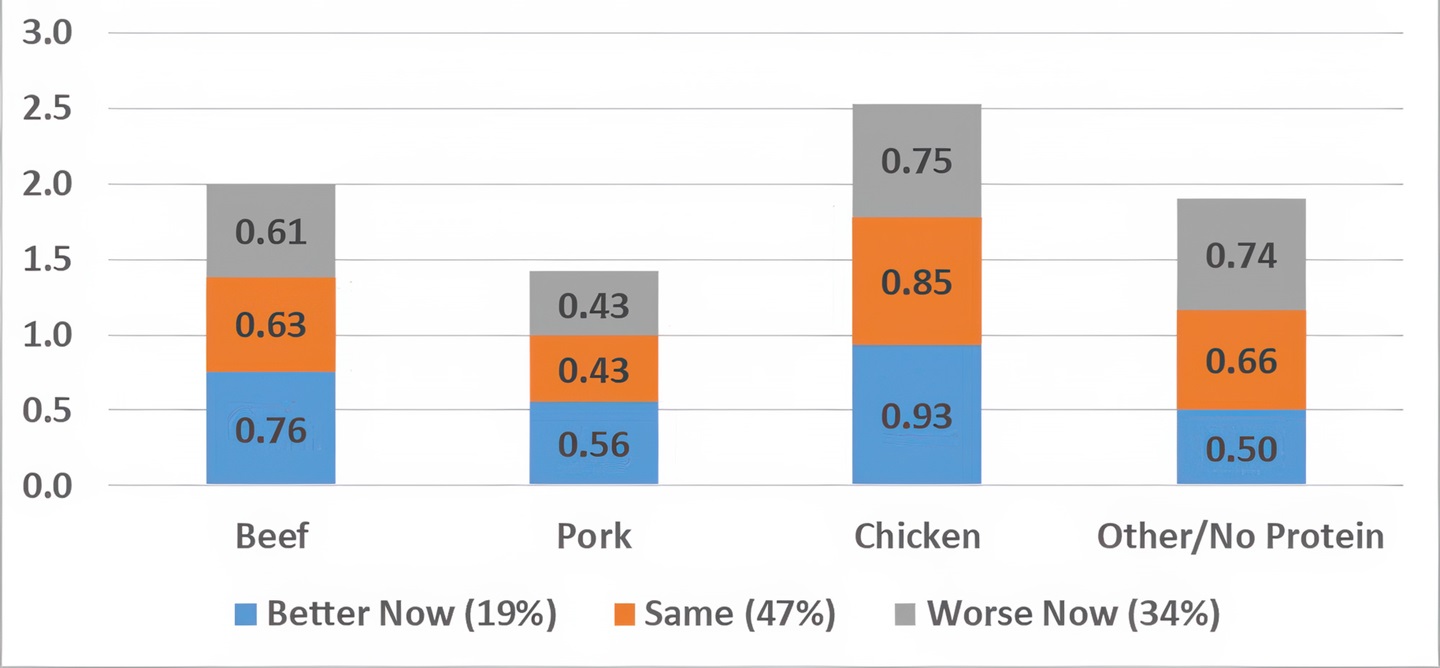
Fig. 1: Prior-day meal, protein inclusion rate by financial sentiment (now vs. one year ago) for July 2025
Source: Meat Demand Monitor, 2025.

Given ongoing developments in measures of the U.S. macroeconomic situation, using the MDM to connect changes to meat demand relevance and ultimately producer bottom lines is highly encouraged. Yes, there are many reasons for cattle producers to smile today; but, astute management starts with taking stock and accurately assessing one’s situation.
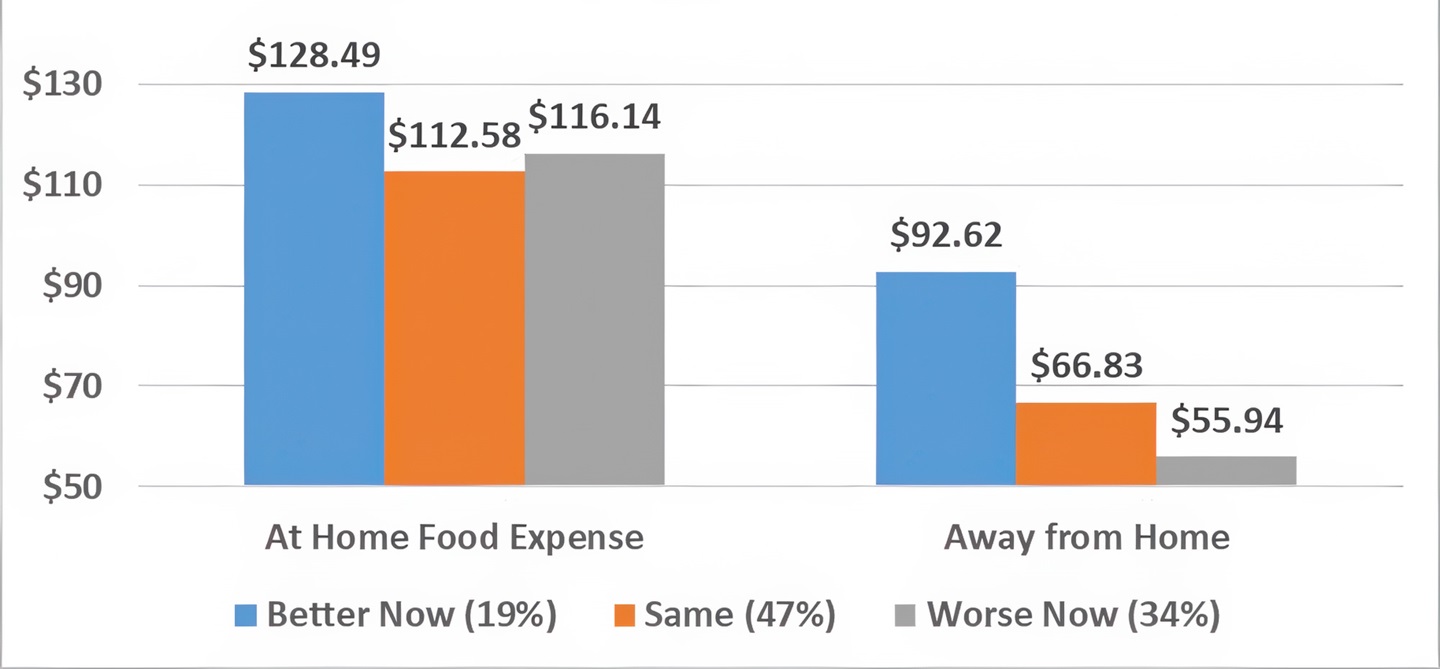
Fig. 2: Avg. weekly food expenses by financial sentiment (now vs. one year ago) for July 2025
Source: Meat Demand Monitor, 2025.

As summer wraps up, I hope readers can enjoy a beverage of choice and enjoy a beautiful sunset one evening. Meanwhile, take note of the clear and critical role consumer demand has in producer economic vitality.
Editor’s note: Glynn Tonsor is a professor in the Department of Agricultural Economics at K-State. This article is reprinted with permission from the Livestock Marketing Information Center, available online at https://www.lmic.info.
Angus Beef Bulletin EXTRA, Vol. 17, No. 8-B
Topics: Feedyard , Industry News , Marketing , Management , News
Publication: Angus Beef Bulletin
Related Content



Current Angus Beef Bulletin
Our November issue focuses on the females of the herd and the records that validate them.