


Gary Smith Receives Industry Achievement Award
Renowned meat scientist honored at Certified Angus Beef’s Feeding Quality Forum.
August 19, 2025
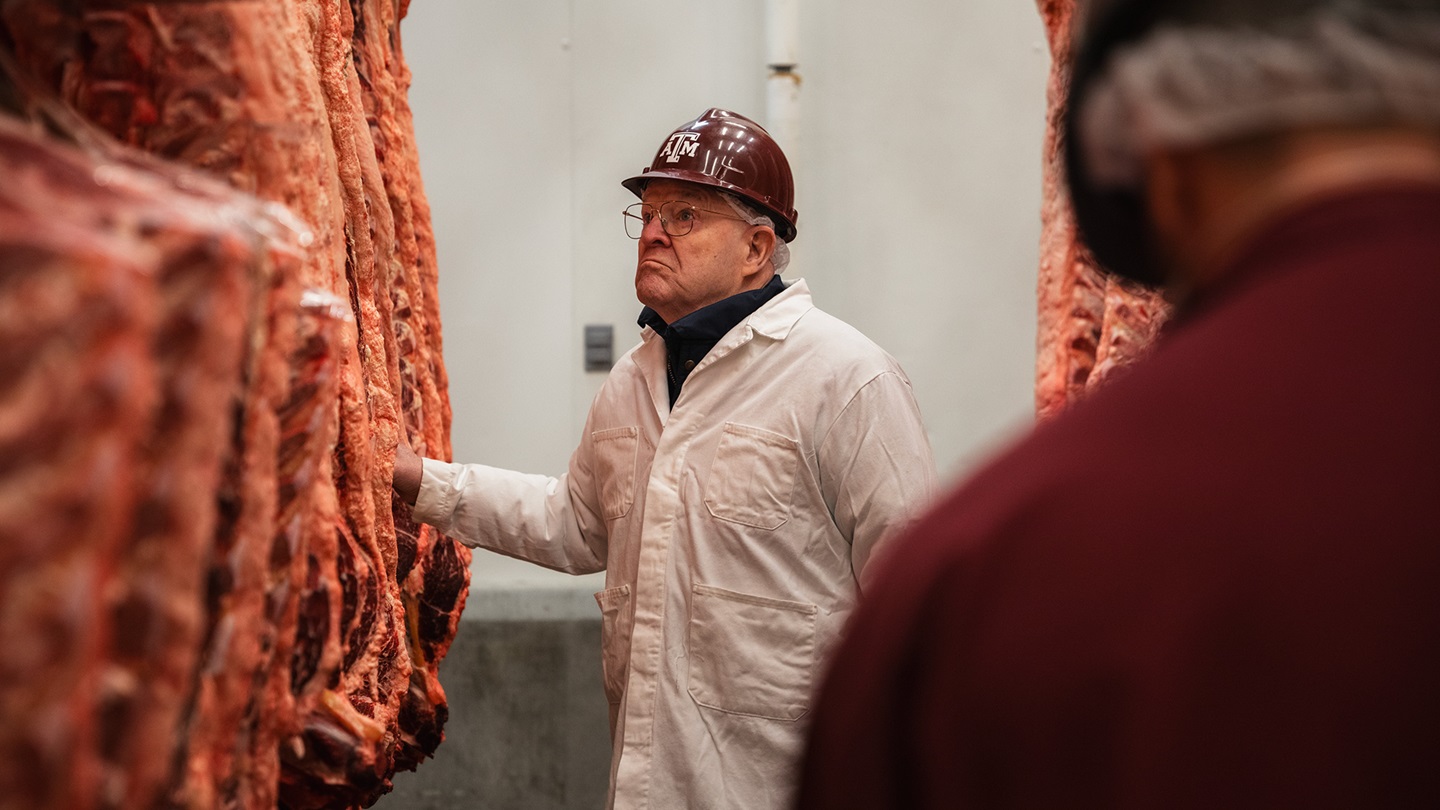
Gary Smith’s leadership with the 1992 National Beef Quality Audit served as a guiding light for quality beef production, at a time when approximately 45% of beef was Select or lesser quality. [Photos courtesy CAB LLC.]

Meat science has advanced by leaps and bounds under Gary Smith’s guidance. From food safety to quality beef production, his research findings helped save the beef industry during some of its most challenging times. College students were educated, inspired and trained to be top-notch leaders by the “dean of meat scientists,” who has never shied away from getting in the trenches and putting in the work.
For the indelible mark he left on meat science and the beef community, Smith earned the 2025 Certified Angus Beef (CAB) Industry Achievement Award, presented at the brand’s Feeding Quality Forum in Rochester, Minn., Aug. 14.
A lasting impression
Smith first experienced protein processing during his childhood, when his family would gather to harvest livestock and poultry for meat. From cattle and hogs to chickens and turkeys, generations would work together, without electricity, to get the job done.
“The things I enjoyed the most were getting involved with people who were in the trenches trying to make a living, trying to make a better life for themselves and others. We just helped them by finding ways to use research.” — Gary Smith
Witnessing the challenges of drought and socioeconomic issues on the farm made an impression on Smith. When choosing a degree path, he settled on teaching agriculture — his experience guiding him to help other farm families earn the money necessary to survive.
After high school, Smith headed to California State University, Fresno (Fresno State) to pursue a bachelor’s degree in vocational agricultural education. He completed that degree, spent a year student-teaching high school agriculture classes and quickly decided it was not for him.
At the encouragement of a college adviser, Smith returned to graduate school. He planned to finish a master’s degree and return to the classroom as a junior college instructor.
Although he finished his master’s in animal breeding, his time at Washington State University (WSU) set the pivot for Smith’s next chapter in meat science.
A chance opportunity
Growing up, Smith dabbled in meat judging and later took a meats course at Fresno State, but he had no plans to become a meat scientist. While finishing graduate school at WSU, Gene Ensminger, department head, tapped Smith to fill a vacant meat science professor position.
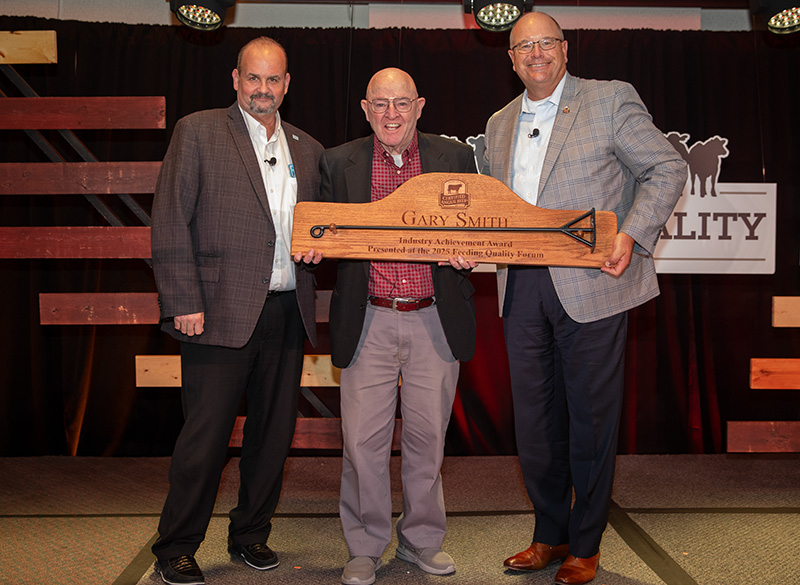
Gary Smith (center) was recognized by Brad Morgan (left) and John Stika (right) during CAB’s Feeding Quality Forum in Rochester, Minn., Aug. 14.

After four years teaching meat science at WSU, Smith took a leave of absence and went to Texas A&M University (Texas A&M). There, he completed a doctorate under famed animal scientist O.D. Butler. The rest is history.
“I got into [meat science], I loved it and spent the rest of my life trying to be better at it,” Smith says.
Since his academic detour, Smith has been at the forefront of industry-changing research. A key to his success has been establishing a deep network of colleagues and peers within meat science, the beef community and the ag industry. Another key: Smith’s work ethic, passion and initiative to find solutions for producers.
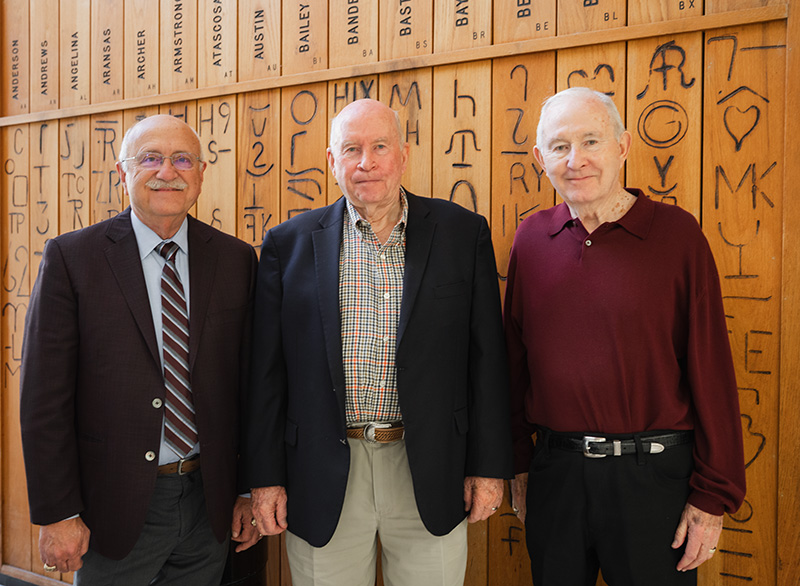
Pictured from left, Jeffrey Savell, Bill Mies and Russell Cross each worked with Gary Smith throughout their careers.

“The things I enjoyed the most were getting involved with people who were in the trenches trying to make a living, trying to make a better life for themselves and others,” Smith says. “We just helped them by finding ways to use research.”
In the span of 60 years, Smith’s body of work varied and expanded. In the early years, he was educating people on how to cure meat with the right combination of salt, nitrate and nitrite. By retirement, his research had touched all corners of meat science — a nod to one of his top qualities, the ability to keep an ear to the ground on what problems existed and where solutions were needed.
Smith has been at the forefront of studies on beef palatability; food safety; product packaging; beef shelf life; transoceanic shipment of meat; and food safety, including mitigation of E. coli 0157:H7, salmonella and listeria in packing plants.
Alongside a team of researchers from Texas A&M and Colorado State University, Smith pioneered the National Beef Quality Audit (NBQA). Other notable industry research projects include the International Beef Quality Audit, National Consumer Retail Beef Study, and exploring USDA beef quality and yield grade standards.
That research had a direct effect on the trajectory of CAB, exploring the importance of marbling and its influence on flavor and tenderness.
The infamous “War on Fat” was fought during Smith’s research tenure. There was a belief that cattle had too much backfat and the issue needed to be rectified.
“I think we were scared to death we were going to lose beef over quality,” Smith says.
Getting rid of the waste fat, while simultaneously keeping the “taste fat,” proved to be the answer — one Smith says saved the beef industry.
“It took us time,” Smith says. “Fortunately, there were people who went the right direction. CAB did it. The industry as a whole did it.”
At the time many people were skeptical, says Jeffrey Savell, vice chancellor and dean of agriculture and life sciences; university distinguished professor of meat science and E.M. “Manny” Rosenthal Chair in animal science at Texas A&M.
The application of his research findings has improved every sector of the beef community, from cow-calf ranchers to feedyards, packers and end users.
“He let the data support what he had to say,” Savell says. That paved the way for an industry’s understanding of quality and its importance.
Savell says Smith could bring research results to life — translating and explaining what it meant to others with a “magic” unlike anyone else.
Dean of meat scientists
“He’s an icon,” Russell Cross, senior professor in the Department of Animal Science at Texas A&M, says. “We call him the dean of meat scientists.”
Smith has taught thousands of students and mentored hundreds of graduate students. Many of those past students are industry leaders in research, academia and government roles.
To Cross, a former colleague who worked alongside Smith for decades, Smith’s unique teaching and communication style bring out students’ ideas and inspires them to ask questions.
It’s part of what made him such an admired educator and the recipient of many teaching awards.
The other part? The genuine care and love he has shown his students.
Now retired from academia, Smith’s passion is still present. It’s not uncommon to see him in the halls of Texas A&M’s buildings, dropping off news articles and notes he has meticulously written for those still actively doing research and teaching college courses.
Purpose follows passion — and Smith found purpose in bettering the beef business.
The application of his research findings has improved every sector of the beef community, from cow-calf ranchers to feedyards, packers and end users.
Beyond the practical implications of Smith’s research, he is known for his unmatched work ethic, no-stone-left-unturned research methodology, and ability to build collaborative — and deeply meaningful — relationships with students, colleagues and peers.
“You can measure people by who they had around them, who they trained and the impact that they had,” Cross says. “For Dr. Smith, it’s impossible to measure. He will go down in history as the one who had the greatest impact on the meat science community.”
Editor’s note: Lindsay Graber Runft is director of producer communications for Certified Angus Beef. [Photos courtesy of Certified Angus Beef.]
Angus Beef Bulletin EXTRA, Vol. 17, No. 8-B
Topics: Award winner , Events , Genetics , Industry News , Meat Science , News
Publication: Angus Beef Bulletin
Related Content


Current Angus Beef Bulletin
Our November issue focuses on the females of the herd and the records that validate them.