

The Local Livestock Auction
Local auction markets serve as the lifeblood of the cattle industry.
February 20, 2026
Parting advice: We are sad to note that before we could bring this story to print, Blake Nuffer, the lead source of the article, died suddenly Oct. 3, 2025. With permission of his family and the team at Montana Livestock Auction, now under the direction of the team Blake built, we offer the story as his parting advice to cattlemen.
Local auction markets are an important part of the cattle industry, providing an essential service to producers. Blake Nuffer, former owner of the Montana Livestock Auction, Ramsay, Mont., said one of the great things about local markets — no matter where you are in the country — is they offer a market every week.
“This provides true price discovery each and every week. We are there for our customers all the time,” he said. While the video sales offer marketing opportunities and true price discovery, they are more seasonal.
“Auction yards also offer special sales that attract a lot of buyers — special feeder-calf sales, bred cow sales, pair sales,” Nuffer said, pointing out the local auction is a great connector of sellers and potential buyers. “Most livestock barns take pride in what they do and do a good job of advertising and exposing your cattle to more buyers — especially in this age of social media.”
Local communities also benefit, as sale barns attract commerce to the area.
“They bring more business to town, at least one day each week,” Nuffer said. “Here at Montana Livestock Auction, we offer two sales per week.”
Buyers and sellers who come for a sale may stay overnight or get a meal, have their truck repaired or do some shopping, he explained.
Adding value
“Here at our auction we encourage ranchers to take advantage of our special feeder-calf sales, and they can get top dollar by vaccinating those calves and giving us all the information about the cattle — their breeding program, et cetera,” he said. “Then we can pass those details to our buyers as we merchandise those cattle.”
Buyers can be confident a group of cattle has been vaccinated, weaned and is ready to go, said Nuffer. The value-added programs work just as well when you are selling through an auction market as they do when selling on the big video sales.
Having a sale every week gives stockmen a chance to sell an animal at the right time, and not have to wait for a big sale.
“We never know how big or how small a sale will be, but it’s always available when any of our customers needs to sell animals,” Nuffer said, offering an equipment breakdown or impending payment deadline as examples of an unexpected time of need. “They can always bring something to the auction to sell. We have sales for our customers, not for us.”
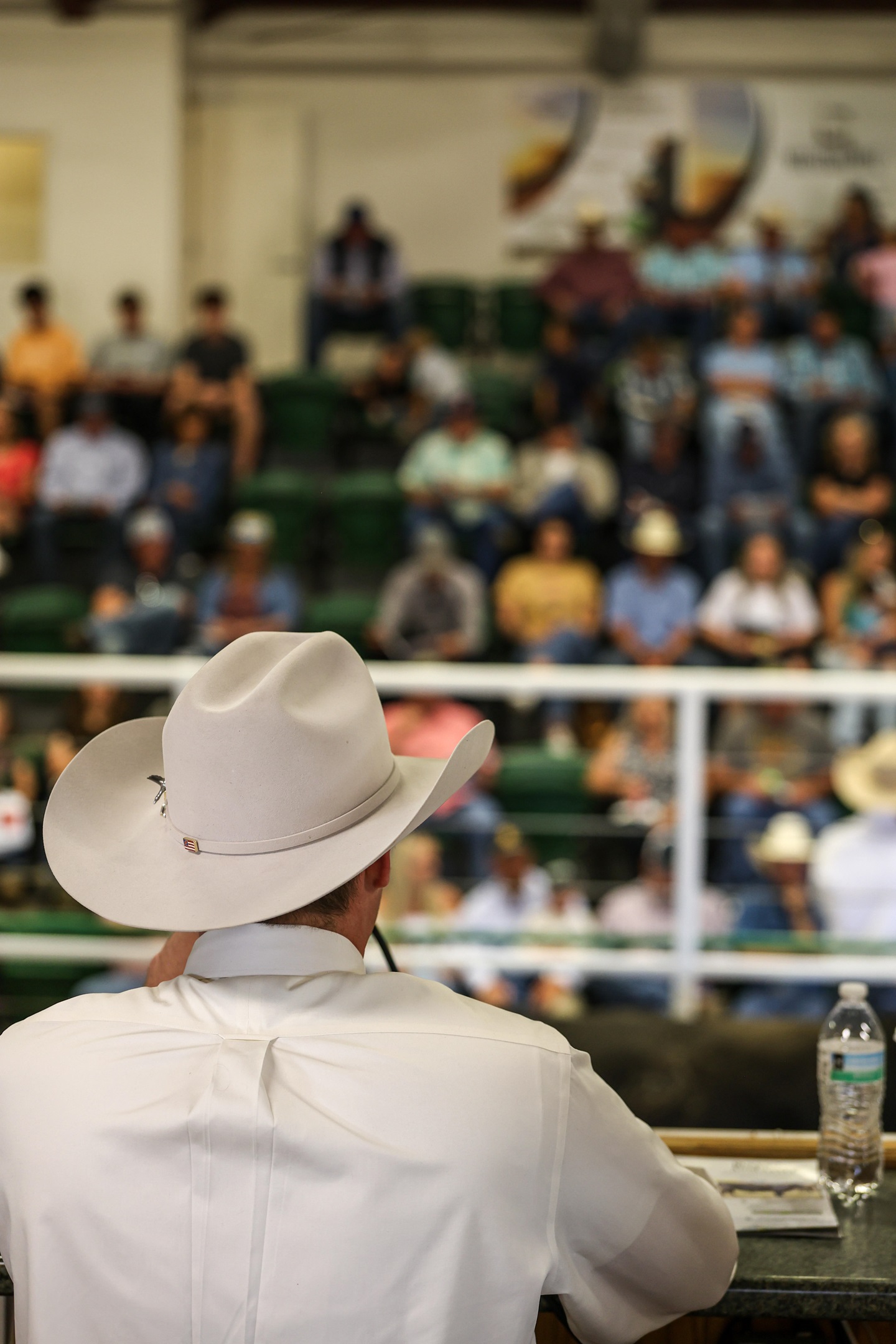
Even if a producer doesn’t have a large group, animals sold at a well-attended auction barn will always bring what they’re worth, says Jace Thompson.

Another benefit to selling cattle at your local livestock auction market, state and federal law ensures prompt and reliable payment, Nuffer said. You can get your money the same day, and you don’t have to worry about a bad check.
No matter what size of operation you have, you may have some extra calves or some that don’t fit a particular load. The local sale barn provides a market for every class of cattle, from calves to bred cows, crippled bulls or cull cows.
“The cattle business is a great way of life. Whether you are on a ranch or at a livestock market, this is the backbone of the livestock industry,” said Nuffer.
Most auctions do a great job. People who bring in cattle know those animals will be taken care of. If they bring the cattle a day or so before the sale, they can be confident that they will have adequate good-quality feed and water and be in good shape to sell.
Accurate appraisal
Jace Thompson, a young auctioneer based in Billings, Mont., has sold in markets large and small, experiencing the diversity of the business.
“The one thing they all have in common is that they offer a unique appraisal specific to your animals. Even if you don’t have volume, you have an accurate appraisal for that animal,” he said. “In a properly managed and well-attended auction barn, your animal will always bring what it is worth.”
“The buyers get the benefit of volume, and the sellers get the benefit of being able to sell into that market even if they don’t have volume,” according to Thompson. Without local auction markets there would be no consistent place to go with some of these animals, such as cull cows and bulls or animals that need to be sold at a certain time.
A person can market some of those cattle online or with advertisement, but they often get discounted in terms of their true value.
“There are usually freight issues, et cetera, that reduce the actual price you get. By contrast, the auction market makes it convenient for the buyers and sellers,” said Thompson.
“If you have cattle to sell, most sale barns provide options that ease the process of selling them to out-of-state buyers,” he said. “They offer full veterinary services (ID for the cattle, aging, preg-testing, blood work, et cetera), which is generally required to send cattle to other states. These services are generally cheaper at the sale barn compared to alternatives, due to the volume the sale barns handle.”
If you have enough cattle to create load lots, this is the way the industry is going. But most auction markets are now tied in with video sales companies or may even have a video sales company owner.
“If you have the volume of cattle required, most auction markets can get you in touch with a video company. There is often a video sales rep who works for or with that barn,” he said.
Digital EXTRAs
“The auction barn is like a stepping stone between ranchers in rural America and the corporate side of the cattle business. In some areas, especially in the West, there are not very many auction markets, and it can be a long distance to haul animals. To help resolve this problem, some auction yards have drop stations where you can drop your cattle off and get them brand inspected. There’s a fee (usually a per-hundredweight price) to haul them to the auction barn for you.”
For instance, the Montana Livestock Auction has several drop stations in Montana and one in Idaho. This is a help to ranchers in outlying regions who may not have the means or the time to take their cattle all the way to the sale barn.
Ups and downs
There have been many changes in the cattle industry, and there are always ups and downs in the market.
“The higher prices right now will help keep some of the smaller ranches alive, and in turn keep these small communities thriving,” Thompson said. “The ranching families are the backbone of many small communities in America.”
“We are seeing higher profits in the cattle business than we’ve ever seen before, and this needed to happen. Up until four years ago, the price of cattle was not increasing enough to keep up with rising input costs,” he said. The market will probably always be cyclical, but the good prices today may keep some people in business and allow them to catch up and get a fresh grip on things.
“For the first time in my short life, beef is no longer being demonized. It’s been in the highest demand it’s ever been,” Thompson said. Most folks are realizing beef is healthy and the most wholesome source of protein — and it tastes good!
“I have sold at barns all across the country — many feeder cattle and cows. It’s been obvious that quality sells; buyers will pay top dollar, even when the market is down. As soon as the market started coming up again in 2020, there was an even bigger premium for quality cattle. We see it every day: Quality sells,” Thompson said.
“When buyers have to pay a lot for cattle, they want cattle that will perform for them and make money,” he continued. “If you get cattle that don’t perform, at these price levels, it can be very detrimental. There is always a premium for quality. Good cattle with room to grow and on a good health program, with good genetics behind them, will always sell at a premium.”
Editor’s note: Heather Smith Thomas is a freelance writer and cattlewoman from Salmon, Idaho.
Angus Beef Bulletin EXTRA, Vol. 18, No. 4-B

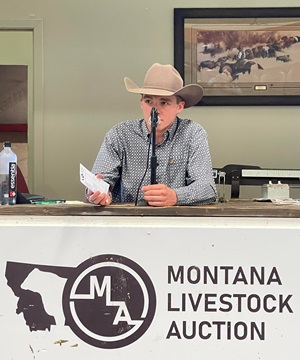
The auctioneer’s role
At age 5, Jace Thompson had already sold some horses and was encouraging the crowd to “bid ’em up.” He grew up working at his family’s feedlots and ranches, then decided to follow in his father’s and grandfather’s footsteps as auctioneers. Now 22, he’s been auctioneering professionally for four years.
His grandfather, Warren Thompson (Lander, Wyo.), former owner of the Riverton Livestock Auction, has been an auctioneer for more than 50 years. Jace’s father, Ty, manages cattle sales at two stockyards in Billings, Mont., and is part owner of Northern Livestock Video Auction. Ty won the World Livestock Auctioneer Championship in 2009 and has taught auctioneering.
Jace says he has worked with some of the best auctioneers in the world and some of the best ringmen in the world.
“I’ve been around really good examples, and that helped me a lot,” he says. In June 2024 in Oklahoma City, he was named Rookie of the Year at the World Livestock Auctioneer Championship, and in September was honored as the 2024 International Champion Livestock Auctioneer.
To be successful as an asset to the sale barns or other entities they serve, it’s crucial auctioneers know current prices and understand where the market is going, Thompson says. The auctioneer is facilitating a rancher’s entire year’s income in about three minutes.
Related Content


Current Angus Beef Bulletin
Our November issue focuses on the females of the herd and the records that validate them.